Excerpt 1: The Living History of VIR, Volume 1
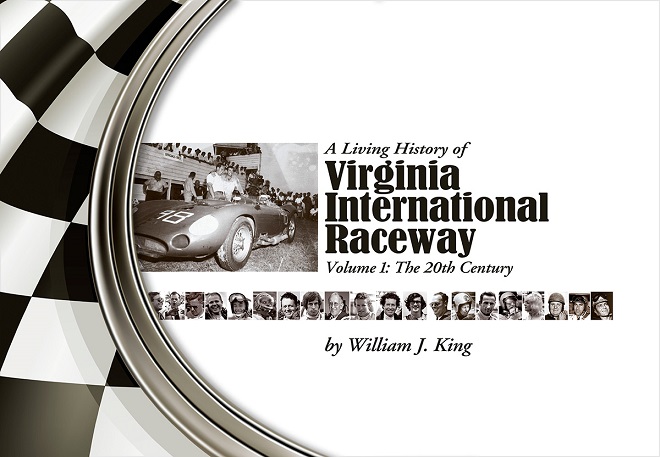
Click here
to purchase "The Living History of Virginia International Raceway, Volume 1: The 20th Century" at The RACER Store.Virginia International Raceway was among the early group of American road courses that sprang up in the mid-1950s to fill a growing need for proper circuits for the burgeoning, post-WWII U.S. sports car market. Each venture was driven by a dream, the most common thread being the desire for a convenient venue to test themselves and their "exotic" cars.
In describing VIR, Sylvia Wilkinson distilled the essence of all of these new racetracks: 'It's your favorite country road in captivity."
A group of enthusiasts in Greensboro, North Carolina, led the effort to create a road circuit in the mid-Atlantic. They found leaseable land in a rolling setting just into Virginia north of Milton, North Carolina. South Bend Farm was soon to be better known as Virginia International Raceway.
The chronicle of VIR's first 18 years forms a microcosm of road racing for the period, not only on the East Coast but across the country, mirroring the evolution of the sport. Many of the players who populated the early road racing ranks took the sport into the professional sphere.
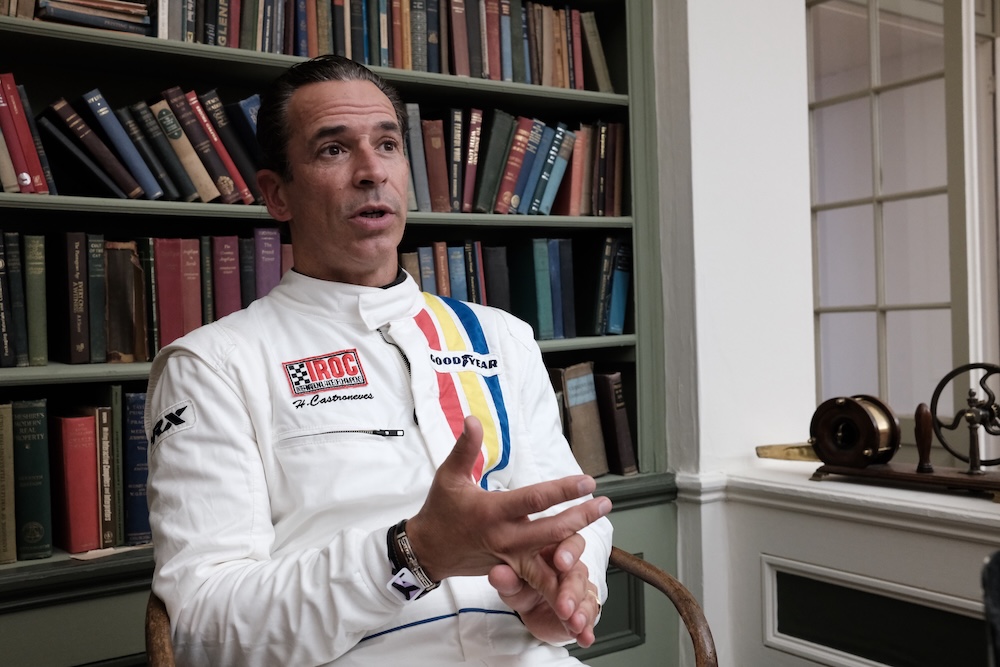
In his foreword, Sam Posey says, "Here is a book that's authentic, rich in detail, and fun to read."
Excerpt 1: From the 1962 President's Cup at VIR
As the droll Henry N. Manney III often wrote, "Practice was the usual shambles." Of the frequent agricultural excursions, the worst in terms of the President's Cup competition involved the usually tidy Dr. Dick Thompson, who wrote off the right front of the Cunningham-entered Cooper-Maserati. The other Cunningham entry – a Cooper-Buick for Walt Hansgen – suffered bearing failure in the aluminum V8 from TRACO.
With two strikes against him team, manager Alfred Momo gathered all the pieces and sequestered the Cunningham team in a Danville Airport hangar for an all-nighter. Under Momo's direction, the crew plus Hansgen removed the Buick's entire front end and clipped it onto Thompson's smashed car. Butchering Hansgen's otherwise intact mount was the only choice as the chassis had been seriously modified to accommodate the little V8. The resulting racecar was a slightly wrinkled Cooper-Maserati for Hansgen to chase his fourth President's Cup Sunday afternoon.
[Skip forward to that race. First, there was a fruitless rain delay...]
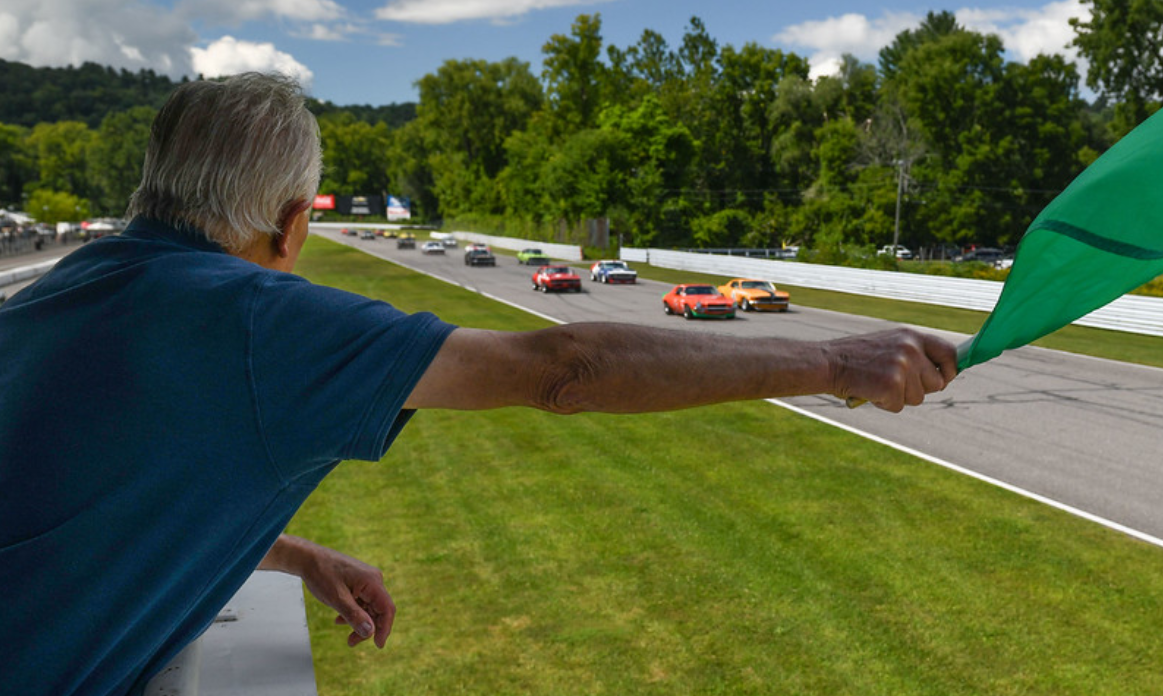
When it became apparent that the weather wasn't going to cooperate and already well behind schedule, the race duration was cut from three to two and a half hours to avoid darkness. Then at 3:30 p.m. the bottom dropped out just as Tex Hopkins flagged off the 20 soon-to-be hydroplanes – C through G Modified.
Polesitter Penske immediately sloshed into the lead in the bright red Cooper-Monaco [Telar Spl], Bob Holbert's Porsche RS61 in tow. Hansgen, of course, was buried in the field having missed qualifying for lack of a functioning racecar.
By the second lap, Penske had opened up a 10-second lead over Holbert who immediately yielded to the fast closing Hansgen. Sensing he was literally a sitting duck, Penske dove into the pits to have his tire pressures lowered. That led to a flood of pit stops for the same procedure.
All this time, the rain was steadily increasing in intensity. Forty minutes into the race, it became a gosh-darn-frog-strangler to use the most applicable terminology. That's when Hansgen's drenched spark plugs began shorting out and he dove into the pits for a change. The blinding deluge caused the mega-efficient Momo crew to fumble through a normally 30-second job in roughly eight minutes.
Leader Penske was blubbering along in second gear with Holbert following suit about five-car lengths back and just barely able to make out the distinctive tail of the Cooper.
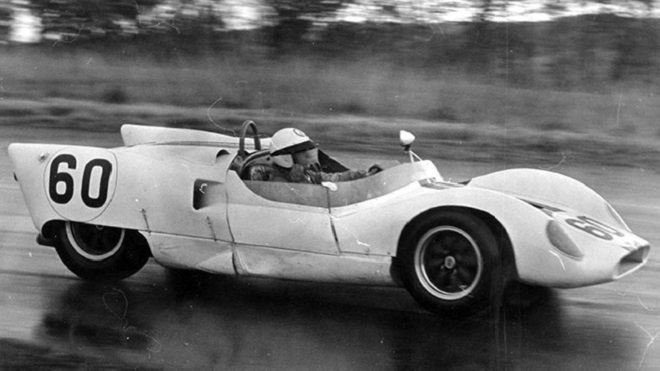
Then above the roar of this major thunderstorm, the wail of a tached-out Maserati grew in the distance. Now more than two laps down, the No. 60 Cunningham Cooper was back on the track, appearing suddenly as a screaming ball of spray and then gone.
For the next hour and a half as the rain abated, Walt Hansgen defied the laws of physics. His display of wet track car control remains unmatched in the eyes of many observers. He was reeling in Penske at a rate of nearly eight seconds a lap.
With a half hour to go, Hansgen had unlapped himself once and was again closing on the lead duo of Penske and Holbert. The three thought they were all on the lead lap. For 15 minutes, the trio mixed it up before Hansgen finally slipped through to what he thought was the lead, pulling out another 15 seconds before Hopkins' leaping checkered flag signaled the end of a masterpiece of wet-track driving.
Hansgen was shocked when he did not receive a checkered flag and a victory lap. Penske was equally shocked when he did. It was Penske's second President's Cup. Hansgen thought he'd won his fourth.
It was to be the great Hansgen's final appearance as a driver at VIR, and his performance on the weekend was surely was one of his finest and may be the best ever at the track.
Click here
to purchase "The Living History of Virginia International Raceway, Volume 1: The 20th Century" at The RACER Store.
Latest News
Comments
Comments are disabled until you accept Social Networking Cookies. Update cookie preferences
If the dialog doesn't appear, ad-blockers are often the cause; try disabling yours or see our Social Features Support.