MEDLAND: Vettel's magic word
I was at a Richard Ashcroft gig on Saturday evening – ex-frontman from 1990s British shoegazers The Verve – and one of the highlights of a great night was his rendition of his old band's 'Lucky Man', which features the lyrics:
But how many corners do I have to turn?
How many times do I have to learn?
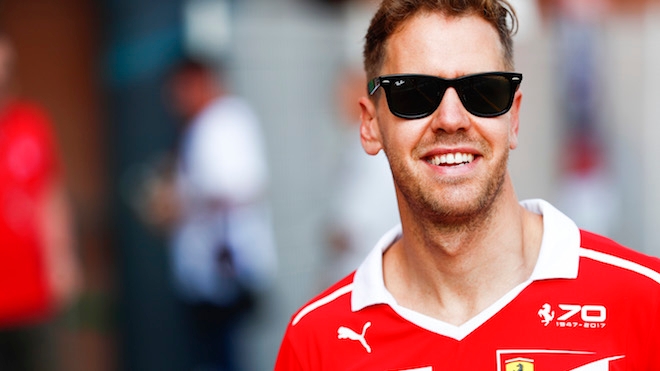
I'll admit, it didn't seem apt at the time, but it does now. Sebastian Vettel's apology appeared to get him out of further trouble with the FIA after he hit Lewis Hamilton in Azerbaijan, and it just doesn't sit well with me.
Why? Well, aside from the incident being concerning in isolation, it raises the question how many times Vettel will be allowed to say sorry? How many times does he have to learn?
In Mexico last year, Vettel lost control of his emotions and fired numerous expletives at race director Charlie Whiting because he felt he had been unfairly hampered in a fight against the Red Bull drivers for the podium. Whether he was wronged or not is beside the point; there is no excuse for abusing an official in any sport, and it is the first time I can recall it ever happening in Formula 1 – certainly during a race in the manner that Vettel told Whiting to "F**k off". Twice.
After that incident, I felt Vettel was lucky to escape further punishment, but the FIA said the German had sought out Whiting to apologize and then sent letters to both Whiting and FIA president Jean Todt. So Todt decided that was sufficient and no further action should be taken.
"In the light of this sincere apology and strong commitment, the FIA President has decided, on an exceptional basis, not to take disciplinary action against Mr Vettel by bringing this matter before the FIA International Tribunal," an FIA statement issued at the time read.
"The FIA will always condemn the use of offensive language in motor sport – especially when directed at officials and/or fellow participants – and expects all participants in its Championships to be respectful and mindful of the example they set for the public and the younger generation in particular.
"The FIA takes this opportunity to advise that, in the event of any future incident similar to the one that occurred in Mexico, disciplinary action will be taken by bringing such incident before the FIA International Tribunal to be judged."
At the time, I could accept it as a one-off. It hadn't happened before, and Vettel had immediately owned up. But there was a clear warning over his future conduct.
Now compare those words to the statement issued following Monday's meeting in Paris where Vettel was present to once again give his "sincere apologies" and offer to give up some personal time to FIA educational activities across F2, F3 and F4.
"The FIA notes this commitment, the personal apology made by Sebastian Vettel and his pledge to make that apology public," Monday's statement read. "The FIA also notes that Scuderia Ferrari is aligned with the values and objectives of the FIA.
"In light of these developments, FIA President Jean Todt decided that on this occasion the matter should be closed.
"Nevertheless, in noting the severity of the offense and its potential negative consequences, FIA President Todt made it clear that should there be any repetition of such behavior, the matter would immediately be referred to the FIA International Tribunal for further investigation."
Sounds familiar, doesn't it?
my previous comment piece
, but the issue is not – or should not be – about the severity of the collision between Vettel and Hamilton. It also has nothing to do with the driver Vettel hit, or whether the Ferrari man had grounds to be annoyed with the race leader's slowing of the pack. The problems is solely Vettel's reaction.A Formula 1 driver, at the age of 29 (and now 30), with 186 grand prix starts behind him, has to have a degree of control over his emotions. Vettel has now failed to have that control on two occasions, and both times he has been let off from further punishment due to a "sincere apology".
So, kids, when you've done wrong, make sure you've practiced saying sorry sincerely.
Vettel did not accept he had done wrong at the time, or after the race. He criticized the stewards for not penalizing both drivers, and refused to take full responsibility for his actions. But faced with an examination of what happened, he then felt it was time to go and say sorry.
"Concerning the incidents of Baku, I'd like to explain myself: During the restart lap, I got surprised by Lewis and ran into the back of his car," Vettel wrote on his website. "With hindsight, I don't believe he had any bad intentions. In the heat of the action I then overreacted, and therefore I want to apologize to Lewis directly, as well as to all the people who were watching the race. I realize that I was not setting a good example.
"I had no intention at any time to put Lewis in danger, but I understand that I caused a dangerous situation.
"Therefore, I would like to apologize to the FIA. I accept and respect the decisions that were taken at [Monday's] meeting in Paris, as well as the penalty imposed by the Stewards in Baku.
"I love this sport and I am determined to represent it in a way that can be an example for future generations."
As sincere as I'm sure that apology is – Vettel is a clever guy and will be feeling guilty about it all now – the FIA has failed to deal with the situation adequately. In one sense, every single driver on the grid now can verbally abuse the race director once, and can retaliate against an opponent once, too, and expect to get off lightly.
While Todt says the matter should be closed, I found myself heavily agreeing with NBC's Jason Swales after the ruling, who wants to see the FIA "publish all the data, video and testimonies from all parties, including the race stewards and their process for making decisions ... to aim to reduce the confusion and frustration for fans regarding their decisions and processes."
The incident has divided opinion, and as wide-ranging as those views may be, I firmly believe there would be more acceptance on both sides of the argument if the decisions were explained. And if there wasn't, then that may suggest the wrong decisions were taken at some point along the line.
But even that will not result in the matter being fully closed, because the FIA's leniency means Vettel's apology will forever be a precedent going forward. If it's a precedent that is often cited in the future – at any level of motorsport – then Todt and co only have themselves to blame.

Latest News

Comments
Comments are disabled until you accept Social Networking Cookies. Update cookie preferences
If the dialog doesn't appear, ad-blockers are often the cause; try disabling yours or see our Social Features Support.