MEDLAND: Can Sauber escape the shadows?
There seems to be a bit of a mess in Switzerland...
I was in Geneva at the FIA Sport Conference when word came through that the real story was happening roughly 150 miles away in Hinwil. Monisha Kaltenborn had left Sauber with immediate effect, and a power grab was ensuing in the aftermath.
Kaltenborn's departure came about at the start of the week and appears to be the result of rising tension behind the scenes between the team principal and current owners Longbow Finance. The treatment of drivers has been suggested as one of the central points to the breakdown in the relationship, with links between the owners and Marcus Ericsson.
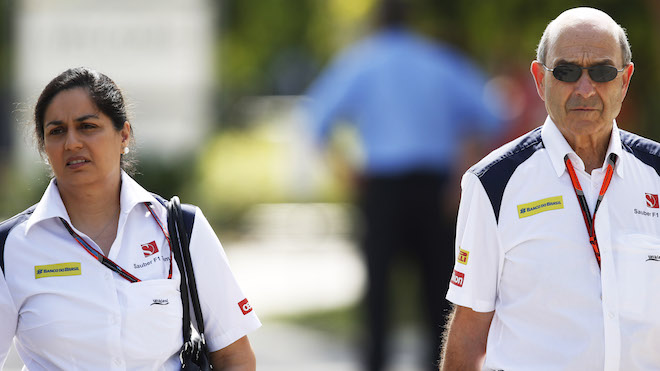
Longbow Finance acquired Sauber last summer, Pascal Picci taking over as chairman from Peter Sauber (BELOW, with Kaltenborn), but team principal Kaltenborn remained in place. Her ongoing tenure was one of the terms that former team owner Sauber had stipulated was a condition of sale during previous investment negotiations, and while the change in ownership was warmly welcomed by the team principal and CEO at the time, Kaltenborn also sold her own shares. With it, she relinquished a chunk of power.
Kaltenborn had ridden out many a controversy during her tenure at Sauber, most famously the situation at the start of 2015 that resulted in Giedo van der Garde taking the team to court in Melbourne over what he claimed was a valid contract to race. The Dutchman effectively sacrificed any hope of a future F1 career in order to make the point, with Sauber having named Ericsson and Felipe Nasr - both bringing crucial funding - as its race drivers.
Rights and wrongs of the situation aside, when the episode was finally resolved, the team was still in existence, and that was priority number one.
It must be noted what an achievement it was for Kaltenborn just to keep Sauber running. UK-based teams such as Manor and Caterham have folded over the past three years, and until last year's takeover, Sauber was under perpetual threat of going the same way. The team principal said following the change of ownership that the promise of stability would provide a refreshing contrast to having previously been forced to plan the team's future on a week-to-week basis.
To work in those conditions is one thing, but convincing new recruits to move to Switzerland amid so many unknowns is another challenge altogether. Turnover of key personnel was high at Hinwil so it's no wonder results were hard to come by, but each year the team found a way of carrying on, and then started to rebuild last summer.
Senior staff members were brought in, but competitiveness was always going to be limited by a decision to use year-old Ferrari power units, a move Kaltenborn claimed would allow Sauber to capitalize on the new aerodynamic regulations. In reality, a breakdown in the Ferrari relationship and the further need to develop the team structure in Switzerland following a spell of shrinkage also played a role.
But the decision looked like a more sensible one following the demise of Manor, guaranteeing Sauber a top ten constructors' finish and therefore additional prize money. Ironically, it was Felipe Nasr's excellent performance in the penultimate race last year - finishing ninth in Brazil - that allowed Sauber to leapfrog Manor and secure tenth place, ultimately forcing its main rival out of business and also costing Nasr his seat as Pascal Wehrlein came in.
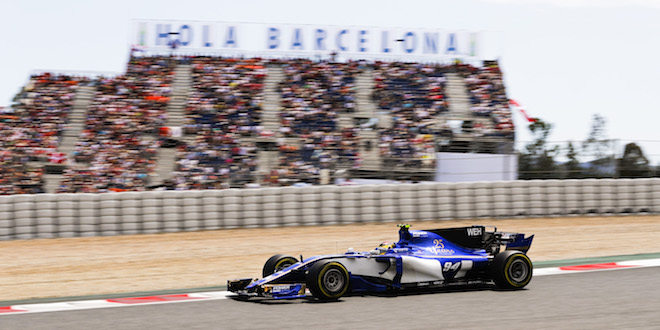
While Ericsson is now in his third season with the team and Wehrlein missed the opening two rounds as he recovered from a back injury, it is the Mercedes youngster who has caught the eye more than his Swedish counterpart. Wehrlein's drive to eighth place in Spain (ABOVE) has been Sauber's highlight of the season so far, and leaves the team ahead of McLaren in the constructors' championship.
Ericsson has always distanced himself from Sauber's current owners, but if driver treatment proves to be at the heart of Kaltenborn's departure then there are likely to be wider repercussions. Longbow Finance is unlikely to install anybody into the position of team principal who will present the same problems it felt it faced with Kaltenborn, and therefore Mercedes will certainly have something to say if it feels Wehrlein is not getting a fair crack of the whip.
Then there's the issue of the team's power unit future. A deal to become a Honda customer next season was announced earlier this year, bringing to an end a long-term partnership with Ferrari. Should the McLaren-Honda partnership end in divorce, Sauber would be perfectly placed to capitalize on an opportunity to become the central focus of a major engine manufacturer. It is understood Kaltenborn was central to those negotiations, and so Honda finds itself preparing to supply a team with management it may not see eye-to-eye with.
Former HRT team principal Colin Kolles has been linked with Kaltenborn's role; the Romanian having most recently been involved with Caterham in 2014. With that recent resume it doesn't take a genius to work out that Kolles has dealt with teams on the brink of collapse before, so such an appointment would not scream stability.
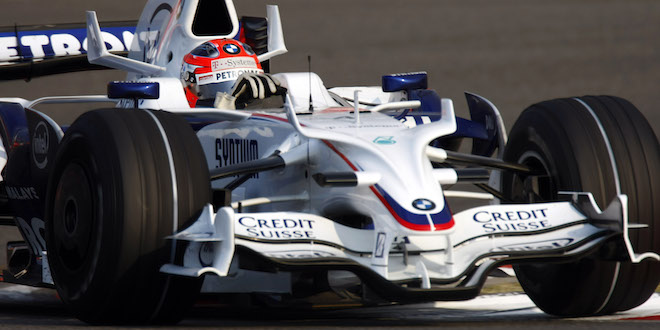
At present, it's a sad state of affairs. Sauber is the team that gave Kimi Raikkonen and Felipe Massa their starts in F1, was regularly fighting at the front of the midfield and even - as the BMW manufacturer team - was a contender for the drivers' championship with Robert Kubica a decade ago (ABOVE).
Regardless of the reasons for Kaltenborn's departure, it is a shame that Sauber's future suddenly looks almost as uncertain as it when it teetered on the brink of financial collapse a year ago. In the space of 12 months, the man who gave his name to the team and the woman who fought so hard to keep it afloat in recent years have departed, and Formula 1's fourth-oldest team finds itself lacking a clear leader.
Without Kaltenborn - who had midfield allies such as Force India's Bob Fernley; the pair having jointly sought a more equitable distribution of F1's revenues - Longbow Finance will need to act quickly and decisively. There is obvious talent within the team, but if it was hard to attract in the first place it will be even harder to retain if Sauber loses its identity. And that could well signal the beginning of the end.
Presented by:

Latest News
Comments
Comments are disabled until you accept Social Networking Cookies. Update cookie preferences
If the dialog doesn't appear, ad-blockers are often the cause; try disabling yours or see our Social Features Support.