LMP1 2020 regulations revealed
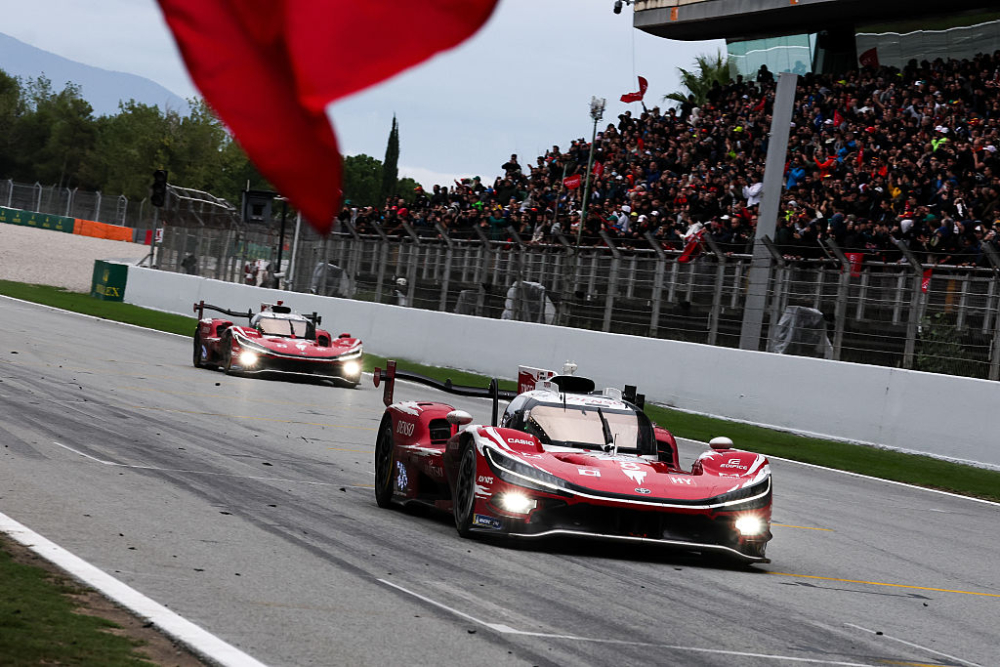
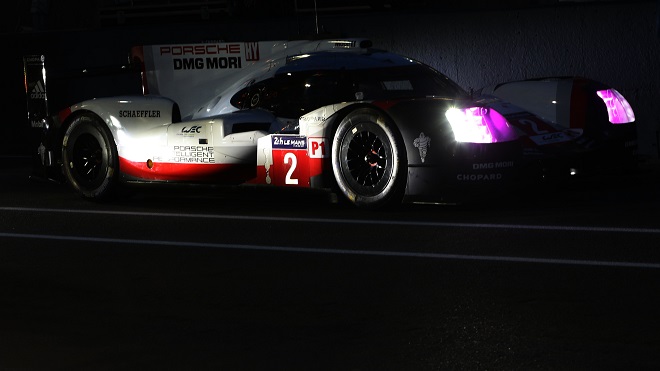
The ACO has detailed the 2020 LMP1 regulations, today at Le Mans, which focuses on the introduction of plug-in hybrid technology, safety enhancements and cost reduction. The regulations have been created with stability in mind, and last for at least four years.
Plug-in hybrid tech being added to the LMP1 cars is the big announcement here. Each car must be able to pull away from a pit stop and complete the first kilometer of its out lap using only electric power. This will be compulsory for Le Mans as well as the other FIA WEC rounds. There are also plans to have the cars cross the finish line at the Le Mans 24 Hours on electric power only.
Other big changes have been outlined, to reduce the cost for the manufacturers. Teams will only be able to homologate a single body kit for each season, with simpler aero under the cars and small variable aero points to enable them to be adaptable for low-downforce circuits like Le Mans. There will be active aerodynamic front and rear wings, with small variable 'clips' behind the front splitter.
The cars will also continue to feature two eight-megajoule hybrid systems – as they do now – and only be allowed two gearbox units.
Related Stories
Wind tunnel hours have been reduced from 800 to 600 hours, and private testing will be limited. Teams will have to opt to develop chassis, engine or aero, but would not be permitted to upgrade all three. ACO set to organize collective tests for greater transparency. The development of the cars year-to-year will also be limited to a number of areas, preventing teams from undergoing design overhauls. Instead teams which choose which area to develop, be it chassis, engine or aero.
In terms of fuels, the regulations include the integration of biofuels, and other types of more evolved fuels as well as new energies. Research work on new energies like hydrogen will continue with the aim still to introduce them at a later date.
The number of staff in each team will also be reduced 50 members to oversee the cars, down from 65 currently. There will however, still be no limit in place for the Le Mans 24 Hours.
There will be a number of changes concerning safety. Major work will be done on the monocoque – much more internal volume, (1 500 mm) with adjustable pedals – particularly concerning the width and the cockpit volume ahead of the driver's head.
To protect the driver's vertebra during impacts the seat angle will be 55 degrees rather than the current 35 degrees. In addition to that the cockpit height will be up by 80mm.
The volume area for driver legs has slightly modified too, to facilitate driver changes. There will be protective foam for drivers legs, stiffer front and rear crash tests of the monocoque and the crushable structures and improved cockpit ergonomics to enhance driver visibility.
All the new safety features will not effect the performance levels of the LMP1 cars, however.
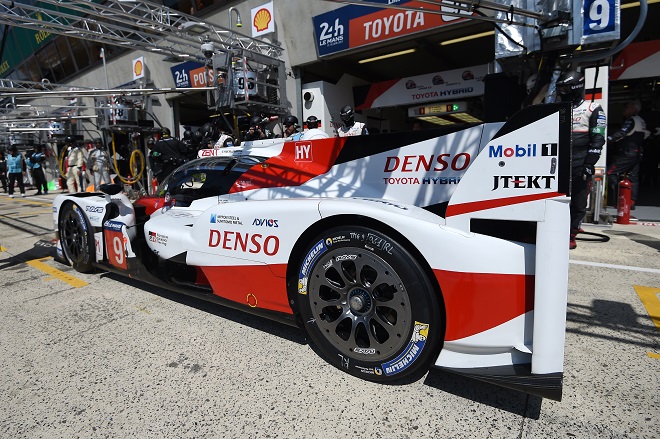
The ACO was keen to point out that Porsche and Toyota, as well as other car manufacturers, were part of the meetings to create the regulations and showed "great interest into their contribution."
Lone Star Le Mans
, a six-hour sprint deep in the heart of Texas:September 15-16 at COTA
.
Latest News


Comments
Comments are disabled until you accept Social Networking Cookies. Update cookie preferences
If the dialog doesn't appear, ad-blockers are often the cause; try disabling yours or see our Social Features Support.