MEDLAND: The irony of Ferrari's one-two
Sunday was a big day. Formula 1 was always going to be in the shadow of events in Indianapolis, and the Monaco Grand Prix was hardly a thriller, but the result could be a genuine watershed moment.
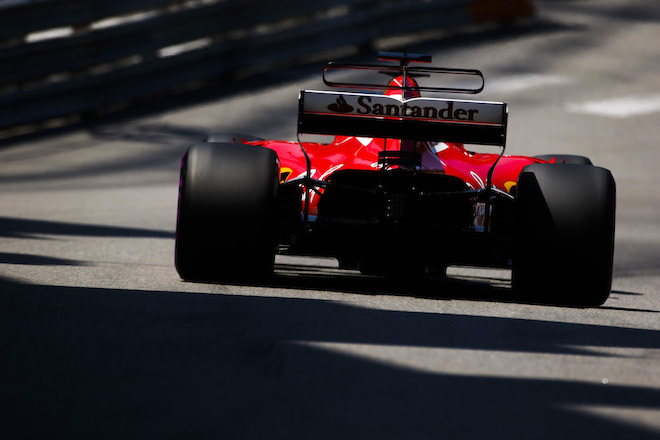
A Ferrari-led end to Mercedes dominance was already a well-established story well before last weekend, and the arrived in Monte Carlo, with a real title fight already on its hands. But if the Scuderia's good strategic decisions in Melbourne suggested that it spent the winter evolving into more well-oiled machine, that was reinforced by the final result in Monaco.
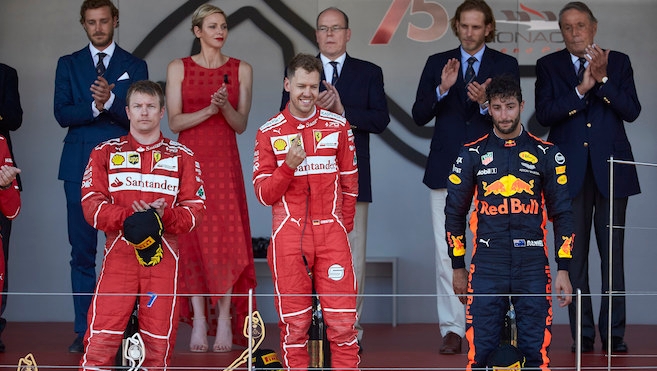
The one-two was Ferrari's first in nearly seven years, and was delivered in controlled fashion from the front of the race. A front row lockout was crucial to that achievement, and was a flashback to the more dominant periods of the team's history. If there was anyone reserving judgment on Ferrari going into this year, surely nobody is now.
And yet the main questions aimed at the two drivers in the post-race press conference were largely negative. Kimi Raikkonen was on pole and led from the start, putting him in a position that should have been very hard to beat. But Sebastian Vettel emerged from the pit stops ahead of his teammate and took his third victory of the year, leaving Raikkonen - winless since 2013 - clearly unhappy on the podium.
Eyebrows were raised by how little warning Raikkonen was given of his pit stop – denying him an attempt to push on his laps before pitting - and then his release into traffic he had already been hampered by earlier. If there is one thing in Monaco you try to avoid during a pit stop, it is coming out behind other cars. Track position is everything.
But perhaps it was the right call. If any of the chasing cars were really perceived as a threat to Ferrari, pitting Raikkonen first when he had a bigger margin over Daniel Ricciardo behind was the safest thing to do. To pit Vettel would have brought him out closer to the Red Bulls and Valtteri Bottas, but Raikkonen could rejoin safely ahead and Vettel could build up a margin himself.
Whether the strategy was a deliberate attempt to give Vettel a chance to jump Raikkonen, or simply Ferrari protecting a one-two at the expense of the Finn, Lewis Hamilton's comments summed up the wider feeling among observers.
"It's clear to me that Ferrari have chosen their number one driver, so they'll pushing everything to make sure Sebastian is maximized on all of his weekends," Hamilton said. "In strategy, that doesn't happen. The leading car... [it] is very hard for him to get jumped unless the team decide to favor the other car, so it's great for him."
But should Ferrari really be criticized for such a move, even if it was deliberate? Yes, a Raikkonen victory would have been his first since returning to Maranello and would have been hugely popular, but there isn't a team on the grid that can afford to let sentimentality creep in when there are tight championship battles to be won. Ferrari's wait for another title currently stands at nearly a decade.
Team orders are legal, and while Ferrari was chastised for moving Rubens Barrichello over for Michael Schumacher in Austria in 2002 (RIGHT) – resulting in the introduction of stricter team order restrictions at the time - that was because Schumacher had already won four of the first five races on his way to a dominant championship victory.
Ironically, the last Ferrari one-two came in the 2010 German Grand Prix, a race that also featured a team orders controversy. Race leader Felipe Massa was given the now-infamous radio message "Fernando is faster than you" from his race engineer Rob Smedley and moved over to let the Spaniard win. Even with that help, Alonso fell short in a final race title decider.
Two years later Ferrari again had one dominant driver as Alonso led the team, supported by Massa, and again the championship fight went down to the wire. The man to ultimately win it, again, was a certain Mr Vettel – then from Red Bull – and 2012 remains the team's last serious title challenge.
Until this year.
Ferrari has a car that works on all circuits, but Mercedes' dominance in recent years is going to be hard to break. There is a huge technical team at Brackley - recently strengthened by the addition of the excellent James Allison - and in-season development is progressing at a serious pace. The overriding feeling is that Ferrari's ability to get the most out of its tires gives it the upper hand, but whether that continues remains to be seen.
It's hard to ignore the impression that Mercedes has more to come, and yet the team has scored just nine fewer points than it had managed at the same stage a year ago. Hamilton even has 22 points more than he had after his Monaco win last season, and - like last year - the three-time world champion can't list consistency as an aspect of his season so far...
All of the signs point towards an extremely tight battle between two of the biggest teams in the sport, with Red Bull also threatening to gatecrash the party with its performance in Monaco. Hindsight is a wonderful thing, but F1 teams spend their time working on foresight. The missed opportunities in the first race are as important as those in the last when the final championship positions are decided.
While Mercedes preaches that it will let its drivers race as long as they do not jeopardize the team's number one goal of winning the Constructors' Championship, Ferrari - with the luxury of massive historical bonus payments that make constructors' winnings less significant - has different priorities. One paddock figure with knowledge of Ferrari said: "Ferrari exists to win the Drivers' Championship. That is all there is. The team doesn't give a s**t about anything else."
When the door has been opened in the title race and the man most likely to lead the Scuderia for a number of years to come is in the championship lead, wouldn't it be foolish not to back him?
If it isn't actively doing so already, perhaps it should...
Presented by:

Latest News
Comments
Comments are disabled until you accept Social Networking Cookies. Update cookie preferences
If the dialog doesn't appear, ad-blockers are often the cause; try disabling yours or see our Social Features Support.