BUXTON: Secrets and success
Upgrades! Upgrades for everyone!
The start of the European leg of the Formula 1 World Championship is, traditionally, the point at which teams bring their first major development packages of the season. Being the first year of a new set of technical and aerodynamic regulations however, that's not strictly true for 2017 as we've already seen a rapid rate of progress in the early races. But in terms of the first major changes it is here that we should see the most obvious major physical differences in this year's cars.
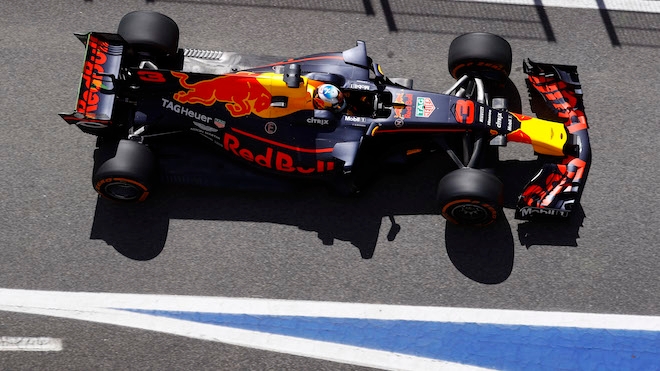
Red Bull is rumored to have been working on a comprehensive upgrade package since the first race weekend in Australia. So vast are the changes required to the RB13 that talk has been rife for a month or more that the upgrade package for Barcelona would constitute a B specification at the very least. Other teams have talked of bringing a host of aerodynamic changes. Some have been slightly more precise, detailing specific new parts. But, as ever, it's all a bit hush hush.
Secrecy in Formula 1 is either part of the allure of the sport or part of its inherent frustration. Never is it more pronounced than during pre-season, when cars are hidden away behind screens in garages, revealed only for a moment before shooting off on track. Photographers are shooed away as the new creations roll to a halt in pitlane, so wary are the teams of snappers employed by rival outfits as spies, detailing every nuance of aerodynamic trickery on show.
Of course the irony is that their pitlane faffing does little to deter or inhibit the image capturing. While some photographers will lie belly down at pit exit to get a decent shot of a diffuser, almost every photographer knows you get a far clearer shot through the break in the fencing at Barcelona's Turn 9. The secrecy merely frustrates for a moment. The shot will still be taken. The knowledge is still accrued.
That same secrecy exists once the season has started, as the majority of teams give you a glossed-over headline of what they've brought to the table on any weekend rather than anything editorially useful. Today I went to each team and asked what upgrades they were running this weekend. "An aero package," was one response. "Nothing major," was another (and a lie). "We've added some bits, just development work really," was nice. "I'm not sure what I'm allowed to say yet. I've not been briefed." That was my favorite.
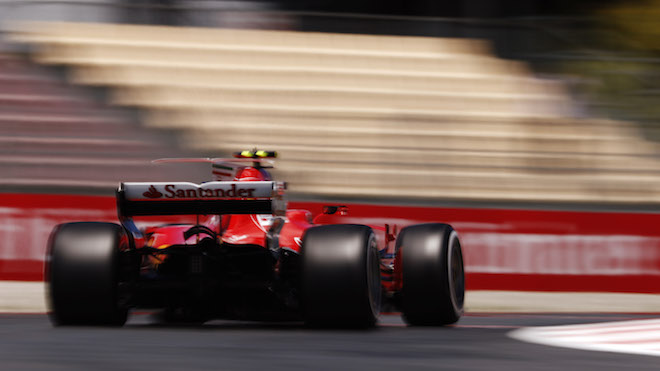
It's long been part of the game that if you want to know anything about the Ferrari, for example, you don't ask Ferrari. You ask Red Bull. You ask Mercedes. The same is true for all teams. They will rarely, if ever, tell you what they are doing. But their rivals will give you a steer on what they believe their adversaries are trying to accomplish. Again, you can see that as part of the allure or part of the frustration.
In our world of trying to tell you the story, it can be something of an annoyance. And an unnecessary one at that. I don't think any of us, as journalists or broadcasters, believe that Adrian Newey is sitting in Milton Keynes awaiting our reporting of a race weekend to learn what Mercedes or Ferrari have done with their car. I don't think the teams do either. By the time Friday morning arrives, Newey's Dropbox will already be full of images, his team hard at work deciphering the multitude of new flicks and winglets appearing throughout the pitlane.
The teams know that as soon as their cars are taken to scrutineering, their rivals will already know the key points of what they've done. Externally, at least. Why then, is there the need for such secrecy and subversion? And what does any of what they actually do say, mean? What is a B spec car? Why have certain parts been developed? What has changed and why? We want to know because you want to know.
How enlightening it would be if a team was to turn around on a Thursday and show us all the new parts those back in the factories have been crushing all-nighters to complete.
"We were struggling with X. The way we are going to try and fix it is by doing Y. So we've built Z. That's it, right there. Will it work? We'll let you know on Sunday night."
That's not going to provide any of their rivals with a Eureka moment. But it is going to help this sport promote itself to its millions of fans around the world.
Formula 1 under Liberty Media is starting to open itself up. This weekend in Spain, the fan engagement has taken a huge leap forward with a completely revitalized and revamped "Fan Festival" experience with new possibilities and new concepts. And as the sport opens itself to its paying customers, there has been talk from its new bosses of breaking down the well-cemented walls of secrecy that serve not only to keep those wishing to engage with the sport in the dark, but which keeps the status quo of the competitive order in place too.
Ross Brawn, Formula 1's Managing Director of Motorsports has, this week, suggested that Formula 1 may wish to adopt a NASCAR-style open form of scrutineering in which cars are checked and measured in full of view of rivals and fans alike. Smaller teams wouldn't have to duck and dive to learn the secrets of the big boys. Open inspection could, potentially, lead not just to a more immersive experience for fans at the track, but to a more competitive and open challenge on the track.
It would be naive to think that any such shift in scrutineering will lead to an immediate levelling of the playing field however. Recognizing the genius of a part on one car does not mean it is easily copied, nor that it is easily understood. It is quite another thing to presume that the part in question would then work in the manner it is intended simply by plonking it onto your car. The technology of this sport is far more nuanced than that. But freeing up the ability of a team to investigate what its rivals are doing in an open fashion will almost certainly lead to the transfer of ideas and the improvement of the spectacle.
And if the teams know what each other are doing, it should follow that teams in turn will be more willing to advertise their expertise to the media and in turn to you, the fans.
Formula 1 has long been ruled by its self-proclamation of being the pinnacle not just of racing skill, but of technical ingenuity. Why then have the game's players insisted for so long on hiding that which the sport claims to be one of its greatest assets?
Fernando Alonso's rookie run at IMS was proof, if it were needed, of the positives that flow from being open and inclusive. It was supposed to be a private test, behind closed doors. It ended up pulling in two million viewers. We saw a two-time world champion nervously shuffling his feet before his first run, words of advice from a new team-mate. We heard Alonso being briefed, the radio communications to him during his first laps. We watched the car going through set-up changes, we watched a driver growing in confidence and speed. We shared in the hearty congratulations from one of the greatest drivers of all time. And the smile of a guy loving what he was doing.
It wasn't big or grand. And yet, to Formula 1 fans, it was refreshing.
Formula 1 should be screaming from the rooftops. Look at all this cool stuff we're doing! Look at what we've made! Look at what we do!
One gets the feeling that's exactly what the sport's new owners want as well. Overjoyed with their new toy, they want to show it off to the world, knock down the walls, smash the secrecy and put on display how absolutely amazing this sport can be.
On a weekend when Formula 1 is used to seeing its biggest upgrades, the greatest yet may be the breaking down of barriers which have done nothing to promote this incredible sport, and which have existed for far too long.
Presented by:


Latest News

Comments
Comments are disabled until you accept Social Networking Cookies. Update cookie preferences
If the dialog doesn't appear, ad-blockers are often the cause; try disabling yours or see our Social Features Support.