Renault focused on unlocking race pace
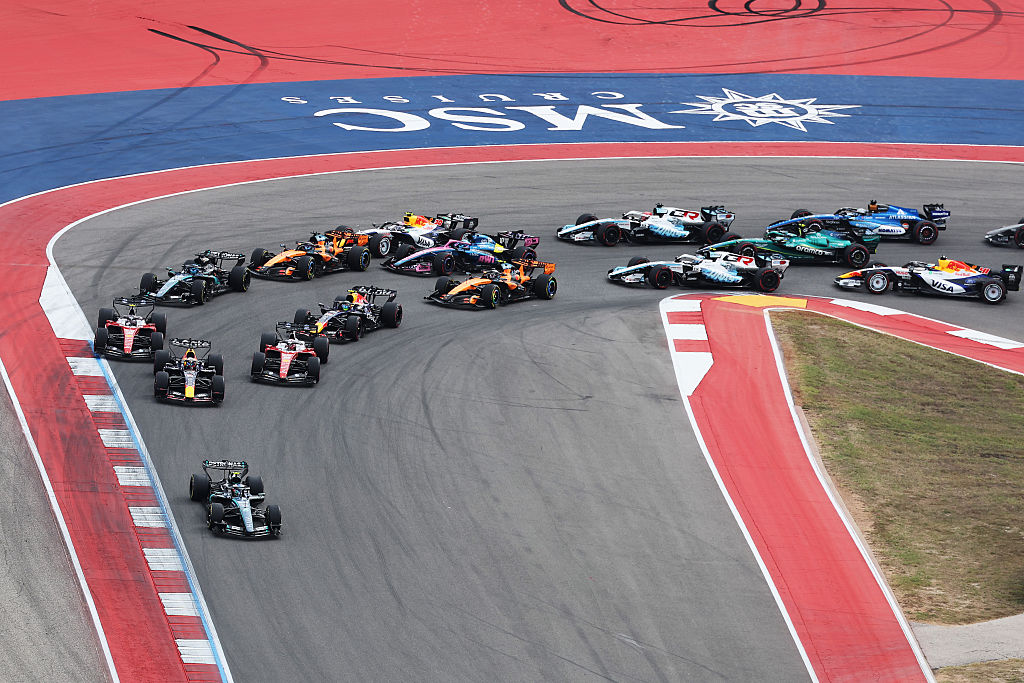
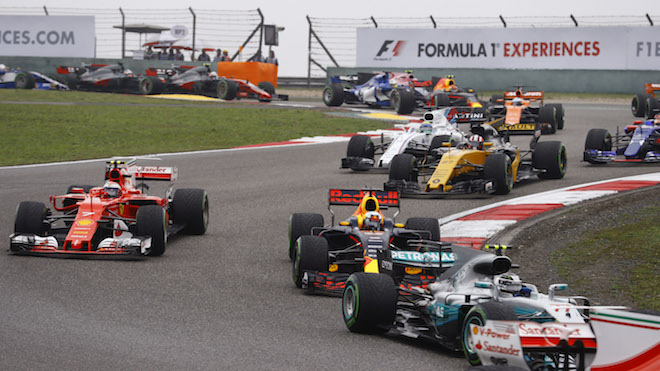
Renault is working hard to try and unlock better race pace after failing to convert strong qualifying performances so far this season.
Nico Hulkenberg has qualified seventh at each of the last two races but has only managed to finish in the top 10 once this season, coming home ninth at the last race in Bahrain. The qualifying results highlight the inherent one-lap pace Renault has, but chief technical officer Bob Bell says the lack of point-scoring results are due to the R.S.17 being less competitive in race conditions.
"It's pretty clear and we're not under any illusion; we are currently qualifying better than we race and that's a symptom of our current car performance," Bell said. "We have a reasonable understanding of why this is and have a number of developments to address this in the realm of aerodynamics and suspension.
"We tested new parts – including a new front wing – in Bahrain designed to add more aero performance to the car and also make it slightly more benign to engender better race pace. It's a positive of testing somewhere where you've just had a grand prix that there is a lot of comparable data for evaluation."
Bell attributes the car's lack of consistency as the reason it cannot replicate its one-lap pace over a race distance, but is encouraged that the raw pace provides a strong base to start from.
"The R.S.17 is not as well balanced as we'd like over a full stint. While you can get away with this over the course of a qualifying lap – where fresh tires can mask the balance issue – the performance is less consistent when you take to the longer runs of race stints.
"The R.S.17 has a somewhat nervous corner entry, followed by mid-turn understeer, followed by a nervous exit making finding traction a challenge. If we can address these areas, our drivers will have a very effective race car at their disposal. We believe the problems are aero related, so we're primarily looking for the solution there. Once we have the entry-phase of the corner sorted, the rest should follow more easily.
"The big positive is that the car has the basic pace to be able to be qualified well. Our current issue is extracting that pace in a race scenario. If you have the pace the key is maintaining it; it's easier to translate qualifying pace to race pace than to find basic performance."
Presented by:


Latest News
Comments
Comments are disabled until you accept Social Networking Cookies. Update cookie preferences
If the dialog doesn't appear, ad-blockers are often the cause; try disabling yours or see our Social Features Support.