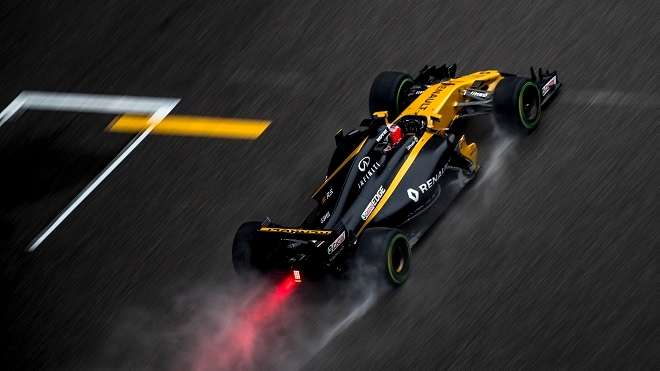
Abiteboul - F1 needs to be open to new engine spec
in the aftermath of the recent meeting in Paris between the manufacturers and the FIA
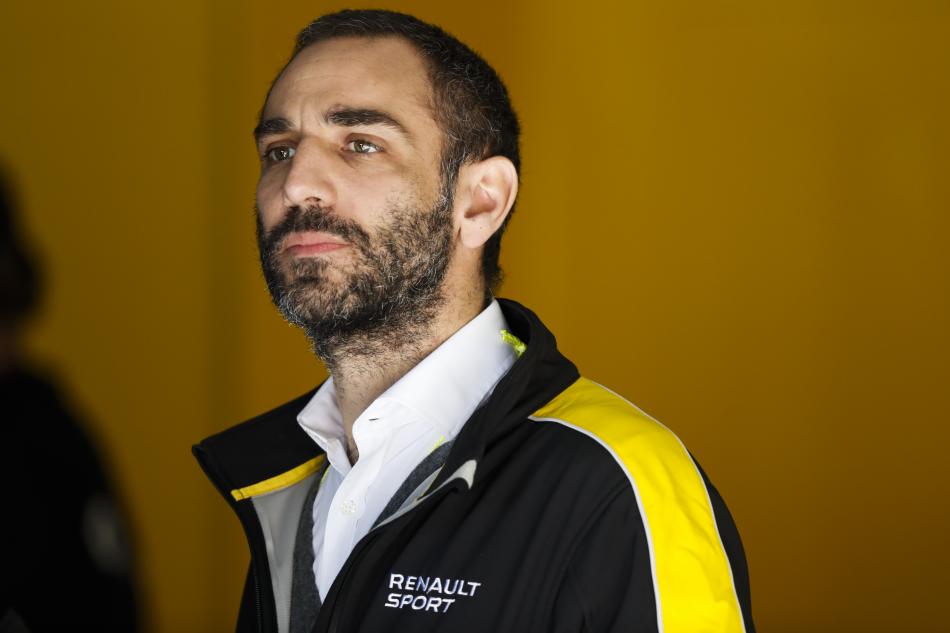
.While maintaining that the turbo hybrid formula retains key attractions for automakers, Renault's Cyril Abiteboul acknowledged that it might be necessary to make changes in response to pushback about the level of competition, spectacle and cost.
"I think one thing is that we cannot be stubborn, or we cannot be deaf to what obviously we've been constantly hearing since we introduced those new engine regulations," said Abiteboul. "I think fundamentally there were very good things introduced with that new engine formula. With the previous V8s, we believe that clearly Formula 1 had lost contact with the direction that automotive was taking so something had to be done. Maybe we've been a step too far – we've been moving from something that was a bit too old-fashioned to something that is maybe too modern, too complex, too sophisticated, too expensive.
"We need to be a bit careful about solutions that seem to be easy, like freezing current engines, because if we freeze the current engine, we will freeze something that is extremely expensive and costs will not go down. Development costs for manufacturers may go down, but supply costs to the teams will not go down simply because the bill for material of the engine is extremely expensive because of its sophistication.
"It seems there is a common view about the diagnosis of the current regulations and what we would need in order to build from there, without starting again from scratch...but I think the devil will be in the details, and it's not going to be that easy to find a solution that satisfies everyone and achieves everything. I think it will be about prioritizing, and that's where I hope that the new process in partnership between the FIA and FOM with Ross Brawn – who has a fantastic understanding of all the complexity involved – will provide a good leadership for the discussion."
"I think everyone agrees that there should be some element of electrification. We don't necessarily see some road relevance or contribution to the show to an element like MGU-H, so that this orientation for the future, I think the whole debate would be on the architecture of the internal combustion engine, which will be an interesting debate and some things that I guess will keep us busy for the next few months."
Asked what Renault's preference on architecture would be in terms of numbers of cylinders, Abiteboul replied: "There is what I like and there is what we need. I don't think that Formula 1 can afford to turn its back on some things that are relevant to the manufacturer, given the current business model. Formula 1 could completely change to a different business model and go for something that is really different and not road-relevant, but that would be a brave maneuver."
The Frenchman also offered the view that prospective future fans might not have the same mindset of opposition to the sound of hybrid turbos that many older fans do.
"As far as I'm concerned, I started with the sound of the V10 and that's something that I will never forget, obviously, but that's just me. The new generation, the generation that we need to attract – because it's not just about the current fans of Formula 1, we also need to think about the fans that we do not have – those fans have never heard the sound of a V10 and maybe for those fans, getting back to a V10 or V8, is not so relevant.
"So it's a complex debate and an interesting debate and I hope it's going to be done in a constructive and also documented manner – and again that's where I believe all the surveys that are going on, all that will also go on in the course of this year will be instructive for the direction that we need to take."
Force India's Robert Fernley agreed that a knee-jerk scrapping of the current formula would be counter-productive, although as a representative of one of F1's non-manufacturer teams, he stressed the need for adjustment.
"I think there is a little bit of work which could perhaps be done to address some of the issues, particularly the noise and simplify the base technology, but I think that the principle of the current engine shouldn't just be abandoned – a lot of work has gone into it but I think it could be simplified a little bit. I think a lot of the things that we're doing perhaps go beyond what even the most sophisticated of fans is understanding, so we could come back a little bit, get the cost right, obviously get the power and the noise right and move forward but you don't have to throw the baby out with the bathwater."
Toro Rosso's Franz Tost added: "For me the pillar for the new engine is the parity – there must be a chance that there is parity between the different manufacturers, because without it they can't contribute anything to the show. It cannot be that some cars are far ahead.
"The second pillar is the costs. The current engine is simply far too expensive. From the technology side, it's a fantastic engine – it's extraordinary technology, but it's therefore also very very expensive. And the third point is the noise; we need to bring in some music and these are the criterias and I think, regarding the parity and the costs.
"This is now in the hands of the people who make the regulations, and if the development is restricted from the beginning onwards with very strong regulations, then I think we will achieve the goals with the parity and the costs and the sound. It should be able to find a solution that the fans are happy with, the music of this new engine."
Presented by:


Latest News
Comments
Comments are disabled until you accept Social Networking Cookies. Update cookie preferences
If the dialog doesn't appear, ad-blockers are often the cause; try disabling yours or see our Social Features Support.