BUXTON: A scarlet season ahead?
Sitting in the departure lounge at Barcelona's international airport, I found myself deep in conversation with a highly experienced and respected member of a rather successful Formula 1 team. We tried not to talk shop, but after such an intriguing fortnight trackside, the topic was never far away from discussion.
"Honestly?" he imparted, "if we've got our sums right, it's Ferrari's championship to lose."
Make no bones about it, this really could be a scarlet season.
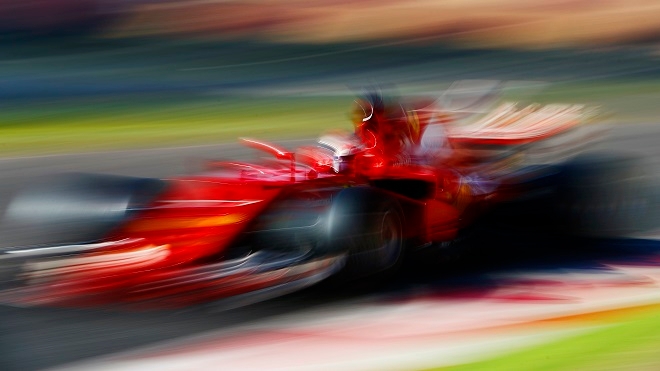
The noises coming out of testing were all very positive for Ferrari. The car was fast and clearly sandbagging, slowing across the line on each of its test-topping fastest laps. For the most part it proved reliable. It looks good out on track, too. A touch nervous, perhaps, at high speed with its drivers white knuckling it on occasion through the faster corners, but it looks together. It looks promising.
The talk coming out of Mercedes and Red Bull, too, was that Ferrari hadn't yet shown their full hand. They were holding back. And with that in mind, given how impressive their testing performances had been, they were the favorites going to Melbourne. Off the record, the opinions of those in the know were exactly the same.
The words to the press were not false praise. They weren't lip service, designed to ignite interest and hope in the new season and new regulations. They came from a place of serious worry for the teams which have sewn up the past eight world championships. For once, Maranello might actually have got its sums right.
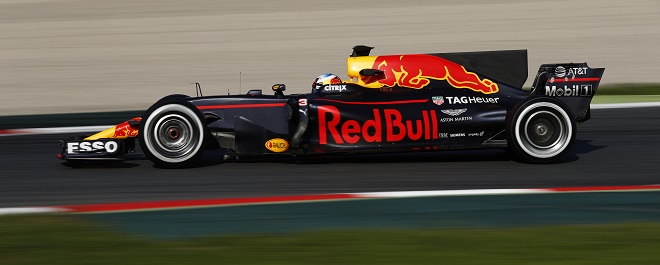
The Ferrari is one of the more intricately designed cars out there, its philosophy falling almost perfectly between the two polar opposites of Red Bull and Mercedes. While Red Bull launched a relatively simple-looking car which relies for its competitiveness on the angle of rake affecting airflow, the flatter-raked Mercedes uses complex wing arrangements to affect the path taken by the air.
Might Ferrari, by taking the central path, have found a compromise which provides the best of both worlds? Certainly it isn't out of the realms of possibility, but the real challenge now will be how each of the top teams fares in the development race which begins in just a week's time in Melbourne.
All three are likely to arrive in Australia with cars vastly different to the last iteration we saw in Barcelona. Mercedes, it is believed, was not happy with the aero modifications it made in the second week of the test, and while it isn't a case of going back to the drawing board, it is certainly a small stumble they could have done without.
The rate of development in 2017 is sure to be vast, and so whoever has the fastest car in Australia may not still find themselves in the ascendancy come Montreal. Similarly, we may find that one team has a concept which lends itself to a certain style of track, while another suits quite the opposite. How those teams adapt for the tracks on which they fall slightly below par, will also be telling.
Yet Mercedes may have more to worry about than just aero. Their concerns in testing were compounded by a power unit which we understand never reached full potential due not to the manufacturer wanting to keep its cards close to its chest, but out of a genuine concern over reliability. This, of course, leaves serious questions. If the power unit issue is, as believed, due to a weakness in an integral part of its design and manufacture and relates directly to a concern of its reliability at full power, it is something which will require a swift resolution. Not just for the champions, but for their customers, too.
And so, from a competitive perspective, one hopes that the Renault power unit is up to task by the time we reach Australia. Noises out of Red Bull, Toro Rosso and Renault itself were positive over the advances made between 2016 and 2017, but the niggles that were self-evident in testing create an acknowledged cause for concern.
It could be worse, of course. The teams could have a Honda lump in their back of their cars. While the relaxing of the engine token regulations has allowed every manufacturer to go away and redesign their power units, almost in their entirety, using the knowledge accrued over the past seasons of competition to create well honed, well-conceived engines, Honda appears to have made the same base mistakes that led to its embarrassing first effort in 2015. Nobody wants to see Honda fail. Nobody wants to see a McLaren at the back of the field. But that is the reality.
Honda was supposed to be the turbo specialist. It was supposed to come in and be a beacon of ingenuity, leading the sport's charge into its hybrid era. Yet it remains a laughing stock.
How does one solve the issue? Will Honda, as was rumored with Ferrari, benefit from a few bods from Brixworth casting a critical eye over their plans and circling in bright red marker pen a few areas they might want to take a look at? Or will the relationship with McLaren simply crumble and burn? With the demise of Manor, there's a spare Mercedes contract up for grabs, and with Ron Dennis no longer in the picture the bad blood between Mercedes and McLaren could be swept under the carpet. But Honda doesn't just bring disappointing power units to the party. It also brings nine-figure backing to McLaren every year, and for a team lacking a title sponsor, that's a pretty hefty burden.
I leave for Melbourne on Monday, and for the first time in a few years I genuinely don't know which way the race or the season is going to go. I have to say that from what I saw at testing the 2017 cars look desperately impressive on track and the drivers are going to have their work cut out. There will be some who tire and don't make the checkered flag. I would put money on it. They're braking later, carrying more speed through corners, rapidly changing direction and pulling ridiculous G through the high-speed stuff. Lap times will drop. Records will be smashed. Drivers will be beaten up inside the cockpit. It's going to be intense.
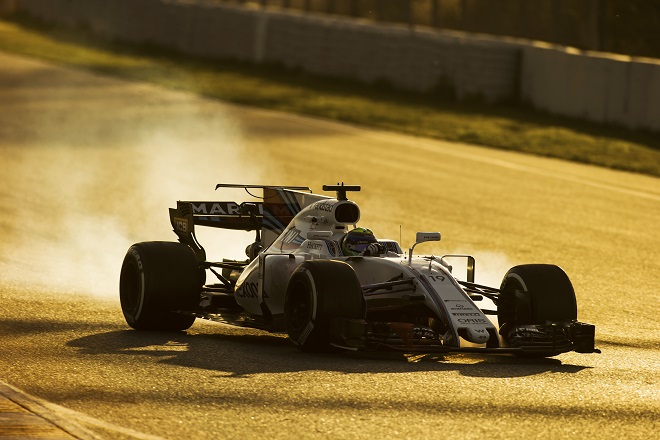
But through it all, the one thing that rings clear is that no matter who you talk to, Ferrari comes out as favorites. And genuinely so.
Raikkonen for the title? Whisper it. But to my mind it's not as unlikely as the bookies seem to think.
Presented by:


Latest News
Comments
Comments are disabled until you accept Social Networking Cookies. Update cookie preferences
If the dialog doesn't appear, ad-blockers are often the cause; try disabling yours or see our Social Features Support.