PRUETT: Inside Ganassi's Honda switch
If only the process of switching engine and aero kit suppliers was as simple as unbolting the old equipment and installing the new.
With its move from Chevy to Honda, Chip Ganassi Racing's four-car team has undertaken the single biggest vehicular change among Verizon IndyCar Series entrants for 2017, and the physical labor was the easy part.
The rest of the lengthy procedure, involving months of R&D exploration by engineers, and a team-wide reconfiguration of its chassis and aerodynamic setups, has kept CGR's staff working longer hours than most teams during IndyCar's long offseason.
Complicating matters, the team is unable to draw from its past experience with Honda (from 2012-13) when it used a single-turbo 2.2-liter V6 and spec Dallara aerodynamics. With Honda's shift to a twin-turbo engine layout in 2014 and IndyCar's adoption of aero kits in 2015, the data from the last CGR+Honda partnership simply won't help to expedite its steep new learning curve.
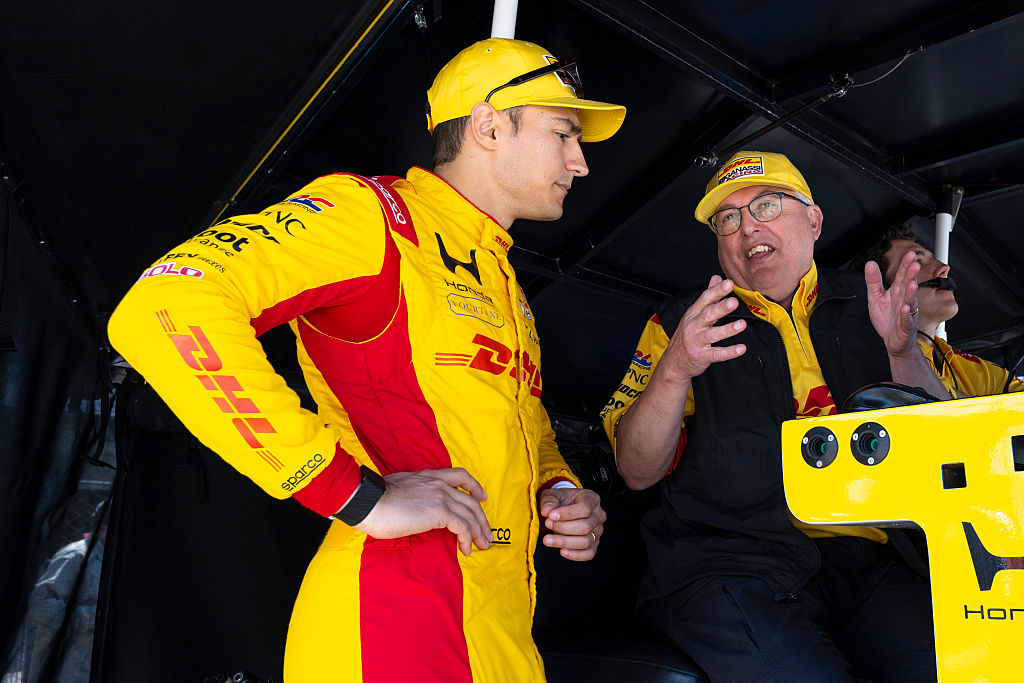
To fully understand everything that was required of CGR when it parted ways with Chevy to start over with Honda, Julian Robertson, the team's veteran technical director, walked me through the multi-stage effort.
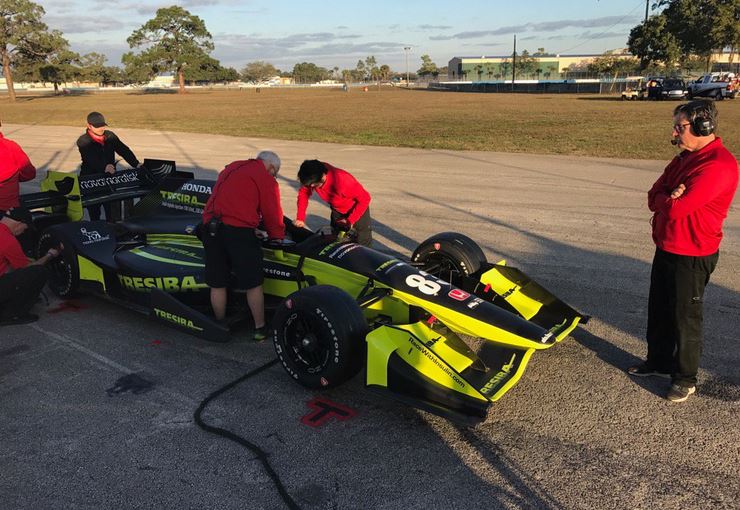
"Both manufacturers have very good documentation in terms of technical bulletins and that kind of thing on how the engine should be installed, how it should be run. So it is fairly straightforward to get it in a car, but the electronics side is much more involved. And the different aero kit bodywork is probably one of the biggest upsets to the system."
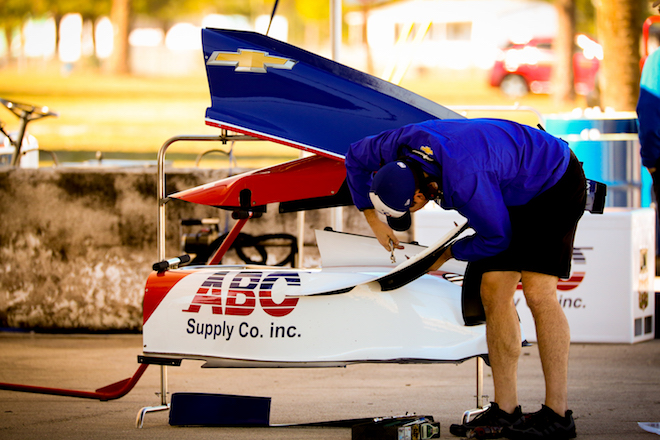
AJ Foyt Racing has gone through an identical offseason change with its two cars, but moved in the opposite direction, leaving Honda for Chevy. The timing of the shared process helped CGR and Foyt to reach a mutually beneficial compromise.
"It is not like there are six or eight complete body kits just sitting on the shelf at Honda ready to go," Robertson said. "They manage their part supplies so that at the end of the year they have a sensible number of parts left over to support. They didn't necessarily have everything in place to support a large team like ours straight away, but we worked pretty heavily with Honda to get aero kits in the door, plus we have done a lot of trading with Foyt with their changing to Chevy.
"It is in our interest, and we have to manage the financials sensibly. Yes, we are a big team but we still watch the pennies. And yes, we have bought a certain number of brand-new aero kits, but a number of aero kits have been traded with Foyt."
With fresh sets of eyes at Honda's disposal, tasking Robertson and CGR's deep pool of engineering talent with evaluating its road course/short oval (RC/SO) aero packages and its superspeedway aero kit has led to the greatest volume of work for the team. The areas needing improvement are well known.
As fellow Honda teams Andretti Autosport, Dale Coyne Racing, Rahal Letterman Lanigan Racing and Schmidt Peterson Motorsports found in 2016 while learning the aero kits, significant performance deficiencies were revealed whenever the high-downforce RC/SO kit was required.
It means that with 14 of 17 events taking place at tracks where the RC/SO package is required this year, CGR's concerted R&D explorations could play a role in helping Honda to improve its overall competitiveness at most rounds. That's the hope, at least.
"Well, we are going pretty hard at it," Robertson said. "The busy time for engineers is this part of the season where you are trying to get all your processes in place for the upcoming season. First off, the goal was to run a car, so we did that at the Gateway oval tire test as an extra car with Tony Kanaan in it (in October). That gave us a feel for the basics of how the Honda package works and a feel for some of the aero stuff.
"You have to go through all of the Honda aero literature, of which there is tons for the past couple of years, and different manufacturers don't treat everything the same way in terms of nomenclature, they don't use all the same methods of mathematically presenting it so we have to get our head around the monitoring tools and how they do it and relate that to how we think we want to run the car and that starts to feed into the simulation side where the aero is going to be different."
The Gateway test, which was followed by a visit to Sebring's short road course configuration, gave CGR opportunities to incorporate real track testing data into the heavy computer simulation work that began at the onset of its move to Honda.
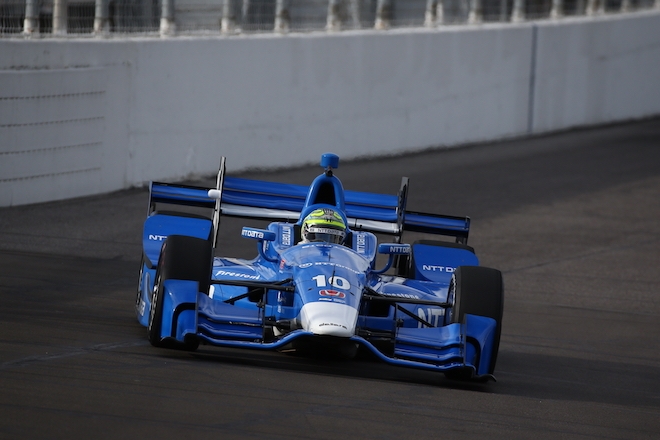
This week's test at the one-mile Phoenix International Raceway oval will give the team another chance to figure out the high-downforce likes and dislikes associated with Honda's aero kit and the complementary chassis setups that work best on the bullring track.
"[The tests] give us a feel for the mechanical weight distribution, and all that kind of thing, which is almost certainly going to be subtly different between the Chevy and Honda engine installations," Robertson continued. "It's going to have different ride height characteristics. It's going to have different lift over drag characteristics compared to the Chevy. We have to identify all those areas.
"Then we work on what we think we need to run the car at different tracks, which it doesn't all feed straight off our Chevy experience because the two cars are different in a number of areas. It is not like we can say this is how much downforce we ran with the Chevy at this track, and if we do the same with the Honda, the result will be the same. It is not that straightforward."
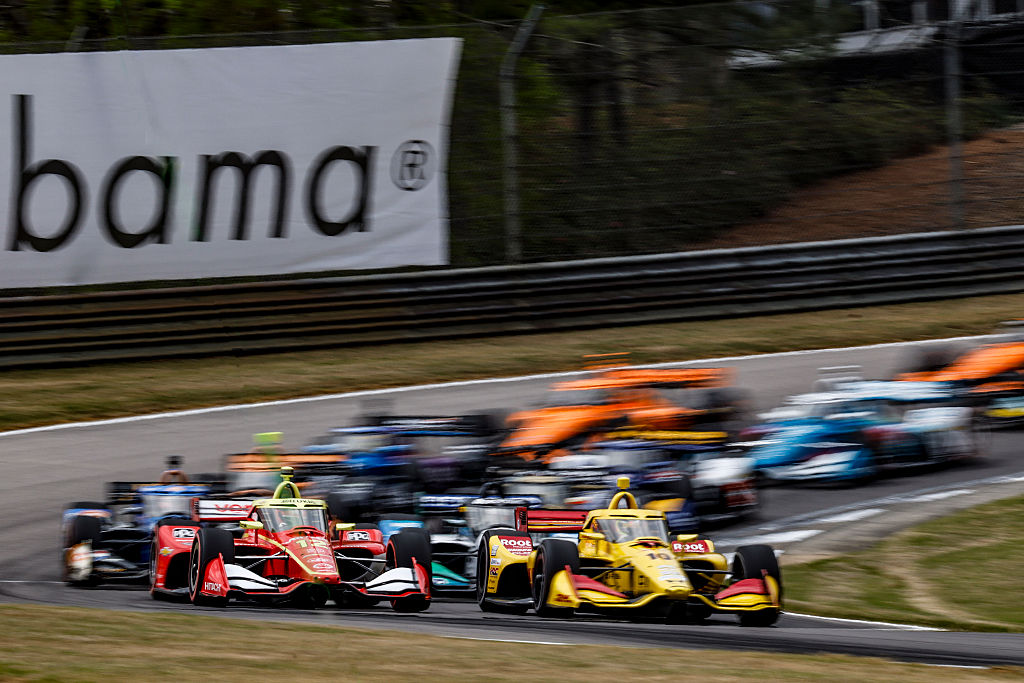
Although Honda's aero kit serves as the primary mystery most of its teams are trying to solve, the information gathering isn't limited to downforce and drag. Finding the optimal suspension settings that will get the most out of the RC/SO aero kit at Phoenix, or Long Beach, or Road America (pictured) is another massive undertaking for CGR's engineers and drivers.
The interconnected chassis and aero dynamic means Scott Dixon's race-winning Chevy setup from last year's Phoenix event won't produce the same results with Honda's package. Although Robertson has a good feel for what the CGR cars will need in RC/SO configuration, a lot of trial and error will take place during the Friday-Saturday test at PIR and again at most tracks once the season gets under way.
"We don't necessarily run the car the way other teams with Hondas have run the car, so maybe there are gains in the way we do it versus the way they do it," he said. "Maybe the way they were running the car was the optimum way to run the car and that's what we need to find, but it seems like Honda teams run the car different than some of the Chevy teams run theirs because of the aero characteristics of the packages.
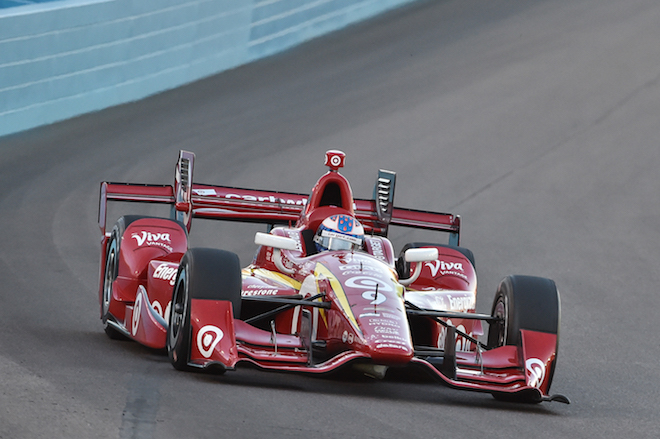
"Last year it seemed like Honda had an advantage at the superspeedways and did not have that advantage in some of the road courses and short ovals. We have to find ways to make our gains in areas where we think we are deficient, and we are having a hard look at how the car behaves to get the best out of it as we possibly can.
"[Computer] simulation comes a ton into that. Most of our simulation tools are relatively well-developed. Switching to Honda also means you have to change the way you approach simulation in a couple of different areas. We filter that side and bring some of Honda's information into our stuff and meld the two together."
If there was a perfect season to change IndyCar engine and aero suppliers, few would cite 2017 as the obvious choice. With IndyCar's big testing reduction in mind, CGR (and Foyt) will head to the March 12 championship opener at St. Petersburg with many questions unanswered due to the widespread cut in private testing. It places an even greater priority on computer simulation work and driver-in-the-loop simulator testing.
"Both Chevy and Honda have advanced driver-in-the-loop simulation where the driver sits in the simulator and drives the simulator, they have both done significant work in the past years and they're both able to be used to give you an idea of what you will get before you go to the track on downforce and set up, and all that kind of thing," Robertson explained.
"We will be hitting all those tools is hard as we can before we get to the season, and particularly because of the limited amount of testing this year. It makes you long for when you had 14 [private] test days, where now, there's three before the season."
Considering the manufacturer change and testing limitations, CGR is fully aware of the increased challenge it will face to maintain its place – at least in the opening rounds – as a perennial contender for wins.
"Certainly, we are going to be playing catch up early on," Robertson acknowledged. "The Honda teams have had two seasons running the Honda aero kit. They'll know more about it. You can look through all the data, you can do your analysis, but still running the car always has a significant impact on your view of it and how you think you need to address all the areas that need to make it faster. So we know we are going to be playing catch-up.
"With Honda, we have to cover a few more bases once we hit the street courses, and then you will turn up at some of the other tracks with no experienced at all. We will rely on the testing we have done, and then there's some in-season testing that will be beneficial, and we will continue to learn."
Amid the considerable workload that will dominate CGR's efforts in every test and throughout the 2017 championship, its engineers will also need to find the right setups to made Dixon, Tony Kanaan, Charlie Kimball and Max Chilton happy and, hopefully, competitive.
Achieving a fast and harmonious balance with the chassis, aero and drivers ... it's a tall order to fill.
"Yeah, it's fun," Robertson said with a laugh. "Again, we haven't got much time to do it. We have four different drivers, and luckily, they all give kind of the same feedback. We've got to tie that feedback into a common voice to speak to Honda so that we can work with them on making improvements to areas that we think we need the most attention."
Chevy won 14 of 16 races last year and earned its fifth consecutive Manufacturers' title. IndyCar's call to freeze aero kit development for 2017 is expected to lead to similar results this year, but there's a legitimate reason to believe Honda and its five teams will take more than two races away from the Bowtie.
Chevy's RC/SO aero kit was a model of simplicity and efficiency in 2016, and we know Honda struggled to reach the same level of performance and results with its complex RC/SO. Honda's signing of CGR to help unlock more of its missing potential – and eventually turn the tables on Chevy – should make a difference, but the path to achieving those goals is long and there's no guarantee it will happen.
CGR and IndyCar championship uncertainty – those are two things open-wheel fans haven't prepared for in more than a decade.
Presented by:

Latest News
Comments
Comments are disabled until you accept Social Networking Cookies. Update cookie preferences
If the dialog doesn't appear, ad-blockers are often the cause; try disabling yours or see our Social Features Support.