BUXTON: Why America can be F1's savior
As the dust starts to settle from the exit of Bernard Charles, and Formula 1 looks to a future direction controlled by Liberty Media, headlines and stories have popped up almost daily over how "Liberation" might look. The grand sweeping statements seem to be that Formula 1 is on the verge of a great American revolution. The Americanization (yes, I spelt that with a z) of the sport seems to be considered an inevitability, creating both excitement and trepidation in equal measure.
The sport is now owned by a very new broom who will have some very new ideas, and so Ye Olde Guard will likely be worried by the prospect of change. I'd be lying if I didn't admit to having a large part of my heart firmly lodged in the Traditionalist camp, but at the same time one's eyes have to be open to the fact that the sport has lagged behind for too long without initiating any meaningful change which would have seen it grow and develop with the passing of time and the developmental shifts in global sporting and televisual trends, rather than stagnating in a puddle of its own narcissism.
There have been so many suggestions of what will happen in a Libertarian future, some of which make sense, others of which need careful and cautionary consideration. So let's start at the start. The Calendar.
From Liberty's first public statements on the future of Formula 1, an extended calendar has been high on the agenda. There are two ways of looking at this. The first is the simple view that more races means more business, means more TV time, means more sport and ultimately everyone from teams to owners to fans win. The downside to this is what it does to those same teams.
When I first started in this sport we had 16 races a season, of which 10 or more were in Europe. These were the days of unlimited testing, and teams were well aware that expecting mechanics and engineers to work 16 races plus all those testing days would be far too high a burden to bear. The limit of 20 races in a season was made not so much for commercial reasons as it was for personal ones. Say what you will about Bernie Ecclestone's relentless pursuit of money and power, but he was a team owner at one time in his life and knew only too well that while it is an honor and a privilege to work in this sport, it can also have a very real and very negative impact on people's personal lives. The more races you run, the more likely we are to have to bring back split duties, or those tasked with putting on the show will either withdraw through exhaustion or depression. Or both.
NASCAR will put on 41 race weekends in 2017, but these take place exclusively within the United States of America. The sheer operational task of putting on a calendar of even half that many races on a truly global playing field is something not to be underestimated. Increasing the numbers to even 25 might lead either to a longer total season, the removal of the summer break, or a heavily compacted schedule of back-to-backs.
Take this not as a complaint, but as a consideration on the effects on the workforce and the potential financial ramifications to the teams that upping employment will bring, at precisely the same time as a cost cap is being mooted.
On the plus side, the opening up of the calendar inevitably leads to the question over which circuits one might wish to see. Of course, we pine for the great tracks lost over the years. I, myself, would love Formula 1 to return to Istanbul Park in Turkey [pictured], and I cannot wait for us to return to France and Paul Ricard. Argentina would be a fabulous (re) addition, too.
But Liberty's main focus seems to be on increasing the number of races in America, and in that I see no bad thing.
I've been broadcasting Stateside for nearly a decade now, in that time falling deeply in love with the country and its people, and I'd like think I have come to understand something of what appeals to U.S. sports fans. More than anywhere else on earth, Americans appear to me to be incredibly loyal to their home-grown sports. Whether it is their city, their state or their college, affiliations with teams run for life and cover hugely varied games. Be it hockey or football, baseball or, increasingly, soccer, there's a home-grown passion that runs red, white and blue through the veins of American sports fans.
These sports are played week in, week out and for the majority of a calendar year. It is rammed home religiously and routinely.
How, then, can an international sport which rocks up once a year expect to have anywhere near the same level of engagement and interest as one which, like NASCAR, plies its trade on all but a handful of weekends, exclusively in those United States? It can't. And so, if Formula 1 wishes to be successful Stateside, it must increase the number of races it holds there.
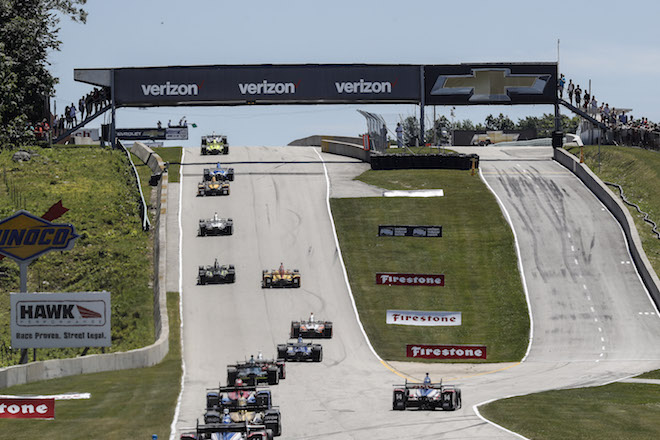
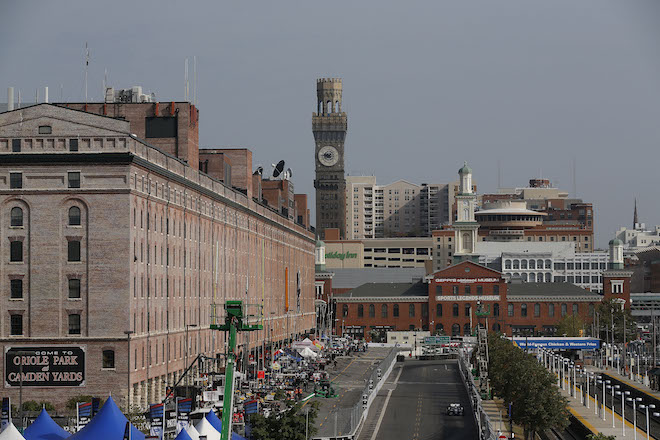
All of their chances, however, remain low at best. The prevailing wisdom is that street tracks are the way to go. Again, a big part of me questions this. The 2017 Indycar calendar features just two street courses (no, I don't consider Belle Isle to be a street track, just as I don't think Montreal or Melbourne are either), a reflection of how ill for purpose American street track design and safety has become over the years.
Formula 1 has had more homes in America than in any other nation, thanks predominantly to the continual failures of so many badly designed street tracks, and I cannot envisage anything worse than a return to a parking lot in Las Vegas or the streets of Dallas. Actually, I can. The thought of something as poorly-conceived as the Baltimore IndyCar street circuit [pictured] leaves me feeling utterly nauseous.
But it's not just America. I have a real love-hate relationship with all street tracks because they rarely, if ever, provide good races. Singapore is the most dynamic, visceral event of the entire season but it is regularly two hours of utter boredom. Monaco, fittingly for a place that has made turd-polishing into an artform, looks magnificent on TV but tends to create dreadful races. Valencia, too, was a great location, let down by terrible races.
The flipside of that is, as I bite my lip, Formula E [pictured in Hong Kong]. Yes the tracks are Mickey Mouse, and yes, the cars are slower than a herd of snails trudging through peanut butter, but by sticking the loopy concept in the middle of cities, it gets eyeballs on it. It is an event that gets everyone talking. And that is the key here.
If you are a Formula 1 fan, you are going to watch Formula 1. But if the sport is going to survive into the future then it needs a new generation of fan, and the only way you do that is to get out there and engage. If a few U.S. street races bring it to a potential fan base that is slightly aware it exists but not even remotely engaged with it, then this is a good way to start.
If you can race in Singapore then you can race on the Vegas Strip. If you can race in Monaco then you can race in New York City. Give me Miami, give me Chicago, Philadelphia or Washington D.C. Give me L.A. Give me New Orleans. Oh my goodness, give me San Francisco.
And with those kind of cities, and if we were to take the cities most closely aligned with current races, then Liberty's desire to turn Grands Prix into Super Bowls makes sense. What I don't think we are talking about here is to turn every race into an end of season blowout. Nor is it a call to invent a NASCAR-style chase, similar to the notion of playoffs in football, where it all comes down to a winner takes all final hurrah, like a Super Bowl. Instead, it is for Formula 1 to go to a city and completely take it over.
Melbourne is a case in point. It's the season opener yet if you jump on a tram and take the five-minute ride from the track at Albert Park to the middle of the city, then almost all evidence of motor racing disappears. With the exception of a few TAG Heuer posters of Daniel Ricciardo, the chances are that if you weren't an F1 fan you'd have no idea a race was taking place in Melbourne over that March weekend. There's little to no positive marketing or engagement.
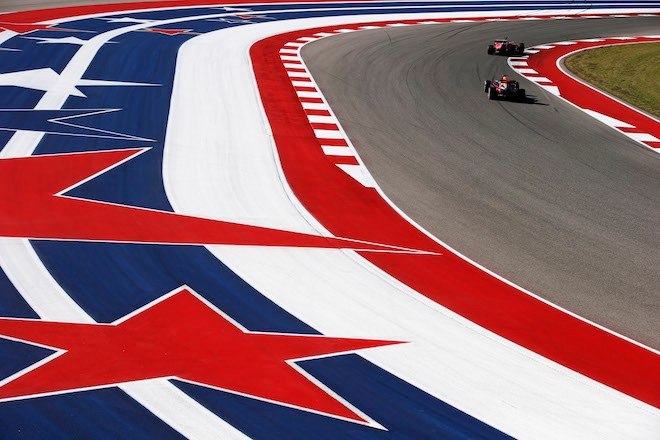
Montreal, perhaps, is the only city that really gets it and still makes the effort. Every year it closes down great chunks of the town to put on shows and concerts. Every shop is filled with F1-themed window displays and special offers. Restaurants have F1 menus. Singapore and Monaco of course are the exceptions, but as street tracks there is no escaping the fact that the sport is in town. Austin gets it to a degree. But everywhere else could do so much more.
And it wouldn't take much. Drivers should be making appearances in major cities from Monday to Wednesday. They should be appearing on national chat shows, breakfast TV, every radio station they can. Teams should be putting on street demonstrations.
And at the track, drivers should be making stage appearances and signing autographs not just on one day, but every day. Any team that doesn't get that doesn't get the world we live in.
The Americanization of the sport seems likely to extend into better business practices whereby tracks can make a profit, where teams will have the option to become shareholders and thus franchises in a sport where prize finds will become more fairly and evenly distributed and where marketing will be centralised and the assets of the championship leveraged to increase awareness and popularity worldwide.
The sport doesn't need revolution, just the adoption of some very simple concepts which for years have seemed out of reach because they were overlooked as being irrelevant by a leadership which proved itself ultimately to be out of touch. The point is, you don't need to write a new song, just remix the one you've always loved and stick a beat on it that's going to get a new generation to start listening.
These are not scary or crazy ideas, but notions that are long past due.
A little bit of red, white and blue could be just what this sport needs to ensure not just its present, but its future too. For if one truth can be held to be self evident, it is that nobody does sports entertainment quite like the Yanks.
Will Buxton is running this year's London Marathon to raise money for St Michael's Hospice in Hereford, U.K. To donate, please visit his JustGiving page.
Presented by:


Latest News

Comments
Comments are disabled until you accept Social Networking Cookies. Update cookie preferences
If the dialog doesn't appear, ad-blockers are often the cause; try disabling yours or see our Social Features Support.