MEDLAND: Should F1 worry about Manor's demise?
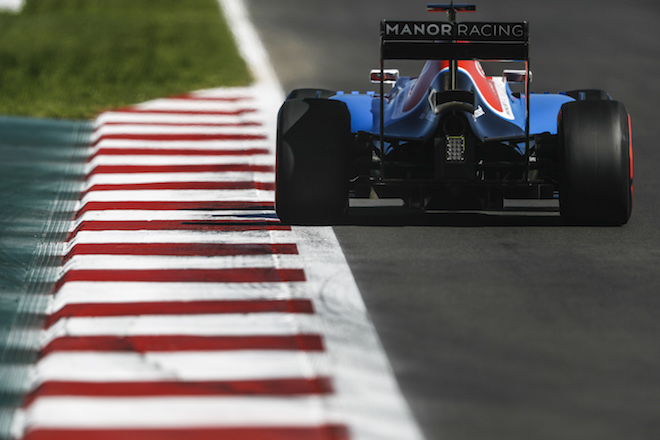
November 27th, 2016: The date of what looks set to be Manor Racing's last grand prix start.
After the operating company folded at the end of January, any hopes of keeping Manor on the grid in its current form appear to have failed. The company that holds the rights for the team's participation in Formula 1 - Manor Grand Prix Racing Ltd - is not in administration, and therefore the F1 entry could be purchased by someone keen to build a new team, but staff have been laid off and the doors closed.
There's never a good time for such an event, but let's face it, the timing appeared even worse considering that the announcement came in the days following the formalization of Liberty Media's takeover of Formula 1. While many involved in the sport were dreaming of a fresh and exciting future, one of the eleven teams on last year's grid was disappearing.
There was certainly serious interest in purchasing the team, but notwithstanding the fact that there could be some form of resurrection, is the Manor situation something that F1 really needs to be worried about? Or was the writing always on the team's wall?
The latter gets some immediate momentum when you take into account the fate of the other teams that entered F1 at the same time as Manor. With the FIA pushing to impose a budget cap around the €45 million (then around $60m) mark, Manor was granted an entry alongside Campos Meta, Lotus Racing and USF1. There was the potential to create a two-tiered system, as new teams could race with less technical restrictions under the budget cap while other teams could receive more financial freedom, but the FIA's plans on that front failed to come to fruition.
Faced with the same set of regulations and no spending limits, one of the new teams didn't make it to the grid at all: USF1 failed before its first race. By the time the 2010 season-opener in Bahrain came around, Campos had been renamed Hispania, and Manor had become Virgin Racing [pictured]. It was not what any of them had signed up for.
Over the coming years, those teams would go through various rebrands and even the odd takeover, with Hispania becoming HRT before folding in 2012, and Lotus Racing being renamed Team Lotus and finally Caterham. Virgin, meanwhile, became Marussia.
What these name changes tell you is that the new teams had little in the way of a long-term plan. The lack of a budget cap resulted in a huge gulf in pace - all three entered a year after new regulations were introduced in 2009 - and they were all forced to work with short-term targets in order to survive. Having purchased Caterham Cars, Tony Fernandes appeared to have the best chance of using his team to promote the car company, but eventually pulled out mid-2014 and the team went into administration ahead of the United States Grand Prix - three races from the end of the season.
Marussia also failed to make it to Austin, having raced only one car in the previous round in Russia due to Jules Bianchi's accident at Suzuka. The team was subsequently headed for administration, but was saved at the eleventh hour by Stephen Fitzpatrick. Renamed Manor, it predictably struggled with an old car and year-old Ferrari power unit in 2015, but hopes were high for 2016.
The problem was, Fitzpatrick didn't have a long-term plan either. He wasn't using the team to promote his own energy company - OVO - and just hoped to keep Manor alive and improve its competitiveness before selling it on. He achieved the first part of that with last year's improvements, but the Mercedes power unit played a major part, as did the resulting deal to run two Mercedes young drivers during the season. When Sauber pipped Manor to tenth in the constructors' championship, prize money to the tune of $11m slipped away and the sums definitely didn't add up.
The spiraling costs make entry for new teams difficult, but not impossible. A new team needs to enter Formula 1 not on a whim, but with a clear business plan. It's been a long time since it has been a sport for a single rich owner to enjoy. Now, it's a serious marketing tool. With manufacturers in the shape of Mercedes, Ferrari, Renault and McLaren promoting cars, Red Bull and Toro Rosso are also marketing their title company, while Williams is increasing its engineering arm and Force India takes the Sahara group around the world as well as promoting Vijay Mallya's United Breweries group.
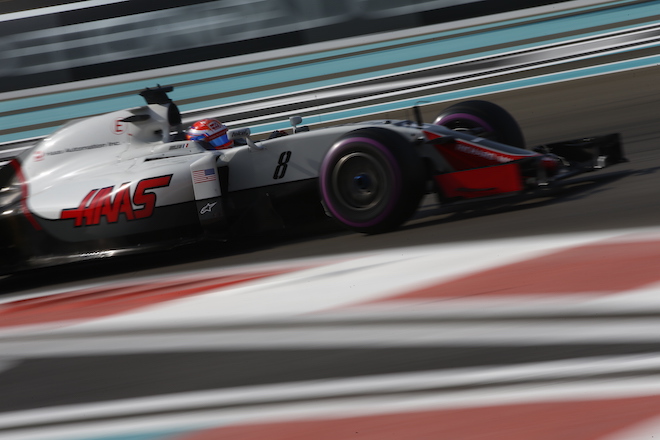
The latest newcomer to the grid serves as evidence Formula 1 should not be panicking too much over the loss of Manor. Haas made a successful start under a different set of rules, taking advantage of a close technical partnership with Ferrari. And it's those regulations that allow a new team to come in and be successful, competing from the first race. From there, it can build to become a full constructor if it so wishes, but realistically, as long as fans are seeing good racing and drivers in competitive cars, that trumps whether a car is 100 percent bespoke or part-customer.
What Haas also displays is a clear business model. While the team has been working on gaining new partners and sponsors - as you would to increase your budget - from a relatively untapped F1 market in the United States, its main focus was to take the Haas Automation brand internationally.
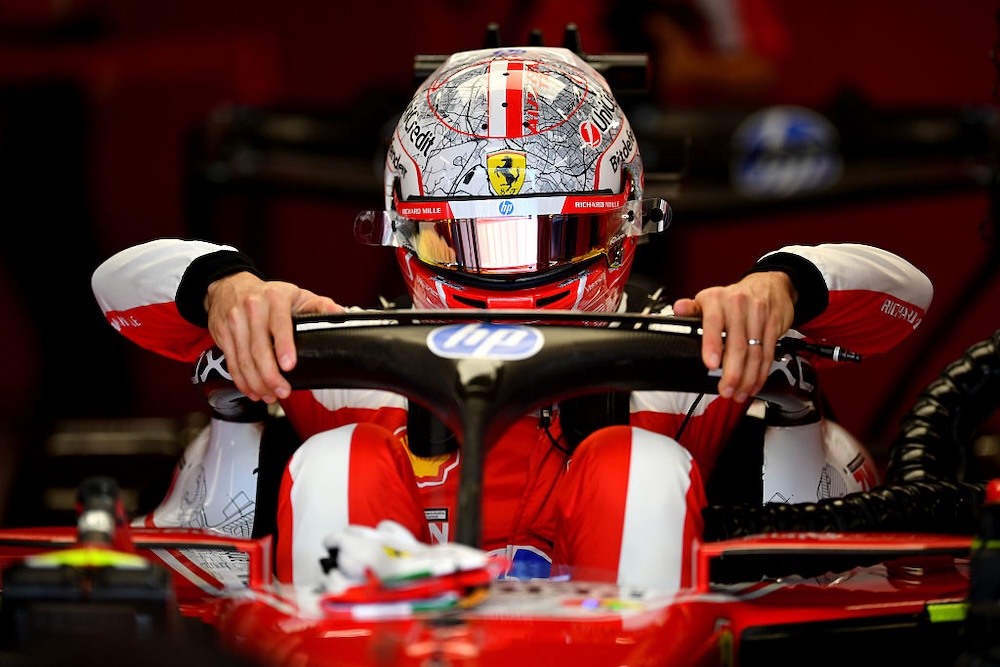
"I think we can build on it but Haas Automation got good exposure for what they wanted to achieve," Steiner [pictured] told RACER last month. "They had planned to get better recognition worldwide, and that was achieved. That means an American brand was made visible to the world. That was achieved.
"Can we get more backing from the U.S.? Yes, sure, we need to improve on it, but it was a new thing. When you consider it was 30 years since the last American team and now we are coming in, you can't expect everyone to be like 'Hey, there's an American team here, we've been waiting for this.' We were new and we were doubted a lot at the beginning because of something that happened a few years ago with another new American team, so we have proven those doubters wrong.
"We did it properly. Gene [Haas] did what he said he was going to do - bring an American team to the grid - so we can improve on it for America but I think it will come."
That said, to dismiss Manor's collapse as the simple result of poor management and business planning would be grossly unfair. Sauber - with numerous third-party businesses including aero testing and precision technology for companies - appeared very close to closing over the past two years, while Renault purchased Lotus for a single-figure amount in a sign of the unequal distribution of funds in F1. The French manufacturer almost didn't return, eventually winning a game of brinkmanship with Bernie Ecclestone as it demanded a greater slice of the pie.
That the biggest teams receive more money is like the Super Bowl winners getting first pick in the draft, only serving to enlarge the gulf between the front and the back. Liberty has already acknowledged this as something it wants to change, with a budget cap again on the agenda. Of course the distribution needs to be addressed, but even after that happens, a solid business model is required.
When a team fails, it is right that questions are asked. But Liberty has already highlighted where it wants to address inequalities and help make the sport better value for money for all teams involved. Ecclestone himself admits his job was to make money for the shareholders, rather than invest in the future. As a result, if F1's new owners put their money where their mouth is, Manor's demise can become symbolic of the closing of one chapter in F1 and the beginning of an era of close racing between those already on the grid and even greater competition among those wanting to join them.

Latest News
Comments
Comments are disabled until you accept Social Networking Cookies. Update cookie preferences
If the dialog doesn't appear, ad-blockers are often the cause; try disabling yours or see our Social Features Support.