F1: Honda architecture and layout changed for 2017
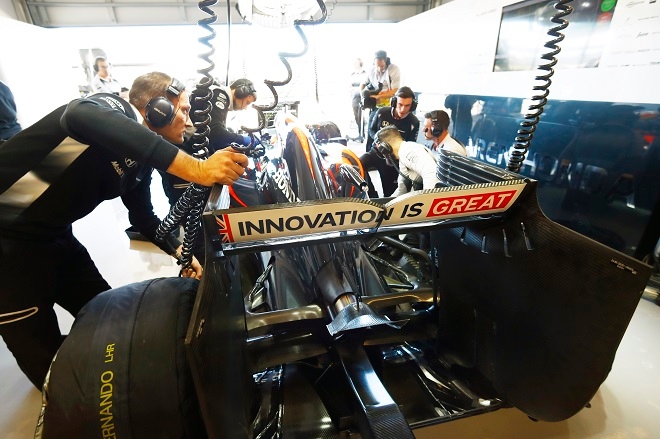
Honda has changed both the architecture and layout of its power unit thanks to the relaxing of development restrictions for 2017.
2015 proved to be a difficult return to Formula 1 for Honda, with its power unit proving both uncompetitive and unreliable as McLaren slipped to 10th place in the constructors' championship. Engine manufacturers were restricted by a token system which limited how much development could be applied to the power units, with certain components costing a set amount of tokens to change.
Effectively, the token system reduced the opportunity for power unit manufacturers to make major changes to their designs, which had hampered Honda's attempts to recover from its poor start. However, the token system has been scrapped for 2017 and McLaren technical director Tim Goss says the power unit supplier has been able to make significant revisions as a result.
"The token system that was applied to engine development for the past few seasons has been discontinued," Goss told the McLaren website. "For 2017, the Honda engine architecture and layout have been altered to serve both for performance and packaging needs.
"The new power unit takes much of the learning from the past two seasons, but has been specifically redesigned for this season."
Honda's head of F1 project Yusuke Hasegawa said last year that the Japanese manufacturer felt it would have been able to match Ferrari's power unit performance without the token restrictions, such was the rate of development.
The lifting of the power unit restrictions comes at the same time as the introduction of new aerodynamic regulations, and Goss says McLaren's engineers have also been having to react the knock-on effects on overall car performance.
"The aerodynamic changes have been another challenge. A lot of the flow structures and physics on the car are fundamentally the same – how the flow is established at the front of the car and then travels back down the car, starts off in a fairly similar way to last year.
"Now what you'll find is that, in the detail, things start to behave differently, which prompts you to change direction. The 2017 cars will look pretty similar to the layman, but the aero guys have been battling to correct flow structures at different ride heights for months and months now. We've had to rethink lots of different areas on the car, because they're behaving differently to how they did before."
Presented by:


Latest News
Comments
Comments are disabled until you accept Social Networking Cookies. Update cookie preferences
If the dialog doesn't appear, ad-blockers are often the cause; try disabling yours or see our Social Features Support.