IMSA Throwback Thursday: A look at the Riley Daytona Prototypes
When the checkered flag dropped on the Petit Le Mans presented by Harrah’s Cherokee Casino Resort earlier this month, it served as the official end of the Daytona Prototype era.
Introduced in 2003 as the race car for the Grand-Am Rolex Sports Car Series’ top class, the DP proved to be a highly competitive, relatively affordable way to race at one of the highest levels of North American motorsport.
The DP ushered in a new era of close competition – one where battling for the victory in the closing minutes of the Rolex 24 At Daytona – and virtually every other race – became the rule, not the exception. Wheel-to-wheel, door-to-door action also became the norm, with cars that were built to withstand some “beating and banging” or “argy-bargy” depending on your point-of-view.
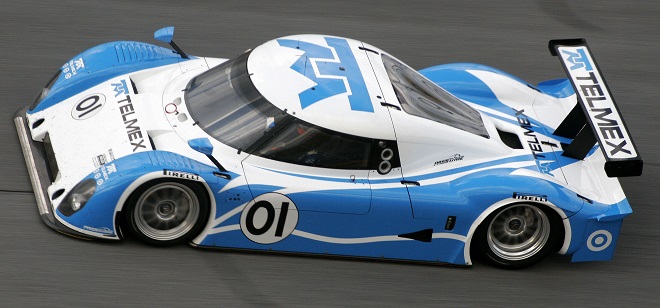
And while there were many DPs that found their way to Victory Lane over the years – Multimatics, Fabcars, Crawfords, Dorans, Dallaras and Coyotes all had their various moments in the spotlight – the most successful of the bunch was the Riley DP.
The car designed by Bob Riley and sold through Riley Technologies won a total of 99 races from the car’s first full season of Grand-Am competition in 2004 through its final win in the IMSA WeatherTech SportsCar Championship at Circuit of The Americas in Sept. 2015. It won nine consecutive Rolex Series championships from 2004 through 2012, and 10 of 11 Rolex 24s from 2005 through 2015, including nine straight from 2005 to 2013.
Oddly enough, however, the Riley DP wasn’t even on the starting grid until the second season of Daytona Prototype competition in 2004. The reason?
“We really tried to sell cars in 2002 for the 2003 season when it started,” recalls Riley Technologies president Bill Riley (pictured). “But for whatever reason, we couldn’t sell any cars in the market. Fabcar sold cars, Doran sold cars and Multimatic sold cars, but we couldn’t do it – us and Crawford, for that matter.”
If he could get customers, Riley knew he had a product that would be competitive.
“That was a car that was right up our alley and right up our skillset of what we could design and build pretty easily at the time,” he recalls. “For us, it was the perfect match.”
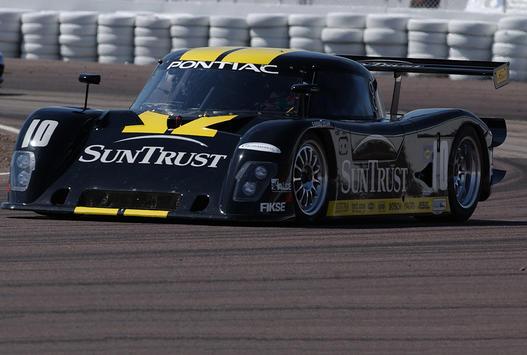
The match finally struck on the Friday before Labor Day in 2003, when Chip Ganassi Racing submitted an order for two cars to compete in the 2004 Rolex Series. Around the same time, team owner Wayne Taylor made a deal with Riley to run his new Daytona Prototype team, which had sponsorship support from SunTrust Bank.
“When that happened, that put a big shot in the arm back into the company,” Riley said. “At that time, the company wasn’t doing great. It was probably one of our darker years.”
It’s safe to say that was probably the last “dark year” for Riley Technologies. On April 10, 2004 at Phoenix International Raceway – with Bill Riley atop the timing stand and running the race team – SunTrust Racing and co-drivers Wayne Taylor and Max Angelelli brought a Riley DP (the No. 10 Pontiac/Riley) into Victory Lane for the first time.
That touched off a run of five consecutive DP victories for Riley and a total of seven on the season en route to the constructor’s first DP championship led by Scott Pruett and Max Papis behind the wheel.
However, it wasn’t a race victory or the championship, but another moment from that 2004 season that stands out for Riley.
“The race that sticks in my mind as the turning point for the car was the 2004 summer race at Daytona,” he recalls. “I sold a car to (Orlando transportation magnate Paul) Mears (Jr.) and Mears’ car was run by SpeedSource. I knew (SpeedSource owner and driver) Sylvain (Tremblay) a little bit, and I shared our setup info with Sylvain.
“He had the right engine from Bob Cronin, he had all the right parts on the car, and I went to a few tests with him and I knew he was a really good driver. We started running that race, and I think Pruett was in the Ganassi car and Wayne was in the 10 car, and Sylvain was in his car, and Sylvain went ahead and passed both of us and was leading the race. This was in the first stint and this was the team’s first or second race.
“That turned the corner. That’s when people, whether they were in Formula Atlantic or in another discipline could say, ‘Wait a minute. If I buy a Riley and get that engine and get a top driver, I’m going to run up front in Daytona Prototype.’ That’s what happened when Mike Shank switched to our car and when Bob Stallings bought a car. That’s what really turned it was Sylvain taking the lead at the Daytona summer race. I told him I owe him a new dishwasher for that, but I haven’t sent it to him yet. But I will.”
“My father knew Chip from a previous program way back in the ‘70s, so they knew each other, but we never really worked with Ganassi before, and (longtime Ganassi managing director) Mike Hull,” he said. “Then, we realized – or found out – how much of a pleasure they were to work with. They really shared everything with us and we shared everything with them, and that made the car very successful.”
Not only did it make the car very successful, but the whole company as well. The Riley empire expanded from Daytona Prototypes to also running the championship-winning Dodge Viper GTLM team and the highly successful WeatherTech Championship GT Daytona team for Ben Keating.
The company opens a new chapter in 2017 with the introduction of new LM P2 and Daytona Prototype international (DPi) cars developed in partnership with Multimatic, which Bill Riley describes as “The same, but different.”
But he always will look back fondly on the Daytona Prototype era.
“It’s the best customer program we ever had as far as selling customer cars,” he said. “It was hugely successful.”
Sounds like a really nice dishwasher is in order for the Tremblay residence…

Latest News
Comments
Comments are disabled until you accept Social Networking Cookies. Update cookie preferences
If the dialog doesn't appear, ad-blockers are often the cause; try disabling yours or see our Social Features Support.