Visit the US GP with the experts
Which country has had the most Formula 1 Grand Prix races and has had the most Grand Prix drivers? Believe it or not, the United States is way at the top of the list on both counts! The Indy 500 was counted as a Grand Prix event for many years, although the race cars did not conform to the F1 regulations. If we don't count the Indy 500 or those who drove in the 500, the United States is still way ahead!
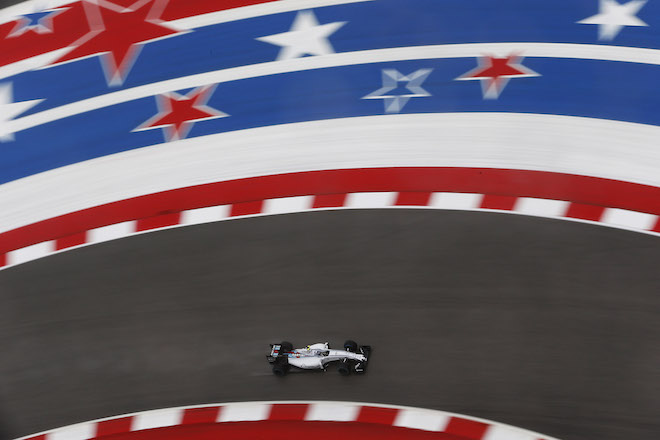
With this fine record it is great to see the USGP at Austin, and the Haas F1 team being such a competitive team in its inaugural year. The Austin track is equal to any track in the world. You can go to Spa, Monza, Suzuka or Silverstone and while these tracks have history and fame they are not better than Austin. OK, the track was drawn on a napkin by Tavo Hellmund, although a certain Bernie Ecclestone claims party to the design. Tavo was pushed out of the project and went on to work with Carlos Slim to revamp the Mexican Grand Prix. However the financiers of COTA brought the track to fruition and can be extremely proud of the result.
There was a USGP at Roosevelt Park Autodrome near New York City. They raced for the Vanderbilt Cup, and the 1936 race was dominated by Tazio Nuvolari in Enzo Ferrari's Alfa Romeo and in 1937 by Auto Union with driver Bernd Rosemeyer. The depression of the '30's, and a lack of competition from dirt track cars, made the races a commercial failure.
After WWII Sebring and Riverside held the USGP in '59 and '60, but it was Watkins Glen (LEFT) that hosted the USGP for 20 consecutive years up to 1980. The Glen was a fabulous track and enjoyed some wonderful F1 race events. In the 1970s races became faster with ground effect cars and fatal accidents claimed the lives of Helmut Koinigg and François Cevert. Increasingly rowdy segments of the crowd got as much publicity as the race by burning a bus in the infield bog, and the track owed some $880K to the teams, which put an end to the USGP at the Glen in 1980.
Long Beach hosted some seven successful races in what was seen as a new Monaco like event however the commercial aspects of the race was not as successful, so out went F1 and in came IndyCar/CART/ChampCar. The race in Detroit ran at the same time as Long Beach and Las Vegas, but three Formula 1 races in the same country on non permanent street tracks was not going to last, coupled with a race in Dallas where it was so hot the asphalt melted, and Phoenix who could not get crowds to their race as people preferred an ostrich race in the desert. Indianapolis tried but tire problems and money stopped F1 cars coming to the States until the inaugural Austin race.
If you enjoy racing on a wonderful track with fun and entertainment to make your weekend complete, Austin is the place for you in October. It is the best Grand Prix in the world on many levels.
www.gptours.com to see
all the weekend experiences they offer.RACER's Formula 1 coverage is presented by Grand Prix Tours. Feel the power and the glory of Grand Prix racing now via Grand Prix Tours' Pick 8 competition.

Latest News

Comments
Comments are disabled until you accept Social Networking Cookies. Update cookie preferences
If the dialog doesn't appear, ad-blockers are often the cause; try disabling yours or see our Social Features Support.