Interview: PWC CEO Greg Gill
The Pirelli World Challenge series embarks on a new season this weekend at Circuit of The Americas, and after a few years of growth mixed with turmoil, the longstanding SCCA Pro Racing property is set for a fresh start with new CEO Greg Gill in place.
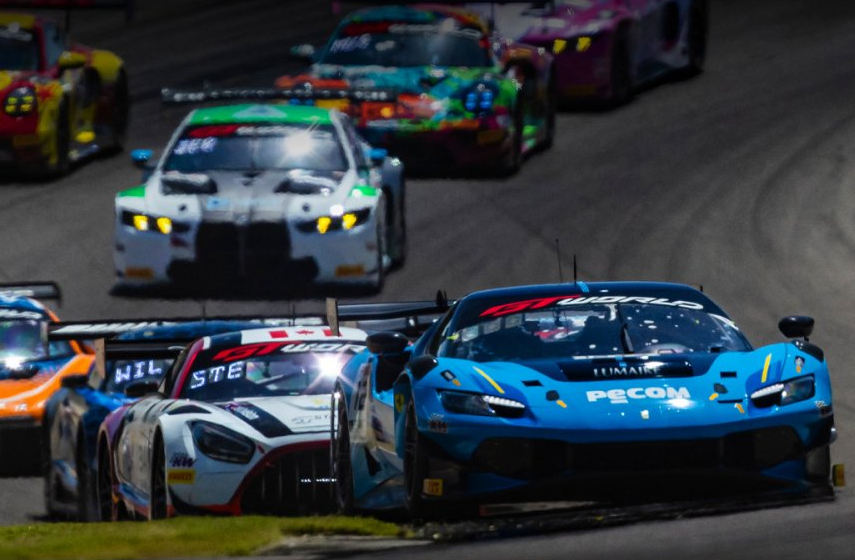
Gill's appointment as interim CEO during the 2015 season finale was followed by removal of the 'interim' tag, and with his confirmation, PWC began building for 2016 with a newfound feeling of calm and optimism. The response from a paddock filled with passionate entrants and manufacturers can be measured by the presence of more than 100 cars at COTA, and with the recent strengthening of the PWC technical department led by Marcus Haselgrove, PWC is moving from strength to strength.
With its place as North America's top sprint racing sports car product firmly established, PWC should see its popularity continue to grow, and on the eve of the first event of the season, Gill spoke with RACER for an in-depth discussion on the state of the series.
MARSHALL PRUETT: PWC has a lot going for it right now. Coming out of 2015, what areas are you looking to expand or improve?
GREG GILL: From a big picture and competitive side, what is exciting to me is we have had three years in a row where most of the class battles have gone down to the last race of the year, which says fans can expect something exciting wherever we go. Certainly we hope it will go that way again this year.
When you watched this series in 2007 or 2008, you pretty much knew who would take those three steps on the podium. In today's GT class, it is seven to 10 people that could be on the podium. And maybe even more than that can legitimately expect to be there at every race. The volume of competitive cars and drivers in just about every class we have has grown exponentially and that's something we want to continue.
2015 ended with great races; everyone is in agreement with that, but the front burner story behind it all was what about [Balance of Performance] and what about impartiality? Some took issue with the BoP and asked was the series impartial, was the series fair? When you have words like that, that are very emotionally charged, you can respond emotionally or you can respond in what we thought it was a better way—with an engineering-based solution in recognizing that first and foremost we had to work on transparency.
We knew that Marcus Haselgrove had to be completely independent when making technical decisions [on BoP]. He had to be able to operate with a sense of autonomy and not a sense--a perception—that his decisions were going to be overrode or that his decisions would be questioned. That created a chilling effect on him making decisions.
That has been removed. That has been changed. Although Marcus and I do speak about our overall business several times a day and keep each other informed on how we are doing, when it comes to the details of how he is running the competition department, that is completely in his purview and he's doing a fantastic job with it.
I think the biggest thing we came away from 2015 with is we have to change the perception that the series was either not willing to listen or was biased in some fashion, or could be changed without the right facts involved with BoP. We're now using simple words--transparency and consistency. Those were the items that we will want to work on. Our attitude is that by our race at Barber Motorsports Park, after we have had three races under our belt, we are hoping the teams will give us that feedback and say, yes, we have seen a change year-over-year.
And you have seen examples of a shortened rulebook and a faster response time to questions, more staff being added in the competition department for Marcus, so that it makes those things better. I think that will lead to achieving those two goals of transparency and consistency.
live streaming
, but you obviously need to bring more awareness to your product. Is that possible through CBSSN and the web?GILL: You start with a made-for-TV format. We are not the geniuses that came up with sprint racing, obviously, but we were the people who were doing sprint racing first here, most consistently, and that works very well for television. That translates well for television to begin with.
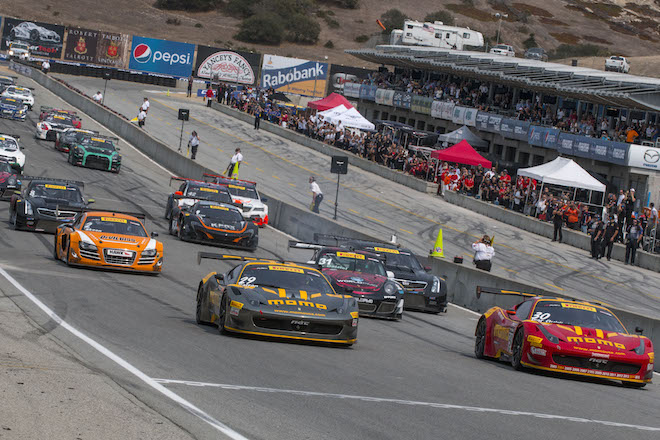
Now you can give GT two hours of dedicated coverage on a race weekend. You could give GTS a whole dedicated hour of coverage. Same thing for our TC classes. That made it much better. Remember the series when all those classes were running on the track at the same time and we would have a 90 minute broadcast with everything mixed in? That's where the growth has come: the ability to feature classes with their own broadcast.
The strategy moving forward with live streaming. We were one of the early pioneers of that, and everyone has worked hard on online streaming, but it is a challenge. The technology keeps improving, but at the end of the day, you are at the mercy of the connection that you have.
When you are here at Circuit of the Americas like we are this weekend, connection is not going to be an issue. When we are at Mid-Ohio, it is a major issue. Those are the challenges we will have ongoing. But working now with the Motor Trend OnDemand product, that has been fantastic in the sense they have put their full print products and their brand and motor trend now behind the relationship. That is driving additional eyeballs, but also promotion of Pirelli World Challenge, of the broadcast on CBS Sports. That's a good thing.
As it stands for live streaming this season, again, they will be able to go to world-challenge.com to watch the races there. And we're promoting and encouraging people to go to Motor Trend OnDemand; we're certainly looking forward for them to build more on that digital side, not only archiving our content there but pushing it through their streaming service.
PRUETT: Outside of NASCAR, the NHRA, and motorcycle racing, we have some compelling road racing products in North America with IndyCar -and I know they still race on a few ovals - PWC, and IMSA looking to become bigger and more prosperous. Where do you see PWC in that landscape? I'm not so much asking about comparisons of one series to another, but general product positioning. Is PWC eye-level with the series it mingles with? Above? Below?
GILL: In 2012, you and I chatted briefly about your perception of where Pirelli World Challenge fit in that that pre-merger time for Grand Am and the ALMS. You said, great, they're Major League, you guys are AAA ball, and you've got your home, but recognize where you are. I remembered that. It stayed with me because I think there was a lot of validity to your points. Especially how we operated and what we did. Smaller car counts and everything else.
Now, people look at the series and the growth and the quality of the cars, the changes in staff. And the natural thing is to ask that type of question, well, three years ago, four years ago, the perception was this was an excellent support series and a great place to go if you could get in on a weekend somewhere where you wanted to be and participate, but that was it.
Now the perception is changing; we have five headliner events of our own, and we're pushing ourselves more and more. The overall goal remains the same: to be the best sprint racing on the planet. That is our focus, sprint racing is what has been good for us. That is what we want to continue to do.
Do we look at how do we rank? Or where do we fit compared to IndyCar, or IMSA and the WeatherTech series, the Continental series or their single-make series? I don't spend a lot of time thinking about that. We run our own race and want to concentrate on what our customers want us to do and what they are interested in.
PRUETT: I have to believe that regardless of the competition facing PWC, you are patently interested in where PWC fits among other series; it's only natural for a company with a product to sell. I always think of it in terms of the grocery store aisle. You want your product on the best shelf, right in front of the consumer's eyes, so your brand is seen first and hopefully consumed first. The other series want the same thing, so understanding which shelf you're on is rather important if there's a need to move.
GILL: Everybody wants to be on that high-level shelf, if we're going to use that supermarket analogy. I agree with you on that. Companies all approach that opportunity, and there are basic marketing plans to achieve what you're referring to. If you want to achieve that higher level, you have got to take excellent care of your customers. You have to listen to your customers. They will guide you. And I believe that strongly.
One of my mentors once said to me, take care of the ultimate consumer and everything else will shake out. That might be a little bit simplistic-sounding, but in our mind we have a collection of customers. We have our shareholders, make sure they have a profitable business and keep going. I have to pay attention to that stakeholder group, certainly. We have our racers. Without our racers, I have nothing. Without our sponsors, I have nothing. Without our fans, the sponsors or racers don't have anyone to appreciate what they're doing and grow the business, and we need them to help drive us into the right shelves.
We spent a lot of time balancing those desires, those needs and looking at a feedback loop from the racers, teams, fans, sponsors, in a profitable environment of how we can grow the business and move forward. Those are the type of internal discussions we have of those will be the contributing factors to keep the business moving up a shelf at a time.
PRUETT: When I think of PWC in 2016, I see a perfectly defined series. It's sprint racing, it's stunning GT cars and fun touring cars and a general assortment of awesomeness. Then I look at the Sprint-X series, the kinda-sorta endurance mini championship that your predecessor announced, and I wonder if it's a distraction PWC no longer needs. The same goes for international tie-ins with other GT3 championships. Do you think the bits that blur PWC's core product - hardcore sprint racing - will be more of a distraction than a boost at a pivotal time for the series?
GILL: A little bit of background on this first. Our perception of Sprint-X was similar, the same thing. It was a legacy idea that looked like it hadn't been really well thought out. There was a reaction [by former PWC CEO Scott Bove] in May of last year that said 'let's do this.' Both Marcus Haselgrove and I were okay with the idea, but we weren't enraptured with it. Our first thought was, well, this is a new level of complexity. Are we ready to do it? Maybe we should hold off.
Since I'm sitting in the COTA paddock right now, and I was there for the last race in September, in my mind I was pretty sure we would stop Sprint-X at that point in time. In talking with customers that weekend, many of who had purchased cars already, it turned out there was a definite interest in sprint-X. So we said, fine, we are going to respect what our customers have done. They have heard about this. They started making plans, we can't back away. Now let's make sure we're actually owning this concept and spending the time with it to consider our options? Where does this put us globally? We have a technical partnership with the SRO. Are we trying to suddenly get involved in the Blancpain sprint series?
There were a lot of questions we asked ourselves during that time. As we answered those, our feeling was, let's do this three times. Let's make it clear to our competitors that it will be driven by the competitors themselves participating in it and getting a benefit out of it. So it is very much a customer-driven initiative. And we are interested in it.
I think the more time that Marcus and I spend discussing it, the more interesting the opportunity is to me and the more desire I have to do it, because it is a good evolution from where we are at. We are only doing it three times to start in venues where we have track time and have the bandwidth to do it: Lime Rock, Utah, and Laguna Seca.
The next question, part of the question was, what about the shared championships, we will send people over there or they will send people here? These things should happen organically. That is what happened in Sprint-X. Once upon a time in May of last year, it was being driven by the former president and CEO. He had the concept, he wanted to see it done. Whatever his reasons and logic were for that.
Over time, it became a customer-driven initiative that the series really likes that and it sees ways that it can fit and become complementary to what we're doing. It's something new, and we've grown the series from the inside to make sure we have the staff to handle what's in front of us.
It is important to know in the off-season, we added eight employees to the business. When you start with the very small group we had, that was a significant investment in staffing so that we could do more projects and do them well. That is our goal this year, to execute on the things we're committed to that we want to honor our customers interest on.
PRUETT: PWC's GT class has gotten a lot of attention during the off-season, so what kind of feedback are you getting from the other classes about where the series is heading?
GILL: The guy driving his [Touring Car B] car is here in the paddock and paying a lot less to participate this weekend than the GT person. We all know that. But do you think they are personally any less engaged than the GT drivers? Absolutely not. They have less team members involved, but they are just as committed to winning the race, just as committed to enjoying the experience, and they're all our customers.
Each class has its own qualities and attractiveness to our customers, and some classes receive more attention than others, which is perfectly normal. We're going to pay attention to those customers and the investments they're making in the series, and at the end of the day, their interest and their success is what drives our interest and our success.

Latest News
Comments
Comments are disabled until you accept Social Networking Cookies. Update cookie preferences
If the dialog doesn't appear, ad-blockers are often the cause; try disabling yours or see our Social Features Support.