IMSA: Lamborghini punished for Rolex 24 violations
IMSA has fined auto manufacturer Lamborghini and penalized all of the teams using the brand's Huracán GT3 for performing outside the anticipated Balance of Performance range during last month's Rolex 24 At Daytona. IMSA impounded motors from each Lamborghini at the conclusion of the race, tested them last week, and appears to have ruled after seeing the dyno figures.
The Italian marque, which is owned by the Volkswagen Audi Group, was assessed a $25,000 fine, lost points in the WeatherTech SportsCar Championship's GT Daytona class and the Tequila Patron North American Endurance Cup, and the five Lamborghini GTD teams competing at Daytona had had five minutes added to the finishing time for each entry.
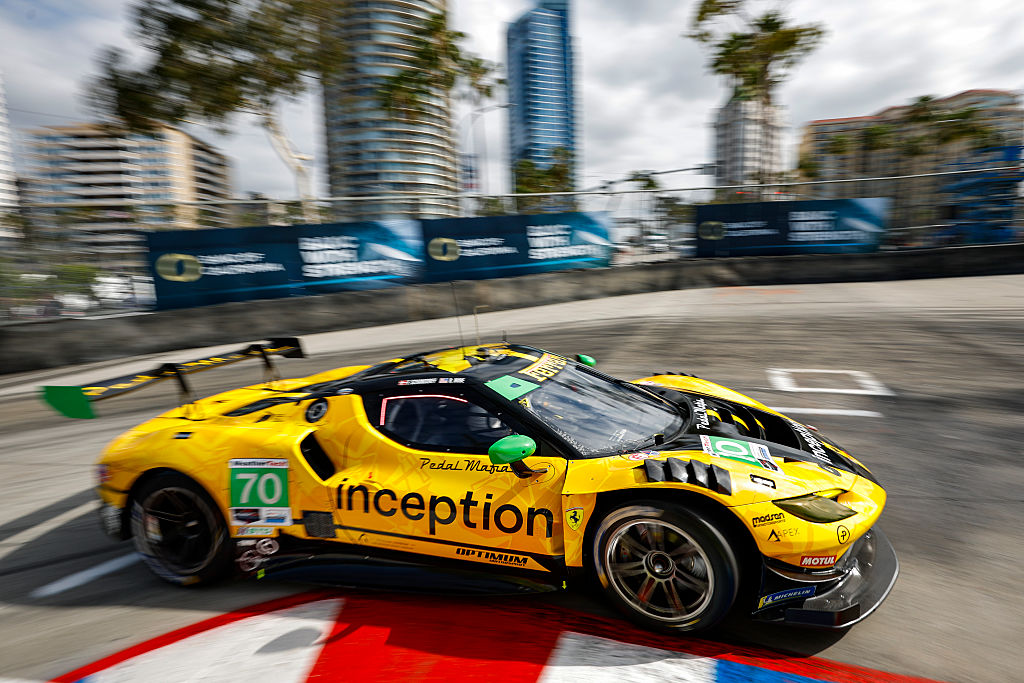
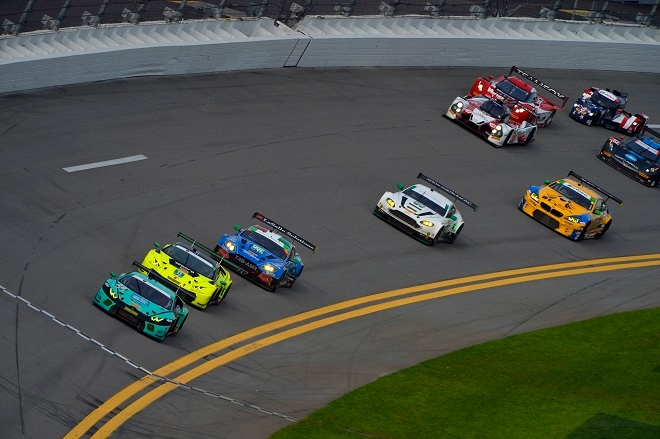
Konrad Racing's No. 28 car has been demoted from P5 in GTD to P10. O'Gara Motorsports' No. 11 has fallen from P14 to P15. The other three teams or cars were not impacted by the time addition due to being so far behind at the conclusion of the 24-hour race.
The sheer speed of the Huracán GT3s at Daytona triggered immediate alarms for the series and competitors in the GTD field. Townsend Bell's fastest lap of 1:45.873 in the No. 11 O'Gara entry was a full 1.343 seconds faster than the best race lap turned by the winning Magnus Racing Audi R8 LMS GT3 (1:47.216), and across all five Lamborghinis, 72 of 75 fastest top speeds were produced by Huracán GT3s. Despite IMSA's efforts to balance the GTD field, it was clear the Lamborghinis held a sizeable advantage that exceeded the series' realm of expectations.
IMSA also pulled the race-winning V10 from the Magnus R8 LMS GT3 and used it as the control in its testing with the V10s extracted from the Huracan GT3s.
Lamborghini's pace prior to the race also caught the attention of the other GTD manufacturers. An email exchange took place between IMSA and those manufacturers following the fourth practice session at Daytona after manufacturers made individual requests for the series to make pre-race BoP adjustments to the Huracan GT3. IMSA's response asserted its rules-based decision to monitor the Lamborghinis in the race and make any necessary BoP changes post-event.
Although IMSA elected to omit the specific reason for the penalties, Lamborghini is known to have supplied a highly advantageous air restrictor for the V10 engine that powers its cars, and Audi's R8 LMS and R8 LMS GT3 models.
The restrictor was the same unit previously used by Audi on the last-generation R8 LMS. After IMSA performed baseline engine dyno testing on its GTD cars at the conclusion of the 2014 season, a number of discrepancies were found, and among them, air restrictors of different shapes were identified as the cause for power and torque outputs that did not match the series' BoP data.
With the discrepancy identified on the R8 LMS, IMSA and the German brand agreed to discontinue the use of the optimized restrictor which delivered more power than expected and, starting in 2015, the series had its GTD field working from a corrected BoP table.
Multiple sources have confirmed to RACER the source of the Huracán GT3's incredible speed at Daytona was due to Lamborghini's choice to fit its engines with the old Audi restrictor. One person with vast knowledge of the shared Audi/Lamborghini V10 engine suggested the improper air restrictor offered as much as 40 additional horsepower.
IMSA cited the rule used to penalize Lamborghini and its teams, which speaks to circumventing the BoP process.
Per IMSA's rulebook, Attachment 2, section 2.9: "Competitors and Manufacturers are expected to provide valid data upon request to assist IMSA in the BoP process. Any Competitor or Manufacturer who deliberately gives false information, attempts to influence the BoP process, or displays a level of performance beyond the expected result may be issued a penalty prior to, during, or after a Race of a minimum Stop plus five (5) minutes. A penalty assessed prior to or during the Race must be served within the final thirty (30) minutes of the Race, regardless of the time when the infraction was discovered and/or the penalty communicated. Penalties assessed after the Race are added to the Car's finishing time for the Race and may include a lap count penalty."

Latest News
Comments
Comments are disabled until you accept Social Networking Cookies. Update cookie preferences
If the dialog doesn't appear, ad-blockers are often the cause; try disabling yours or see our Social Features Support.