BUXTON: Back to basics
Formula 1 bosses will meet in two weeks to determine whether they can put competitive differences aside and agree a mutually beneficial path forward for the sport. With a deadline of February 29th to decide the technical regulation package for next season, time is running out for the powers that be, with many now believing that a delay until 2018 for these new rules may now be the most likely result of a set of protracted negotiations which had first been unveiled to such positive fanfare.
The headline targets for next year's proposed regulations had, of course, frothed the internet up into something of a lather. From next year, you see, the cars would look sexier and would be over five seconds a lap faster than their current iterations. The proposals made headlines but were - as with so many such suggestions drawn from boardroom negotiations - missing the point.
The cars would be made to look better via a new aerodynamic package with a return to low, wide wings and a level of downforce not seen in almost a decade. Lewis Hamilton and Sebastian Vettel both questioned whether the sport's rule makers actually had a clue what they were doing. An increase in downforce, they quite rightly ascertained, would surely reduce from the spectacle, not add to it.
The issue, of course, is that when one starts with a conclusion and seeks a method by which to reach it, one should be sure that the final outcome is what one really wants in the first place.
I'll give you an example. Over the past two years, there has been an ongoing call for Formula 1 engines to be made louder. Indeed, in the last few days the online community has been awash with the supposedly wondrous news from the Mercedes boys that the noise coming from 2016-spec power units will indeed be louder.
But, dare I say it, louder engines are not what people actually want. In spite of their certainty that they are. What fans miss, both in terms of a longing and in terms of grasping the point, is not so much the sheer scale of noise, but the pitch.
V8s to me were always noise for the sake of noise, but as high-revving naturally-aspirated engines, they held a higher pitch and thus produced a more audibly exciting sound than the current V6 hybrids. V10s and V12s were higher shriekers still, and thus even more thrilling. But what one must remember is that if the sound of a V6 is dislikeable, increasing the volume simply makes that same dislikeable sound louder. It doesn't change the actual sound.
It's not a difficult concept to grasp. At least I would never have believed it to be. Volume is not the issue. Making the cars louder doesn't solve the fact that the sound they make, however loud, is unpopular.
This same miscomprehension is true, then, of the search for faster laptimes. No matter what the general consensus might be, quicker cars don't necessarily make better racing. Just as the search for louder engines, the headline of faster cars is a false target.
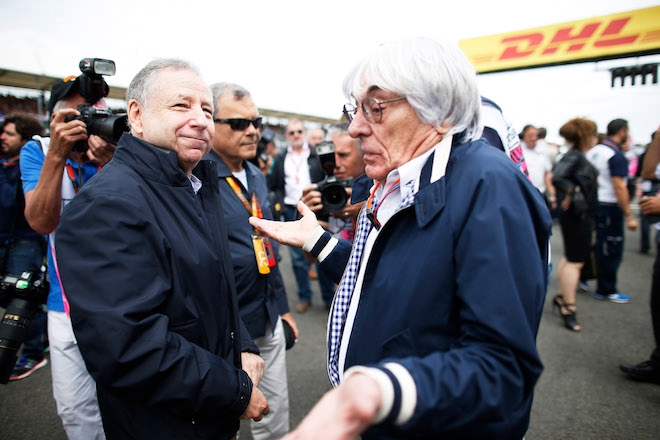
These skewed objectives are being set by the business heads. Some, like Toto Wolff (LEFT) and Christian Horner, were once racers themselves. But with corporate responsibility both seem to have long forgotten what produced the thrill they sought as younger men, strapped into their racing machines. Those on the decision-making bodies are looking for a headline that will please the mass populous. And "faster, louder cars," seems to fit the very general, barely researched bill.
What drivers actually want is less aerodynamic grip and more mechanical grip. If we want better racing, concepts such as ground effect and simplifying the construction of both rear and front wings so as to reduce disrupted airflow and permit cars to follow one another, are the paths we should be following. But that would require the boardroom within which sits the Strategy Group to realise that the headline target of "faster cars" needs to be replaced with that of "closer racing."
And yet, amongst the confusion and indecision of recent weeks, we have seen positive steps for the future.
I have long called for the FIA President to take control of a situation in which an F1 strategy group of competing interests is unable to agree on mutually beneficial rule making. I have chastised his oft-seeming fecklessness when it comes to negotiating with those over whom he at one point held power. And so it would be remiss of me not to praise him when he does indeed step up to the plate and make a positive impact.
Going into the last round of negotiations, all the talk was about the re-emergence of refuelling on the agenda and the looming threat that if agreement between the teams was not reached, Jean Todt and Bernie Ecclestone had been granted the power to push through whatever rule changes they wished.
With this warning hanging over the teams, Todt managed to press through an agreement on dropping the engine token system from 2017. Engine manufacturers will now carry the burden of cost in developing their engines, with the thawing of the engine freeze allowing all manufacturers the opportunity not just to catch up with the all-conquering Mercedes outfit, but to compete with them. Costs will drop to customers. All in all, from an F1 sporting perspective, this is one of the great resounding successes of Todt's Presidency.
Of course, the engine freeze was designed to keep costs down and so its removal has caused dismay in some quarters, not least from Red Bull's Adrian Newey, who has warned of a financial arms race from the engine manufacturers. But one must expect this from a man who has dedicated his life to design. Why would he want to see the sport become one based on engine performance? Especially since the team by whom he is employed has proved themselves to be so utterly woeful at maintaining positive relationships with engine partners.
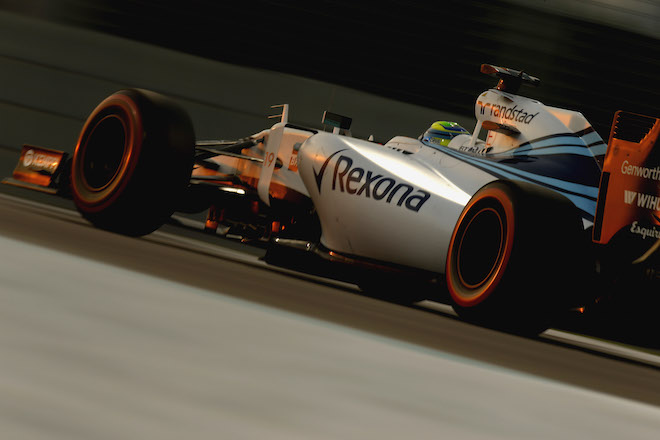
It's a huge positive for F1, as the inability for manufacturers to improve their product could only ever have acted as a deterrent to those thinking of entering the sport. Looking at how spectacularly the mighty Honda failed in its first year back in F1 in 2015, what sane corporate head would have wished to put their own brand through something similar?
The current regulations will thus remain for a good few years yet, and that is also a positive move. With a performance step between 2015 and 2016 expected to be as great as that which we saw between 2014 and 2015, and the technology being developed for the track filtering down into the road car divisions of the manufacturers present in Formula 1, there is genuine road relevance.
In 2015 Mercedes produced the most powerful engine in its F1 history. Their unit produced over 900 horsepower from a 1.6-litre V6, a figure which bested that of their 2005 3-litre V10. It is expected that thermal efficiency will exceed 50 percent this year. At the end of the V8 era that figure was less than 30 percent. The advances in engine tech are staggering.
But if we return to the headline of those 2017 technical regulations, it is from the drivers themselves that the most simple, but important requests have come.
While those with the power to formulate the rules have dithered, an emboldened Grand Prix Drivers' Association has made two simple demands for the new rules: firstly to have tyres on which they can race and secondly to see the introduction of increased cockpit safety measures.
The issue of tires falls hand in hand with the drivers' requirement to have cars based around the concept of mechanical over aerodynamic grip. While fuel flow rates have been maligned for the "lift and coast" constraint of the past two years, it is Pirelli's tires which have taken the brunt of the responsibility for the decrease in a driver's ability to push flat out from lights to flag.
Pirelli has said it has no issue with creating tires on which drivers can push, although there are various schools of thought over whether the substantial degradation of the Italian rubber is an intentional or unintended consequence of their design, but in order to develop new tires on which a driver can push consistently, they will need to be afforded the opportunity of carrying out extensive testing. This is something which, at present, they are unable to do due to the regulations of the sport, but a simple flick of a pen could see a regulatory change to facilitate such an essential undertaking.
The second facet then, is head protection.
The deaths of Jules Bianchi and Justin Wilson brought the notion of driver protection into sharp focus, with the GPDA now set on pursuing the much-publicized Halo concept. But the issue with the development and testing of the vast majority of concepts seen thus far is that, by nature, they have had to be retrofitted onto an open-cockpit racing car.
As time has marched on, it has become obvious that only by including cockpit protection into the design of the car from the outset can the concept truly become workable. And in recent days, the aligning of two separate ideas has hit the headlines as a very possible avenue for the near future. Self-supporting canopies hit trouble from their earliest tests due to the thickness of material required to form an effective barrier. The curvature of this thick material created a 'goldfish bowl;' effect and blurred sight in the cockpit.
The Halo concept created no real issues in upward vision given that drivers see through such a narrow aperture in their visor anyway, but did cause visibility problems due to the central strut required to hold the very Halo in place. But by combining the two, one could potentially create a thin enough semi-canopy/screen, strengthened by a retractable Halo above so as to remove the central strut.
The drivers, therefore, could and should have both of their requirements as the starting blocks for the 2017 (or 2018 as it may be) regulations. Engine costs have been reigned in for customers and freedom returned to manufacturers to compete. Laptime will flow as a result. If we start from a place where a driver can push from lights to flag in a car powered by engines zeroing in on relative parity, in an increasingly safe environment, what follows requires only common sense.
The history of this incredible sport that created heroes and legend was not made in a boardroom, but on the racing track. If Formula 1 truly wants to get back to what it always used to be, it needs to remember that. At its root, this sport is incredibly simple, and over-complication long been its downfall.
It's time to forget the false ideals and remember why we do this.
It's time to set racing as the only target for which we ever need to aim.
Presented by:


Latest News
Comments
Comments are disabled until you accept Social Networking Cookies. Update cookie preferences
If the dialog doesn't appear, ad-blockers are often the cause; try disabling yours or see our Social Features Support.