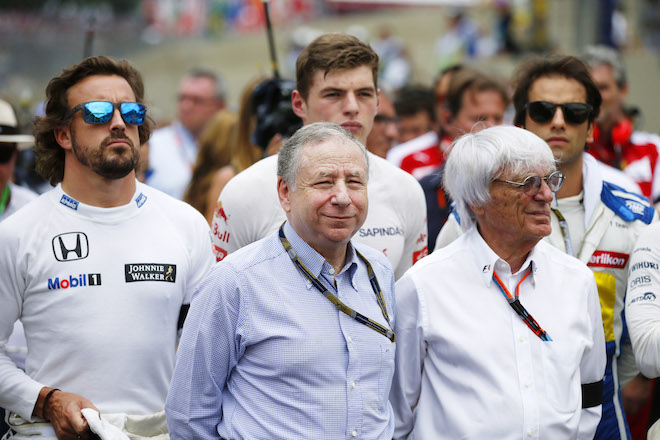
BUXTON: Ground control to Major Jean
David Bowie's passing hit me far harder than I thought it would. For most of us, Bowie and his music have been constants in our lives. No matter our musical tastes, it seems we all found our way to Bowie somehow. For me, it was through Nirvana's cover of The Man Who Sold The World during their MTV Unplugged recording. My father heard it and said he was sure David Bowie had done the original. And so I started listening to David Bowie.
There was always something rather magical and otherworldly about him. And yet this supposedly immortal life-force has been taken back to whichever planet was kind enough to lend him to us. Sadly all too soon.
On the day of his death, I read a lovely little piece by my old mentor and dear friend Joe Saward, reflecting on his own memories of Bowie. He finished with a sentiment that Formula 1 needed to be brave like Bowie, and to embrace change.
To be honest I struggled with this, as I have with almost every recent protestation over the need for Formula 1 to make changes. I struggled with it even more, the deeper I considered the parallel between the Thin White Duke and the sport I love.
You see, to me, Formula 1 always used to be like Bowie.
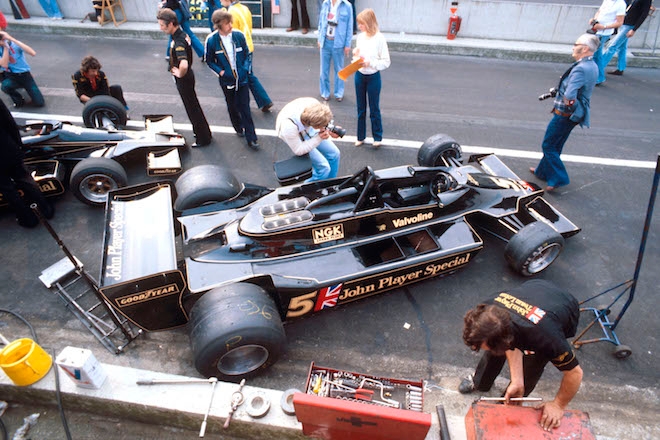
Formula 1 in the 1970s was unashamedly itself. But it was also a continuously evolving entity. Regulation of the sport through the 1970s had to keep pace with the relentless march of technology. In part this had to do with safety. In other cases, it had to do with sporting innovation. But all the time it was the sport that was having to react to the ever-evolving, ever-changing face of the product that was being created of and within it.
While Formula 1 was changing faces every year, musically the 1970s belonged to David Bowie, a man famously and unashamedly himself. In the ten years between 1969 and 1979, he would release twelve albums that, like The Beatles in the decade before, completely revolutionised his art. But with Bowie it wasn't just about music. Everything he did, he did with integrity. The changes in his musical style, the changes in his clothing, in his politics, in his sexuality ... they came from a place of honesty and authenticity. He was innovating on the very edge of acceptability, in so doing expanding the realms of what was possible and what was then to become conventional.
That's what Formula 1 always was, too. At the forefront of technology, finding new innovation and exploiting it. Pushing beyond the dominion of the achievable to create the ostensibly impossible.
While I don't think the incredible brains in Formula 1 have ever stopped innovating, the sport today does find itself in the odd position of limiting that which is achievable. With the teams having, in my opinion, too great a say in which regulations are adopted, an invisible and insuperable impasse has been created to achieving the greater good.
It's like the record companies clubbing together to stop studios allowing The Beatles to record Sergeant Peppers, or Bowie from releasing Hunky Dory. If innovation is stifled, how can the trail of change, true meaningful change, be blazed?
If one stops innovating and wallows in what exists, how long before one becomes obsolete? As The Starman once famously said, "Tomorrow belongs to those who can hear it coming."
Today we live in an era of American Idol and America's Got Talent. We live in a time of disposable celebrity, where the famous live their lives through social media, laying themselves bare in an effort to remain relevant, to remain front and centre. Never has Warhol's idiom of the fleeting nature of fame been more prescient.
Fascinatingly, 20 years ago David Bowie warned of the dangers of the internet age on music and the real possibility that creativity would be lost. When one looks at the raft of talent shows, the carbon copies of existing artists they produce and the music-by-numbers littering the charts, one must ask if they have perhaps looked past the potential Bowies of the current musical era because these shows are so concerned with putting out what they think the public wants to hear. How many great talents have entered these contests only to lose out because they didn't fit the mold of what is deemed fashionable and acceptable by today's standards?
How does anything move forward if it is constrained by those who run the very sphere of influence from within which it is trying to innovate?
How does it hear the future? And should it listen to the present?
It panics. It realizes it took a wrong turn. And it decides it must change. It must adapt to suit the will of the consumer.
But this isn't and now can't be an organic change. And as it isn't natural, it isn't sincere. And without that genuine foundation what one will be faced with is a soulless version of the product and, potentially, something as unpopular as that which it was brought in to replace.
The difference is between those who grow and change to evolve, and those who change because they feel they should.
Today's version of Madonna is, I suppose, a fine example. A once trailblazing pioneer of great female pop in the 80s, today she cuts a misplaced figure, aping the very acts she herself influenced: reacting to trends rather than setting them herself.
Dressed in a leotard and thrusting away with a bunch of dancers four decades her junior. Causing her audiences to dry heave as she surprises guest collaborators on stage by shoving her tongue down their throats. Pulled backwards down the steps of an elaborate stage show she felt she needed to climb in order to scream to the world "LOOK AT ME! I'M RELEVANT!"
Heavens. Is that it? Has Formula 1 stopped being Bowie and become Madonna?
Its desire to appease and amend itself to please a consumer it seems to no longer understand certainly holds similarities. But how did it get in such a mess?
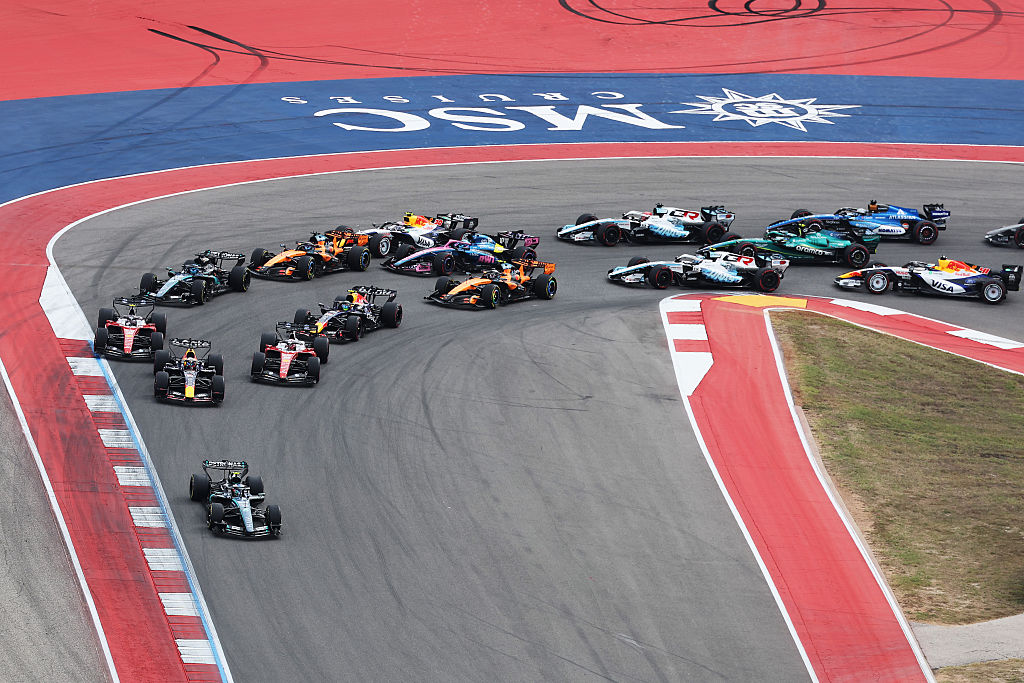
Formula 1, or rather the FIA, didn't make much noise about the regulations it put in place for 2014 and that is a mistake from which the sport is still reeling. The technology in place at present is staggering. Yet nothing was done to give suitable fanfare to the genius present in creating in 12 months what it would have taken road car divisions a decade to construct.
Instead all we have heard is derision. The only positives have come in the recent news that new regulations were set to hit the sport in 2017. New aero regs, faster and wider cars, prettier cars too. The regulations were slammed by three-time world champion Lewis Hamilton who questioned if the people making the rules had a clue what they were doing. How would more downforce help with racing, he asked? Teams without unlimited budgets asked whether wholesale changes so close to the last set of regulation changes made sense from a financial perspective. Neither were given any solid answers.
And yet the changes look likely to now not see the light of day. And I for one am glad. I've always argued that rules should be allowed to settle, in order to allow everyone to catch up. Even if the current rules are far from perfect. Do I like the current limitation of the tires? No I don't. Do I like fuel flow limits? Of course not. And the saddest part is that they are bastardizations of what wasn't an awful original concept. Like Phil Spector's Wall of Sound arrangement of The Beatles' Let It Be. The original concept was beautiful as it was, but somewhere between recording and release it got horribly overworked.
Ironically, the new regulations wouldn't have solved the existing issues with Formula 1 and indeed have only been derailed because Pirelli can't handle the faster speeds (ironic that one of the main facets of the modern sport I hate is the one thing saving us from a change I'd have deemed unnecessary.)
Does Formula 1 need to change? I guess it all comes down to the question of why it deems it necessary.
The true greats only change when they feel the need. Not because popular culture tells them to. Not because they want to sell more records. They don't react to the transient. They take influence from the masterful and come out with something extraordinary that changes the game and moves things forward.
In the last 13 years of his life, David Bowie released just two records, arguably containing some of his finest work. His final album, Blackstar, written we now know as his farewell and epitaph, saw him come full circle. Death as art. And it is majestic.
Because it is sincere.
If Bowie taught us anything, it is to always be true. That only genuine, honest evolution creates authenticity. Something this sport's governing body would do well to heed.
Ground control to Major Jean. Can you hear me?
Presented by:


Latest News
Comments
Comments are disabled until you accept Social Networking Cookies. Update cookie preferences
If the dialog doesn't appear, ad-blockers are often the cause; try disabling yours or see our Social Features Support.