Cell mates: How Mahindra developed its new Formula E powertrain
From a distance, the Formula E cars that line up on the grid for this weekend's season-opener in Beijing will look pretty much like the cars that squeaked around the track during the all-electric championship's inaugural season. In fact, you won't even have to view them from afar: stand right next to one, and you'd still be hard-pressed to spot the difference.
It's only once you lift off the cowling and start poking around bits of the car that the team would rather you didn't that the differences become apparent. This season, seven of the 10 teams on the grid have taken the leap from being competitors to manufacturers by developing their own e-motor, inverter, gearbox, and cooling system. (Dragon Racing will use the powertrain that has been developed by rival team Venturi, Andretti reverted to the stock powertrain after troubles with its own version during testing, and Team Aguri opted to remain with the original powertrain from the start).
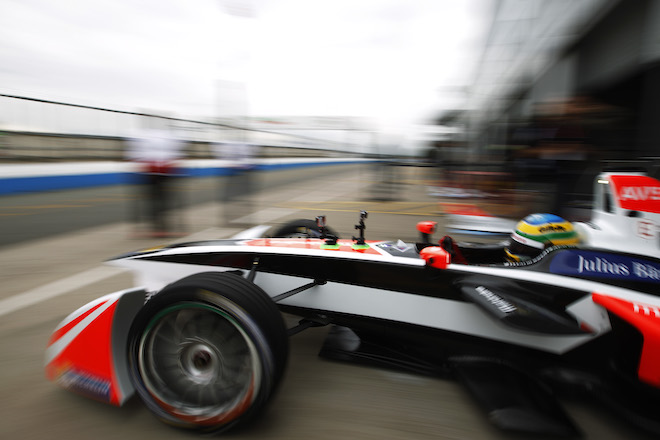
It's a huge challenge, and according to Mahindra Racing chief engineer Vinit Patel, (RIGHT, with Nick Heidfeld) the degree of difficulty was ramped up an extra couple of notches by the tight development timeframes.
"The program was delayed because Formula E and the various stakeholders like the FIA were still deciding how much freedom to give us at a bit of a late stage," he tells RACER. "So everybody has come together quite well; there's a few different options on the grid, and you'll notice quite quickly the number of gears people use, and the way the cars sound, is all quite different now.
"But it was very tight. We kicked our project off in late December, early January, with feasibility, got suppliers on board by the end of January and the start of February, but even then, that was very, very tight. We chose our partners carefully, they were all experienced in motorsport, but we were all learning about how to apply and get the best out of an electrical powertrain.
"We did deliver just about in time – we'd have preferred a little more testing. But I think going into the first race we'll see that most of the packages are relatively proven, but maybe not completely optimized."
In the end, the freedoms that were granted were fairly broad. Many of the specifications for the powerplants were left more or less open, but with the chassis themselves being carried over into the second season unchanged, the governing factor was packaging.
"There was pretty much total freedom," Patel says. "Your limitation is that the cars aren't changing visually, so there is an envelope inside of that that your powertrain has to fit into. So if you take the underside of all of the bodywork, the mounting bases for the back of the battery, which is still a fixed component, and the mounting base for the rear wing – that can't move. So you have to replicate those fixing points. And also the wheels relative to the rest of the car and the bodywork couldn't move, so the outboard suspension points were fixed.
"You had to use the same floor, so have this fairly complicated envelope that anything can fit into. But everything else was free. You basically did a survey of what you think you can achieve within the regulations; what's the best way to chase performance. You might have a particular development pipeline in mind; if you're coming with a different approach with some new technology you might push that. And it might not be the best thing out of the box, but it might be developed further and further."
One of the key supplier partnerships that Mahindra locked down early was McLaren, which developed the electronics for the season one engines. The rationale, Patel says, was that both sides could apply what they'd learned from the first season into a bespoke solution that ties in with Mahindra's package.
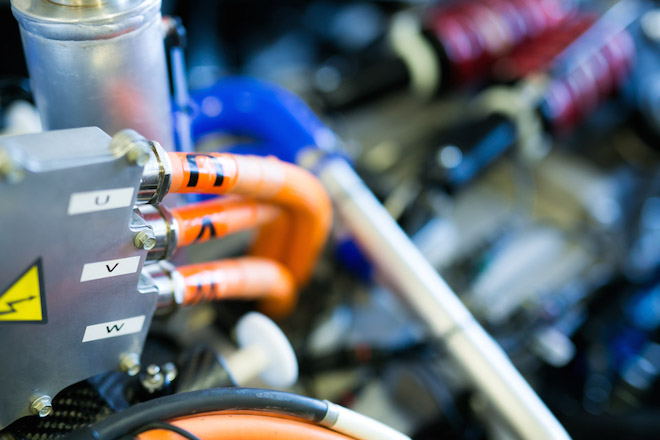
"So they came up with a development plan for us; we've developed the product with them hand-in-hand, which is exclusive to Mahindra Racing. If you looked at our components side-by-side between last year's and this year's, physically, they are going to look the same. You're not going to tell them apart other than the color of the sticker. But everything internally has been optimized and changed; new materials for electrical components inside the motor, new components inside the MCU, which is the power controller, and more importantly, a different philosophy and development behind how the software controls all of the electronics to make sure you're extracting the most power, the most torque and the most efficiency, which is the important word, out of the e-motor."
All that sounds good on paper, but paper's not where the races happen. Teams were allocated 15 days of private testing before they convened upon Donington in England's Midlands for a group test in August, although the tight development timeframe meant that some teams were unable to make the most of their full allocation of track time. Those that didn't were further compromised when a large chunk of the Donington test was affected by bad weather.
"We were able to squeeze out 13 or 14 [private test days], which was good; it dealt with the initial niggles of getting the system up and running," Patel says.
"[The car] is driven mainly by software and laptops, so making the right pieces of code work takes up a lot of time, and you can only really test it once the car is on the track, and you can make sure all the systems are fired up and working well together.
"We did all of that in private, and by the time we got to Donington we had a fairly good handle on some performance aspects and some reliability aspects. So we were pretty good. I think we racked up the third-most amount of miles at Donington, and we held back over the last couple of days because they were mainly wet, and there was fairly little for us to learn. We did a bit of running, but not as much as other people.
"We were pretty happy in terms of reliability. There are just a few unknowns about some of the things that the FIA have decided to throw at us a little bit at the last minute, and with the change in power that we weren't allowed to use in testing, and that the races might be a little bit longer ... it's a little bit different to other forms of racing, they keep you on your toes, and that's kind of refreshing, to be honest."
If pre-season testing was enough to give Mahindra a reasonable level of confidence that their new units works more or less the way it was designed to, much of the team's sense of the progress they've made still comes from the test bench. The true vindication of their efforts won't become fully apparent until drivers Bruno Senna and Heidfeld are sent into battle.
"We've not done any [testing] side-by-side [with the old engine]," Patel says. "We've done things on a bench-test, which was successful in over-achieving the design specification that we asked for. So on a bench we know it's a better product. In a car, we maybe haven't seen it in terms of a few parameters, because last year's car to this year's is very difficult to test unless you've got two cars side-by-side.
"But we have seen certain areas that the bench test has translated into on-the-car improvements in efficiency and performance. So in essence, some of the improvements in lap time that we see from season one to season two ... I'd say that 50-60 percent of that could be attributed to the team and drivers knowing the cars better, and the rest is down to various teams improving their powertrains. So everyone is taking steps. There are certain gaps between those ahead and the few behind with the older car, so there is definitely an improvement on lap time."
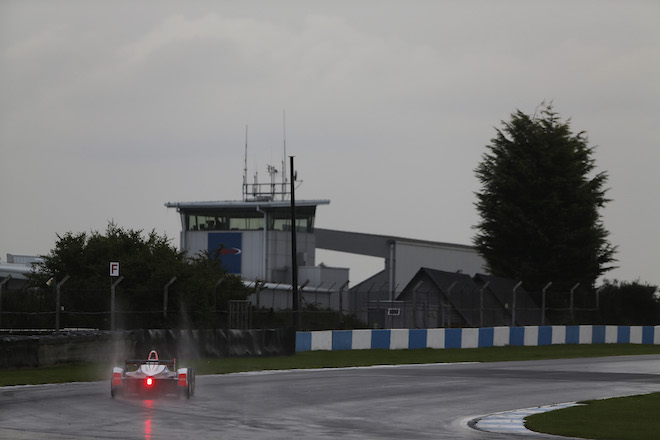
And that's one of the big questions leading into the new era of Formula E powertrain competition. Obviously the teams that have invested in becoming manufacturers expect a performance benefit at the end of it, but where does that leave the teams who are still using the older units? Patel believes that there are enough other variables during a race weekend to act as a leveler of sorts, but still expects that the teams that are developing their own units will have an advantage.
"Even though you consider some of the teams that have got last year's cars as underdogs, they've still got a platform to perform, because the race is one day, and if they happen to make the right call on the set-up, or a driver is really on-form at one circuit compared to the others, that could really reduce or reverse [the gap]," he says.
"So it is still going to be mightily competitive – you've got really good drivers driving season one cars, and really good drivers driving season two cars. Ultimately, if you took them to a test track and tried to measure the performance difference ... on an average Formula E circuit, the season two-spec cars should be a good half-second up the road. Maybe more. But on the day I think the results are going to be fairly mixed up."
That's great news for those who already follow Formula E. Fans of more traditional forms of motorsport who find some of FE's particular signatures – like the eerie silence of the races – hard to wrap their heads around might be drawn to pay closer attention now that there's a bona fide technical war underway. But more significantly, it's a huge step toward the series' aim of having the technology develop to the point where mid-race car swaps are redundant by season five, and cars are able to complete a full 40-minute race.
"That requires development of technology in all areas – battery chemistry, battery manufacturing, and e-motors and gearboxes as well," says Patel.
"There's a lot of excitement about what Formula E can offer to make that development happen at a faster pace than it maybe would have in normal industry. Everything that we develop is actually very applicable to road use, and Mahindra is mainly involved in Formula E because of its 'race to road' program; it sees a direct correlation between the kind of motor and the kind of battery that we could end up seeing in Formula E, and the same technology being licensed and used in one of their road applications. [ED: Mahindra, an Indian automobile manufacturer, already has an all-electric compact in its range, the e2o].
"It's a very transferrable technology. It's not like Formula 1 where the KERS technology has gone down a bit of a rabbit hole – it is really, really impressive in terms of technology, but not really that useful to anyone's day-to-day lives.
"Formula E is a little bit different in terms of road car technology, but we want to make cars quick, we want to make cars last longer and have a single-car race, and by doing that we'll be developing technology so that you can get a decent-sized battery into a normal-sized car in a real-world environment, and then that car could perform almost like your normal gas or diesel-powered car and you wouldn't have to worry too much about getting to a plug to recharge."
So when you do a 500-mile road trip in your all-electric car sometime in the near-ish future, you'll know who to thank. But for now, it's about enjoying that technology's journey rather than its destination. And in this case, that means a fleet of different electrical powertrain concepts humming into combat, validating the philosophies behind their design corner by tire-chirping corner.
here
.

Latest News
Comments
Comments are disabled until you accept Social Networking Cookies. Update cookie preferences
If the dialog doesn't appear, ad-blockers are often the cause; try disabling yours or see our Social Features Support.