
PRUETT: P2's paradigm shifts, part 2
Click here for part 1
WHERE DOES THE PROCESS GO FROM HERE?
After being on the receiving end the ACO's unexpected hardline approach toward manufacturers and custom items in America, surely IMSA knows it must continue its march towards self-governance.
Permitting the ACO's four 2017 P2 chassis suppliers to sell their cars for use in IMSA isn't a bad idea, but beyond that concession, IMSA's next Prototype formula differs on too many fronts to involve the ACO's input in any meaningful way.
A P2 car is comprised of three main items – the chassis, the engine (and associated drivetrain), and the bodywork. The ACO has laid out rules where its Le Mans/WEC teams must use all three with no changes, while IMSA is only planning on using one of those items – the chassis.
In the biggest head scratcher of all, IMSA continues to allow a French sanctioning body to dictate how American teams can use the two open items – bodywork and engines – they deny teams in Europe.
Based on the ACO's June 11 press conference, IMSA Prototype teams would be allowed to race at Le Mans with their factory engines from a Chevy or Mazda, for example, but IMSA teams would be forced to leave their manufacturer's custom bodywork at home. Seriously?
The ACO is fighting to keep IMSA from having the unique bodywork its manufacturers want to use in America, and even if IMSA gets everything it wants, that bodywork wouldn't be welcome at Le Mans. Is there anything remotely similar between where the ACO is headed with P2 and what IMSA is looking to achieve?
Just as the ACO wouldn't allow IMSA to set the rules for P2s at Le Mans or other WEC events, it's silly to think Daytona Beach would allow the ACO to have a say in its full 2017 P2 package when the concepts are so radically different.
HOW VITAL IS LE MANS TO IMSA'S PROTOTYPE TEAMS?
Le Mans is the biggest race in the world and the center of sports car racing's universe, but you won't find blind devotion to the great 24 Hours event within IMSA's Prototype paddock. In fact, you'll find most (but not all) of the existing teams are lukewarm on the topic of racing at La Sarthe.
That little tidbit might come as a surprise after realizing almost everything IMSA has done with its current and future Prototype regulations revolves around creating a gateway for its entrants to possibly – and I do mean possibly – get an invite to race at Le Mans.
The link from America to Le Mans is carried over from the ALMS, and has been invaluable for many IMSA teams during the last 15 years or so. Entrants from every class, barring PC, have used their automatic invites to race at Le Mans, while others have filed regular entries with no guarantee of being accepted.
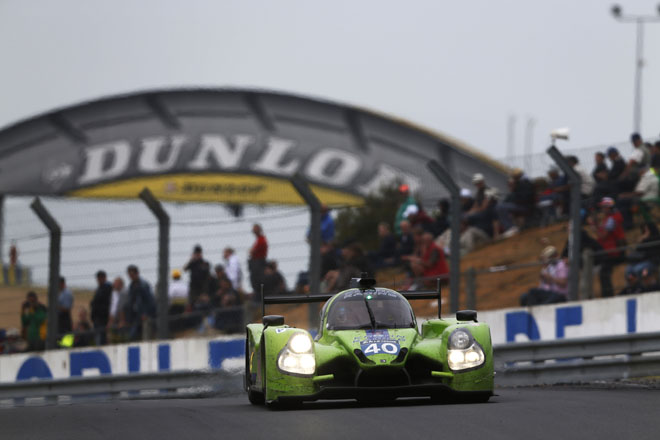
Looking at either route to Le Mans, what if the people who build, fund, buy, and run the cars in Prototype today find minimal value in using cars that vaguely comply with the 2017 P2 rules? In light of IMSA only wanting one of the three core components that make up a 2017 P2 car, it's an utterly ridiculous concept to craft rules for a domestic class where 66 percent of the international specification is rejected.
To confuse the matter even more, if IMSA goes ahead with the ACO's mandate, we'd have three P2 specifications in 2017: ACO/WEC P2, IMSA P2, and IMSA/Le Mans P2. It's lunacy.
 INTERMISSION
To recap the major territory we've covered, IMSA needed a replacement for its whirling blend of chassis formulas in Prototype, opted in to the ACO's plan for 2017, was invited to shape those 2017 rules, made it known they had different needs in America, was told those needs would be accommodated, found the ACO actually wasn't that keen on making exceptions to their European P2 concept, has been caught in a struggle to get the exceptions they were promised, had its leaders embarrassed in Le Mans, could be dialing back the ACO's influence on P2s and 2017, has been told its custom bodywork won't be allowed at Le Mans, and has heard from its paddock that having Le Mans-compliant P2 cars isn't a priority.
MANUFACTURER PHOBIC
Let's run through a scenario where a few manufacturer-supported IMSA Prototype teams are given entries to race at Le Mans in 2017. We know the ACO has written manufacturers out of its P2 rules, and they've also made it abundantly clear to IMSA they do not want auto manufacturers coming to Le Mans and upsetting its spec P2 class. Carried to a logical outcome, it wouldn't be absurd to suggest a Chevy or Mazda could find it extremely hard to win at Le Mans in IMSA trim.
A win by an IMSA manufacturer is the worst possible outcome for the ACO. It's the Trojan horse situation they are determined to prevent. And while I don't believe the ACO would intentionally disadvantage American P2s, it's hard to imagine anything other than full ACO-spec P2s having the edge.
COMMON SENSE WINS
Continuing with this theme, the ACO sets its performance targets each year at Le Mans with data gathered from the official pre-race Le Mans test and other info captured at European tracks. With new spec engines and four new chassis on the way, all of the ACO's P2 information will come from the new 2017 ACO P2 package.
Just as IMSA P2 teams would feed its sanctioning body with BoP data to perfect its cars for America's biggest endurance events, common sense tells us the new P2 cars the ACO sees and works with for months leading up to Le Mans will offer its teams the best chance to succeed at the 24 Hours.
ANOTHER SCENARIO
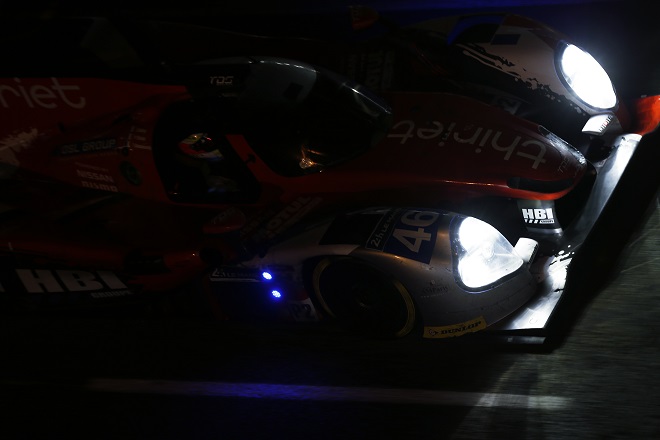
Take, for instance, a 2017 Chevy P2 engine – maybe it's a twin-turbo V6 that needs bigger radiators and additional airflow to pass through an intercooler. A Chevy IMSA P2 team would go to Le Mans, lose its custom body with tailored radiator/intercooler airflow, and be subjected to using its P2's stock bodywork. Would the stock body provide ample cooling? Would the Chevy's different radiators and intercooler create more drag or come with an aerodynamic disadvantage?
Will the Chevy engine, which the ACO has promised to performance balance against its spec P2 engines, have a chance after it receives whatever air restrictor, rev limit, or torque restriction is applied?
With all of those question marks, and there are more we can add to the mix, would any of IMSA's P2 manufacturers or teams actually consider taking their 2017 cars...sans custom bodywork...and with a one-off engine BoP...to race at Le Mans? Not if they want to win.
LEASE PLAN
To take the great sports car racing challenge and seek P2 glory at Le Mans, leasing a full-bore ACO car from one of the four manufacturers, or from a WEC (or ELMS) team is the only play that makes sense for IMSA's entrants.
An IMSA P2 will only make up the numbers at Le Mans, and spending a million dollars or more for the privilege of being buried in the P2 field would be a tragic case of a fool and his money parting ways.
DRIVERS AND STATUS
Among the other footnotes of interest, the ACO requires a Pro-Am driver lineup in P2. IMSA allows full Pro lineups in Prototype. Would an IMSA team be forced to leave one of its drivers at home if it goes to Le Mans in 2017?
Another point to consider is the status change between the two P2 classes. American P2 teams will be the headliners in IMSA where team owners, sponsors, and drivers – even those who bring money to the program – will receive top billing. They'll also receive more of the TV coverage than the other classes.
Take that team, its paying sponsors and/or drivers, ship them to Le Mans, and they immediately fall below the two Pro categories – P1 and GTE-Pro – and might even drop beneath GTE-Am if Patrick Dempsey is still driving. At home, P2 teams will be kings, but at Le Mans, they'll pay handsomely to be anonymous.
It's yet another area where the ACO's P2 2017 plan makes sense for every entrant that doesn't race in IMSA.
Click here for part 3
.
Latest News
Comments
Comments are disabled until you accept Social Networking Cookies. Update cookie preferences
If the dialog doesn't appear, ad-blockers are often the cause; try disabling yours or see our Social Features Support.
