.jpg?environment=live)
IndyCar: Honda making progress with aero kit testing
ABOVE: While 2014-spec cars rule the show circuit, HPD is pushing ahead in secret for 2015. (photo courtesy of HPD)
Related Stories
Honda's aero kit testing continues to make progress, and even with the lack of revealing images to show what Honda Performance Development and Wirth Research have created, HPD vice president Steve Eriksen tells RACER the process has been meeting their targets.
"Surprisingly, I thoroughly thought we'd have [spy] shots out by now..." he said with a laugh. "The testing has gone very well, and has mainly been focused on correlation more than anything. It's about checking the virtual world versus what we've seen in the wind tunnel versus what we're seeing on track. We've coordinated the configurations as such so that we can prove the data across each of the three points.
"When you're testing, you're ultimately trying parts or pieces that were designed a little while ago – it takes time to tool up and manufacture the parts – and seeing how those snapshots in times match what we expected. Does this predicted performance match reality? Do the forces match? Does the aero balance match what we'd expect? And then there's the unexpected part in the real world with a driver in the car giving you feedback on how it's performing."
Moving HPD's aero kit development to road courses and ovals has also helped Honda to expand its data collection and verification capabilities.
"If you look at testing in the wind tunnel, you can only test up to certain speeds, whereas on the racetrack, you aren't bound by any limits; the aero elastic limits found in the wind tunnel are gone – you can see the real-world effects the aero kits provide," he said. "I'm confident of what we've learned so far and where the testing program is heading."
Eriksen also spoke on HPD's choice to limit its aero kit testing and development to a single team, Andretti Autosport, while Chevy is relying on two of its premier entrants with Team Penske and Chip Ganassi Racing representing the Bowtie.
"If you look back to the 2011 season leading into 2012, it's akin to what we did with a new chassis and engine coming in and in that case we had Ganassi maintain the car and run the tests," he noted. "And then we had our teams in attendance so they could learn about the car, and there was only one at that point, while it was developed."
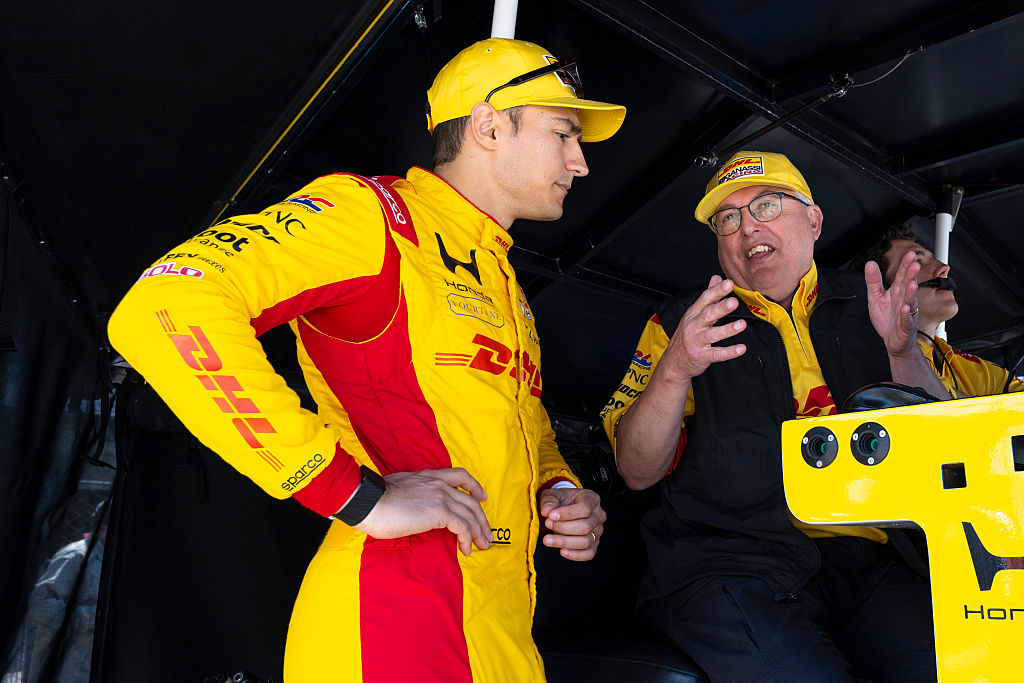
2012 Verizon IndyCar Series champion and 2014 Indy 500 winner Ryan Hunter-Reay has been charged with leading HPD's aero kit testing from the cockpit, although he is not the only Honda driver involved with the program. Simplifying the size and scope of the teams and drivers responsible for aero kit testing, according to Eriksen, is beneficial to the process.
"We now have two cars running, out of 10 or 12 team cars, and our approach has been the same – to have a single team maintain the car and run the tests for the sake of continuity and to eliminate as many variables as possible," he explained. "We're also giving our teams the ability to attend the tests and learn as we're learning."
Presented by:


Latest News
Comments
Comments are disabled until you accept Social Networking Cookies. Update cookie preferences
If the dialog doesn't appear, ad-blockers are often the cause; try disabling yours or see our Social Features Support.