.jpg?environment=live)
Marshall Pruett’s Tech Mailbag for June 6
Hi all – I’m off to cover the 24 Hours of Le Mans next week, so if you have Tech Mailbag questions or video explanation requests from the event, send them to PruettsTechMailbag@Racer.com. We can't guarantee your letter will be published, but I will always reply. -Marshall Pruett
Q: I understand that some IndyCar teams are using inerters so lower spring rates can be used to increase mechanical grip while still maintaining accurate control of the car's attitude for maximum downforce. Would you please describe the different types of inerters being used, how they work, and whether they are more effective on relatively smooth tracks like Indy or rough tracks?
LSA, Indianapolis
MP: IndyCar teams are required to use dampers that contain the inerters within the damper body, which is a big difference from Formula 1. In F1, where the technology originated, teams are allowed to manufacture standalone units that attach to the suspension pushrods.
Damper with inerter
With IndyCar damper manufacturers like Penske Racing Shocks and Ohlins being forced to fit everything inside a compact space, the small screw and weight system is attached to the damper shaft, and is driven that way to manage tire loading and oscillations.
Q: Is the design of the newly unveiled Indy Lights Dallara IL-15 chassis (ABOVE, IndyCar photo) complete or will there be additional appendages? A glaring difference versus the DW12: no rear wheel guards. If they elect not to use rear wheel guards (which I personally think are ineffective for their intended purpose on the DW12), what message does that send?
David, Greensboro, NC
MP: I really don't think there's any message being sent. The new IL-15 is much lighter than an Indy car and won't have to deal with repelling as much mass barging into it from behind. But that's not to say the car shouldn't have some sort of rear wheel guards. I'm not a fan of the boxy "Kardashians" on the DW12, but they have prevented countless cut tires since their introduction. The belief that they could somehow prevent another DW12 from launching itself from behind was wildly optimistic, yet they do take tons of bumps without causing immediate tire failure or wing damage. They have allowed much closer racing, and I'd welcome the Lights series looking into using something smaller and more contoured to the profile of the rear tire.
Q: Regarding the question about a front differential: I don’t know if you remember the F1 Front Torque Transfer System that BAR introduced back in the day. It was a front diff driven by driveshafts from the front wheels. Weight (as usual) was the big drawback. It was later banned. I remember the debut well. I had come up with the exact same concept a couple of years before during some post-work whiteboard bench racing with my fellow F1 fans. When BAR introduced it, just for a brief moment, I was a genius!
Rob Roten Spring Hill, TN
MP: Thanks Rob. The concept started with Benetton in 1999, and as I recall thinking at the time, was one of the first attempts by a Formula 1 team to delve into the technical minutia involved with driving a car. Most ideas are born from improving a car’s lap times through improved mechanical or electrical systems, yet this one seemed to be spawned from a driver-first approach to technical innovation. Here’s a link to a story on the topic by my friends at Racecar Engineering:
Q: I have heard F1 power units harness heat energy as part of their energy recovery systems. Do they use a thermoelectric generator based on the Seebeck effect or...?
Tom Phillips
MP: Unfortunately, no, there’s nothing particularly cool or interesting in how 2014 F1 cars harvest energy from their engine’s turbo. Teams and the series love to say that the MGU-H “recovers heat energy from the turbo,” when in fact, it has nothing to do with heat being converted into electricity; it’s a mechanical harvesting process from start to finish. A shaft is connected from an electric motor to the turbo assembly, and when the engine is running and the turbo is spinning, the shaft is either used to rotate the electric motor and generate electricity that’s stored, or, the electric motor is used to spin the turbo when the driver is off the throttle to reduce turbo lag.
Just like the primary MGU-K (aka KERS) system that’s charged under braking via the driveshafts, the turbo KERS system is just another, smaller, and less powerful shaft-based recovery unit.
Q: Looking particularly at the new Daytona Prototype dive planes, I've noticed they have very large lips on them. They look a bit like gurney flaps. Are they intended to work like a gurney, or more like an endplate to keep the air from slipping off the side?
Andrew in Baltimore
MP: The new high-downforce package DP dive planes were created to add as much front downforce as possible without forcing manufacturers to design all-new front aero to balance the big jump in rear downforce.
Dive planes, at least on prototypes with complex and highly articulated aero, tend to serve a dual purpose: They generate front downforce, obviously, but also shape and direct the air to intersect with the airstream toward the back of the car – to feed the diffuser, for example.
The big ramp-like DP dive planes, with vertical extensions on the outer edges, are there to serve one purpose and that’s to use the air to press down on the front of the car, so as you mentioned, the lips are more like end plates than anything else. They’re intentionally aggressive and have also been homologated to match each DP body style (Ford, Chevy, Honda and Riley tested their own versions, which IMSA then approved).
Q: How do HPD and Chevy define the pool of engines available for an event? Does it include the engines below the mileage limit in cars plus a defined number of spares in hand that are of the current updated spec?
Is there a separate engine pool defined for the one-off programs at IMS that allows HPD and Chevy to provide different specs to different teams based on willingness to pony up more for the race spec engine, rather than taking a "leftover" original spec engine?
How many spares are typically maintained in the pool? It seems obvious that there would have to be some "leftovers" of the previous spec somewhere that would go unused after an update of any sort (minor or major) is released...do the makers then take those unused engines back and modify them to the new spec and then put them back in the "current pool"?
Thanks!
Steve Jarzombek
MP: Great questions, Steve. As each manufacturer does things their own way, I asked Chevy and Honda to help with answers, starting with Chevy IndyCar program manager Chris Berube:
1: The IndyCar rule book, Section 16 – Engine Sporting Regulations, requires the pool of engines for an event be designated by noon the day prior to on-track activities at the event.
2: The pool will only contain fresh engines of the latest spec. Used engines may be used for testing purposes.
3: The engines provided to the single event entries at the Indy 500 were the same latest spec as the full season entries.
4: the pool is anywhere from 2 to 8 engines during the regular season (not including Indy) and is dependent on the forecasted engine change-out schedule. To make sure we have the latest spec at the track at all times, engines are removed from the pool and updated once a new spec is released.
Honda’s Dan Layton helped from their side:
The pool of engines available for a given race weekend will include:
- Engines already installed in cars
- New engines that can be used to replace engines that "mileage-out" during a race weekend or otherwise need replacement (due to failure, team request, or manufacturer request)
- "Used" engines that have yet to mile out and are scheduled to be re-installed when that car's current engine is removed (e.g., if an engine has been removed at team request, checked, and found to be sound, it will be re-installed in the same car once that car's "replacement" engine miles out).
Engines that were run as "one-offs" at the Indianapolis 500 remain available for that driver's use in any additional races (i.e.…if Pippa Mann takes part in any other races this year in a third DCR entry, she will continue to use her '500' engine until it miles out).
IndyCar still determines which engine is assigned (by serial number) to each entry, so a manufacturer cannot designate a specific engine to a specific team or driver. It doesn't cost teams/drivers any additional money to make an early "upgrade", but will cost them 10 championship points. And I believe they will have to return to the previous engine and use up its mileage once the replacement's mileage is completed.
The number of spare engines kept trackside varies from race to race, depending on build schedules, replacement and mileage-out schedules, etc. All engines and their component parts have a defined service life, and individual parts are replaced on that basis. Major, homologated components (blocks, heads, cranks, etc.) will go through several builds and service cycles until they are replaced. Other parts (the obvious stuff, hardware, bearings, etc.) are not much more than "consumables" and are replaced with each rebuild.
I'm puzzled about the choices of compounds that Firestone brought to Belle Isle. I was under the impression that the red/alternate compound was intended to be faster than the prime, but with higher rate of degradation. But, I noticed in the Sunday race in particular, none of the drivers set their fastest laps on the reds. They were all quicker on the primes and the primes didn't go away. Doesn't seem like there would be much incentive to use the options (except for the rule book). What's your take on that?
By the way, I enjoyed having the Firestone live timing tire chart available during the race. Hope they continue that.
Glenn Weaver, Charlotte NC
MP: Agreed, Glenn, the new Firestone Tire Track chart is awesome (www.Livetiming.net/firestone). Firestone tends to be on top of the Red/Black mix, but the noted deficiencies with Reds at Belle Isle can easily be attributed to the declining surface conditions. Unlike a Mid-Ohio or Sonoma, or even St. Pete and Long Beach, Belle Isle is pummeled each winter by snow and ice, and it wreaks havoc on the tarmac. As teams and the tire manufacturers found this year, old Belle Isle was even more of a tire shredder, making the softer/faster Reds a liability. Other than the rulebook requiring Reds to be used, teams would have stayed on Blacks the entire time, as you noted, and as for the fastest laps, drivers spent their stint on Reds carefully managing their lifespan. I’m sure they would have produced faster lap times on Sunday, but after their big drop off on Saturday, drivers knew pushing too hard on Reds would leave them sitting prone later in the run.
Can you give us an update on where the aero kits from Chevrolet and Honda stand? Is Tino Belli at a point where he can share any info on what to expect racing wise, or looks, or issues that have been worked through?
Derek McElheny
MP: It’s still an evolving process. Aero kit manufacturers and teams have a rough schedule of when they will be delivered, and those dates are based on the start of the 2015 season, which is still TBD. Look for the overhead snorkel air intakes to go away, but the sidepods won’t look too far removed from what’s on the DW12s at the moment. As for how they will race, that won’t be known until we have cars on the track. Manufacturers can use CFD to simulate many things, but real world running is required to know how both kits perform while interacting on the racetrack.
Q: I have a two-part question for you Mr. Pruett. First, if BMW wanted to race in Indy car would they be allowed to use an inline 6 engine? Second, with IndyCar having open rules with dampers, are teams allowed to use passive or active suspension?
Andrew Marshall
our story late last month on IndyCar being open to production-based engines
, I’m sure BMW’s trusty inline-6 would be a candidate. Active suspension is banned in IndyCar and every other form of professional racing I can think of. I’m hoping that changes – active suspensions in F1 helped to trigger my interest in the technical side of the sport, and could do so for a new generation.Q: With Tim Keene leaving the Ganassi IMSA team for DeltaWing, how will this affect the strategy/future for Scott Pruett and the other drivers? Is this a major change? Who will replace Tim Keene?
Peter in Phx
MP: Tim and Ganassi parted ways after the Rolex 24 earlier this year. He was replaced by Mike O’Gara, a former Ganassi employee, who had been serving as team manager for Sarah Fisher’s IndyCar team. It was a major change; Tim’s vastly experienced and was the driving force behind Chip’s sports car team, but the team also won two consecutive races when Mike took over the team manager role. That tells you the team is built to survive and thrive in the absence of any individual, and that Mike’s damn good at what he does.
I would love to know more about what the teams options at Indy were for aero settings from a technical standpoint. I’ve looked around for more information, and it seems to be pretty sparse or high level. What on the front wing, the under-aero, and the rear wing could teams adjust or swap out for Indianapolis? I’ve heard things about wickers of all shapes and sizes, but I don’t know where they are located on the wings, and how they are adjusted before or during the race.
Any information or visual references would be great to help us tech spec geeks! Thanks!
Andrew King
MP: For Indy, teams were allowed to change the front wing angle, the angle of the front wing end plates, and to use Gurneys on the front wing. Beneath the car, teams were allowed to use or remove the underwing sidewalls that terminate just inside of the rear wheels. Removing those sidewalls was more of a qualifying trick than a race day setup. Teams were allowed to use Gurneys on the ream beam that connects the Kardashians to the chassis, and could adjust the rear wing angle. Teams were also allowed to use radiator inlet blockers to the degree they desired.
Q: After reading your very well written piece about the Indy 500 I want to take a moment to share with you the pic that my good friend took from his seats in Turn 1. It clearly shows how Townsend Bell encroached on Ed Carpenter. Yet Carpenter took out his wrath on Hinchcliffe (reminiscent of Tom Walkinshaw's wrath) when it was Bell whom by this photo and video review should take the blame. I would encourage you to forward this to Carpenter, Bell and Hinchcliffe.
John Mylenek
MP: Yeah, my post-race analysis section on the crash prompted some interesting responses afterward from the three involved. The final word came from Ed, who said he turned into Townsend to avoid Hinch. I’ve written enough about the situation already, and won’t disagree with Ed, but your photo (BELOW) sure seems to depict one car turning down, one pointed straight and the other nowhere near the other two.
Q: Last year I posed the question to you as to what affect autonomous cars would have on future generations of automotive enthusiasts, and the future of open-wheel racing. Now we have Google coming out with their own prototype. (Yikes, now all of sudden the Dallara looks pretty!)
What happens to motorsports after a couple of generations of autonomous cars? Do future young people look upon cars as appliances, like a smart phone? Will Gasoline Alley be converted into condos?
Remember when Google was a pimple on the backside of AOL, nobody took them seriously. The Google putt-putt you see today could sit on the pole, tomorrow! (Dallara....powered by Google?)
Jim Scott, Wisconsin Rapids
MP: Jim, people already look at most new cars as appliances. Can’t modify them in any substantive way, other than wheels and body kits (or some tack-on item under the hood like an air filter). I’m definitely concerned about America’s passion for the automobile being lost.
As for autonomous car racing, unless the things go a few hundred miles per hour on existing tracks, I just don’t see them becoming a spectacle folks will want to watch. The Indy 500, once a place steeped in technology, has been reverted to a race where 33 personalities vie for the win. That’s OK, but compare it to Le Mans where 50+ cars are the stars, and for the most part, the drivers aren’t well-known beyond sports car diehards. People like watching people, and in a perfect scenario, Indy gets more interesting tech to make the event less about who won and more about who won using a better mousetrap. The same goes for Le Mans: with more personalities to follow, the average fan would be drawn in to learn more about the insane developments at play.
Q: Bob Hengen thought there could have been more yellow flags waving after Saavedra stalled. I haven't heard anyone mention this but I recall seeing a green flag still being waved as an overhead camera scanned the grid after the collision. Has anyone else mentioned this?
Randall
MP: Not to me, Randall. I think with all the confusion and mayhem, a unicorn could have pranced through the cloud of dust and debris without being noticed.
Q: In order to solve the issue of drivers not being able to see a stalled car on a standing start, why not put a string of LED lights across the back of the rear wing (the area is dead air anyway, so aero should not be affected). If a car stalls on release of the clutch, the string flashes red. That way drivers would be at least warned of a stall. Oh, to prevent cheating, the system is disarmed upon rear wheel movement. Just a thought.
BTW - agree the red flag was a good idea.
John Boltik
MP: John, IndyCar uses the rain light affixed to the back of the attenuator to blink when a caution is out, so that system is already in place, but there’s certainly some work that could be done to activate it in different ways based on the situation.
Q1. Why did IndyCar decide no push-to-pass on ovals?
Q2. What is the bottom line with F1 teams' constant complaints about the Pirelli tire compounds as compared to the relative satisfaction of IndyCar teams with Firestone?
Gordon from Dallas
MP: 1) I can’t say why the series hasn’t allowed it, but will admit it would be weird. Passing on ovals has never been an issue in IndyCar, so I’m not sure why a gimmick like push-to-pass would be necessary.
2) Pirelli was asked to make a few different tire versions with varying degrees of grip and drop-off, which is far from an exact science. Complaints come in, changes are made, surface conditions change, and even the car formula, vehicle weights and weight distributions have changed. I don’t envy Pirelli, and after the constant haranguing, I don’t see why any tire manufacturer would want to be involved with F1.
Firestone, on the other hand, has a big series of constants to work with: same chassis, same weight, same weight distribution and IndyCar visits mostly the same tracks each year. They already have excellent racing tires, and the lack of changes helps Firestone to further refine their offerings each season.
Q: Since I’m sending this through e-mail, I’m expanding the question out to get more understanding and give you more material to work with.
1) What is the purpose of the third spring in the DW-12, and where is it located in the chassis?
2) Is there a damper assigned to it?
3) Are there certain tracks where utilizing the third spring will really benefit the car?
4) For the DW12 at the Indy 500, do teams use the third spring in the chassis?
Andrew King
MP: Hello again, Andrew. The third spring is used to manage ride height, and through its use, teams also manage a car’s aerodynamics by controlling the attitude of the underwing. The third spring device also allows teams to use softer spring rates on the traditional twin dampers that connect the wheels to the chassis. In IndyCar, there is no damper included with the third spring – it’s just a slider with a collar for adjusting dynamic height of the spring, rubber or plastic shim each team chooses to use. Third springs are in their element on road and street courses, and teams do not use them at the Indy 500.
Ganassi car no front 3rd spring...
...and with front 3rd spring.
Q: Approximately how long will the Dallara DW12 chassis the teams purchased in 2012 last? Will they get three seasons, four, etc. from the chassis tub?Ryan Becker
MP: Barring big crash repairs or other worrying damage to jeopardize the integrity of the chassis, carbon tubs can be used without any significant reduction in strength or torsional rigidity for many, many years. Some teams with the financial resources will buy new cars every few years just to make sure they have the freshest chassis possible, but you can look for most IndyCar teams to use the same chassis until the next design comes along.
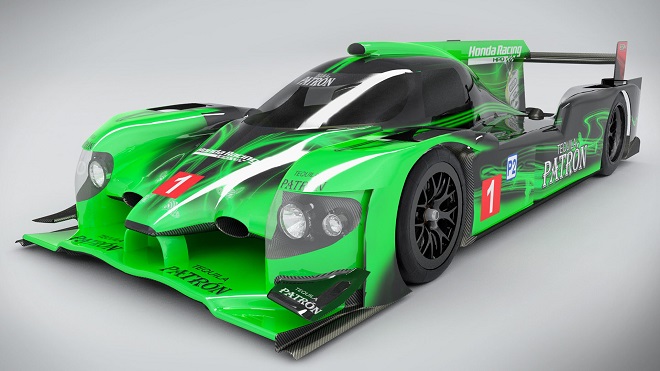
Q: I read that ESM is expecting to take delivery of its new HPD coupe in November. Which got me to thinking: what's ESM taking delivery of, exactly?
Would the new car come as an assembled rolling chassis? Or is it more like a kit car – all of the pieces you need with an assembly manual for putting it all together? Since the car will use the same engine as the old one, would the team be responsible for removing systems from the old car and moving them to the new one? Would someone from HPD or Wirth be there to help with the process?
S2000_moose
MP: Every manufacturer goes about this process in their won way, so I asked HPD vice president and all-around good guy Steve Eriksen to answer how they plan to handle the HPD ARX-04b’s dispatch and delivery:
Typically, the first car will be assembled at Wirth Research's facility in the UK by a combination of team mechanics and engineers, WR personnel, and HPD personnel. Any improvements that are adopted as a result of the first build can then be cascaded through each of the remaining builds. The second team chassis would likely be assembled at their shop and we would provide WR and HPD personnel as needed (HPD are always there for the first fire up in a newly assembled car). We can certainly provide a complete assembled chassis but we find that it is more valuable to let the team see how it goes together first hand so that they can ask questions and get their answers in real time.
With regard to the question about removing systems from the old car, this really depends on the team's wishes. If they wished to keep their previous chassis in complete raceable condition, then they would likely leave it together and put a new kit of parts on the new car. If they've sold their previous chassis then there are likely items like electronics that would get removed and retained.
Q: How does Audi, Porsche, Toyota, etc., see a value in LMP1 but GM and other American companies don't? American car companies are global brands just like Audi and Toyota.
The engineering involved, development and what is learned from making these cars seem to of value. Audi talks about it all the time. It's hard to believe they are lying about the value it provides them.
So what is the deal? American companies used to be interested in top categories of international racing. Now they could care less. Why is that?
I've also wondered why big American companies don't compete developing, marketing and selling supercars like Porsche, Ferrari, McLaren. There is obviously money to be made in that market (Ferrari funds their F1 team with it!) and from a reputation standpoint wouldn't GM want to show they could make a car to stand up to a Porsche 918 Spyder?
Doug, Stafford, VA
MP: Doug, we get cool things every once in a while, but to your point, they tend to be more along the lines of what the average person can attain than something truly out of reach. A Mustang, a Corvette, a SRT Viper – all under $100,000. The engineering minds and technical resources at Ford/Chevy/Chrysler could come up with a rival for the 918, or other Euro exotic, but at what cost? Our auto industry’s finances come under more scrutiny than any of its international rivals, making crazy 918-like projects a bad fit for the times. When the economy is back and roaring, I’m sure we’ll see Detroit and Dearborn start to aim higher.
As for why American manufacturers don’t see value in P1, I don’t really understand why any manufacturer sees value in it these days. The costs involved to develop a race-winning P1 Hybrid would make most F1 teams blush, yet other than Le Mans, the amount of international coverage and acclaim is rather small. I realize there are technical benefits from building and racing P1-H cars, but there’s no way to recoup the expenses through vehicle sales.
And, to be honest, what doesn’t Toyota already know about hybrid systems? Its Prius has been on the road for more than a decade, is the top-selling hybrid in the world, and I’m sure the road car division knows more about the technology than the race team. It’s a cool promotional exercise, but let’s not kid ourselves into thinking Toyota’s Le Mans project is driving the factory – it’s the other way around.
In recent years, American manufacturers have been focused more on racing what they sell (or silhouettes of what they sell) – GM with its Corvette Racing program, Chrysler with its SRT Vipers, Ford with its FR500Cs. If I worked for one of the Big 3, spending a quarter-billion to fight among hybrid prototypes in France or elsewhere is a move I’d veto without hesitation.
Q: Let's say you are the owner of an F1 team. Under the current LMP1-F1 rules, would it be in any way reasonable to take an F1 power chassis and put a LMP1 body on it and go ACO racing? If not, would there be any major parts or systems that could reasonably be carried over from the F1 car to the LMP1 car?
Ed Joras
MP: Great question, Ed. Durability is the obvious concern, and a few changes for the sake of reliability would be necessary. We don’t know the exact figures, but most reckon 2014 F1 engines produce something in the 600hp range on their own. They hit that number from just 1.6 liters of turbocharged capacity (98 cubic inches) and six cylinders. That’s asking each cylinder to account for 100hp from a very small motor and not a lot of metal. Audi’s V6 turbodiesel also churns out something in the vicinity of 600hp, but does it spread across 4.0 liters of capacity.
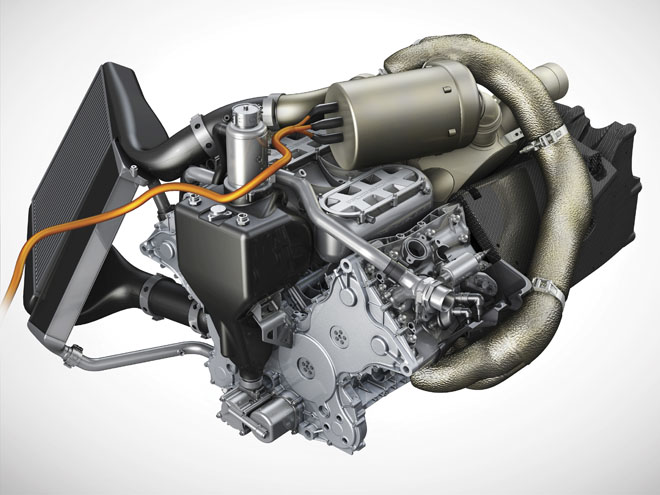
The one area where major similarities exist is in hybrid technology. F1 cars work with 4-megajoule systems, while P1-H cars are allowed up to 8MJ (6MJ is the most being used right now). More tweaks would be needed to comply with the ACO’s hybrid rules and engine capacity-to-MJ formula, but it wouldn’t be as significant as the changes required for the engine.

Latest News


Comments
Comments are disabled until you accept Social Networking Cookies. Update cookie preferences
If the dialog doesn't appear, ad-blockers are often the cause; try disabling yours or see our Social Features Support.