.jpg?environment=live)
Indy 500: One-offs and rookies part 1 – Alex Tagliani
Related Stories
Up until this year, Alex Tagliani was a man punished by his own innocence and hunger, believing the next chance was the big chance. The dogged pursuit of IndyCar glory blinded him to the harsh realities that a one-car team, even if he was there for 10 years, would not enable him to fight for a championship with Ganassi, Penske, Andretti etc. Then, as mounting frustrations stretched the bond with his team and his world crumbled around him, Alex would look like a dog who'd been kicked without understanding why.
Why did he put himself through all this, I – and others – wondered frequently? It could only be because of his sheer love of racing and that needling feeling of unfinished business. One of my favorite lines by Michael Scott from The Office comes when assessing (to camera) yet another failed romance. He states firmly but obliviously: "I'm not gonna give up that easy. I'm going to make this way harder than it needs to be." Well, that was Tag's sad cycle too, or so it seemed.
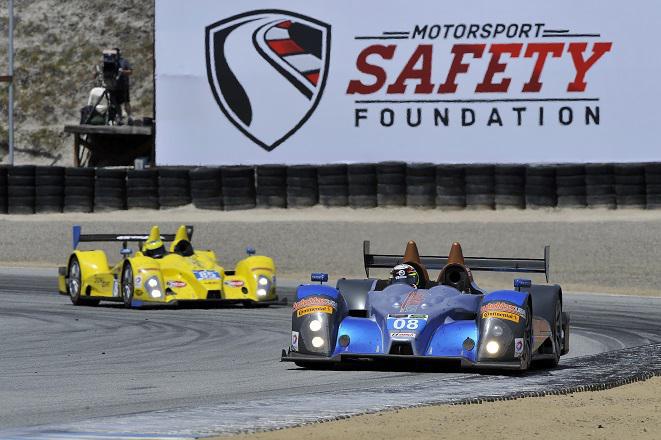
But it's all changed in the last nine months. Tagliani has been out of a full-time IndyCar ride since August last year but made a one-off start for Target Chip Ganassi Racing subbing for Dario Franchitti in Fontana, and has since spread his net wider – Canadian NASCAR, TUDOR Championship with RSR in the PC class (BELOW) and now back to Indy, where he scored that emotional pole position for Sam Schmidt Motorsports in 2011. And later on this year, Alex will compete in the two NASCAR Nationwide Series road course races for Team Penske. Suddenly, he's gone from struggling to finance and retain one ride, to having a hatful of paid-for opportunities, and he's also building a small business.
RACER: First of all, why no full-time ride in 2014 for Alex Tagliani?
AT: The hardest thing I had to do at the start of 2014 was say to myself, and others, 'No, I am not bringing any more money.' For so many years I got into a pattern where I'd pick up the phone to speak to a team owner, and almost the first thing out of their mouth was, 'How much have you got?'
And I look back and think, "What the hell was I doing?!" I was often investing my own money into a team and a setup that was constantly changing. Well that is not a way to gain success. You look at Penske: Will [Power] wins a bunch of races, and three straight years he comes this close to the title but doesn't win it. Well, Mr. Penske doesn't suddenly say, "You're fired!" No, he makes sure that Will has the opportunity to keep knocking on the door until it opens. That is called professionalism, and that is what I missed for large parts of my career.
Related Stories
So how did this deal with Sarah Fisher Hartman Racing come about?
They came to me and said, "We want to expand to a two-car team when we can afford to." They did it because Sarah and Andy and Wink have a passion for racing and they want to improve their performance at a faster rate by having two cars. They did not do it because they've got themselves into a business that they've found is too expensive and they need more income from a second driver. So they have sponsorship for a second car for this race, they're looking to gain more for some other races, possibly, and they wanted an experienced driver, so they hired one. That's the way it's supposed to be! They did everything for the right reasons and did everything the right way.
How good is the program?
Strong. We haven't even really gone for speed yet, just focused on race setup and trying things out and I'd say we have tremendous potential. Josef and I started the month with two completely different cars, and every time we went to evaluate it, it would rain or we ran out of time to finalize it because of the rain. So we have a lot of unanswered questions, and we haven't really shown our cards yet. I think with some proper track time we will be very competitive.
And how is it to do a one-off race like this with a team of people you don't know?
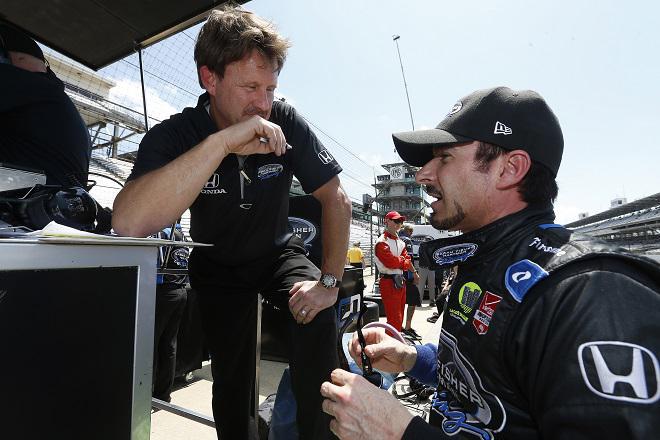
Well, that's trickier than blowing the rust off the driving, to be honest. I have to get to know my race engineer, Mike Culliver, and he has to get to know me, so that he knows what I'm looking for and he knows why I'm moving the weight jacker, or why I want to try this or that. You know, it's just adapting to the way each other works – what we think is the best way to reach our goals for fixing this handling characteristic, or adjusting this to be a little bit better in traffic.
Where the lack of track time because of the weather is hurting us is because it's this track. It's not like trying something at Mid-Ohio and if you get too much push or go too loose, you just catch it, control it and bring it back to the pits to reverse the change. Indianapolis Motor Speedway is going to punish you if you do too much too soon. If you just throw something at the car that is a big step in one particular direction and it goes wrong...well, you're going into the wall and that helps nobody. Every decision has to be well thought through and analyzed.
Which is where having a second car is useful...
Exactly. Before we go out with a new setup, we speak to the other race engineer [Jeremy Milless, Josef Newgarden's race engineer] and say, for example: "Hey, if we're going to run this front wing at this level, do you compensate with this rear wing setting?" You don't just head out and discover the hard way that it was wrong! And the same goes the other way, too. That was the advantage of starting far apart on setup and working back to a solid center.
As a one-off or part-timer who doesn't need to think about championship points, does that free you up to just go for it?
Listen, I'm now in a happy situation where I don't need this desperately – it's not the only thing in my career. So if I didn't think Sarah was offering me a really competitive ride, I would either not have taken it or would not be so excited by it. But I am excited about it: this is not a second-car program where the team has just thrown a car together and done the minimum and they just want me to fill the grid. They're absolutely serious about it and that means I am too. As far as I'm concerned, I'm here to qualify in the Fast Nine and to win the race, and I believe we have a shot.
The performance of Newgarden this year must give you encouragement that this is a team on the rise.
Yes, definitely. This team has a really strong core. It's not like I've been deep in the team for the whole season, so I don't know everything about them, so I can only base an assessment on what I've seen so far, but I think this is very good. They're really hard workers but also methodical and organized. Sarah and Andy genuinely are experimenting, assessing what difference running two cars can make, and then they'll make their decision about where else they may do the same. But the important thing is, if they can't afford it, they won't do it. Of course I hope they do and I hope I'm part of the plan, because I really do think I can help Josef and help the program.
Well already, Josef and Jeremy must be feeling the benefits, just as a point of reference as much as anything. I mean, let's be honest, since Indy has become flat all the way around with the DW12, it's much more car than driver.
Yes, it's about how the driver works with the engineer and adjusts his car for the conditions on race day that makes the difference. And that's why working on the race setup is so vital. When we're running out there and we finish 15th out of 33 cars on the time sheets, we can't say, "Oh, my car is slow" or, "Great, my car is fast" when we have no idea what the others are doing. Are they on race simulations and going from heavy to low fuel? Are they on wing settings for running in a pack? For running in hot conditions, cold conditions? Are they just on low fuel? You don't know.
But if you have a teammate there, you find out exactly what wing settings he's on, what fuel weight he had in it, what handling he had to set the time he did, and you can compare that with your own situation and calculate what you were doing in comparison, good or bad. On a street or road course, driving style comes into the analysis a lot more: on an oval where you're flat all the way, there's a pretty good comparison sitting on the other side of your garage. That's why Andretti cars all go out at the same time. They're working with each other, helping each other.
And is SFHR strong enough that a second car could help them make another step from the one already made this year?
Yes, I think a teammate would be helpful for Josef at all times. They were strong in the race at St. Pete, and throughout Long Beach and Barber and last week on the road course, the team found speed but didn't get it all together when it mattered. But the team is now at the point where they know they can have splashes of super-strong performance, but they want it all the time. They want to be contenders for the Firestone Fast Six on all the road and street courses, and to do that, they want to reduce the number of wrong roads they go down before they hit the right one at each event. A two-car program would help a huge amount. They're right on the fence of proving they're a team to be reckoned with; they just want that push, that helping hand to show they can be that way every weekend.
Anyway, right now, let's just focus on doing the best we can this weekend and next weekend. I hope there's enough practice time to try all the things we want to try. If not, then at least it's the same for everyone else, too. So long as Mike and I understand each other technically, I think we'll be very good, I really do.

Latest News
Comments
Comments are disabled until you accept Social Networking Cookies. Update cookie preferences
If the dialog doesn't appear, ad-blockers are often the cause; try disabling yours or see our Social Features Support.