.jpg?environment=live)
PRUETT: Reboot time for the TUDOR Championship
Related Stories
If time heals all wounds, the month between TUDOR United SportsCar Championship rounds wasn't long enough to smooth over the wrong doings and enflamed emotions that followed the Mobil 1 Twelve Hours of Sebring.
Honestly, it would be silly to expect IMSA to untangle its mess in the span of one race; between the officiating errors and the ensuing damage that was done to its reputation, those inside the organization know they face a lengthy digging-out process. But there's a perfect scenario in front of IMSA that should – and I stress should – allow the storied organization to put Sebring well in its rearview mirror.
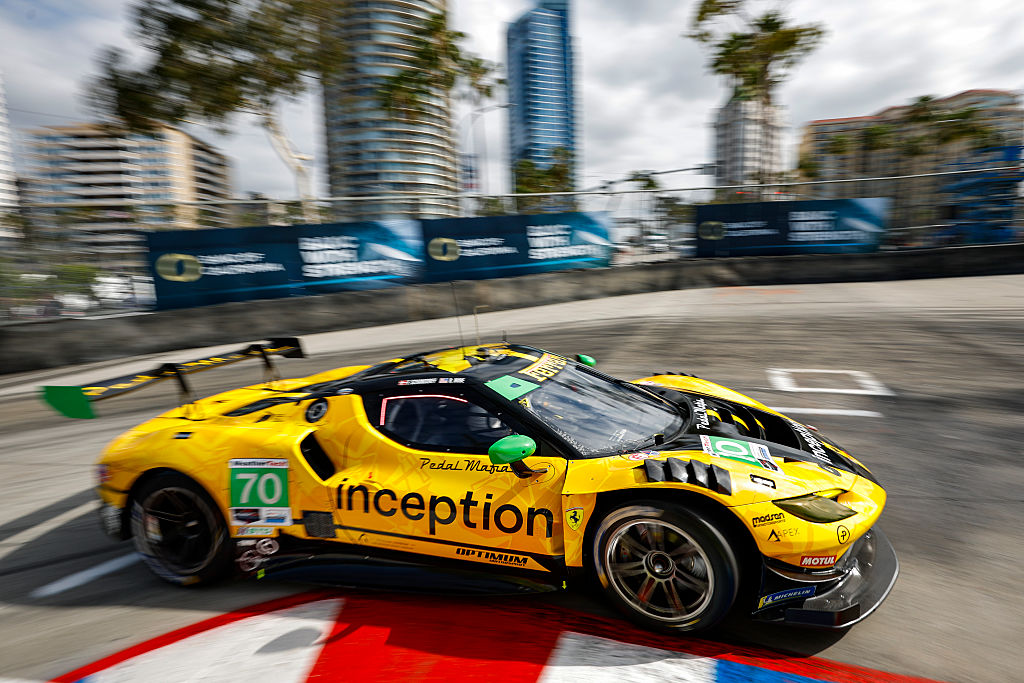
It starts with a greatly reduced field comprised of 12 Prototype and 10 GT Le Mans entries, not to mention the short 100-minute duration, for the Tequila Patrón Sports Car Showcase At Long Beach race.
In terms of a stress test, Long Beach won't tax IMSA's staff or procedures. Compared to Sebring, it's a softball being floated right over the plate and they couldn't ask for an easier home run to hit. Things get harder at Round 4 when all four classes return to action, although the split Prototype/GTLM and PC/GT Daytona races will keep the Monterey event from being too hard to handle. The same is true for Round 5 at Detroit, which will only see Prototype and GTD running.
The first opportunity to measure IMSA's growth since Sebring will come at the Six Hours of The Glen in late June when all four classes share the track. Throw in the wonky PC+IMSA Lites event at Kansas earlier in June, and IMSA has five chances to improve its procedures and the quality of its contests before it has to manage 60-plus cars at the same time in upstate New York.
For now, IMSA has a perfect opportunity – a safe first step--to distance itself from its self-inflicted ills of March. While IMSA has everything in place for a progressive reboot, I'm not sure that's true in every corner of the paddock, or for the loyal sports car racing fans who've been troubled by the TUDOR Championship's bumbling debut. For those outside of IMSA's halls, getting past Sebring will take a conscious effort to stop picking at a festering wound.
I'd be lying if I said all of the drivers and team principals are now happy after weeks of venting and receiving private mea culpas from the TUDOR Championship offices in Daytona Beach, yet there is a strong sense that everyone needs to move on. If there's a common theme I've come across in conversations over the past few weeks, it's one of "we'll forgive, but won't forget."
Fair enough, and I'm not sure I'd expect much more at this stage from the men and women spending millions of dollars to race with IMSA.
Following the theme of forgiveness and restoration, it's easy to become engrossed by the problems the series is facing, but in every instance, the issues are known and entirely fixable. If there's one big takeaway from Sebring, and even the Rolex 24 at Daytona to a lesser degree, it's that the men and women who participate in the series want it to succeed. As much as it might come as a surprise to the TUDOR Championship's biggest detractors, the folks at IMSA are even more committed to its success.
Everything I've mentioned so far leads up to one conclusion: If there's a proverbial line in the sand to draw, it comes, fittingly, at Long Beach.
Rounds 1 and 2 were troubled, with the 12 Hour feeling like a drunk buddy blacking out and throwing up on everyone at the party. We've read every story, explored every angle, and the history books will duly reflect its place atop the pantheon of bad events, but if sports car fans and participants are unwilling to let go of March 15, it's hard to fathom how the series will recover. Simply put, IMSA must be given a chance to show it can improve, and maintaining a steady barrage of negativity won't help.
Fantasy scenarios about a breakaway series are just that: fantasy. Teams, drivers and manufacturers need the TUDOR Championship to succeed just as much as the folks in Daytona need the merged series to thrive. American sports car racing seems to always have some sort of expiration date for whomever owns the latest acronym – USRRC, IMSA, PSRRC, GARRA, ALMS – and if history is anything to go by, I'll live through two or three more ownership changes, but we sure as hell don't need one right now.
That's not to say blatant errors and shortcomings should be ignored during IMSA's reputation reclamation project; pressure is being applied from every angle in the hope that IMSA and the TUDOR Championship's leaders deliver a better product, but there's a difference between pressure used to heal and it being piled on with a goal of destabilizing the sport. It's also worth noting that many of IMSA's manufacturers have banded together in a way I've rarely seen.
They're fighting to make the series better and to make sure it remains a viable expenditure. If they didn't care, they'd keep quiet and withdraw at the end of the season, but their active efforts to help IMSA raise its game should be applauded.
All of this sets up a perfect scenario for IMSA to administer this weekend's event with fewer variables to juggle. Instead of 60 or more cars and four classes, it has barely 20 and two to deal with – one less than the Verizon IndyCar Series will field at Long Beach.
Twelve hours of "God knows what could happen" has been reduced to an hour and 40 minutes of spring racing. I'd also imagine IMSA will be under more scrutiny to get the Tequila Patrón Sports Car Showcase right than any other sports car series in recent history, and you can be sure the folks in race control will be under strict orders to quadruple check any penalty calls before they are made.
A more robust penalty review process has been implemented, an additional driver steward has been installed, a smarter approach to caution periods has been established and I'm hoping the itchy trigger finger that tarnished the first two rounds will be replaced by a more moderate outlook on officiating.
Adhering to the letter of the law has been IMSA's view for the past few years – even before its purchase and transformation into the TUDOR Championship's governing body – and the hasty penalty calling has certainly continued. Once IMSA learns to embrace a "spirit of the law" approach to its races, I'm fairly certain we'll have a more enjoyable product to support.
It's being done through gritted teeth at times, but I'm rooting for IMSA to execute a wholly ordinary race on Saturday. I'd love nothing more than to see 100 minutes of hard-fought action and, if it's necessary, appropriate penalties called.
Perhaps it's easy to forget that the majority of the people calling IMSA's races today have done so since at least 2012. They've gotten it right many times before, and given the breathing room by fans and participants, I'm confident they can find that form again starting at Long Beach.

Latest News

Comments
Comments are disabled until you accept Social Networking Cookies. Update cookie preferences
If the dialog doesn't appear, ad-blockers are often the cause; try disabling yours or see our Social Features Support.