.jpg?environment=live)
Marshall Pruett’s Racing Tech Mailbag for March 21
Welcome to Marshall Pruett’s new Racing Tech Mailbag on RACER.com. If you have questions about the technical side of the sport for Pruett, who spent most of his life working as a mechanic and engineer in open-wheel and sports car racing, send them to PruettsTechMailbag@Racer.com. We can't guarantee your letter will be published, but Marshall will always reply.
This week's Mailbag was split into two parts since the questions were too numerous for one article. Click here to read Part 1
First of all I love the mailbag – I love the tech in sports car and open-wheel and until this point have felt underserved in this capacity.
For some reason I've always been intrigued by the underdog LMP cars and the Acura 02a is one of my favorites. To me it seems like a real shame that it wasn't given a true opportunity to compete with the big dogs and shine in the ALMS.
In 2009, Scott Dixon won the Sebring pole over Audi and Peugeot-even using rear tires on the front. Mulsanne's corner said proper tires were worth 2.5 at Sebring, which makes me wonder if they would have had a chance with those. I know the power/torque deficiency was huge in traffic but downforce/grip is worth a lot as well (Red Bull in F1 for example).
Given a proper tire and decent budget from Honda do you think the 02a could have won at Sebring or some of the twisty ALMS tracks with Audi/Peugeot? Or, was the engine just too much of a dog? I've always wondered if it was even as good as an LMP1 Judd or AER from the era. It seems like the LMP2 engine was down a bit on power compared to the Porsche so that could have been a trend that carried over to LMP1.
Thanks for your time and excellent work.
-James
MP: It might be worth going back and reading more about the car. It was the first to use wide front tires – a trend followed by Audi, Peugeot, and all P1 cars afterward. The limitation was the tire construction itself; Michelin did not manufacture a dedicated wide front tire for the car, which reduced its cornering potential, but the Wirth Research-designed Acura ARX-02a was a big step forward in aerodynamics and handling. It won eight out of 10 races, but couldn’t match the power, torque or mileage of the turbodiesels. Given more than one year to develop the car, bespoke wide front tires and an equivalency formula that was so heavily skewed toward diesels, I have no doubt it would have been a contender against the big factory teams.
F1 and IndyCars are now into this V6 Turbo era, but...
What’s up with it? Why are they moving from V8 to V6 Turbo? Is a V6 Turbo engine really cheaper than a V8? Or muuuuch more durable? Or they are just trying to be a "wanna-be ECO FRIENDLY"?
I imagine you can produce the same power in "certain levels" so go with a V6 would be relative the cheaper choice, but four-cylinder turbocharged engines are even cheaper and also can produce de same power in "certain levels" (please don’t get me wrong) so why not go further and throw away the V6 and save more money?
Giu Canbera, Sao Paulo, Brazil
MP: Honestly, Giu, I don’t see this latest F1 engine regulation change as anything other than an eco-marketing ploy, as you suggest, which doesn’t fit F1’s image as the fastest, most uncompromising form of motorsport.
Since turbos were reintroduced to the Indy Car Series in 2012, one thing has always bothered me, and that is how they have articulated the allowable boost levels. Beginning in 2012, the boost levels were expressed in psi, and I believe the current maximum level, per Indy Car, is something like 22.5 psi. In recalling the previous turbo era from 1975-’96, the boost levels were always quoted in inches of mercury, and if I am correct, I believe in the final years the cars were restricted to something like 40 or 45 inches of boost for V8s. My question is, how does the current boost level compare with that of the past, and, why doesn’t Indy Car use the same measuring standard so casual fans like me can understand how the current powerplant relates to those of the past turbo era? Are they trying to further hide that the current engine is not very robust by confusing the issue?
Steve, Newport Beach, Calif.
MP: There’s nothing much to hide, Steve, nor is there a conspiracy to try and ferret out. IndyCar stated from the outset that its new turbo engine formula would not utilize tons of boost. Inches of mercury was the common measurement style decades ago but, at least in the U.S., pressure – psi – is what’s most commonly used. Those who use the metric system tend to quantify boost in bar or millibar.
Some of the old Offy engines could see boost pressures over 50 psi in the 1970s, but some drastic measures were taken – welding the head to the block – to keep the pin from being pulled on the grenade.
Assuming no new aero kit, or any other changes, how much horsepower would be required to run a 237.5mph lap at Indy
Pete
MP: Great question, Pete, and one I can’t answer definitively. Assuming qualifying power is up (we don’t know what the final boost level will be), I’m told an extra 7-8 horsepower is needed to gain 1mph. I’m also told an increase of 60-70hp over what teams had at Indy last year would put Arie Luyendyk’s 236mph average in jeopardy.
Regarding Tim Falkiewicz's question last week about turbo-inlet placement for Indy cars, is there an advantage whether it is overhead or in the back of the engine cover like from the CART era? If the difference is minimal, is this something that could be used to differentiate the cars from one another along with the aero kits.
John Risser, Muskego, Wis.
It’s mainly about clear airflow to the rear wing, John, and lowering drag by eliminating extra body surface. Getting the big periscope intake off the top of the engine and lowering the engine cover will help the cars cut through the air. The turbo intakes, wherever they end up on the aero kits from Chevy and Honda, won’t be large.
Marshall, I’d love to wander the Speedway Museum with you and discus all the different racecars I’ve seen and the memories. I’m sure you have more than a few as well.
I have sons/daughters, grandsons/daughters, and now great grandsons /daughter who attend the “500” and all the surrounding events and what will they be able to show their kids when they take them to the museum?
Why from a technical point of view should my grandkids and great grandkids want to watch the “500”? I have watched them getting out their electronic games during races on TV and one even did it at the “500” last year...his dad took it away! If a kid that has grown up in a family in which racing is next to God and family is bored with IndyCar...where do we get new younger fans?
Ted Wolfram
MP: Well, Ted, it’s not like the 2014 Indy 500 will feature anything less on the “what’s technically interesting” front than we’ve seen since CART raced at the Speedway. That doesn’t mean the cars/race will lack interesting technology, but it’s tightly controlled and only visible to those few who can peek inside the engines. Chevy and Honda continue to do some pretty cool things, but as both do not reveal very much about the inner workings of their motors, it’s hard to sit your grandkids down and explain why Chevy and Honda went with different V angles, bores and strokes, etc. We’ll have some cool stuff to look at when aero kits arrive for 2015, so keep the faith.
Can we talk about how F1 and the new sound sucks? It's like watching a remote control car. Where are the screaming sounds? What inspires me about silence, and "power units" or whatever the PC police want to call an engine? Nothing. I am not inspired. They missed the mark, and it’s a huge miss.
I am a diehard race fan. I watch dirt track racing, NASCAR, IMSA, I race myself, I produce a lot of YouTube videos about racing. I was shocked and almost instantly bored with the new F1. You can't tell what the heck is going on. It’s just cars moving on the screen.
Talked to my buddy who was there and says you can't even tell when the cars are on track! YUCK! No thanks!
Craig the contrarian
MP: Well, I am a sucker for the sound of a good turbocharged racing engine, and have a particular affinity for F1 turbos from the 1980s, but I will admit the 2014-spec F1 engines do nothing for me. If they can dial up the power, the sound quality will improve.
Unless I missed it, I haven't seen this vid linked on RACER yet. I think it's perfect to add to your next mailbag – it's wild!
Steve Casper, Eden Prairie, Minn.
MP: Thanks, Steve – we posted this on RACER last week but here it is again for those who missed it:
Is there a good reason that NASCAR racers lack the doors found in stock formulas the world over?
Lew
MP: That’s just the way they’ve done it for decades, Lew. NASCAR has always set its own standards – what goes on with body shapes and styles in other series has rarely influenced their products.
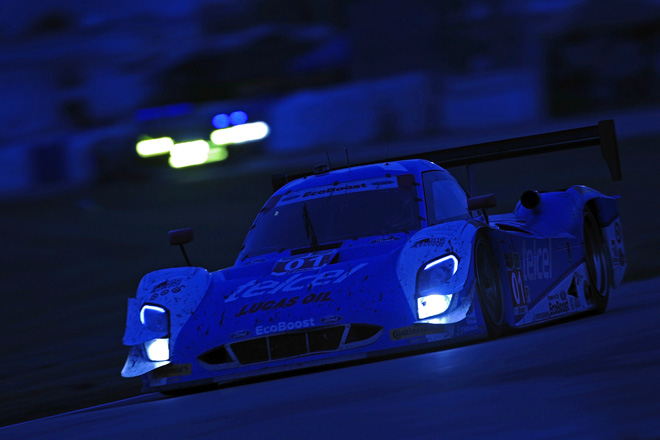
Jim Blue
MP: Great question, Jim. I’ve engineered a Daytona Prototype, but it was long before the new high-downforce package, new tires, etc., so I asked my man Chris Simmons, who engineers Ganassi’s Indy cars and DPs, to help with a more exact answer to your question than I could provide:
There are a lot of things that change from day to night racing, but with ground-effect cars the temperature of the track can have an amplified effect. The splitter on the DP car has always run in ground effect, but with the new for Sebring diffuser the ground effect is amplified, front and rear. Ground effect aerodynamics are a very complicated field, but in short they use the ground to seal the air on one side and parts of the car then form venturi tunnels, vortex generators, or other surfaces to generate a low pressure area under the car. During the day, especially when it is sunny, the air near the surface of the track is considerably hotter than even the measured temperature. This has a major effect on ground effect cars and particularly the parts of the car that are in closest proximity to the ground.
On a DP car somewhere around 35-45% of the aero downforce acts on the front (this is commonly referred to as the center of pressure (CoP), or aero-balance). What this means practically is that the rear of the car tends to be touching the ground at the end of the fastest straight, but the front is touching the ground under braking. In the corners at slower speeds the rear tends to come up more than the front as more total load has come off the front than the rear (relative spring stiffness front to rear also has an effect) so the front is more affected by the track temperature than the rear under cornering.
So, what you end up with is a balance shift from day to night that is even greater than you would expect from just looking at the temperature on a weather station. Every racecar setup (with the possible exception of active suspension) is a compromise, and the 01 team setup their car to have a better balance at night with cooler track conditions. Almost every adjustment on the car will act a little differently at night versus during the day, but in the most general terms just getting the aero-balance correct in the corners for the nighttime will get you a long way to the right setup. You will typically fight understeer, especially on corner entry where the splitter is at its lowest, during the warmer daytime conditions. It seems the 01 guys chose the right compromises this time!
With the introduction of the DeltaWing being close to five years ago now, what are your thoughts on the car from an engineering and performance standpoint? The car's merits are obvious, but has the car's various iterations (Nissan DW, Elan DW Roadster, Elan DW Coupe, and Nissan Zeod) proved the concept? Has a lack of funding and the loss of Ben Bowlby for the Panoz group harbored the improvement and potential performance?
Michael, Indianapolis
MP: It was March of 2012 where the car turned its first wheel at ButtonWillow in Southern California, so if we’re talking about the first real car, it’s only 24 months old. I’m a big fan of the car – in DeltaWing or ZEOD form, and the concept’s originator, Ben Bowlby. It’s obviously different, obviously weird, and that’s a good thing. The DeltaWing coupe has come a long way, and could use some additional power and a more effective transmission – it can’t power through corners after braking has been completed – to improve its lap times. More downforce would also help at the faster tracks, as well. Don Panoz has spent a fair amount on the car, and seems committed. The ZEOD hasn’t done a ton of miles, but it’s the logical evolution of the car and features a wickedly cool 3-cylinder engine and hybrid system. The concept, to me, is proven, but being proven and being successful are two different things.
The results are in from Sebring and for the second straight race, the DPs were marginally faster than the P2s and DPs have taken two wins. P2s qualified slower than last year – and this at what most thought would be the P2's natural habitat. What should we think about the Prototype BoP? Is the deck stacked against P2 or has it been that those teams have been outsmarted on strategy?
A second question: what is it with GTD finishing higher than GTLM?
Paul Lewis, Macon, Ga.
MP: The P2s really came on strong once the temperatures dropped and the sun went down, so they can hang with DPs, but yeah, we’ve yet to see an official session where P2 cars had an advantage over DPs. That could change at Long Beach, and Detroit, but I’m just not seeing how the P2’s lighter weight and super late-braking capabilities overcome DPs everywhere else on the calendar. Tweaks to the BoP can be made, and would tip the favor in any direction IMSA chooses. As for your second question, I’m not sure what you’re referring to as GTLM cars have out-paced and finished ahead of GTD cars at Daytona and Sebring.
Brian Henris
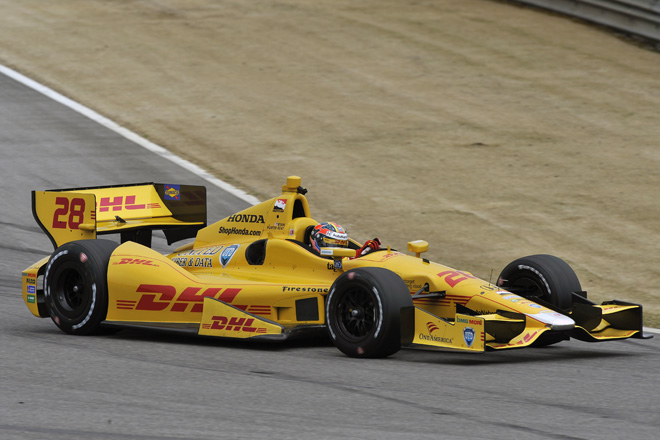
In a spec formula like IndyCar, it could be huge. Every driver demands different things at different times – some brake late, roll through the corner and want pull power on exit, while others might brake earlier, have a lower entry speed and look to carry more mid-corner throttle. The more individualized the engine mapping, the more tailored the power delivery to match a driver’s style. Knowing how conservative most engine technicians are at the moment in IndyCar, I’d expect the driver-specific mapping to be dialed up after St. Pete.
How did F1 engine designers manage to get a 15,000 rpm engine sound like the TR-4 I used to race? The old turbo race engines, Indy and F1, didn't sound like that.
Tom Phillips
Think of it this way, Tom: F1 found a way to match the disappointing sound with disappointing looks. Here’s a video of one of the best-looking F1 cars ever built, the Jordan 191, and its rather pedestrian Ford HB V8 being warmed up. It sounds better, and makes me smile.
What is the deal with the DeltaWing? Besides the obvious lack of reliability, when the car is in the track, from the video you showed in Sebring, it has to brake early and it lacks power.
Why they don´t cry for a BOP adjustment? All the other manufacturers seem to do so.
If its advantage is efficiency and can stop less for fuel and tires, maybe IMSA should let them play that card.
Carlos Villalobos
I’m not sure how much is left to adjust, Carlos. It’s already light, makes good power, etc. With a different engine, which they asked Honda about late last year, it could be a front-runner.
I've been following F1 quite closely since the new rule changes were announced and watched the first race in Australia. Much of the focus is on the energy recovery systems. There are two systems. The first is the kinetic energy system that transfers the deceleration of the car under braking into electrical energy which is stored in a battery and re-injected into the drivetrain when the foot punches the accelerator. The second system is new for this year. It takes heat from the turbocharger and uses it drive an electric motor to keep the turbo spin at max rpm. This has the benefit of greatly reducing turbo lag.
What I want to ask is if we could see any of this stuff in IndyCar? I pretty much know the answer to the first system. It's heavy. It’s very expensive and close to useless on an oval, so that's highly unlikely. But the second system is intriguing. The additional weight is minimal but I don't know much about how it would affect the cost of an engine lease. It would also necessitate mandating all engine suppliers use a single turbo configuration. So it’s obvious that such a change is unlikely to happen before 2017. Nonetheless I would love to see IndyCars sliding around exiting corners on road courses the way F1 cars are doing now. What's your take?
Bob Marston
One area of PR spin with the turbo-based ERS system is that is somehow uses exhaust heat to create electricity. In reality, it’s just a shaft connected to the turbine that spins an electric motor to generate energy. The energy can be sent back through the shaft to keep the turbo spooled up when there’s minimal exhaust gas spinning the turbine wheel. It’s an interesting development, and one that at least Honda has expressed an interest in for IndyCar, but I don’t know if the average fan cares. If it helps Chevy or Honda to sell more cars and invest more money into the IndyCar Series, I’m all for it. Let’s do it today. If it’s just a marketing ploy that costs a lot and does little to drive more fans to watch on TV or to buy the products of the sponsors and manufacturers involved in IndyCar, let’s save the money and spend it on more advertising.
What is the technical reason we need a 24-minute yellow for a stalled car? Conspiracy theorists will tell you that the yellow flew to bunch up the field to have a shootout to the finish. The opposite happened. Because of this yellow there was a considerable gap between the class leaders who had already pitted and those that had to pit. The yellow robbed us of an exciting finish. Had the race restarted after a 10-minute yellow it may have led to a more exciting finish. I’m OK with the wave-around in these endurance races, but the yellow flag periods need to be better.
I did the math and I figure the procedure for wave-arounds and what not requires a minimum of six laps of yellow. Six laps of yellow at 60mph (assuming the pace car does 60mph) at Sebring means a 23-minute yellow period. The final two hours of Sebring, Daytona, Watkins Glen, and Road Atlanta should be able to be cut to four laps of yellow. Lap 1 pace car gets leaders of each class. If you’re ahead of your class leader you bypass the pace car (if you get it wrong you lose a lap we saw it happen in Daytona). Lap 2 pits open to lead lap in class prototypes and GT cars. Lap 3 anyone not on the lead lap in class can pit or take a wave-around. Lap 4 green flag. I’ve just given them seven more minutes of green flag racing at all 3 tracks.
Ryan
MP: You raise a great point, Ryan, on the track length, speed of the pace car, time required for cycling classes through pit stops, etc. Simplifying tow-ins and other non-emergency cautions is a must for the series. One driver who is smart, a champion and sick of the wasted time under yellow, proposed going to a mandatory pit lane speed limiter zone, demarked by start and end cones before and after the safety crew, to allow the racing to continue without a long and drawn out process like we saw at Daytona and again at Sebring. I’m not saying it’s the best idea or without some issues, but it’s a creative approach to something IMSA thinks is black and white. As I’ve said a few times since Saturday, be lucky the caution for Curran’s stalled DP fell with 51 minutes left. Imagine if it happened with 30 minutes left on the clock. Based on the 32 minutes it took to go through the full-course yellow procedure, the 12 Hours of Sebring could have ended under caution for a stalled car…
Did IMSA have a tech shutdown that didn’t allow them to see one of the most horrible calls in modern motorsport? Why was the # 912 Porsche RSR not penalized for punting the # 49 Ferrari in the Mobil 1 Twelve Hours of Sebring? Why was that Daytona Prototype not pushed behind the nearest wall during the final caution? What Prototypes, if any, were able to take Turn 1 at full throttle?
Rick
MP: It wasn’t their finest day, for sure, Rick. Your first two questions are bit like asking “How long is a piece of string?” There’s no answer. I’m unaware of DPs taking Turn 1 flat at Sebring. Scott Dixon told me they were downshifting from sixth to fourth.
Do you know why HPD's Technical Director Roger Griffith resigned last week and do you think his leaving will be a weak link in the near future of Honda's Indy car program?
Henry Kim
MP: I spoke with Roger today, he’s doing fine and I hope to see him at a track very soon. The reasons for his departure aren’t public, and I’ll respect his wishes to keep it that way. Yes, his loss will definitely have an impact on HPD’s open-wheel and sports car programs. Can he be replaced? Without a doubt, but he wore so many hats and did so much to drive the organization forward, it will likely take some time before a person or persons are put in place to steady the ship. It’s a talented company, but this was a major blow that no one expected.
P.S.- F1 has not been this exciting in years.
Dan, Louisville, Ky.
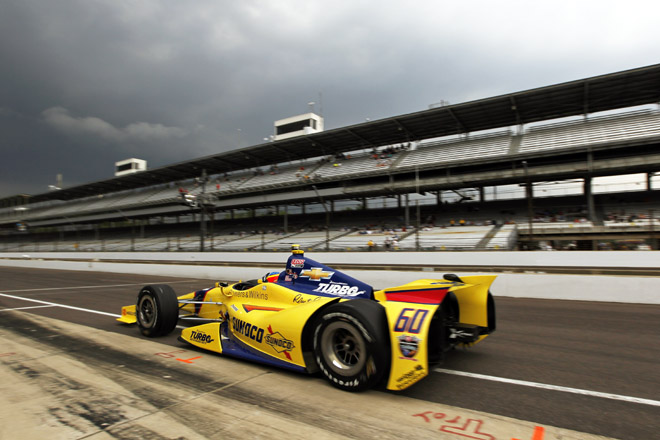
MP: Indy cars already run with their single-element rear wings tipped so far back in qualifying they look like they’re about to fall off. DRS works by taking a two-element rear wing and opening the gap to make the upper element lay flat – two totally different wing layouts and systems. F1 came up with DRS because its races were often boring and/or had few passes taking place. If you’ve watched IndyCar since the new turbo formula came in for 2012, excitement and passing have been its two greatest attributes. Hopefully, no one monkeys with the formula.
I was wondering if you might be able to give some insight on why there is such a difference in the engine sounds between IndyCar and F1? Is it because the F1 engine doesn't have to work as hard because of the electric motor helping? It certainly doesn't sound like the F1 engine is revving that high. The new Pirelli tires certainly seemed to not give off much clag/marbles on the track until near the end of the race and was wondering if that would be something that Firestone might be able to emulate?
Jake
You’re right on with the first question, Jake. More fury, more sound, less fury… Firestone has never had a major issue with marbles that I can think of in recent years. Comparatively heavy, high-downforce Indy car will definitely grind away at their tires, depending on the abrasiveness of the track surface, but that has nothing to do with Firestone, frankly.
With the new aero kits coming next year to Indy car, I guess we can assume the new designs will include rear wheel guards…. My hope was that the value they brought to the party was minimal and they would be eliminated. Can you elaborate on whether or not there has been any consideration of doing away with rear guards?
Ron Hampton
I think we’ll see the wheel guards stay, but as I mentioned in the last few Tech Mailbags, there could be a few changes to the final product. We know IndyCar called for stiff wheel guard mountings for 2014, which will hopefully improve their effectiveness, but other than going to steel cages around the wheels, I’m not sure a carbon fiber box hung out on a beam will be able to stop the kind of impacts most people think they should be able to withstand. If anything, our expectations are probably too high.
I typically would side with a series when it comes to tech infractions, since teams believe that, “If you aren't cheating, you aren't trying.” If we knew the fuel flow sensors were accurate, it's an obvious DQ for Red Bull in Australia. However, the FIA asking Red Bull to change fuel flow sensors seems to be a pretty good indicator that these sensors aren't reliable. Is it the team's responsibility to provide an accurate sensor? How does the FIA know that one sensor is OK, but another isn't? It sounds like the FIA's backup fuel flow calculation procedure is cumbersome and not accurate either. This sounds like a witch hunt: tie the witch up and toss her in a lake. If she floats, she's a witch. If she drowns, she wasn't.
I understand the attractiveness of performance balancing – allows dramatically different technologies compete against each other and keeps the racing close. But I'm sick and tired of hearing sports car teams complaining about BoP. I recently read an article about a team's successful season despite competing with the deck stacked against them because of the BoP rules. Is this whining and politicking a necessary evil when a series is making BoP updates after every round? A few years ago IndyCar had a single midseason exception to its engine freeze for a manufacturer that could prove it was down a certain percentage of power, and that seemed to eliminate some of the whining.
How are BoP adjustments made? Will an increase of 200 rpm increase top speed by 2mph? Does a 30-pound weight increase reduce cornering speed by 1mph?
Kyle in Raleigh
MP: The answer to everything you’ve asked either involves data or testing. Data can drive information to make a quantified change or prove/disprove whether something is functioning according to expectations. And where data is lacked, it’s often as simple as allowing a team to test with an extra 200 rpm to see what it delivers for extra speed and lap time.

Latest News

Comments
Comments are disabled until you accept Social Networking Cookies. Update cookie preferences
If the dialog doesn't appear, ad-blockers are often the cause; try disabling yours or see our Social Features Support.