What is BoP?
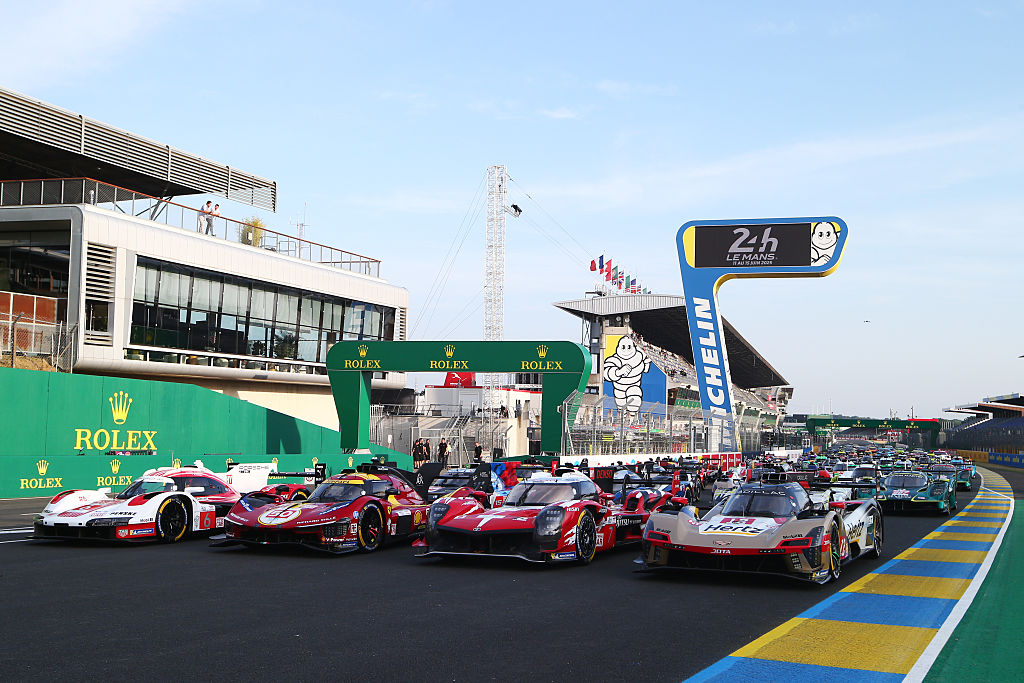
Balance of Performance (BoP) is a system used in multi-manufacturer racing classes – most notably GT3-based classes like LMGT3, GTD, and GTD PRO, as well as WEC's Hypercar class – to artificially equalize performance between fundamentally different cars, so that a wide variety of manufacturers can race competitively against each other despite building genuinely different machines.
Unlike IndyCar's spec chassis (where every car is mechanically identical) or F1's cost-capped-but-still-open engineering, GT3 and Hypercar-class racing intentionally allows different manufacturers to build very different cars, each with its own engine layout, aerodynamics, weight distribution, and power delivery. Left alone, some of these designs would simply be faster than others, and the class would turn into ‘whoever designed the best base car wins’, rather than a genuine contest of teams and drivers.
How it works
The sanctioning body monitors each car's real-world and simulated performance, then adjusts a handful of variables to bring them closer together:
- Weight: Adding ballast to a car that's performing too well, or removing it from one that's underperforming.
- Power/torque: Restricting engine output (often via boost or fuel-flow limits on turbocharged cars) for cars judged too fast, or opening it up for cars judged too slow.
- Aerodynamic elements: Occasionally adjusting ride height or minor aero components, though this is used more sparingly than weight and power.
- Fuel tank capacity: Sometimes adjusted to equalize how often different cars need to pit, since a car with better fuel efficiency naturally gains a strategic edge.
How adjustments get made
Sanctioning bodies collect enormous amounts of data – lap times, sector times, top speed, telemetry from every car at every event – and compare it against target benchmarks. If a manufacturer is consistently outperforming the field, its BoP gets tightened (more weight, less power) for the next race; if it's lagging, it gets loosened. This is typically reviewed and adjusted race-by-race or even session-by-session, which is why you'll often see a manufacturer dominate one weekend and then struggle the next after its BoP numbers change.
Why it's controversial
Since BoP is applied by officials rather than emerging naturally from competition, BoP decisions are frequently accused of favoritism, inconsistency, or being reactive rather than predictive. A manufacturer that wins convincingly at one race often gets "balanced" harder for the next, which some argue punishes good engineering and driving rather than truly leveling the field.
Manufacturers lobby hard (and sometimes publicly complain) about their BoP numbers, and controversies over perceived unfairness are a recurring storyline in GT3 racing and now Hypercar competition.
It's fundamentally different from a spec chassis approach (IndyCar) or a cost-cap-with-open-design approach (F1) in that BoP tries to have it both ways: real manufacturer diversity and identity, but forced-parity results, which creates philosophical tension since it means the best-engineered car doesn't necessarily win; the best-BoP'd car does.
Why it exists despite the controversy
Manufacturers get to race recognizable road-based (or road-derived) cars carrying their own brand identity, which matters enormously for marketing and fan connection – something a spec series like LMP2 doesn’t offer. BoP is essentially the trade-off that makes that brand diversity possible without one manufacturer's engineering department simply winning every single race by default.
Latest News
.jpg?environment=live)
Comments
Comments are disabled until you accept Social Networking Cookies. Update cookie preferences
If the dialog doesn't appear, ad-blockers are often the cause; try disabling yours or see our Social Features Support.