Meg Oliphant/Getty Images
How does stage racing work?
Stage racing is NASCAR's system for splitting most Cup Series (and other national series) races into three segments, each with its own mini-competition and points payout, rather than the race just being one continuous event that only matters at the very end.
The basic structure
Every eligible race is divided into three stages. The first two stages are shorter segments; the third and final stage covers the remainder of the race distance and ends when the checkered flag actually falls.
The length of each stage varies by race and is announced ahead of time. For example, a 500-mile race might be broken into two stages of roughly 25% of the total laps each, with the final stage covering the remaining 50%.
What happens at the end of each stage
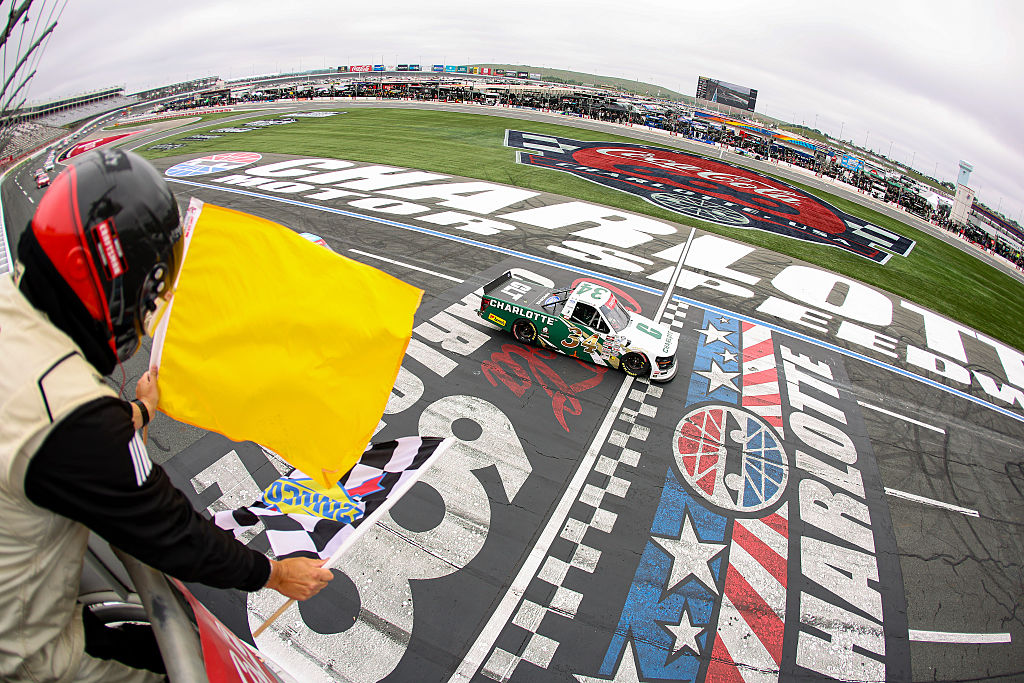
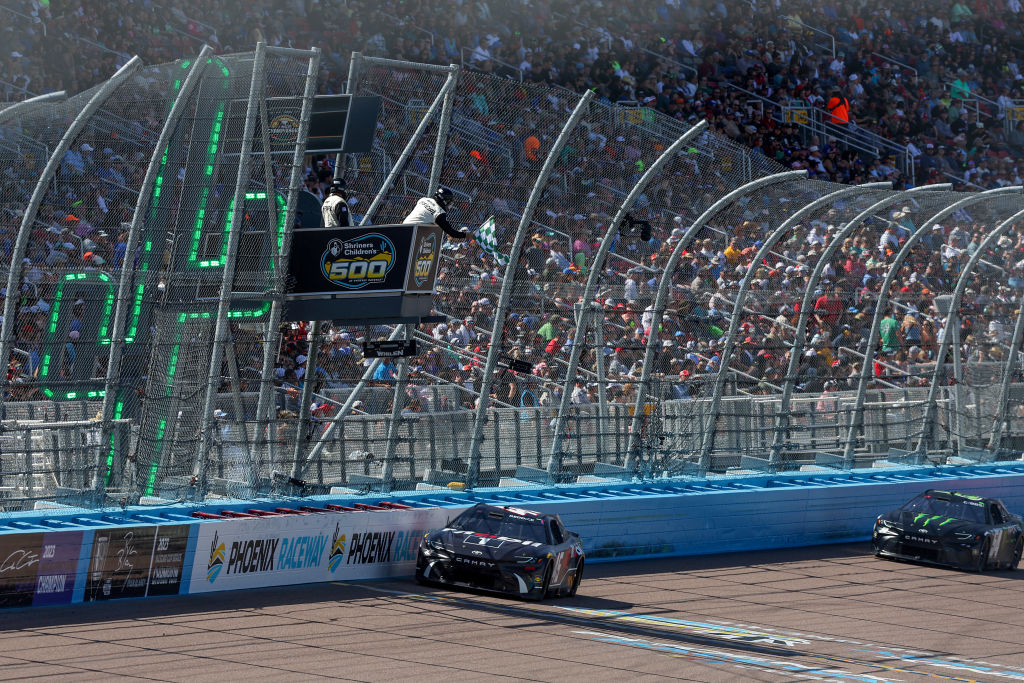
When a stage ends, the field takes a "stage break," announced to the field via a green and white checkered flag. Cars can pit if they choose, and the race pauses briefly before restarting for the next stage.
The top 10 drivers at the end of Stage 1 and Stage 2 earn stage points, on a descending scale (10 points for 1st, 9 for 2nd, down to 1 point for 10th). Those stage points count toward the regular-season points standings, meaning drivers can meaningfully boost their championship position even if they don't win the overall race.
Why it exists
Before stages were introduced, long Cup races could feel like nothing ‘mattered’ for much of the middle portion, with the real racing only heating up in the closing laps.
Stages were designed to create more incentive to race hard throughout the entire event, not just at the end, since there's now a meaningful mini-prize partway through.
They also add more natural pit stop and strategy windows, since teams can time their stops around the stage breaks, and give the regular season standings (which determine who makes NASCAR's championship playoffs) more texture. A driver who consistently finishes well in stages, even without winning races outright, accumulates a real points advantage.
Bonus points for the playoffs
Winning a stage earns a driver a playoff point in addition to the regular stage points, and winning the race itself earns additional playoff points too. These playoff points matter once the postseason begins: they carry over and get added to a driver's total heading into each round of the playoffs, acting as a cushion/advantage for drivers who accumulated strong stage and race results across the season.
What doesn't change
The overall race winner is still simply whoever crosses the finish line first at the end of Stage 3 (i.e., the actual end of the race). Stage wins don't determine the race winner, they're a separate, parallel scoring layer.
Points for final race finishing position (1st through last) are still awarded on top of stage points, using NASCAR's standard descending points scale
Latest News


Comments
Comments are disabled until you accept Social Networking Cookies. Update cookie preferences
If the dialog doesn't appear, ad-blockers are often the cause; try disabling yours or see our Social Features Support.