Michael Reaves/Getty Images
All about NASCAR’s Next Gen car
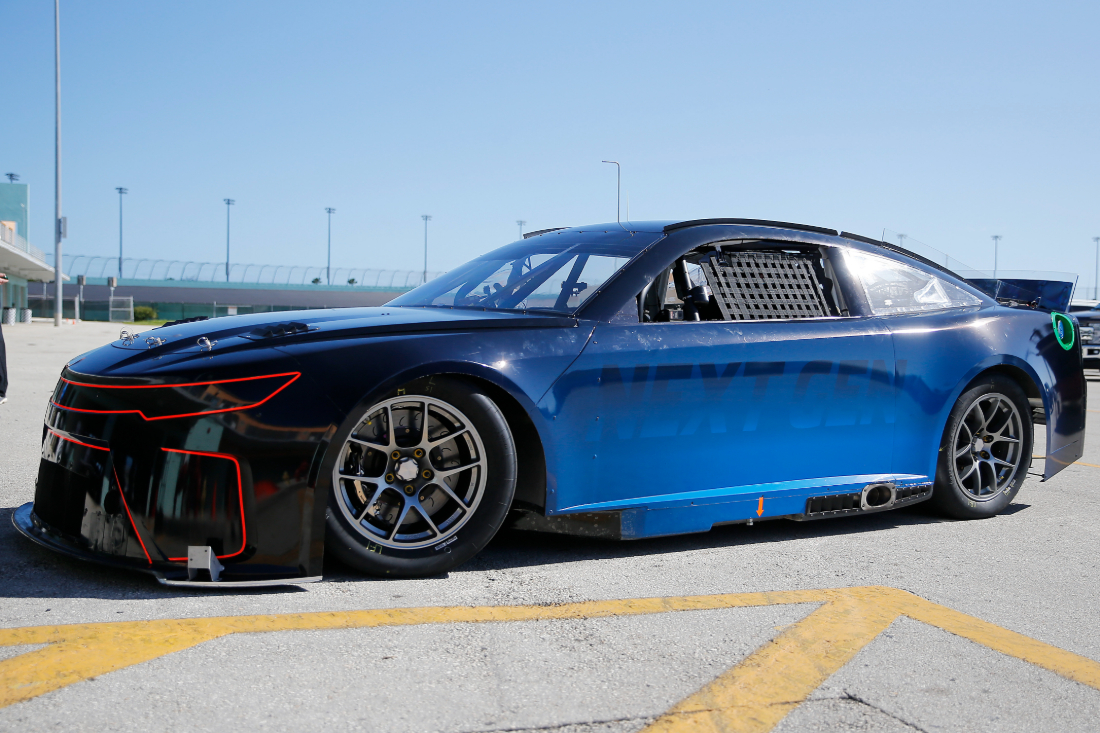
The Next Gen car (also called the Gen-7 car) is NASCAR's current Cup Series race car, introduced in 2022. It's the biggest overhaul the sport's top-level car has had in decades. It replaced the Generation 6 car, which had run since 2013.
Chassis & body
The Next Gen body is fully symmetrical, whereas old NASCAR cars had a right side made from a single flat panel, deliberately skewed to help stability while turning left at high speed. Since Next Gen is meant to race everywhere – ovals, road courses, street circuits – that oval-specific asymmetry had to go, and the car instead relies on nearly 1,000 pounds of additional downforce to achieve similar stability.
It's still a steel tube-frame chassis with an integral roll cage, but built with a modular design that allows faster construction and repair.
One car can now genuinely do it all – ovals, intermediate tracks and road courses – with only minor setup tweaks between them, unlike the old system where teams built specialized cars for different track types. This was proven when Ross Chastain won at both the Circuit of The Americas road course and Talladega Superspeedway in literally the same chassis, with only minor component swaps between the two.
Suspension & steering: a huge mechanical leap
Independent rear suspension replaces the old solid rear axle/truck-arm setup. Each rear wheel can now move independently, a massive handling upgrade over what was essentially 1970s-era underpinnings.
Double wishbones and five-way-adjustable coil-over dampers replaced the old truck arm rear suspension and live axle.
Steering moved to a modern rack-and-pinion system, replacing the old recirculating ball gear which, remarkably, had been based on a 1950s GM Saginaw truck steering box.
Transmission
A five-speed Xtrac sequential manual transmission replaced the old four-speed H-pattern manual. It's now packaged as a rear-mounted transaxle (transmission and rear gears combined into one unit), which also opens the door to future electrification.
Wheels & brakes
18-inch aluminum center-lock wheels with a single lug nut replaced the traditional 15-inch steel wheels secured by five lug nuts. The change also speeds up pit stops significantly, since crews no longer have to worry about missed lug nuts, which had been a frequent source of penalties.
Brakes are larger and higher-performance than on previous generations.
Aerodynamics
New aero elements include a stepped front splitter, louvered vents on the hood, and a redesigned side skirt, all aimed at reducing side force and improving performance in traffic. There’s also a rear diffuser, which is completely new to NASCAR and helps generate underbody downforce.
A full-length carbon fiber undertray runs underneath the car, feeding air from the front splitter through to the rear diffuser and shifting more of the car's downforce generation to the underbody rather than relying purely on the bodywork shape, which also lets the sheet metal above more closely resemble the actual road-going Camaro, Mustang, and Camry.
Engine: the one thing that didn't change (yet)
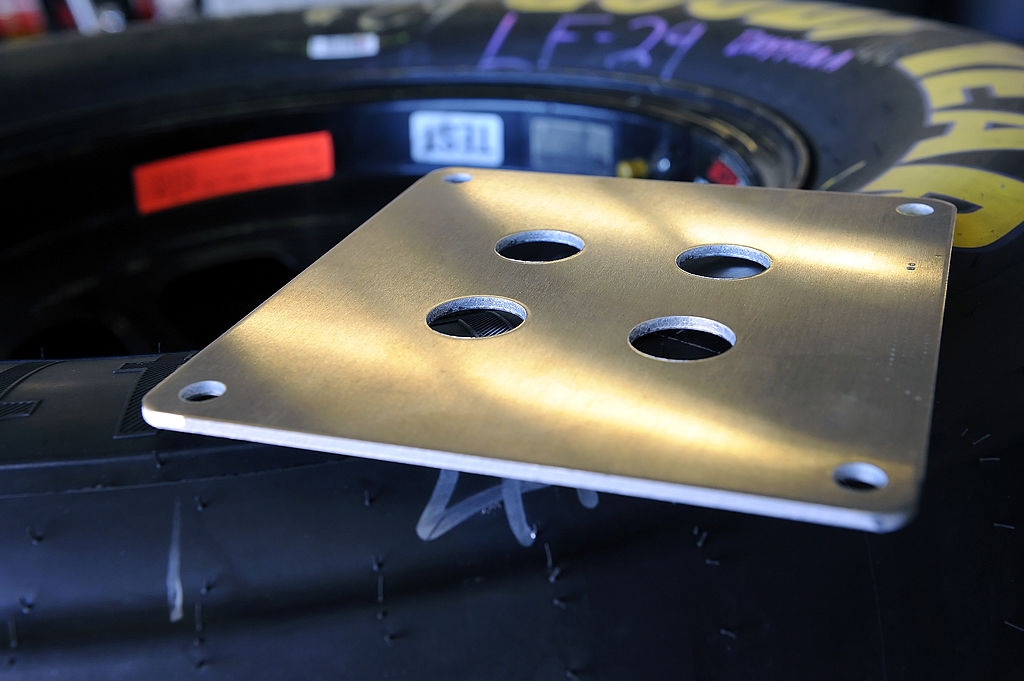
The engine itself was left alone. It’s still a normally aspirated pushrod V8, built by each manufacturer (Ford, Chevy, Toyota) rather than by NASCAR or a spec supplier.
Power did increase, though. Next Gen cars run 510 horsepower on the superspeedway package and 670 horsepower on the intermediate/road-course package, both up from the Gen 6 era. These packages are managed via a tapered spacer rather than the old-style restrictor plates.
Why NASCAR did this
The main goals were making racing more affordable for teams, attracting new manufacturers, improving driver safety, and creating closer competition. This was largely achieved by standardizing parts that all teams now buy from the same single-source suppliers, rather than teams fabricating most components themselves in-house.
It was also meant to make the cars look and feel closer to their actual showroom counterparts, reversing years of NASCAR cars looking generic and disconnected from the road cars they're nominally based on.
Latest News
Comments
Comments are disabled until you accept Social Networking Cookies. Update cookie preferences
If the dialog doesn't appear, ad-blockers are often the cause; try disabling yours or see our Social Features Support.