Jared C. Tilton/Getty Images for NASCAR
All about restrictor plates
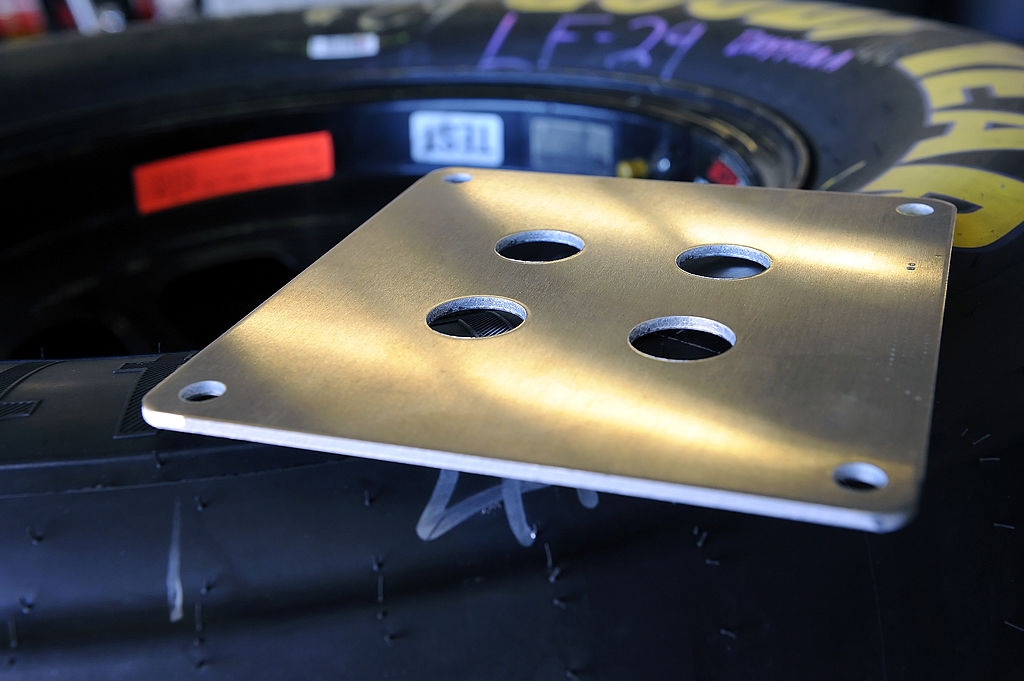
Restrictor plates are metal plates with small holes, installed between the carburetor and the intake manifold, that limit how much air and fuel can flow into the engine. This caps horsepower and, in turn, caps top speed.
NASCAR mandated restrictor plates specifically for its fastest tracks – Daytona and Talladega – starting in 1988, after a Bobby Allison crash in 1987 at Talladega resulted in his car going airborne and tearing through the catch fence, endangering spectators. Speeds at those tracks had been climbing toward 210+ mph, and restrictor plates were the fix: choking the engine's airflow to cut horsepower (roughly from 700+ hp down to around 400-450 hp) and bring top speeds back down to safer levels.
Restrictor plates had a major unintended consequence. Since every car's horsepower was capped to roughly the same level, cars couldn't easily pull away from each other on power alone. This bunched the field into large, tightly packed groups running nose-to-tail at nearly identical speeds, making drafting (and multi-car "big one" wrecks) a defining feature of racing at those two tracks specifically.
NASCAR has since moved away from restrictor plates in favor of the tapered spacer. It’s a similar concept (limiting airflow to control horsepower) but implemented differently and paired with more precise aerodynamic/downforce packages to fine-tune speeds. The tapered spacer is now what's used at Daytona and Talladega (510 hp) versus the higher-power package (670 hp) at other tracks, but the underlying goal – capping horsepower for safety at the fastest, most dangerous ovals – is the same lineage that started with restrictor plates in 1988.
Latest News


Comments
Comments are disabled until you accept Social Networking Cookies. Update cookie preferences
If the dialog doesn't appear, ad-blockers are often the cause; try disabling yours or see our Social Features Support.