The Tesla Roadster borrowed its trick from the Chaparral 2J
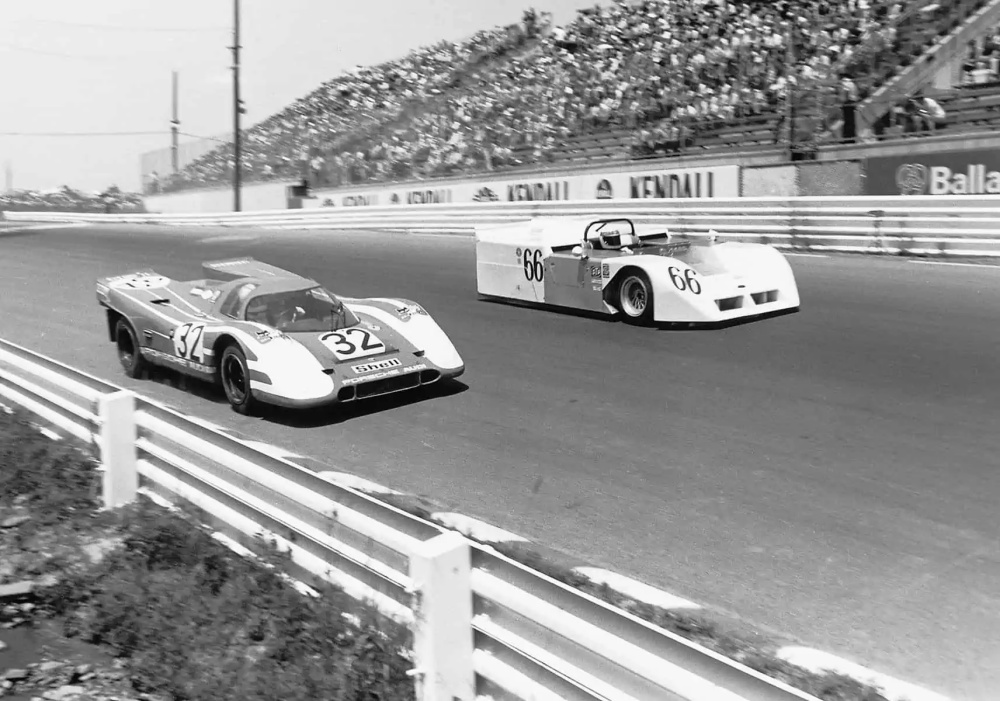
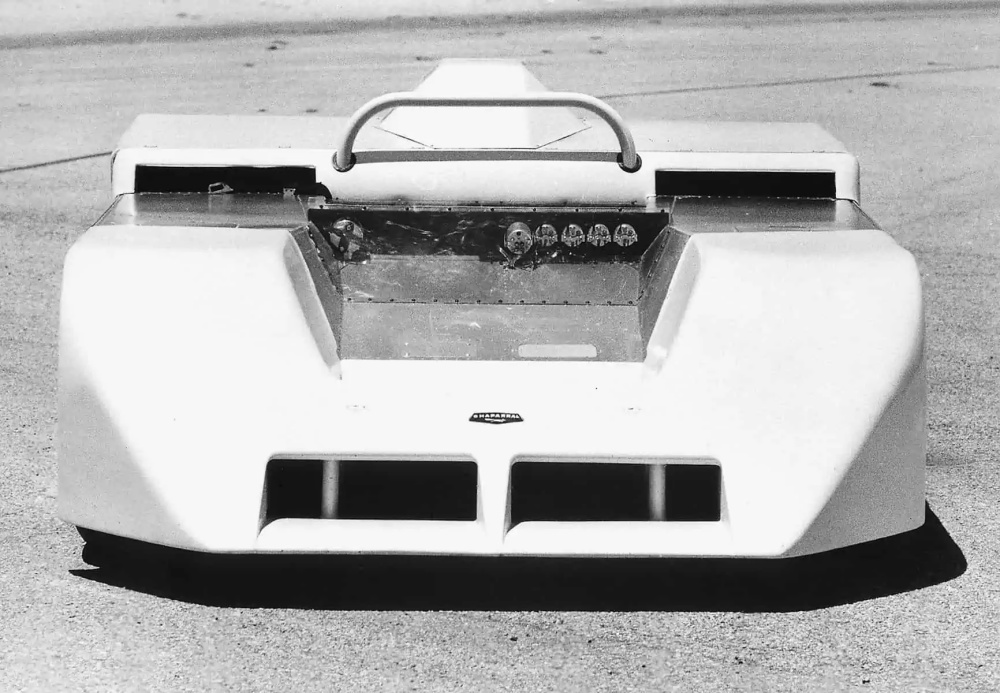
In 1970, American racing big dog Jim Hall built a car that practically glued itself to the racetrack using a pair of enormous fans. It looked like a shoebox. No, like literally: no curves, flat sides, so ugly that it nearly came back around to something I can’t help but call cool. It sounded like a fleet of snowmobiles lived beneath its planar body. Yet despite its crude looks and decidedly homemade demeanor, it was so effective at generating grip that its rivals wanted it banned from competition. More than half a century later, Tesla is bringing the same fundamental idea back with its already-viral Roadster.
The Chaparral 2J was one of the most radical race cars ever built, and its story is a reminder that some ideas arrive decades before the technology and regulations are ready for them. The Tesla Roadster's approach is considerably more modern, but the underlying physics would have been familiar to Hall and his outfit.
What was the Chaparral 2J?
Chaparral Cars was founded by Hall and Hap Sharp in Midland, Texas in 1962. Hall was an engineer and racer who couldn’t leave nothing well-enough alone. He challenged conventional thinking about automotive performance in ways that would have been seen as heretical. His cars experimented with lightweight construction, unconventional transmissions and aerodynamic devices that helped transform how racing engineers approached speed.
Karl Ludvigsen photo
The 2J developed for the 1970 Canadian-American Challenge Cup was perhaps his most outrageous creation. Underneath sat a Chaparral-tweaked 7.6-liter Chevrolet V8 making 680 horsepower, turning the rear wheels through a three-speed semi-automatic transmission.
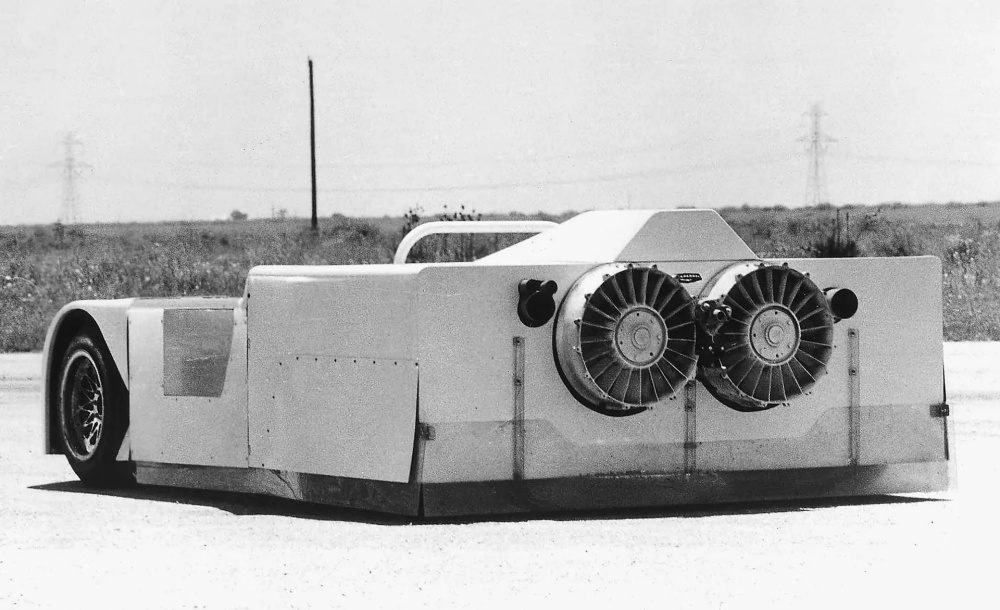
That engine wasn't the car’s most remarkable feature, not even close. At the rear were two 17-inch fans powered by a separate, air-cooled, two-cylinder 45-horsepower JLO engine. Rather than simply cooling the engine, these fans sucked air from beneath the car, creating a low-pressure area that atmospheric pressure effectively pushed downward.
The result was unnatural downforce no matter the speed. Conventional wings create downforce based on airflow, so their effectiveness increases with speed. The Chaparral 2J could generate substantial grip even at relatively low speeds, precisely where conventional aerodynamic downforce becomes less effective.
How the Chaparral 2J’s fan system worked
The secret was sealing the underside of the car. Tough, sliding skirts made from Lexan plastic followed the road surface as the suspension moved, helping contain the low-pressure area beneath the chassis. The twin fans continuously extracted air from that space, pressing the car down to the pavement and increasing the load on its tires. In all that science, the word that best describes what's happening here is suction.
The suction from the fans meant more tire load, which meant more available grip, allowing the 2J to corner and accelerate with extraordinary force. Chaparral's testing showed the system could generate roughly 2,220 pounds of downforce, potentially exceeding the car’s own weight under the right conditions.
Karl Ludvigsen photo
The concept wasn't entirely new even back then, but the 2J took it to the extreme. Its performance was immediately alarming to the competition. At Watkins Glen, Jackie Stewart qualified third behind the dominant McLarens despite the Chaparral’s considerable teething problems. Later, British driver Vic Elford qualified on pole for each of the car’s remaining three appearances in the 1970 Can-Am season.
Unfortunately, a car can be very fast, but if it can’t run for long, it can’t win. The auxiliary engine suffered mechanical problems, debris damaged the fan system, and the car encountered brake and engine troubles. It failed to finish convincingly enough to demonstrate its full potential. After the season, racing authorities banned the system under regulations prohibiting movable aerodynamic devices, ending the 2J’s brief but meteoric career.
The fan car had lost its chance, but its basic idea still had legs. Gordon Murray’s Brabham BT46B used a similar concept a few years later in Formula 1’s 1978 season, winning its only race before being withdrawn. Fan-generated downforce would remain one of motorsport’s most fascinating engineering rabbit holes.
How the Tesla Roadster connects to the Chaparral 2J
Tesla’s next-generation Roadster debuted this week with a bang. The new Roadster dove down that same old rabbit hole, bringing the concept of suction aero to the electric era. At its unveiling, which I assume everyone has seen by now, Tesla announced a multi-mode suction system intended to increase downforce alongside active aerodynamics. Not to be overlooked was the car’s other novel feature: SpaceX’s cold-gas thrusters. Tesla drove the Roadster up a wall with the wild suction system and then spun the falling car around like a skateboard doing a kickflip and softly landing itself.
Despite the deep complexities involved here, the connection to the Chaparral 2J is straightforward: both use fans to lower pressure beneath the car, increasing the force pressing the tires against the road. That can improve cornering and braking grip without relying entirely on speed and can, apparently, let a car drive up a wall.
There are important differences, though. The Chaparral was a purpose-built race car, with its fan system driven by a dedicated combustion engine. Where the Roadster really departed from the 2J are those buck wild cold-gas thrusters.
Tesla’s demonstration is not proof that every advertised capability will make it into a production vehicle, and the new Roadster is not yet an established production car. Let us not forget the many promises of the Cybertruck. But the engineering principle has a long history, one that reaches back to a strange, slab-sided race car built to ignore corners.
The Chaparral 2J was too radical for its moment, but it demonstrated that a car didn't have to rely on speed and wings alone to generate grip. Now, Tesla is revisiting that idea with modern engineering and a rather more theatrical presentation. Jim Hall would probably appreciate the ambition.

Peter Corn
Peter Corn is an automotive writer and storyteller. Peter has spent nearly a decade writing about cars, trucks, and motorcycles for some of the best publications in the business. He believes the best automotive stories aren't really about the machines at all, but instead, the people who love them.
Read Peter Corn's articles
Latest News

Comments
Comments are disabled until you accept Social Networking Cookies. Update cookie preferences
If the dialog doesn't appear, ad-blockers are often the cause; try disabling yours or see our Social Features Support.
_.jpg?environment=live)