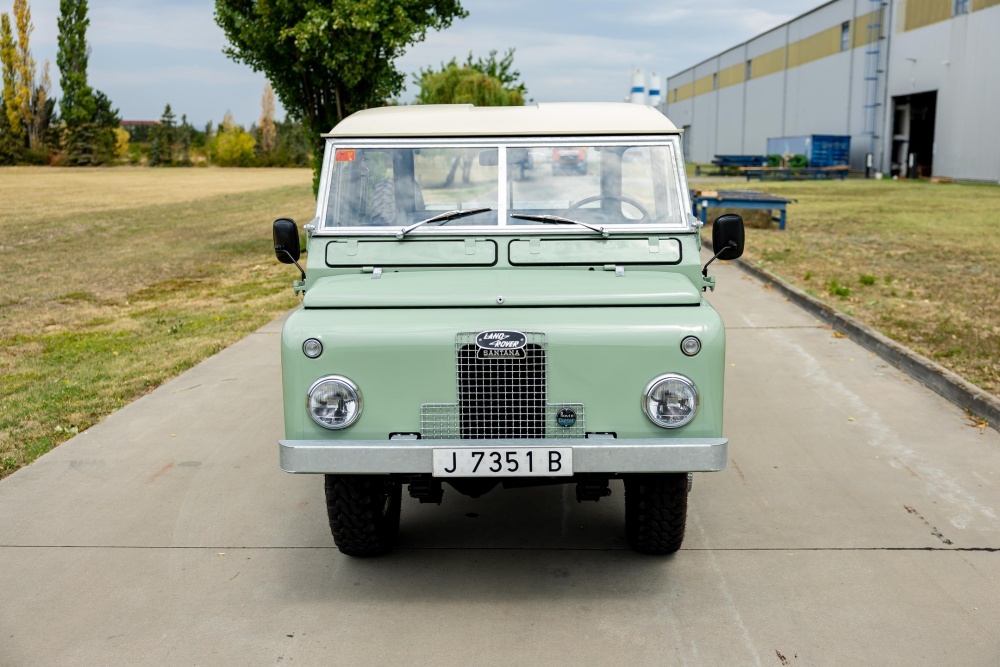
The Land Rover Santana 1300 is unlike the rest of its British brethren
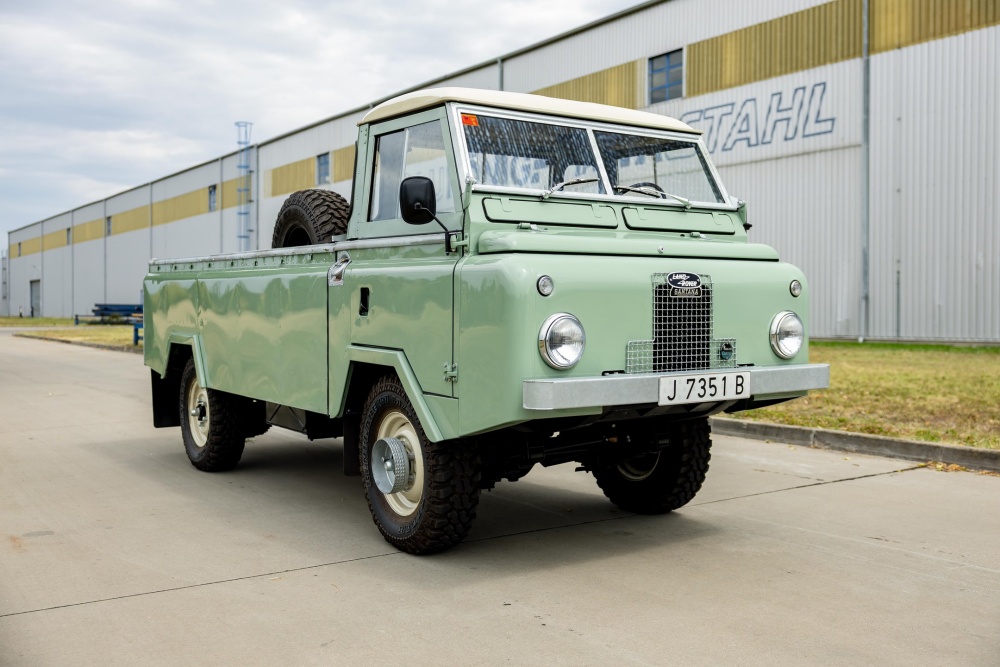
If you know your classic Land Rovers, the Santana 1300 might look familiar at first glance. It has the upright cab, angular bodywork, and the tractor-y proportions of the British Land Rover Series IIA Forward Control, a commercial 4x4 that looks like someone popped a shed on top of your daddy’s lifted truck. But the Santana 1300 isn't a British Land Rover wearing a different badge. It’s its own thing entirely; a Spanish-developed truck, built to haul serious cargo across a country where rugged utility mattered more than anything else.
Produced by Metalúrgica de Santa Ana, better known as Santana, in Linares, Spain, the Santana 1300 was introduced in 1967 and remained in production until 1978. According to Silodrome, around 4,000 were built, and only a small chunk are believed to survive today. Its rarity is part of the appeal, but the more interesting story is how a company licensed to build the same old Land Rovers developed a distinctive vehicle of its own.
The Land Rover Santana 1300 was built in Spain
Santana began producing Land Rovers under license in 1958, after initially establishing itself as an agricultural machinery manufacturer. Rover wanted the Spanish company to start with the older Series I, but Santana pushed to build the newer Series II instead. The licensing agreement also required increasingly high levels of Spanish-made components, eventually reaching 95 percent. That meant Santana wasn't simply assembling imported British trucks. It was developing a substantial domestic manufacturing operation, with Spanish-made components and engineering shaping the vehicles.
Car & Classic
Santana's Land Rovers found a job with Spain's military, police, public works agencies, and commercial operators. The company soon recognized that users needed something with more cargo capacity than a conventional Land Rover offered. Its answer was this weirdo, the Santana 1300, built on the long-wheelbase 109-inch Land Rover platform but with the cab moved forward over the engine. That forward-control layout opened up more room behind the driver for carrying equipment, supplies, and other bulky loads. The name referred to its 1,300-kilogram payload rating, or roughly 2,866 pounds.
How the Santana 1300 compares with the British Land Rover Forward Control
It’s not that Land Rover didn’t see value in an FC truck. In fact, Britain had already explored the same basic idea with the Series IIA Forward Control, introduced in 1962, and later the Series IIB. Both the British and Spanish trucks used the trusty old Land Rover formula of a steel ladder-frame chassis, live axles, leaf springs, a four-speed manual gearbox, and dual-range four-wheel drive. Their similar proportions reflect that shared mechanical foundation, but the Santana 1300 was developed by Santana's own design and prototype department rather than simply copied from a British blueprint.
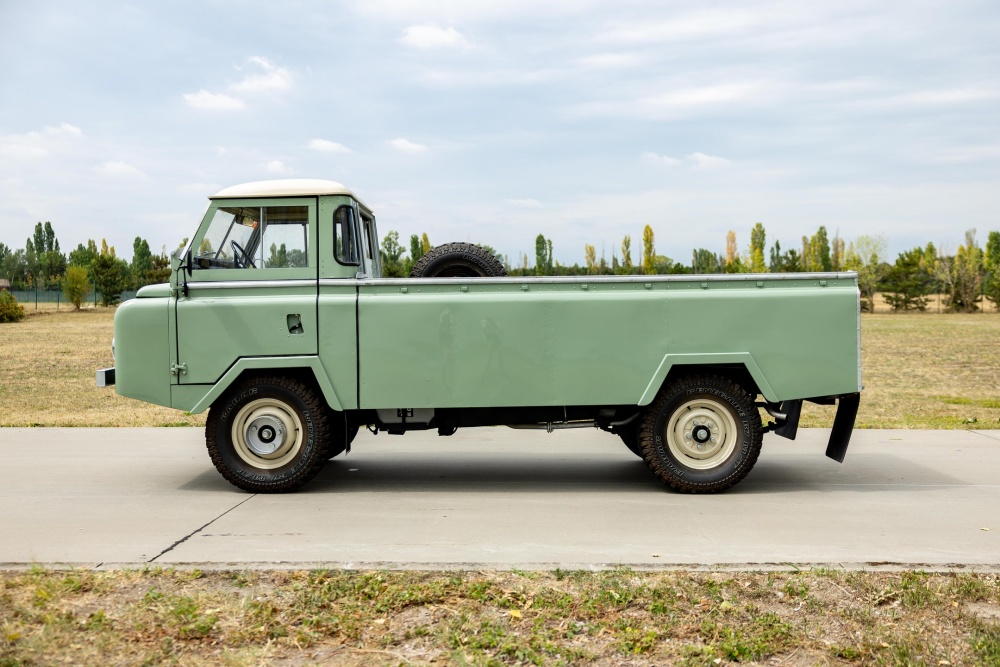
Car & Classic
Under the hood, most Santana 1300s used a positively agricultural powerplant in the form of a 2.25-liter four-cylinder engine, available in gasoline or diesel form. The gas version produced around 80 horsepower, while the diesel made a little over 60. Some examples received Santana's own six-cylinder engine, which was basically the same 2.25-liter but just stretched out to accommodate two more cylinders, making it a 3429cc engine. With a curb weight approaching two tons, even the petrol version wasn't going to trouble most other drivers. Hell, with that power-to-weight ratio, the Santana couldn’t trouble meemaw on the hoveround. But that’s OK; this was basically a tractor in work truck coveralls, not a sports car.
Santana supplied many 1300s as chassis-cabs, allowing customers to fit bodies suited to their particular jobs. The company also offered van and pickup configurations. Spanish military units used them to transport personnel and equipment, while firefighters relied on them to carry crews and supplies into demanding terrain. Their combination of load capacity and off-road ability made them useful in places where conventional delivery trucks would struggle.
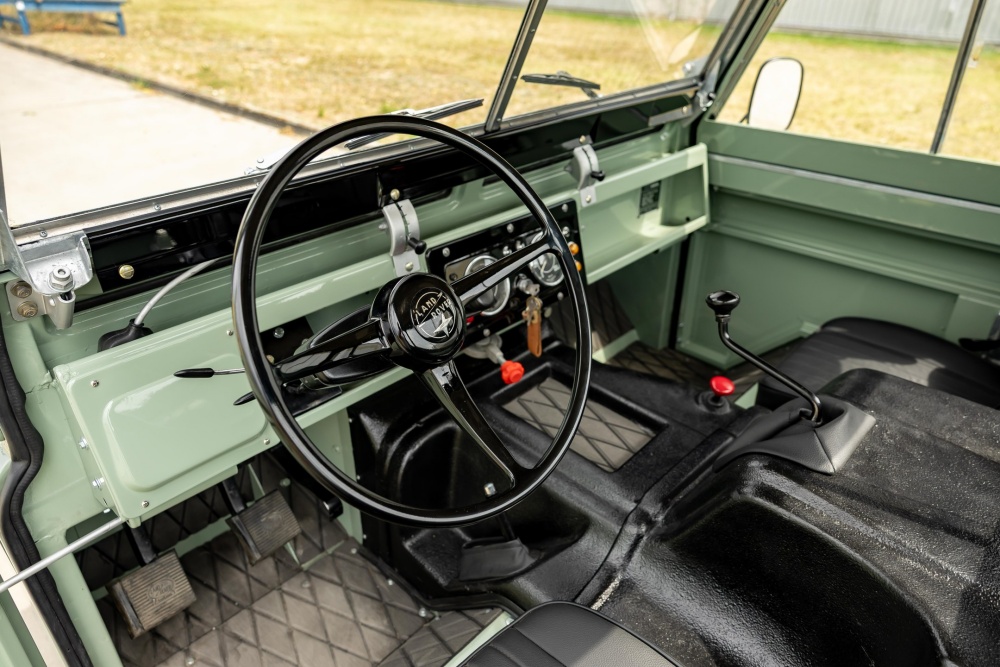
Car & Classic
The company continued refining the forward-control concept with the Santana 2000, introduced in the late 1970s and put on sale in 1981. As its name suggests, that model raised the payload rating to 2,000 kilograms. Still, these work wagons never caught on like the now-iconic SUV models that would go on to form the backbone of an entire corner of 4x4 culture.
Why the rare Spanish Land Rover Santana 1300 matters
The Santana 1300 is a reminder that the Land Rover story, as well-known and beloved as it is, extends well beyond the familiar British models. Licensed production in other countries often led to vehicles adapted to local needs, and Santana's Spanish-built trucks eventually developed an identity of their own. This is really the point here. What better metaphor for the tenacity and flexibility of car culture is there than this? No matter where in the world you go, certain cars will always be significant, but the majority of the cars that people care about are due to local tastes, needs, and beliefs. It’s a wonderful thing, and the Land Rover Santana is a wonderful example of this localized taste.
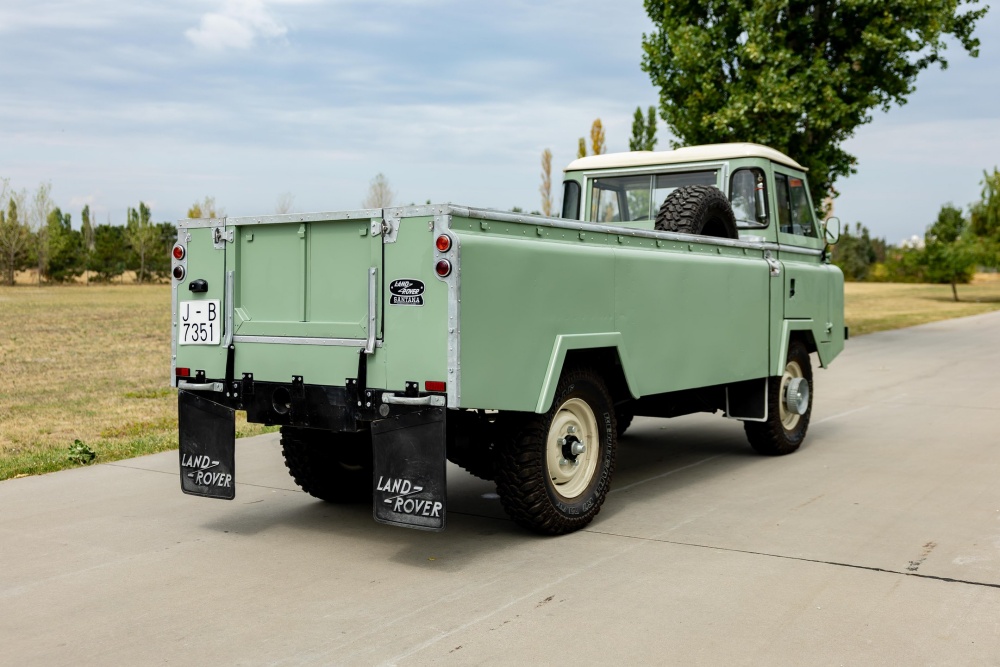
Car & Classic
The 1975 Santana 1300 shown here reportedly underwent a restoration involving more than 1,000 hours of work, including the chassis, wiring, bodywork, interior, paint, and wooden cargo-bed floor. It has a 2.3-liter diesel engine, four-speed manual transmission, part-time four-wheel drive, and seating for nine. The restoration reportedly included a photographic record, and the vehicle is presented as being in good mechanical condition. This 1975 model shown here is heading to Car and Classic to be auctioned off for what I suspect could be a good deal, considering the bidding ends Oct. 11 and is currently at €11,000.

Peter Corn
Peter Corn is an automotive writer and storyteller. Peter has spent nearly a decade writing about cars, trucks, and motorcycles for some of the best publications in the business. He believes the best automotive stories aren't really about the machines at all, but instead, the people who love them.
Read Peter Corn's articles
Latest News

Comments
Comments are disabled until you accept Social Networking Cookies. Update cookie preferences
If the dialog doesn't appear, ad-blockers are often the cause; try disabling yours or see our Social Features Support.