RM Sotheby's
One of the most significant American race cars is for sale
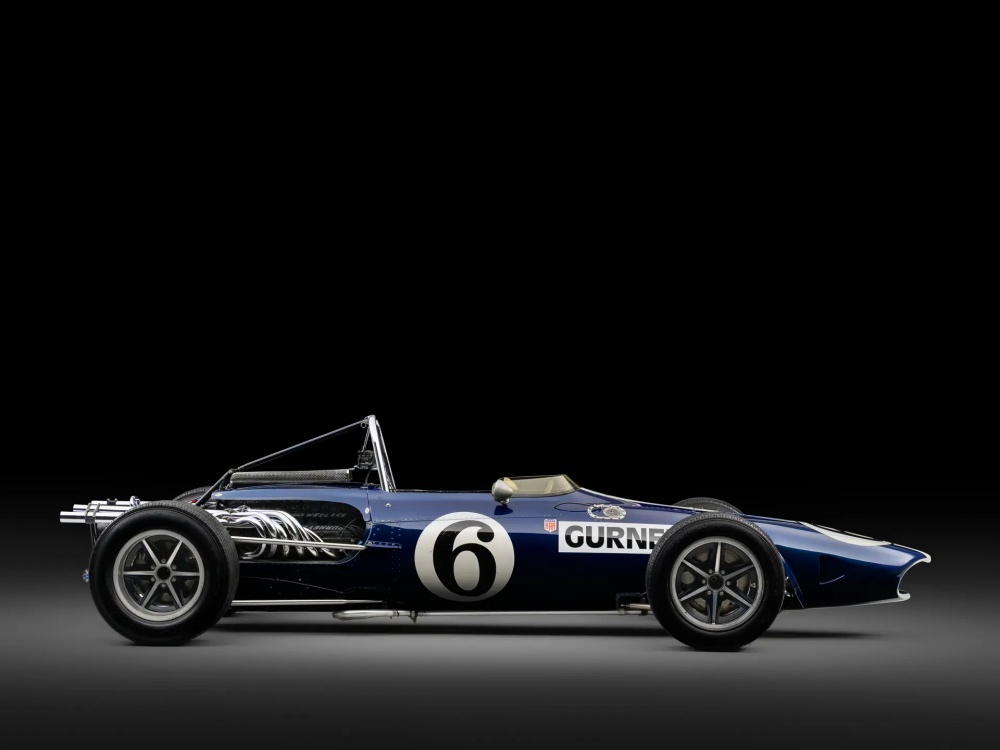
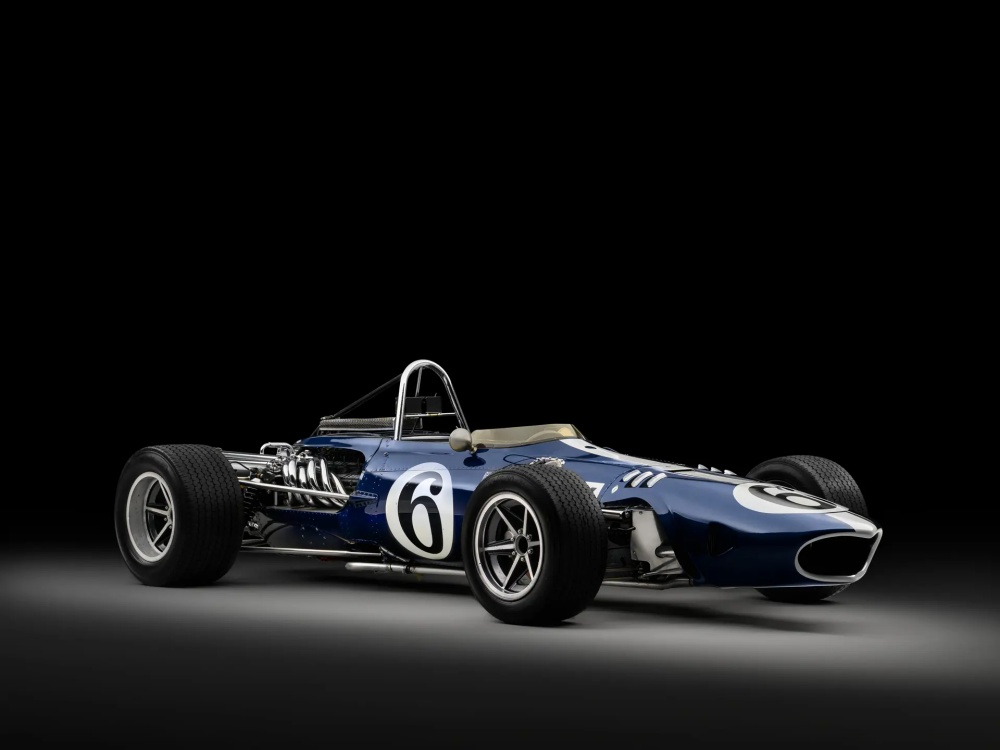
There are plenty of famous Formula 1 cars, but relatively few that tell the story of what American racing could have been. This 1967 All-American Racers Eagle Mk I, chassis 103, is one of them. It is a genuine V12-powered Grand Prix car built by Dan Gurney's All-American Racers, and it is now being offered for sale, with estimates saying it should hit crazy money when the auction closes on September 30.
Courtesy of RM Sotheby's
Before we get into all the fuss and bustle of history and grand statements of "firsts" and "legends," we need to take a moment to simply appreciate the shape and presence of this beautiful race car.
The Dan Gurney Eagle Mk I was America’s best shot at Formula 1
The Eagle was born from conversations between Gurney and Carroll Shelby in 1964. Shelby had helped establish Gurney as one of America's great road racers, and the pair saw an opportunity to create a California-based racing operation with backing from Goodyear. AAR initially competed with Lotus and Shrike machinery before deciding to build its own cars. Gurney, who had spent years racing in Europe, had a more ambitious idea: take the Eagle to Formula 1.
Courtesy of RM Sotheby's
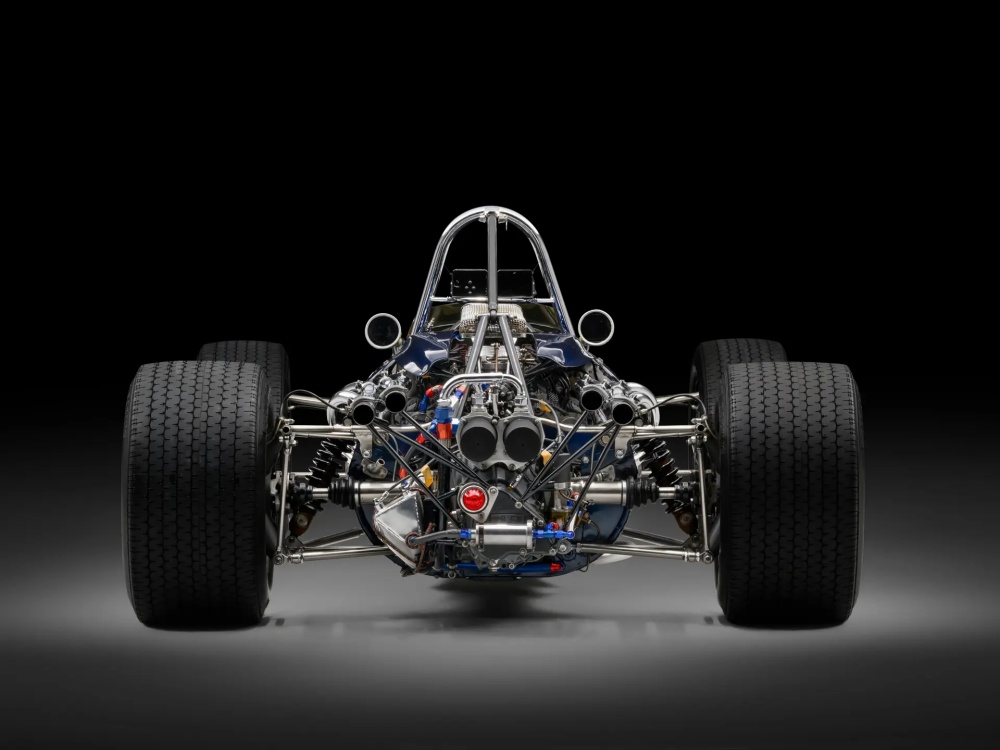
The result was one of the most beautifully engineered American racing cars of its era. Designed by Len Terry, whose Lotus 38 had won the 1965 Indianapolis 500 with Jim Clark, the Eagle featured an aluminum monocoque chassis and a bespoke 3.0-liter, 48-valve Weslake V12. A five-speed Hewland DG300 gearbox put the power to the rear wheels.
Dan Gurney was more than a racing driver
It is difficult to tell the story of the Eagle without first talking about Dan Gurney a bit. The California-based driver was one of the great American racers of his generation, winning Formula 1 Grands Prix in France, Mexico and Belgium while also wheelmaning successfully in sports cars, Indy cars and NASCAR. But after all his racing, Gurney believed he could race a car he built instead of someone else’s.
That combination of driver and constructor produced some remarkable results. In 1967, Gurney won the Race of Champions at Brands Hatch before teaming with A.J. Foyt for victory at the 24 Hours of Le Mans in a Ford GT40 Mk IV. Side note: Foyt became the only driver to have won Indy and the 24 Hours of Le Mans in the same year. One week later, Gurney drove an All-American Racers Eagle to victory at the Belgian Grand Prix at Spa. The win was particularly significant because it made Gurney the second American driver to win a Grand Prix in an American-built car, and the first to do so during the modern World Championship era that began in 1950.
Gurney's Eagles would go on to become an important part of American racing history. He finished second at the Indianapolis 500 in 1968 and 1969 and third in 1970, while Bobby Unser won the race with Gurney Eagles in 1968 and 1975 and Gordon Johncock did the same in 1973. For four consecutive years beginning in 1973, Eagles reportedly made up roughly half of the 33-car Indy 500 starting field. Gurney was also a formidable NASCAR road racer, winning five of six 500-mile races at Riverside between 1963 and 1968.
So when Gurney decided to take an American-built car to Formula 1, this wasn't some wealthy driver playing at being a car manufacturer. He was one of the few people with the racing experience, technical curiosity and ambition to attempt it.
The Eagle’s Weslake V12 arrived late
The Formula 1 project got off to a slightly less glamorous start than the engineering might suggest. Weslake's V12 was late, so the first Eagle raced with a Coventry-Climax four-cylinder engine. Gurney finished seventh at the 1966 Belgian Grand Prix and then scored fifth at Reims, giving AAR its first World Championship points.
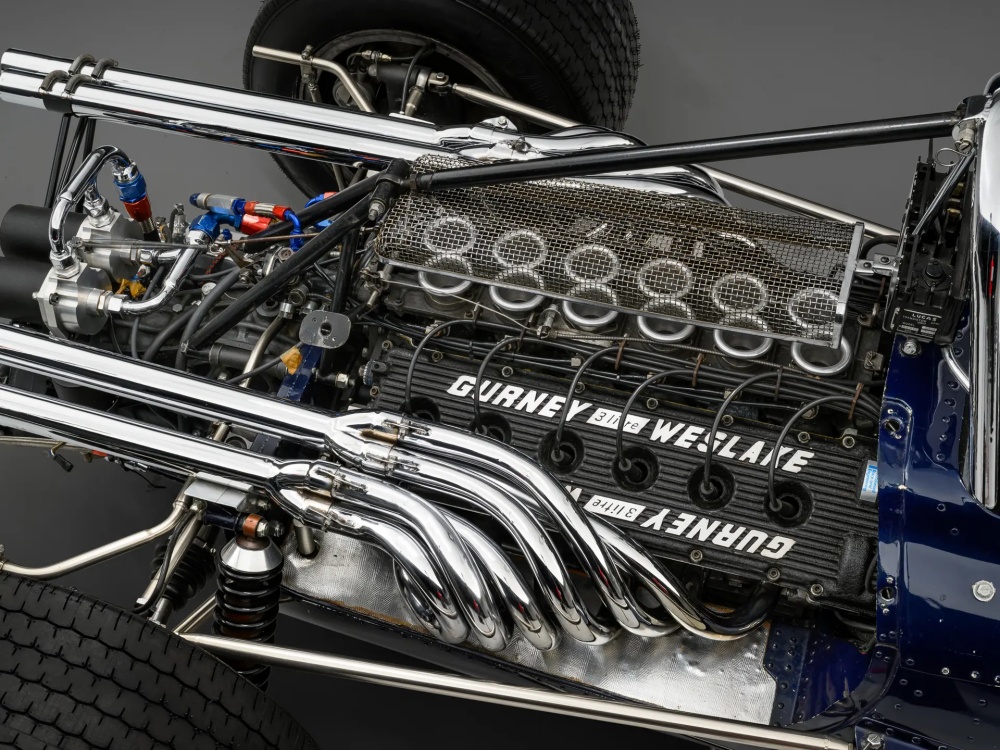
Once the V12 arrived, however, the Eagle had the sort of power that its elegant shape seemed to promise. Unfortunately, having a spectacular engine is one thing; making that same engine survive an entire Grand Prix turned out to be something else entirely.
Eagle Chassis 103 Made Its Debut With Richie Ginther
Chassis 103, the car being offered here, is that same car that made its debut at the 1967 Race of Champions at Brands Hatch. It was a remarkable weekend for the young team, and this car was at the center of it. Gurney took pole, more than a second leading the field, and won the first two heats. He went on to win the final as well, while Ginther brought chassis 103 home in 10th after retiring with brake problems near the end.
That victory was a glimpse of what the Eagle might have become. Unfortunately, Formula 1 is not a sport particularly interested in rewarding glimpses.
Chassis 103's next appearance came at Monaco. The weekend went badly, however, with the car retiring after just four laps because of a fuel-injection pump belt failure. Ginther failed to qualify, then retired from racing altogether after the event.
Dan Gurney’s Eagle finished third at the 1967 Canadian Grand Prix
The rest of the Eagle's 1967 season was a mixture of genuine speed and mechanical frustration. At the Canadian Grand Prix at Mosport, Gurney qualified fifth and then finished third in torrential rain, giving chassis 103 its most significant World Championship result.
At Monza, Ludovico Scarfiotti drove the car, qualifying 10th, only for its engine to fail again during the race.
The numbers tell the story of AAR's F1 misadventure. The team started 15 Grands Prix and finished only two. It scored 13 World Championship points, nine of them coming from Gurney's famous victory at the 1967 Belgian Grand Prix in the sister Eagle, chassis 104. After another troubled campaign in 1968, AAR shut down its European Formula 1 operation.
What happened to Eagle Chassis 103?
Chassis 103, meanwhile, had a considerably longer life. It passed through the hands of former NHRA champion Danny Ongais, among others, before being prepared for historic racing. It returned to Europe in the late 1990s and appeared at events including the Goodwood Revival, Goodwood Festival of Speed and Monaco Historic Grand Prix.
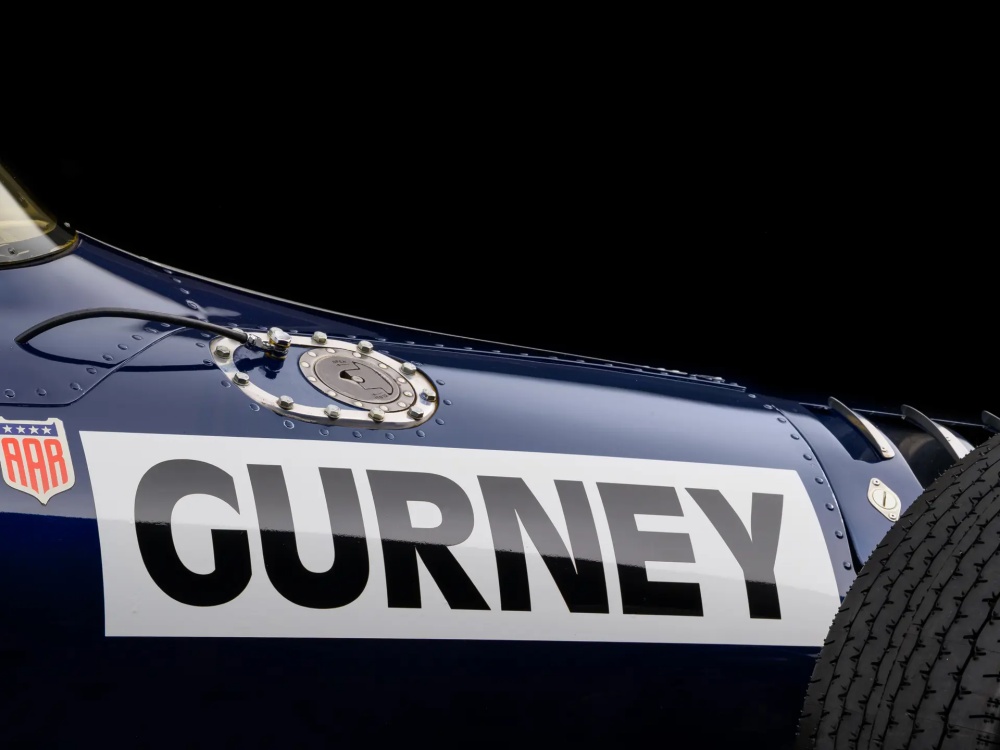
Courtesy of RM Sotheby's
In 2002, it entered the current owner's collection, where it has remained pretty and unbothered ever since. It has not competed since 2006, and a recent inspection by Hall & Hall found that it would need a proper going-through to turn a lap again.
A rare Dan Gurney Formula 1 Eagle is for sale
When legendary race cars hit the auctions, the prices can hit some pretty staggering heights, which is why the Eagle is heading to auction through RM Sotheby’s Sealed platform. For sellers who value privacy, Sealed offers a confidential way to bring exceptional automobiles to market. Sellers remain anonymous, final sale prices are not published, and each car is presented through targeted global marketing designed to reach the right buyers. Competitive bidding takes place behind closed doors, creating genuine competition without putting the transaction on public display. With all that confidentiality in mind, Sotheby’s still estimates Gurney’s Eagle could sell for between $ 7,000,000 and $ 9,000,000.
It’s no small price to pay, but it’s one of the last chances to own a key artifact from Dan Gurney's improbable attempt to build an American Formula 1 team. Chassis 103 isn't merely an old Grand Prix car. It is a surviving example of the moment when an American constructor arrived in Formula 1 with an exquisitely engineered V12, enormous ambition and, unfortunately, more beauty and chutzpah than reliability.
Only two V12-powered Eagles are in private hands, according to the Sealed auction listing, making chassis 103 an unusually significant piece of American Formula 1 history. It didn't become the American answer to Ferrari or Lotus, but failed attempts can be as interesting as the successes. The Eagle is a beautifully preserved reminder that sometimes the most interesting racing cars are the ones that came painfully close to changing everything.

Peter Corn
Peter Corn is an automotive writer and storyteller. Peter has spent nearly a decade writing about cars, trucks, and motorcycles for some of the best publications in the business. He believes the best automotive stories aren't really about the machines at all, but instead, the people who love them.
Read Peter Corn's articles
Latest News
Comments
Comments are disabled until you accept Social Networking Cookies. Update cookie preferences
If the dialog doesn't appear, ad-blockers are often the cause; try disabling yours or see our Social Features Support.
_.jpg?environment=live)