Why I race – Laurin Heinrich
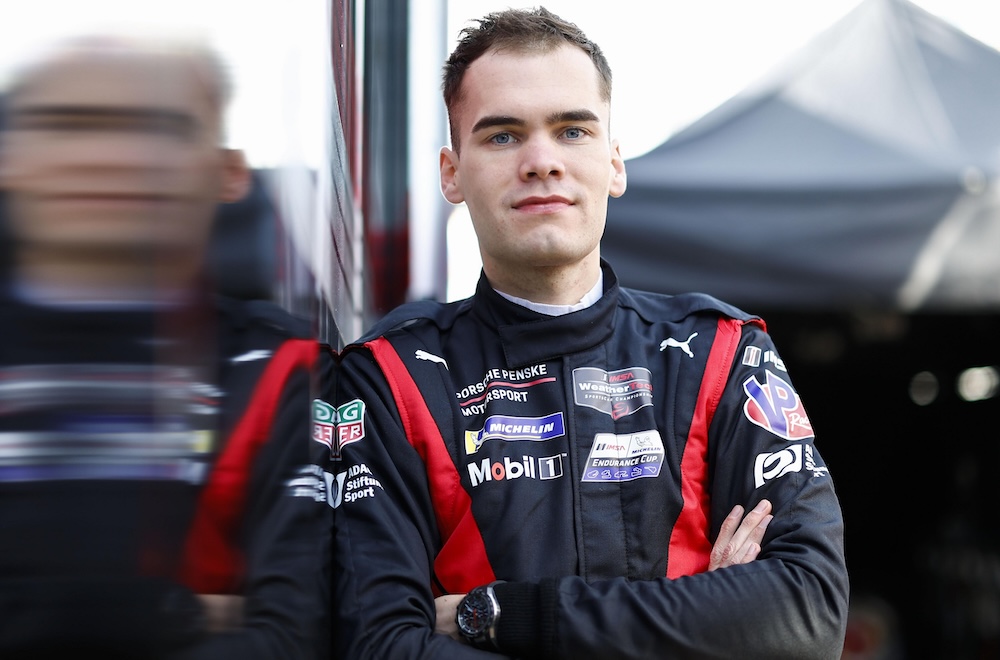
Later this month, Laurin Heinrich will turn 25. A week after that, he may be crowned champion in the IMSA WeatherTech Series SportsCar Championship. For the second time.
The Kurnach, Bavaria-born driver won the IMSA GTD class with AO Racing in 2024, his rookie season in the series. Two years on, he is Porsche’s best-placed GTP driver in the points standings with two rounds to go, despite spending the majority of the season with a Porsche customer team – JDC-Miller MotorSports – that uses the previous generation of the 963 prototype.
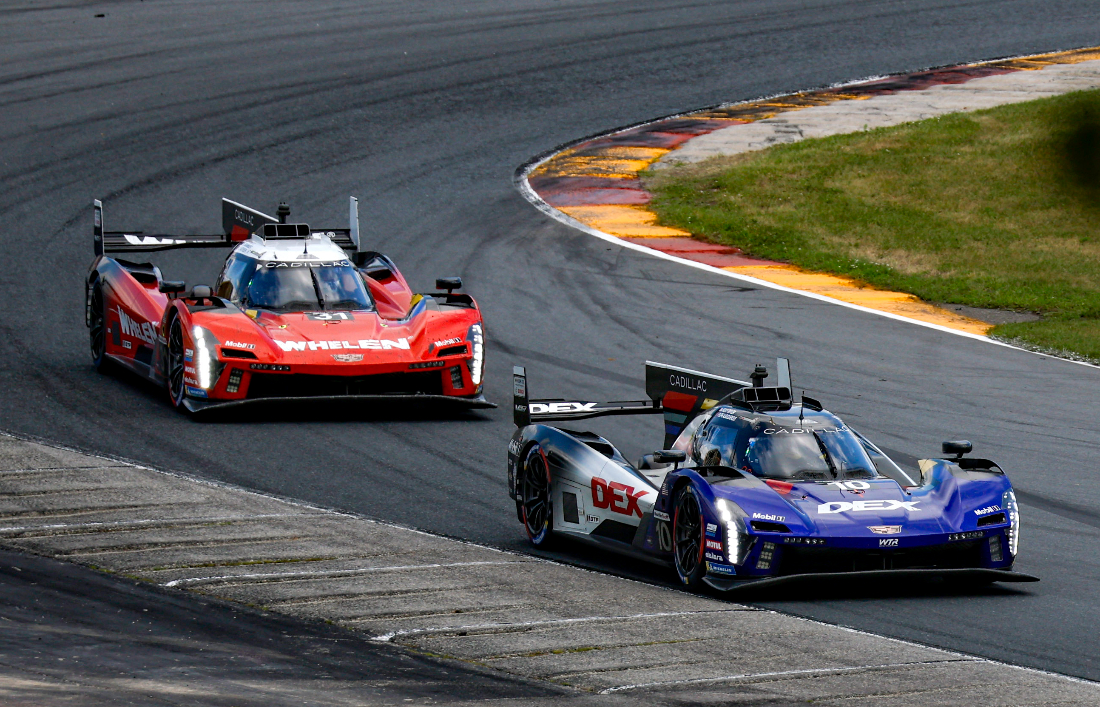
Accruing a second IMSA title in three seasons is still a long shot. Heading into this weekend’s penultimate round on the Indianapolis road course, Heinrich lies 118 points adrift of Whelen Engineering’s Cadillac ace, Jack Aitken. But it’s a small enough gap that he’s been brought back into the Porsche Penske Motorsport stable one race early, to maximize his chances of a late-season surge that tips the trophy in his direction. And few sportscar aces maximize chances like Laurin Heinrich…
RACER: I first noticed your name when you started winning in Porsche Supercup in 2021, when you were around 20. What was your back story?
LAURIN HEINRICH: My father was always passionate about racing, and closely followed Formula 1 and DTM, and he was a car dealer all his adult life so there was always a connection to cars. He had done a little kart racing when he was younger but only as a hobby, but then he got a son, which was me! He started go-karting again, and brought me to the track, and it was just a father-son hobby, driving for fun with no ambitions. We did that for many years, and I never thought of racing cars as my profession – it was just a way to spend my free time.
But it got a bit boring to drive with no competition, so we started racing. I was already aged 14, and some of the drivers today started when they were five or six! I did only one year in go-karts and then my father decided to buy a used Formula 4 car for 2017, which was relatively affordable at the time, and so we had a father-son team with three of my kart mechanics who did it for free just to help us.
I wouldn’t say we were on the level of professionalism that the main junior formula teams have, and because I had no teammate, I had no one who could tell me how to drive a racecar: I just had to do it from feel and from what I learned in sim racing and watching other people’s onboard cameras. But we still got some wins in the rookie category which was nice. Then we thought the dream was over; we were out of budget, and we stopped. I focused on school.
Q: When you came back, was it budgetary issues that persuaded you to go in the sports car direction instead of open-wheel?
LR: Not really. Because we had looked at sports car and touring car budgets, and it was actually cheaper to be in formula cars because we could run it completely ourselves. I think we changed brakes once during the season! F4 brakes were from an Opel Corsa [small street car] but had a different part number and were much more expensive, but my father just ordered the parts for a Corsa and fitted them and they were fine. Compared with that type of operation, to start with a sports car or touring car team would be about three times as expensive.
No, the reason we stopped was I saw how draining it had been for him to run my F4 car on the weekend while running a car dealership on the weekdays so I said to him that if we can’t find a budget, let’s not continue, let’s not overdo it.
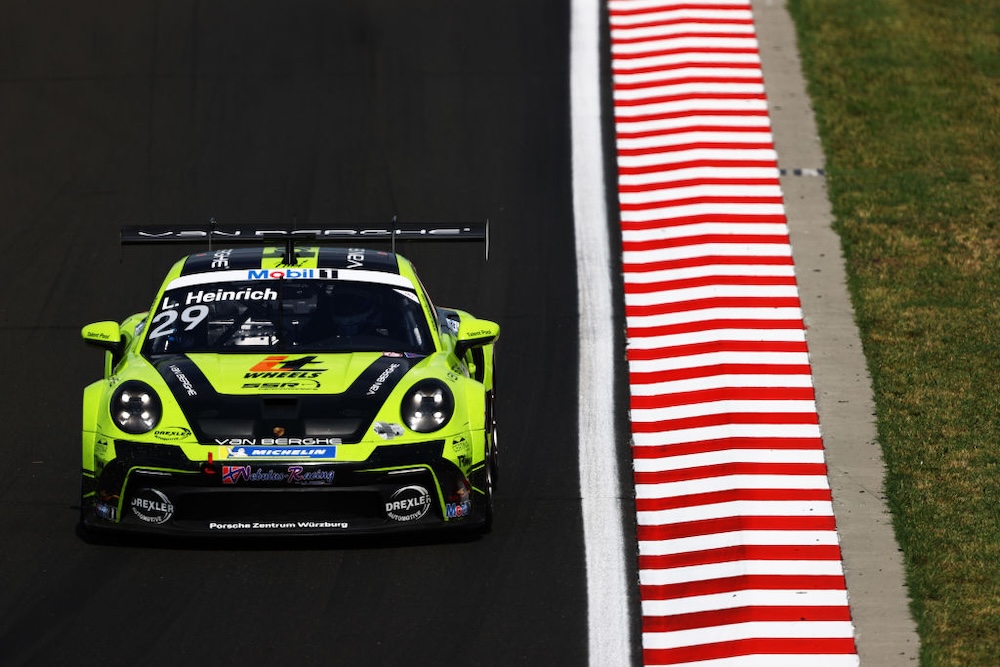
Heinrich made an early mark with strong performances in championships such as Porsche Supercup (above, at the Hungaroring in 2021). Bryn Lennon/Getty Images
Q: After a year sabbatical, you end up racing in Porsche Sports Cup Germany in 2019 and you win six races and the title. How did that happen?
LH: Well, although in 2018 I had stopped competing, we still went to races. We went to watch the Porsche Sports Cup Germany and my father got into conversation with a gentleman driver, an amateur, who said he had a previous generation Cup car which was now too old to be competitive in the Carrera Cup but was now the right age to run in the Sports Cup. He said he would lend us this car for one year and we just had to give it back to him in good condition at the end of the season, and he won’t charge us anything!
So now we had a car, and then we found someone who wanted to start his own team but didn’t have a car. So I said, ‘Hey, I have a car but I cannot bring anything more than that,’ and suddenly we had a deal. It went well, we won the championship, and that opened doors to make the next step into Carrera Cup. But I would say there was a lot of coincidence, luck and being in the right place at the right time for the sports car career to start like this.
Q: When did you realize that you were as good as the other pros in Carrera Cup and then Supercup? Was it the race wins in 2021, the fact that you finished fourth in points in both series? Or was it 2022, when you won the Carrera Cup title and finished third in Supercup?
LH: I don’t think there was a single moment in either series that gave me the confidence that I could face these pros. It was more the process. Back in 2019, when I first tried a 911, I liked the car immediately, and its handling characteristics suited me, but I could feel there was a lot to learn. In 2020, I scored several podiums but I found it hard to be consistently up there. In ’21, I felt I was still inconsistent, but when everything went right, I had the pure pace to score victories. So then after these seasons gaining experience and learning, I realized in ’22 I had the potential to score big in the championship, and sure enough…
Q: When did Porsche take notice of you?
LH: I knew my chance to join the Porsche family would come in the Junior shootout. Due to Covid, the 2020 shootout didn’t happen, but in 2021 I got the invitation, and after a strong season, I was standing in Aragon circuit in Spain with, I think, 12 other young guys with the same goal. It all came down to this. That is pressure, because I didn’t have the budget to continue much longer.
And although going fast is the most important thing, it is not everything; there are mental tests, too, and interviews. They even ask you about the Porsche brand. Fortunately, I did win it.
Q: And an old Porsche star, Sascha Maassen got involved, correct?
LH: Yes, he was at the shootout and he coached me for my first Porsche Junior year in 2022. He’s a tough coach but he does a good job, because look how successful Porsche Juniors have been.
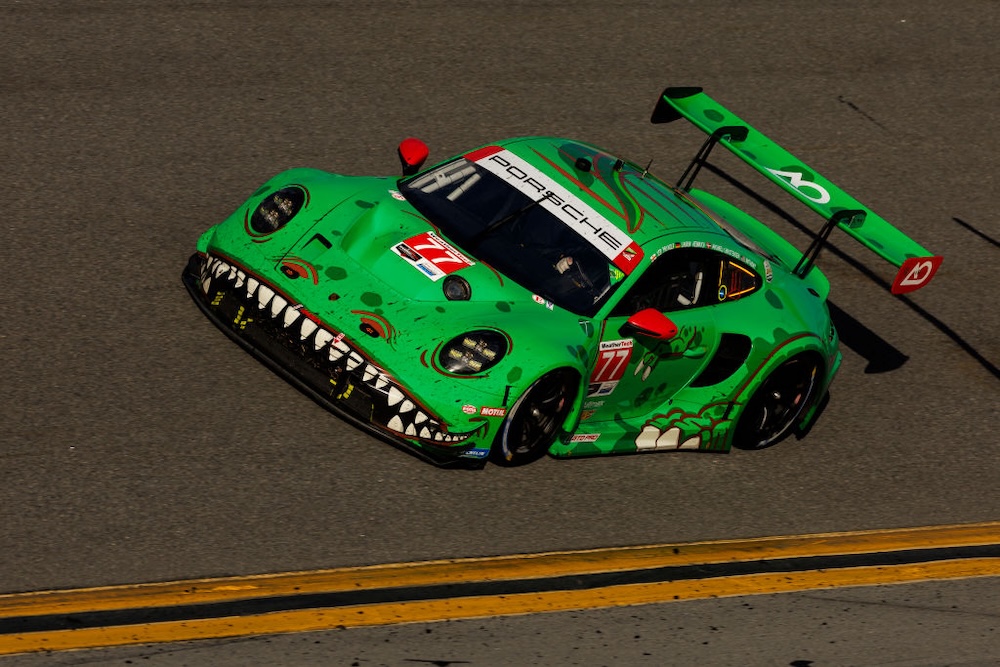
AO Racing's fabled "Rexy" provided a gateway to IMSA in 2024. James Gilbert/Getty Images
Q: We saw your name in many series in 2023, including DTM. Was that Porsche making sure you accumulated as much variety of experience as possible?
LH: Well, as a Porsche contracted driver, you’re part of a pool and the customer teams can select any driver from that pool. And Timo Bernhard – another legend, and a kind of mentor for young drivers – wanted to expand his DTM team from one car to two and took me on. And that was good for me, because up to that point I had been racing in one-make series, fighting cars that all handled the same as mine. In DTM – and the GT World Challenge – I was up against different types of car with different characteristics, and dealing with different tire compounds from weekend to weekend. I wish I had scored more trophies that year, but 2023 was very significant for me in gaining new experiences, including my first race in the USA [Heinrich took pole for the Indianapolis 8 Hours].
Q: Which is very appropriate because you were about to become well known by American fans, driving AO Racing’s tyrannosaurus rex-themed Porsche 911, “Rexy”. How much of a heads-up did Porsche give you that you’d compete in the IMSA WeatherTech SportsCar Championship in 2024?
LH: It happened differently than that. I was sitting in my hotel room during the final DTM race weekend at Hockenheim, and I got a call from an American number. It was Gunnar Jeanette, who helped found AO Racing. I already knew about “Rexy” because I’d seen the car everywhere on media from the 2023 IMSA season, because it was such a distinctive color scheme. Gunnar said he wanted to step the car up from GTD to GTD Pro class in 2024 and wanted me onboard. I was honored, because there were more renowned and better proven GT drivers available. But he and team owner P.J. Hyett had seen me guest drive in the Porsche Carrera Cup North America final in 2022 at Road Atlanta when I got pole and won the second race.
Obviously, the decision to race in IMSA in 2024 was not just my choice; Porsche was also heavily involved. But the DTM program was downsizing, so it was the right opportunity at the right time. I look back now and see it was one of the best career moves I could have made.
Q: It was a strong move by Gunnar and P.J., too – you won the championship for them! Three wins – Laguna Seca, Detroit and Indy.
LH: Yeah, it was a great year: I truly fell in love with GT racing, and I discovered that I loved racing in America. All the tracks that year were new to me except Indianapolis road course, and they were so great to experience for real after trying them on the simulator. Going down through the Corkscrew at Laguna Seca, experiencing the bumps at Sebring, driving the kink at Road America… Special moments.
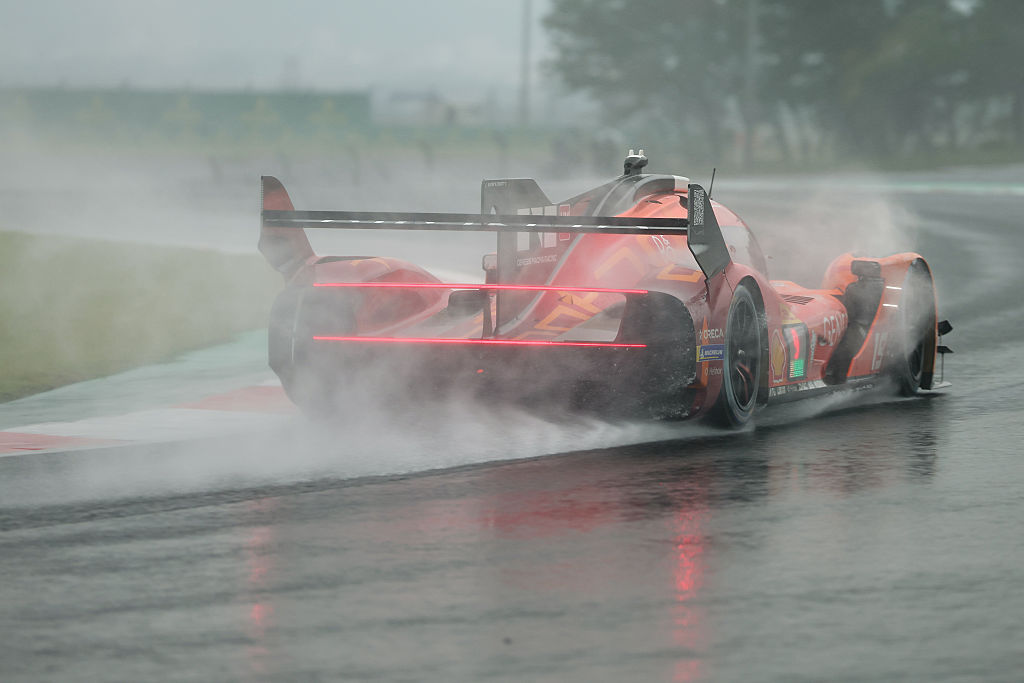
Q: In 2025, we saw you everywhere again – trying to defend the IMSA GTD Pro title, including winning the 12 Hours of Sebring, but also in a lot of GT events. But most significantly, perhaps, you raced the Porsche 963 for the first time, in the WEC finale at Bahrain. How was that big jump from GT car to prototype – especially in this era of complicated GTP cars?
LH: You’re right, it is a big jump and my first experience was a test at Road Atlanta, which is not the easiest! But I think in my career, I haven’t had much testing so I’ve moved from car to car and needed to be up to speed very quickly because often my first try is on race weekend. I’ve also prepared hard on the simulator. So I think I’ve been adaptable: I’m a quick learner because I’ve had to be!
But for the 963, in that Road Atlanta test, it was my first drive for Team Penske and I wanted to be respectful and not break anything, so I took it a bit easy on the first lap. But once I learned what everything did in the car, I was able to push and I loved it. It’s so complicated but that’s because there is a lot you can use to manipulate the car to suit you, and it will make a big difference.
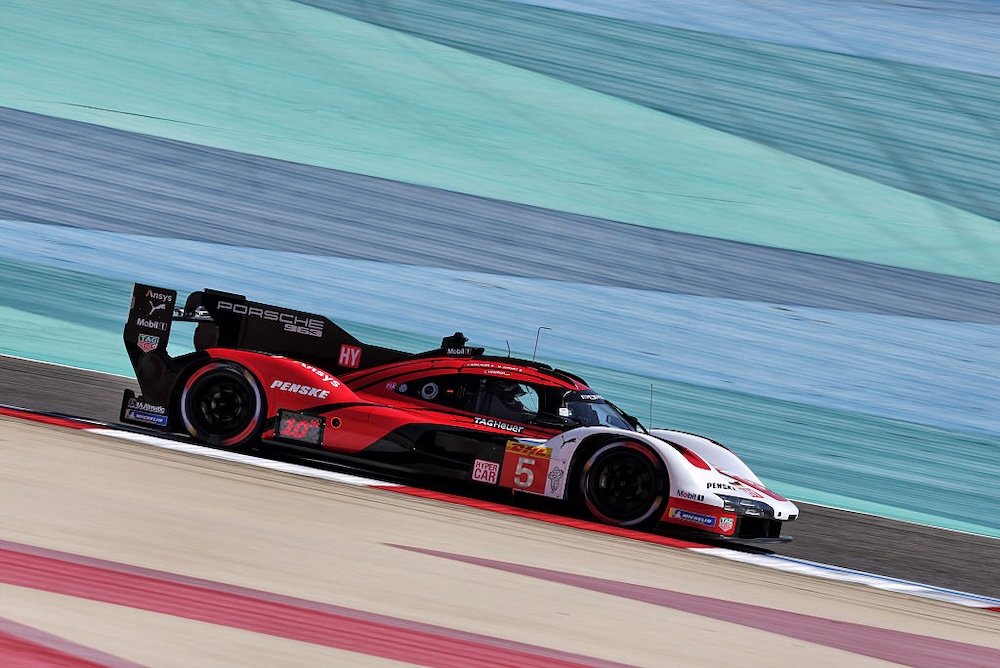
Heinrich first made the jump to prototypes in at the WEC's Bahrain round in 2025. James Moy/Getty Images
Q: Certainly you proved you were ready to race prototypes in 2026 and an obvious choice to be “third driver” in the Porsche Penske team for the Rolex 24 at Daytona and the 12 Hours of Sebring. How did it feel to be sharing a car with Felipe Nasr, who has won three IMSA titles?
LH: It was strange: I remembered watching him in F1. And I knew already how good he is. So I knew my role at Daytona and Sebring was to support him and Julien [Andlauer] because they were the full-time factory drivers. I am a team player – if the team is successful, then I am, too – so at those two races, I took onboard all the advice from people around me, because I know they all have far more experience. They were super-supportive and I soaked it all in. Porsche is excellent at making us a family, building a bond between drivers and sending us on training camps together.
Q: And you three in the No. 7 car ended up winning both of those races – an amazing start to the IMSA GTP chapter of your career. When was it decided that you’d spend the non-enduro races in the JDC-Miller MotorSports Porsche?
LH: It was quite late. I already felt I was making good progress by being nominated as a factory Porsche driver for Daytona, Sebring and Petit Le Mans. The JDC-Miller opportunity wasn’t on the table yet. But when we were testing at Sebring at the end of February or beginning of March, JDC was there as well and they asked to give some feedback on their car, and I was the chosen one. That’s when I got to know John Church [founder], Richard Westbrook [former ace driver] and John Hayes [race engineer], and I think they appreciated my feedback. After that, they sat down with Porsche and made a deal to run me in the JDC-Miller car until the factory team needed me again.
Actually, I wasn’t going to do the Six Hours of Watkins Glen, because I was supposed to be racing a 911 in the Spa 24 Hour race for Schumacher CLRT that weekend. But because I found myself competing for the IMSA championship, I did do Watkins Glen.
Q: You not only won the first two races of the season with Porsche Penske, you then scored JDC-Miller’s first win since 2021 with that brilliant drive at Laguna Seca. You added podiums at Watkins Glen and Road America, and somewhere in there, you also won the Pro-Am category of LMP2 on your debut in the 24 Hours of Le Mans. Whether you win the GTP title or not, 2026 is the season in which you made your name throughout the sportscar world.
LH: Oh yes: I could not have imagined a season going so well. But it is very easy to get used to success, so it’s important I stay hungry, keep both feet on the ground, stay realistic. Take the difficult weekends and learn from them. And if I don’t win the championship, learn from that, too – what could I have done better?
It’s important to occasionally take a breath, look back and be really thankful for what you’ve achieved already. It’s not a given thing. You have to appreciate the people who helped you be where you are today. It wasn’t just me working hard: a lot of people supported me. I have a great manufacturer that has taken me on board, and some great teams who have believed in me. And there was some luck, too.
Q: Final point: it’s always obvious when you’re behind the wheel of whichever car you’re in that weekend. It’s very exciting, because there’s an aggression in your maneuvers that makes a car very animated, particularly in the way you pass rivals or handle traffic.
LH: Well, thank you. I honestly think it goes back to 2018, the year I wasn’t racing. In 2019, when I had another chance, I thought: “How many people in this world get to race cars? Not many. And then how many people stop for a whole season, very early in their career, and get a chance to return? Even fewer.” So that lit a fire in me, I realized how lucky I’ve been, and that gave me that drive to always give 100 percent, every time.
*Since this interview was conducted, it’s been announced that Heinrich will return to Porsche Penske Motorsport one race early – this weekend’s race at Indy – in order to maximize his title chances. On this occasion, he’ll step into the No. 6 car to partner Kevin Estre at the expense of Laurens Vanthoor.
David Malsher-Lopez
David Malsher-Lopez is editor-at-large for RACER magazine and RACER.com. He has worked for a variety of titles in his 30 years of motorsport coverage, including for Racer Media & Marketing from 2008 through 2015, to which he returned in May 2023. David wrote Will Power’s biography, The Sheer Force of Will Power, in 2015. He doesn’t do Facebook and is incompetent on Instagram, but he does do Twitter – @DavidMalsher – and occasionally regrets it.
Read David Malsher-Lopez's articles
Latest News
Comments
Comments are disabled until you accept Social Networking Cookies. Update cookie preferences
If the dialog doesn't appear, ad-blockers are often the cause; try disabling yours or see our Social Features Support.