James Black/Penske Entertainment
IndyCar’s new licensing standards solve a minor problem – but risk creating a lot of new major ones
Make IndyCar better, with a higher caliber of drivers throughout the field. This sounds amazing.
Penske Entertainment’s public declaration of prizing driver talent over driver wealth was met with universal praise last week, and on the surface, it’s a brilliant commitment to its promoters and to its fans as the series continues to grow and gain popularity.
Go forth and sign more first- and second-round draft picks and fewer third-string athletes who ride the bench. Got it. Huge round of applause.
And while there’s no credible argument to form against the concept, there are some serious questions to raise about the timing of this decision, and whether the series’ least financially stable teams were consulted and properly considered as the new directive was being formed.
The changes affect them, and only them, while offering the bare minimum of time to react and no monetary solution to solve the problems this policy visits upon them. This doesn’t sound amazing.
If your main interest is limited to the drivers and dialing up the quality in every entry, there’s no need to continue reading. But if you’re plugged into the business side of the sport and care how the new restrictions will impact some teams, the rest is for you.
The timing of the announcement is interesting. On Sept. 2, just days before the season finale, the series made its revised licensing structure known, and within the document, Indy NXT was listed as the vastly preferred path for drivers to reach IndyCar. That’s a good thing.
It also formalized a stricter filter for NXT drivers to gain the required IndyCar competition license, with the top three in the championship, and those who win multiple races over a rolling two-year span, being the select few who will be seriously considered for approval. The rest? That’s where the newly restrictive licensing criteria takes aim, and that’s where the real money is often found. As of Sept. 2, that’s largely become dead money for IndyCar teams, with no answers on where new sources will be found to backfill the financial craters.
Proven drivers from top-tier series like F1, F2, NASCAR Cup, IMSA and other comparable championships will also be fast-tracked for licensing consideration, which makes sense, but the NXT strictures are where I have significant concerns. The new licensing move has merit, but it needed to be the second of a two-part phasing-in process, not the first step.
The edict creates a new enforcement that takes most of the NXT drivers out of play for IndyCar teams, and it has massive implications for those teams who rely on the deep pockets of self-funded drivers. Although the high-dollar/medium-talent drivers are loathed by some, they play a crucial role in economic framework within IndyCar’s paddock, and it’s here where the licensing guidelines strike hard.
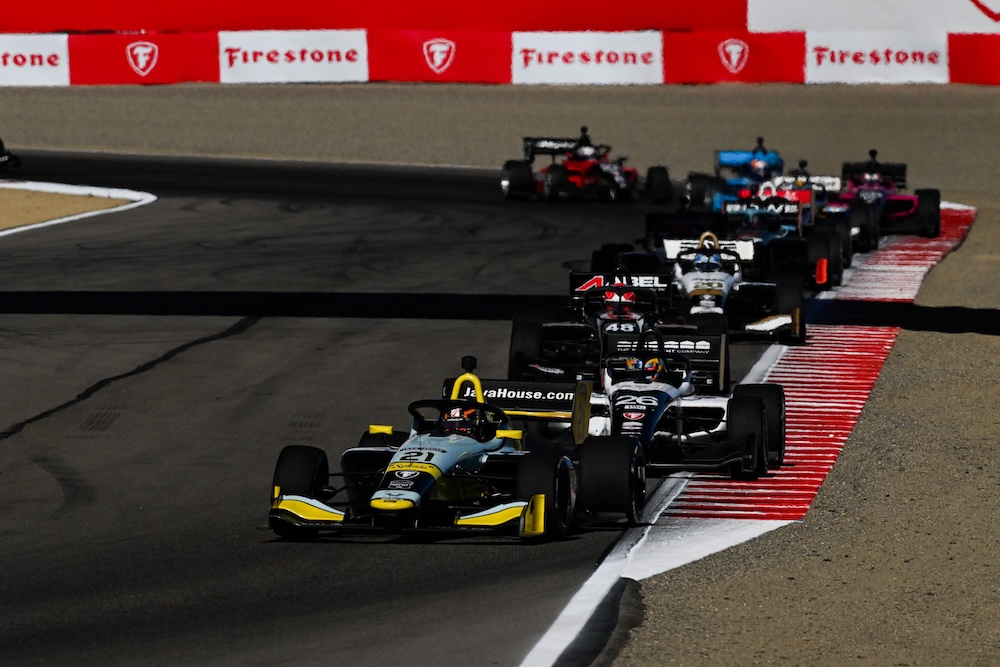
The new licensing standards put a greater emphasis on Indy NXT as IndyCar's main talent pipeline, while simultaneously putting an asterisk against the potental eligibility of the majority of the field. James Black/Indy NXT
Traditionally, the championship-caliber NXT drivers are rarely the ones with extreme budgets to offer IndyCar teams and almost never come packaged with windfalls of money to underwrite their IndyCar careers. The No. 1 draft picks like Josef Newgarden, Pato O’Ward and Kyle Kirkwood get hired by teams straight out of IndyCar’s version of college ball, and tend to go onto succeed and earn millions of dollars per year in the big series.
Then there’s the rest who aren’t nearly as good, but learn enough and demonstrate enough aptitude – regardless of whether they’ve won NXT races or featured in IndyCar’s college series – to latch onto an opportunity with IndyCar teams for hire, and deliver those windfalls to run somewhere well behind the elite drivers.
The paying-driver business model is an old and familiar one spanning many generations in Formula 1, NASCAR, IndyCar, IMSA, the NHRA and just about everywhere else in racing. The numbers vary from series to series, but this has been the accepted practice for ages. Like it or not, that’s the reality.
The money comes in through family wealth, the recruitment of personal sponsors, or the use of family relationships to source income from donors or business contacts. The methods vary, but they’re all versions of the same thing: Drivers engage in business transactions where millions of dollars are deposited in the accounts of teams who render services to provide cars and staff to compete in IndyCar.
In some cases, the volume of money might outweigh their talent, which is what Penske Entertainment is trying to stop. For other drivers, talent is a key point of interest, but they’re still required to bring sizable budgets to participate in IndyCar.
In this year’s IndyCar Series, six out of 10 full-time teams just completed the 2026 season built on business models that require partially or fully funded drivers to field at least one of their cars. That’s a hard-to-ignore 60 percent.
The list includes AJ Foyt Racing with Caio Collet, Arrow McLaren with Nolan Siegel, Chip Ganassi Racing with Kyffin Simpson, Dale Coyne Racing with Dennis Hauger, Juncos Hollinger Racing with Sting Ray Robb, and Meyer Shank Racing with Marcus Armstrong, which underscores the difficulty some will face with the new licensing threshold.
On the approach to 2027, some of those teams for-hire with vacancies to fill will be restricted to the top few in NXT (or others from eligible series), which is great for placing talent before business, but since the leading NXT drivers have little to spend, there are a number of teams left wondering how they’re going to cover annual operating budgets in the $9-$12 million range per car, and cover the $6-$8 million needed to buy new 2028 IndyCar models.
Young Indy NXT veteran Josh Pierson, who appears to have the licensing target placed on his back, was looking like the only NXT driver likely to graduate to IndyCar in 2027. At the time of the licensing revision, he’d spent nearly three winless and unremarkable seasons in NXT, and hovered somewhere between 10th and 12th in the championship, but was able to offer a rumored two-year, $25 million funding package to teams in need.
As we reported in a recent silly season update, Pierson was understood to have signed with the cash-strapped AJ Foyt team… and then the Sept. 2 licensing policy was distributed by the series, which cast significant doubt on Pierson’s ability to receive an IndyCar license and Foyt’s ability to receive the crucial payday to run Pierson.
The 20-year-old Oregonian went on to win his first NXT race a few days later in Laguna Seca and placed 11th in the final drivers’ standings, but it might not be enough to sway IndyCar’s newfound desire to police access to its series. To those who only want top drivers in IndyCar, Pierson’s a problem.
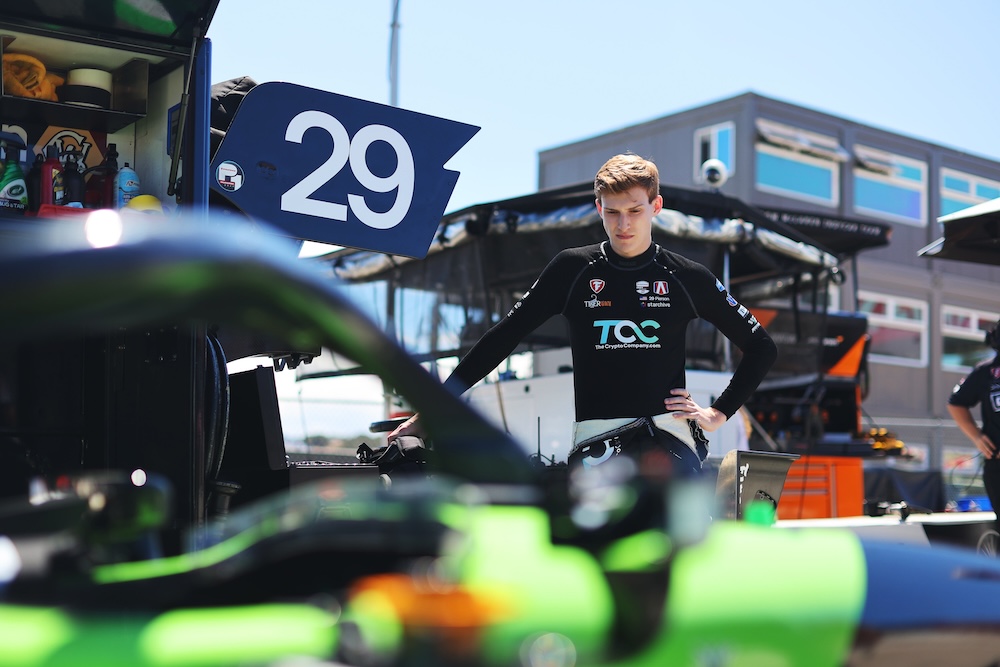
The timing of IndyCar’s new licensing rules could create problems for Josh Pierson – and also for AJ Foyt Racing, with whom he was understood to have signed for 2027. Travis Hinkle/Penske Entertainment
But even in a field of 25 all-time greats, there will be those who finish 20th through 25th on a regular basis. Those newer, better and faster drivers might finish closer to the winners by whatever amount, but there will always be last-place drivers, so I’m not entirely sure what this initiative brings to the racing that’s remarkably different than what it has at the moment, except for cutting off vital funds to some IndyCar teams.
FOX doesn’t point its cameras at the battle for 22nd place, nor do most fans care about those who live at the rear of the field, but for some, it really seems to matter whether the select few who are comparatively uncompetitive get paid to be uncompetitive.
Since there will always be tail-enders in every race, I’d rather have those unfavored few doing something important by contributing to the financial health of their teams. What’s more valuable here? Having better drivers at the back of the field, or ensuring IndyCar teams remain in business?
Admittedly, as long as they’re fast enough to qualify and aren’t creating consistent problems for others, I don’t care about having two or three big spenders propping up a few teams in IndyCar. The truth is, dating back to the 1980s, IndyCar’s always had a couple of Piersons and Robbs in the series, but to fit the new image IndyCar is trying to create for itself, it wants to broom the high-dollar types out of the field. Fair enough. It’s Penske’s series, which means it’s Penske’s prerogative to choose who gets to participate. It’s just a question of timing and when it would be best for its teams to make that change.
I’d rather know that a Foyt, and a Coyne, and others who’ve had to rely on the paying-driver model are able to sign the Piersons in the short term as a bridge to the future, than to learn those teams have six months to completely overhaul their business models and try to find tens of millions in sponsorship – something they’ve been unable to find so far, and is damn near impossible to do when you’re running well outside of the spotlight – before the 2027 season begins at the start of March.
This is why the licensing restrictions should have been the second announcement.The first needed to be the unveiling of a multi-year plan by Penske Entertainment to work with more than half of its teams to identify their business development needs and assist in building out their marketing and sales capabilities to replace paying drivers with true sponsorship and/or business-to-business deals.
If the series wants to rid itself of undesirable paying drivers, I’m all for it. But not before the small business owners who put more than half of the field on the grid have received the help they’ll need to adapt to the new financial demands. To be clear, you won’t find a single IndyCar team that is excited to run high-dollar tail-enders. It’s done out of necessity, which makes fixing the necessity the priority. Resolving the paying-driver problem comes as a byproduct of the business model counseling and conversions.
Providing a longer timeline for the Piersons of the world to participate in IndyCar while Penske Entertainment assists the affected teams to reconfigure their sourcing of critical income is a reasonable starting point. Use 2027 and 2028 to facilitate the changeover, and all bases would be covered.
Bolting the door shut to kids whose families spend millions for them to train in NXT, but aren’t future O’Wards and Kirkwoods, sends a troubling message. Why bother with NXT if you know there’s almost no chance of being licensed for IndyCar?
And if a Josh Pierson doesn’t belong in IndyCar, let him prove it. Assemble an imposing panel of veterans to serve as judges, just as IndyCar did for decades, and go testing at road courses and ovals on his dime. Have him pay for one of the better IndyCar drivers to set bogey single-lap standards and long-run averages to measure his abilities. Bring a race steward in to throw random commands at him to see how he reacts in heat-of-the-moment decision making. Create an intensive experience to gauge true readiness for the big series, and then provisionally accept or deny his licensing request based on what he does or doesn’t do in an IndyCar.
And if he’s allowed in, and can enrich a team’s bottom line while the series starts a gradual pivot to upper-echelon drivers in every entry, its for-hire teams get taken care of during the process.
The bones of a good idea reside within the new licensing initiative. It just needs a few adjustments and a longer runway to go live in the most harmonious manner for the affected teams and drivers.
Presented by:
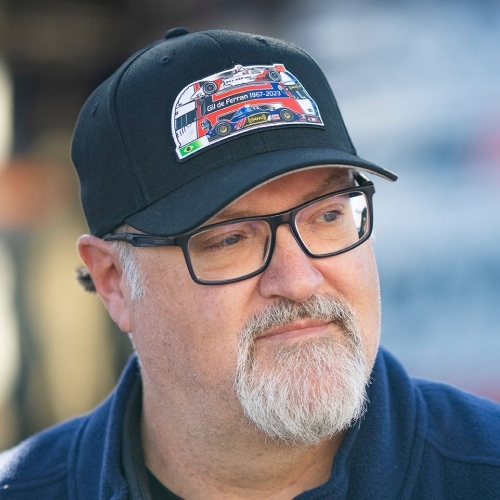
Marshall Pruett
The 2026 season marks Marshall Pruett's 40th year working in the sport. In his role today for RACER, Pruett covers open-wheel and sports car racing as a writer, reporter, photographer, and filmmaker. In his previous career, he served as a mechanic, engineer, and team manager in a variety of series, including IndyCar, IMSA, and World Challenge.
Read Marshall Pruett's articles
Latest News
Comments
Comments are disabled until you accept Social Networking Cookies. Update cookie preferences
If the dialog doesn't appear, ad-blockers are often the cause; try disabling yours or see our Social Features Support.