Brandon Badraoui/Getty Images
IndyCar raises licensing standards, narrowing opportunities for drivers to secure rides on budget alone
Receiving a license to compete in the IndyCar Series as a new driver will involve greater scrutiny and stricter qualifications starting in 2027. Staying in the series as an underperforming driver will also fall under a new microscope the series will use with immediate effect.
Details of the upcoming changes to IndyCar’s rulebook were shared with teams on Wednesday by series president Doug Boles, who outlined heightened expectations for achievement-based worthiness to compete in IndyCar.
The guidelines represent a fundamental change in approach by the series which will directly affect the ability for well-funded but lesser-skilled drivers to buy their way into IndyCar seats, or remain in those seats while lacking the race results that suggest they belong among the proven and emerging stars.
“As we continue planning for the 2027 season, the following driver qualification process will be implemented for drivers seeking to compete in the IndyCar Series,” Boles wrote.
“Our goal is straightforward: we want to make sure every driver who competes at the IndyCar level has demonstrated a high level of experience, performance and success, along with a safety record commensurate with competing at the highest level of motorsport.
“There are many factors that create opportunities for drivers in IndyCar, including talent, team relationships, and commercial support. However, the first threshold every driver must meet is demonstrating that he or she is qualified to compete at the IndyCar level.”
Boles’ last line is the key to what IndyCar is set to implement, and with it, the series will place a higher priority on Indy NXT as the preferred pathway to the top tier, and only the most successful NXT drivers will be deemed as readily qualified to compete in IndyCar.
The adjustments could have a sweeping impact on the series, and on how numerous teams support themselves financially through the selling of race seats to well-funded drivers who’ve often lacked the competitive results to warrant serious consideration on racing terms alone.
“IndyCar driver eligibility remains in IndyCar’s sole discretion,” Boles continued. “To compete in the 2027 IndyCar season, and going forward, drivers who have not previously competed in the IndyCar Series will be evaluated under the following qualification process:
“Indy NXT will serve as our primary benchmark for determining driver readiness for IndyCar. A driver must have competed in a minimum of 12 Indy NXT races before eligibility can be established under the IndyCar NXT qualification standard. Results achieved before a driver's 12th start may count once the 12-race minimum has been satisfied.”
Once the 12 NXT races have been met, the series will declare the Indy NXT champion, the top three finishers in the NXT championship, and any driver who’s earned two or more wins over the last 24 months as “Competitively Qualified.”

High-performing Indy NXT drivers will qualify for an IndyCar license under the new system, although they also need to complete a minimum of 12 races at NXT level. Travis Hinkle/Penske Entertainment
The series will still evaluate and license or decline each new driver on a case-by-case basis, but the “Competitively Qualified” status is as close to an automatic acceptance as the series seems willing to offer. A single NXT win is listed as “Evaluation Eligible,” and for the rest who are winless, which represents the majority of the current and recent NXT fields, the series is introducing a new filter categorizing them as “Résumé Review Required.” This process casts aside the series’ former willingness to license almost every NXT driver who was able to strike a deal with an IndyCar team.
Although it is not written as such in the outline, the policy change appears to be the series’ first serious attempt to dissuade its teams from signing new drivers whose most remarkable attribute is their ability to pay $10 million or more per season to participate in IndyCar.
“Again, our intent is not to limit opportunities for talented drivers,” Boles said. “It is to establish a clear, consistent and credible standard for determining when a driver has demonstrated the résumé, relevant on-track success and experience necessary to compete at the IndyCar level.”
One of the closing passages makes the series’ expectations clear on what it wants from teams as they navigate the current driver market heading into the offseason.
“This is an important part of the new process,” Boles said. “Before testing or entering into an agreement with a driver who has not previously been licensed to compete in the IndyCar Series, IndyCar encourages teams to submit the driver to IndyCar for eligibility determination and receive written approval from IndyCar before proceeding.
“We want teams to engage IndyCar early in the process when considering a prospective driver. This will allow us to make an eligibility determination before a team, driver, sponsor or other party makes commitments based upon an assumption that the driver will be approved to compete.”
Active and recent IndyCar drivers who struggle to make a competitive impact aren’t immune from the series’ elevated standards.
“Drivers who have previously been issued an IndyCar competition license and competed in an IndyCar Series race will be deemed to have satisfied the initial competitive qualification requirement but will remain subject to IndyCar's continuing licensing authority and approval,” Boles said.
Those who aren’t “Competitively Qualified” and only meet the “Evaluation Eligible” standard will be considered for an outing in an evaluation test where “the evaluation may include pace, consistency, car control, racecraft, traffic management, procedural competence and team/engineering communication,” Boles said. But “successful completion of an evaluation does not automatically result in issuance of a competition license.”
For those who haven’t won the NXT championship, placed in the top three, or won multiple races in the last two years, reaching IndyCar through the “Résumé Review Required” criteria is not impossible, but the pathway has narrowed.
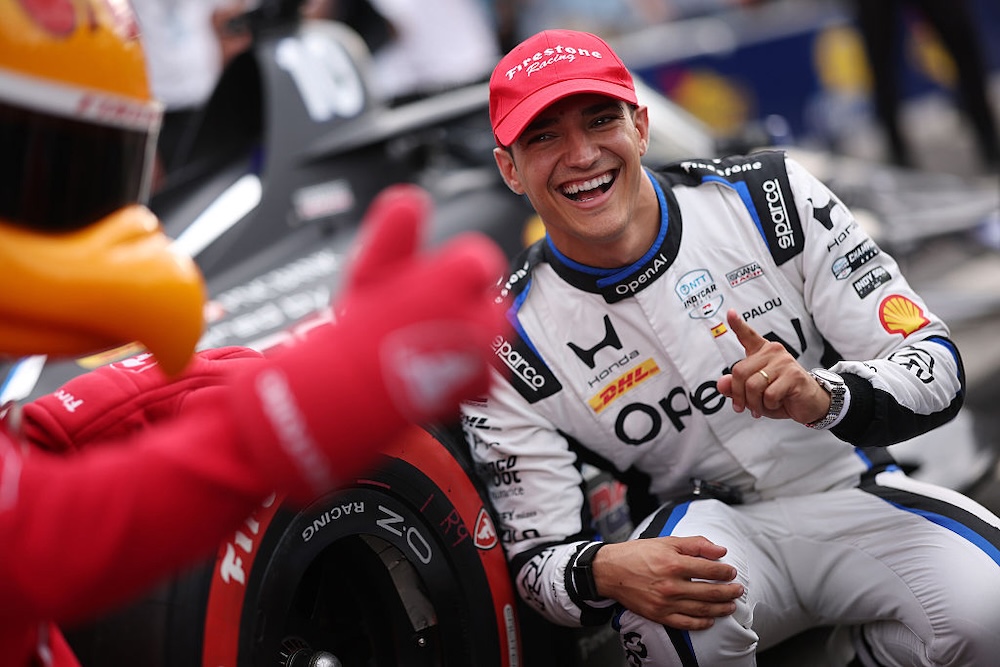
Drivers who arrive in IndyCar via a route outside of NXT - as series champion Alex Palou did in moving across from Super Formula - will be evaluated on a case by case basis under the new licensing system. Travis Hinkle/Getty Images
“IndyCar will review the driver's complete recent racing résumé before determining whether an IndyCar Driver Evaluation will be authorized,” Boles said. “IndyCar may authorize an evaluation based upon significant experience or performance in a category it determines to be equivalent to or more difficult than Indy NXT, or may determine that the driver's experience and performance record is not yet sufficient for an IndyCar evaluation.
“A driver who has not yet completed 12 Indy NXT starts may also be considered through the Résumé Review process. The 12-race requirement establishes when a driver earns status under the objective Indy NXT standards; it does not prevent IndyCar from considering an exceptional driver earlier.”
Boles also discussed the entry points to IndyCar for those from other high-level series outside of Indy NXT.
“We recognize that IndyCar drivers come from many different racing backgrounds,” he said. “Drivers with significant recent accomplishments in Formula 1, Formula 2, Super Formula, NASCAR Cup, IMSA GTP, WEC Hypercar or other professional championships that IndyCar determines to be equivalent to or more difficult than Indy NXT will be evaluated separately.
“IndyCar may determine that a driver's accomplishments in one of these categories establish competitively qualified or Evaluation Eligible status. Participation in a higher-level championship alone will not guarantee eligibility.”
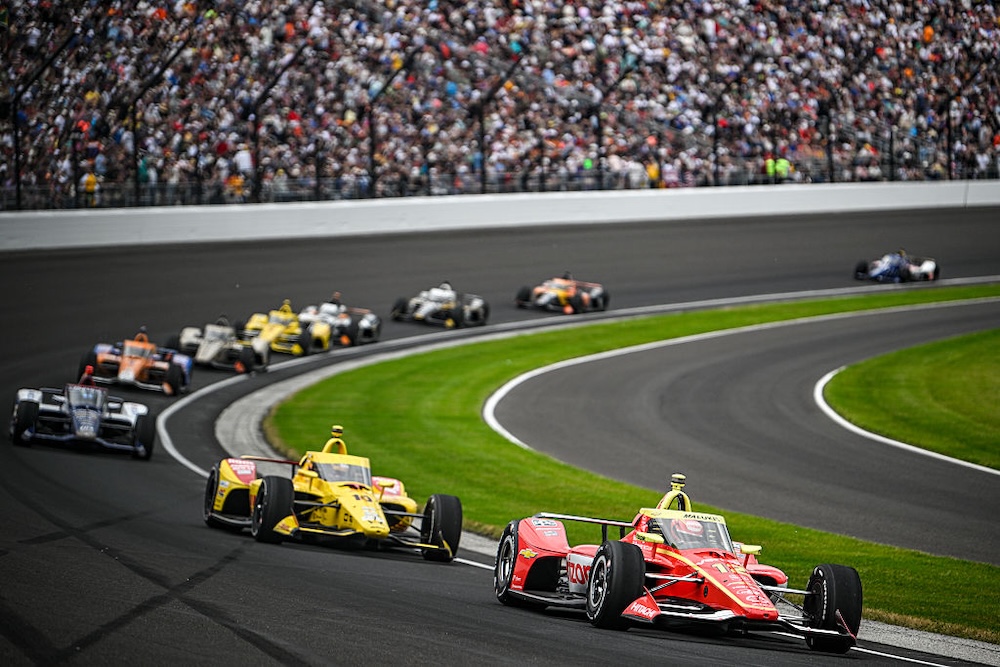
The timing of the licensing strictures is noteworthy, as multiple teams are facing concerns over how they’ll find millions of additional dollars to bankroll the buying of new-for-2028 Dallara IR28 Indy cars in 2027.
With the elevated hurdles to clear for some of the existing or potential IndyCar drivers whose budgets are critical for those teams to operate next season, and to buy new cars to start testing and prepare for the changeover in 2028, the apparent disinvitation for budget-rich backmarkers does nothing to address their urgent need for sizable infusions of cash they’d earmarked from drivers.
The licensing revision appears to satisfy the call for IndyCar to compete with fewer paying drivers, but details on how the series’ age-old business model – one where its independently-owned teams frequently rely on drivers to fund some or all of their operating budgets – will be modified in kind are missing.
Exactly how those teams would replace $10-$15 million on relatively short notice if their chosen driver fails to receive a license is not answered in the document.
“We will work with teams as we implement this process and provide additional guidance as we follow these standards,” Boles said. “Ultimately, our goal is to ensure that the IndyCar Series field represents the highest standard of driver talent, experience and competition, and that every driver competing in IndyCar has demonstrated that he or she is best prepared to find success at this level.”

Marshall Pruett
The 2026 season marks Marshall Pruett's 40th year working in the sport. In his role today for RACER, Pruett covers open-wheel and sports car racing as a writer, reporter, photographer, and filmmaker. In his previous career, he served as a mechanic, engineer, and team manager in a variety of series, including IndyCar, IMSA, and World Challenge.
Read Marshall Pruett's articles
Latest News

Comments
Comments are disabled until you accept Social Networking Cookies. Update cookie preferences
If the dialog doesn't appear, ad-blockers are often the cause; try disabling yours or see our Social Features Support.