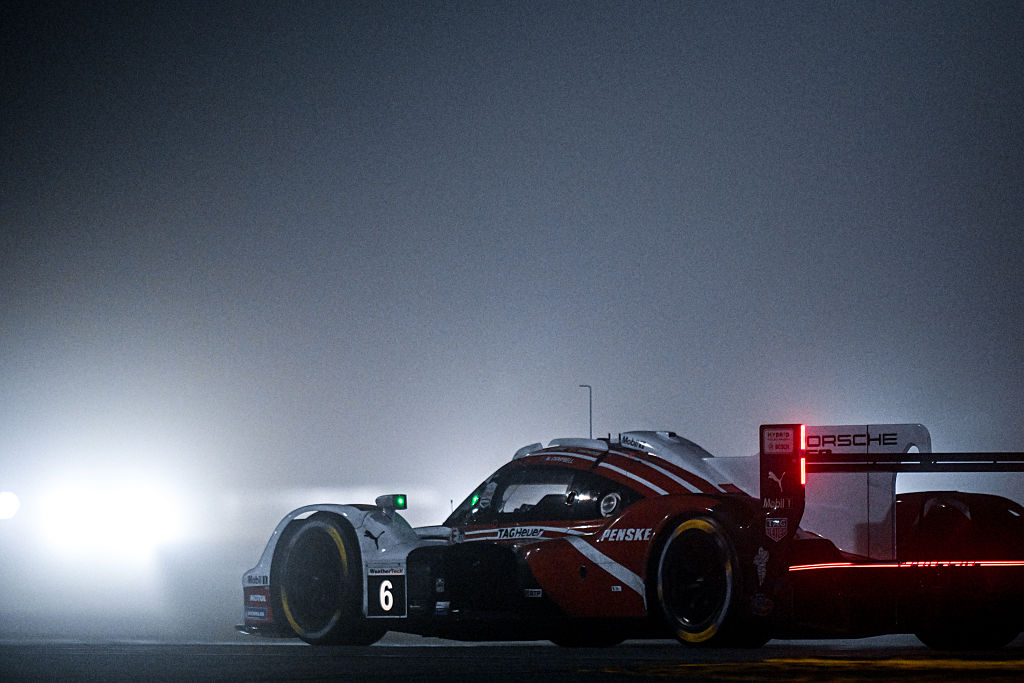
Brandon Badraoui/Lumen via Getty Images
Penske Porsche’s IMSA GTP return for 2027 is set, but pressure is mounting
After an uncharacteristically difficult 2026 campaign, Porsche Penske Motorsport will return to the IMSA GTP grid in 2027 with an unchanged 963, but also an expectation that winning will be a more regular occurrence.
Thomas Laudenbach, Porsche Motorsport vice president, made it clear today during a roundtable with reporters that there is currently “no reason” for the manufacturer to pull out next year. But it may need to get back to winning ways quickly if it is to have a future in top-class sports car racing as a factory beyond next season.
The Penske-run works team has gone from sweeping the opening endurance races at Daytona and Sebring to managing just one podium in the WeatherTech Championship since March. Its lack of outright pace in IMSA’s shorter races has become an increasingly obvious stumbling block in the team’s push for regular silverware. And with 2027 the final year of Porsche’s current five-year contractual commitment to Penske and the 963, next season could carry considerably more weight than a normal campaign.
“We very much plan to be on the grid in 2027,” Laudenbach said when asked directly about the status of the program. “For the moment, there is no reason for this scenario (pulling out), so expect us to be on the grid in Daytona 2027. PPM is planning to start the 2027 season, race the entire season, and win the championship."
Porsche’s answer to the questions surrounding its recent struggles is not another Evo Joker, following its 2026 update to the car's aero package (which only the Penske cars have utilized). The German manufacturer believes it already has a fundamentally competitive car, one that needs to extract more performance within the limits of the current rules and, crucially, the IMSA Balance of Performance process.
That makes the final two races of 2026 at Indianapolis and Road Atlanta, and everything that follows, rather more significant.
“I think we have a very fast car,” Laudenbach continued. “We will bring that to the track. That doesn’t mean we aren’t working on optimizing the package within the framework that we are allowed. But don’t expect a big update to come.
“We never stop trying to optimize and improve the little things; of course, we keep on going because, in racing, you have to fight for every little advantage. But looking at the car itself, there will not be a major update.”
To boost its chances of reaching victory lane again before the end of the current season, Porsche has made driver changes for the race at Indianapolis later this month, putting Laurin Heinrich in the No. 6 factory car alongside Kevin Estre to give Heinrich the best chance to beat Cadillac's Jack Aitken to the drivers’ title.
In turn, it has also supplied JDC-Miller with factory driver Nico Mueller for the final two races in the wake of Heinrich's return to the factory team. This will ensure the fan-favorite Minnesota-based customer team, which has snatched headlines throughout the season for its competitiveness with Heinrich and the 2025-spec 963, can benefit from consistency and remain a contender for podiums and wins.
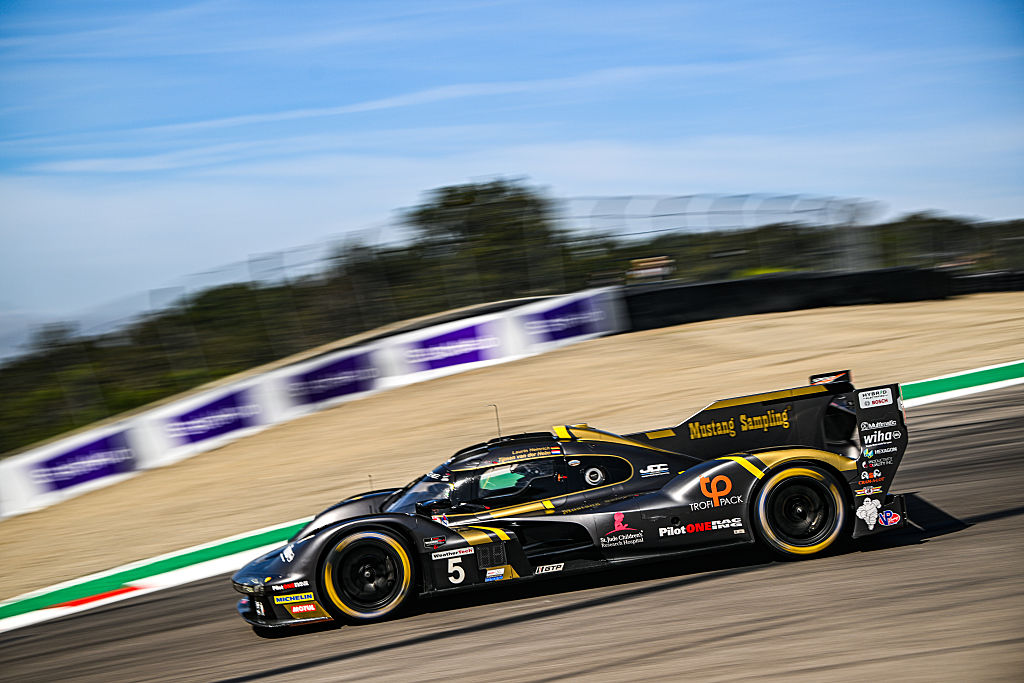
Porsche has bolstered its chances beyond the works team by supplying factor driver Heinrich, and now Mueller, to customer JDC-Miller. Brandon Badraoui/Lumen via Getty Images
By this point in the campaign, though, everyone involved in the program will have an eye on what's next. And the uncomfortable truth is that with the VW Group still struggling financially and cutting jobs left, right and center, a successful IMSA season in 2027 could prove vital in shaping the brand's next steps on the sporting front.
Laudenbach made it clear that he hasn’t been “satisfied” with Porsche’s results in IMSA this year. While not directly attributing the team’s dip in form to the BoP process in GTP – speaking publicly on the subject is outlawed in IMSA – he and Penske team president Jonathan Diuguid hinted at it. They both said they are in dialogue with IMSA about the car’s lack of performance against its competitors in the class.
“Compared to the last two years, I think where we won everything we could win, you might call it struggling,” Laudenbach said. “Yes, we are definitely not in the position we were in last year. We respect and appreciate the work IMSA is doing to provide such a competitive platform. We know it's not an easy thing to do.
“I guess at the same time, I strongly believe that it is important that, for the fans, for us as a team and as a manufacturer, let’s say there is a transparent, consistent, and predictable platform we are racing in. Looking at the 2026 season, I would say this hasn’t always been the case, and there is room for improvement. So altogether, this needs to be better.
“We are not 100% satisfied. At the same time, we all know the world is not perfect, so it’s important that we continue to stay in a very constructive dialogue with IMSA in order to get things where we all want them to be, and to come back really to have a competitive platform, exciting racing and a level playing field, but the core point is we have to work on that together with the sanctioning body.”
Diuguid echoed Laudenbach’s thoughts and pointed out that Porsche Penske Motorsport’s 963s have suffered during the shorter race events on the calendar.
“A 963 hasn’t had a pole since the second or third race in 2024,” he said. “We’re going on a little over two years since we’ve been able to display qualifying performance better than our competitors. So you know we’ve kind of focused on what we can control, and that’s race execution.
“We’ve executed these races at a very high level. The reliability of the 963 has been fantastic. I think that’s shown in Daytona and Sebring, and you know our performance is there, but when it comes down to the sprint races, we are lacking a little bit of pace.
“Everybody on the team has been working extremely hard. And I think we saw that when we get it right, and everything goes correctly, we can fight for wins and podium positions. That’s been our goal, and what we’re focusing on towards the end of the season.”
Laudenbach was asked whether he feels Porsche’s struggles in 2026 can be compared to its results in the 2025 FIA WEC season, prior to its withdrawal from the championship. He believes it’s a “different situation.”
“I don’t want to compare it,” he added. “It’s different how it is handled. We handle IMSA separately. If you ask me if we are happy with everything we have there? No.
“We have regular talks with IMSA and also see that they try to do a good job and provide what we want to have. Is the outcome always what we or IMSA want? I don’t think so. But it’s a completely different thing to what we have seen in WEC. It’s a different situation from the cars which are competing. Would I like to be in a position to win races again? Of course.”
As a follow-up, RACER asked Laudenbach to give his take on the competitiveness and balancing of the WEC Hypercar class so far this season, in Porsche’s absence.
“It’s extremely difficult to judge from the outside because you don't have as much information as compared to the situation when you’re racing yourself," he replied. "Therefore, when I come in, this is really from the outside, basically looking at it on TV and going to Le Mans. I see some changes, and I've seen some races where I would say, ‘Hey, that’s not too bad.’
“I don’t think there is much more to add because I can’t really give you an answer that is based on data, and it's not only what you see on TV or on the track. But especially at Le Mans, I think the competition was at a very good level, especially knowing that this is probably the trickiest race to handle.”
While Porsche is not expected to rejoin the WEC's top class in the short term, it remains part of the ongoing technical working group meetings developing a published set of Hypercar regulations for 2030. Laudenbach, who last spoke with RACER about the 2030 regulations after the ACO press conference at Le Mans in June, reaffirmed that Porsche is “still at the table,” with the framework now settled and the final set of rules due before the end of the calendar year.
“We are carefully looking at everything that happens around Le Mans. There is not much to say. I mean, I made a comment that, even though we took a decision not to race in WEC from this year on, this does definitely not mean that Porsche has turned its back on Le Mans," he said.
“Le Mans is a great race, and I think it's very clear that we follow everything. We are sitting at the table when it comes to giving input to the 2030 rules. I would say that generally it’s going in a good direction, and we have to see what the outcome is.
"Is there any decision about coming back, no. But we are definitely looking into it, happy to sit at the table, to contribute, to give our input; then we will see what happens in the future.”

Stephen Kilbey
UK-based Stephen Kilbey is RACER.com's FIA World Endurance Championship correspondent, and is also Deputy Editor of Dailysportscar.com He has a first-class honours degree in Sports Journalism and is a previous winner of the UK Guild of Motoring Writers Sir William Lyons Award.
Read Stephen Kilbey's articles
Latest News

Comments
Comments are disabled until you accept Social Networking Cookies. Update cookie preferences
If the dialog doesn't appear, ad-blockers are often the cause; try disabling yours or see our Social Features Support.