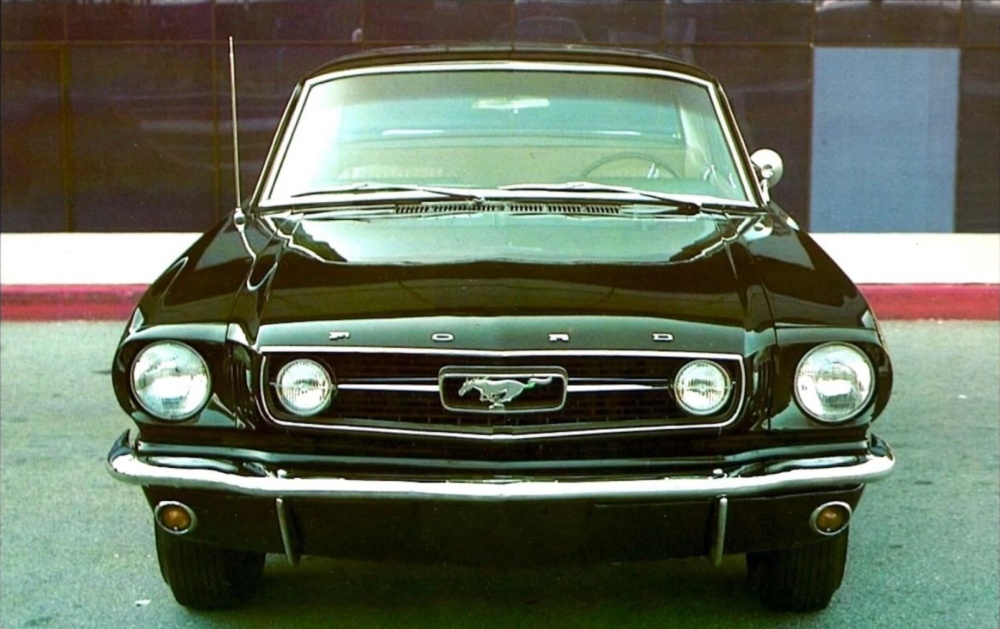
Beverly Hills Mustang LTD Brochure
The Ford Mustang is anything you need it to be, including a pickup truck
The Ford Mustang is like the weather; no matter where you go, there it is. Mustangs are race cars, drag cars, luxury cars, commuters, convertibles, fastbacks, electric crossovers, and, in one particularly strange chapter of its history, pickup trucks. The Mustang Ranchero, later dubbed the Mustero by collectors, wasn't a Ford factory job or some forgotten 1960s special edition or lost prototype. It was the product of a small Mustang restoration shop in Beverly Hills, California, which looked at a perfectly good Mustang and decided it would be better with a bed.
That alone makes the Mustero worth remembering. It is one of those strange little branches on the Mustang family tree that illustrates just how enormous the car's cultural footprint became. By 1980, there was apparently enough demand for early Mustangs that a specialty shop could rebuild them, cut them apart and sell the results as something Ford never intended to build.
The ‘60s Mustang Ranchero that wasn't from the 1960s
The story of the Mustero has been muddled for decades. The commonly repeated version says Beverly Hills Ford obtained Ford's approval in 1966 to build 50 Mustang pickups, supposedly charging $6,500 for each conversion and sending 35 of them to Europe. It sounds plausible enough, which is probably why the story has been repeated so many times.
There is, however, a problem: there doesn't appear to be a contemporary 1966 source for any of it. The earliest identifiable version traces back to a German enthusiast site, where a Swiss owner described information from a company brochure and said that as many as 50 cars had been converted using 1965/66 Mustangs. The model years of the donor cars eventually became the supposed production years, and the story blossomed from there.
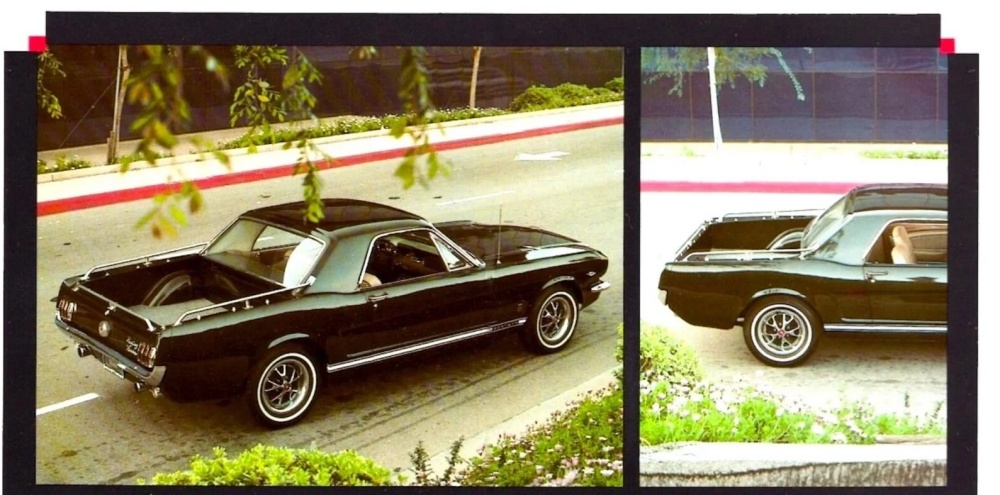
Beverly Hills Mustang LTD Ranchero Brochure
All surviving, credible evidence points instead to 1980. Beverly Hills Mustang Ltd., located in Beverly Hills, had been founded in 1979 by J. Brunk and specialized in restoring early Mustangs and selling parts. According to Brunk's son and former employee Andy Hill, the shop began building the Mustang Ranchero in 1980. The prototype was sold later that year, and former body-shop employee Ed Sherwood recalled seeing several of the conversions being built from fully restored 1965 and 1966 Mustangs, generally with the legendary 289 V8s.
1980 might seem like a random year when talking about a 1966 Ford Mustang, but there’s a reason the Mustang trucks hit in 1980. Ford's actual Ranchero had gone out of production in 1979 after seven generations, ending a long-running tradition of Ford coupe utes. Beverly Hills Mustang's idea may have been an attempt to give Mustang enthusiasts something resembling a Ranchero at precisely the moment Ford had stopped making one.
Cutting up a Mustang
The conversion was considerably more involved than simply chopping off the roof and throwing a bed behind the seats. The shop removed the rear seat and the portion of roof above it, then reshaped the remaining roof so it met the rear window frame. The Mustang's rear quarter panels and glass were retained, helping the finished truck remain recognizably Mustang.
Behind the cabin was a bed measuring approximately 3.5 by 4.5 feet, with chrome rails, a tonneau cover and a 12-inch-deep locking compartment occupying the area where the trunk had been. The brochure described the bed as all-metal, specifically advertising "No Fiberglass!" Although Sherwood later remembered fiberglass beds being molded at the shop, suggesting the construction may have varied, the surviving 1981 brochure clearly describes the finished product as an all-metal truck bed.
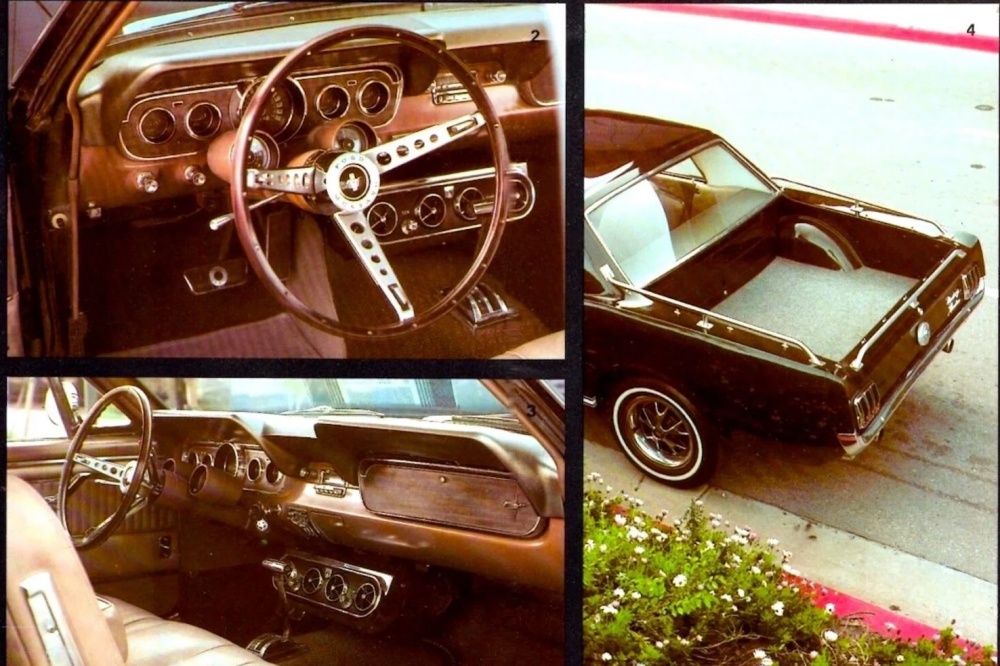
Beverly Hills Mustang LTD Ranchero Brochure
The tail panel, taillights, and bumper remained in their original positions, meaning there was no conventional tailgate, at least at first. Cutting down the roof also changed the shape of the door openings, requiring curved Lucite side windows that continued to operate using the original window cranks. The prototype reportedly had Masonite inner bed walls, a GT exhaust, fog lights, and a parchment pony interior.
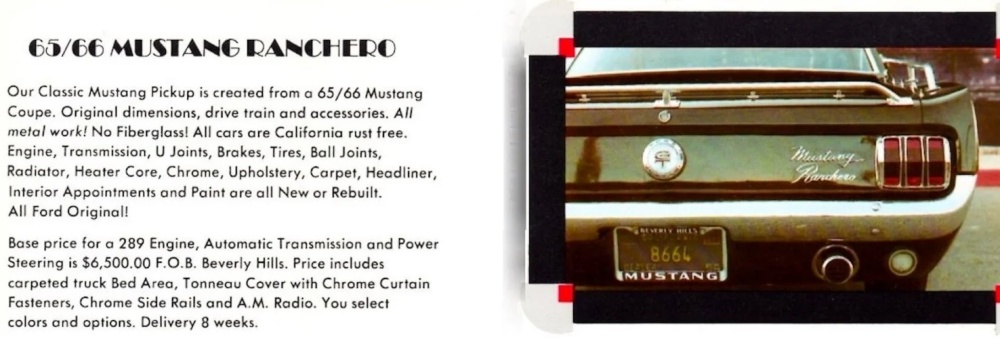
Beverly Hills Mustang LTD Ranchero Brochure
And this wasn't being sold as some bare-bones backyard hack. The 1981 Beverly Hills Mustang brochure listed the "65/66 Mustang Ranchero" at $6,500 as a complete car, including a 289 V8, automatic transmission, and power steering. Buyers could select any 1965 or 1966 factory color. A four-speed added $250, front disc brakes were $400, and factory air conditioning cost another $600. The shop even offered its own Pony bench seat for $450.
Probably fewer than five were built
This is where the Mustero becomes even more interesting and mysterious. Despite the oft-repeated claim of 50 cars, the people who actually worked at Beverly Hills Mustang remembered a much smaller number. Sherwood recalled seeing three or four. Brunk's son estimated four or five. Hill said he built every car except the prototype and also put the total somewhere in that range.
In other words, the Mustero was never a production Mustang derivative. It was barely a repeated product. It was a tiny experiment carried out by a specialty shop, using a handful of early Mustangs and a fairly large amount of cutting, welding, and optimism.
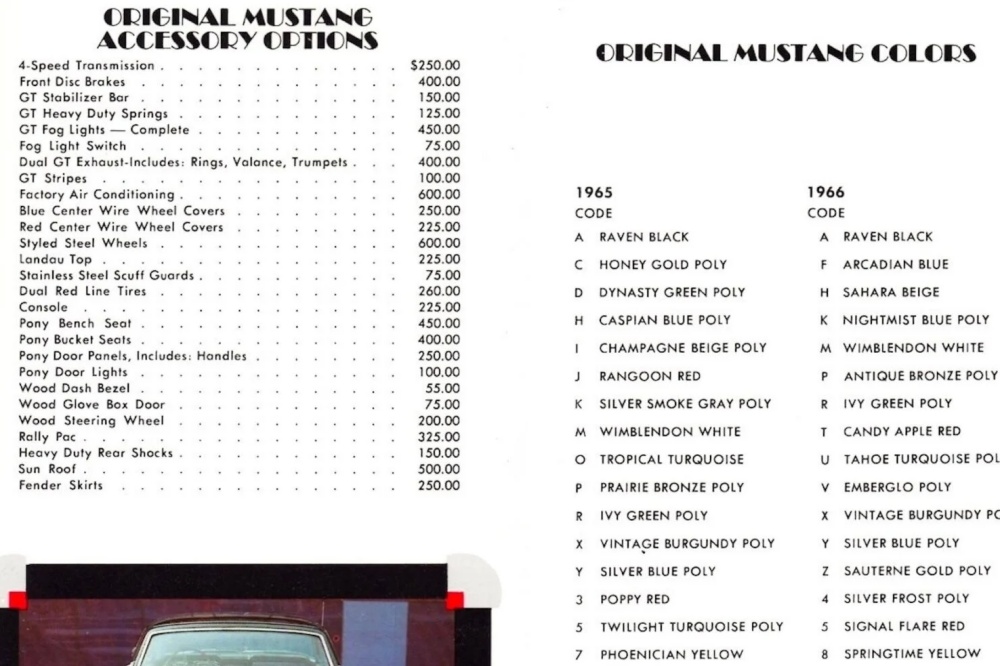
Beverly Hills Mustang LTD Ranchero Brochure
There are also more Musteros in existence today than Beverly Hills Mustang ever built, because other owners have subsequently converted Mustangs into their own versions. Some are extremely convincing; others are considerably more homemade. Many even have functional tailgates, something the original Beverly Hills Mustang conversions did not have.
That may be the most fitting legacy for the Mustero. The Mustang became so ubiquitous that people eventually stopped treating it as a fixed thing. It became a platform, a cultural object and, eventually, raw material. If you wanted a Mustang that was also a pickup, apparently nothing was stopping you from making one or even buying one, technically.
Ford built millions of Mustangs. Like grains of sand on the beach, there are Mustangs of various flavors dotting the world. Enthusiasts have spent six decades finding new things to do with them. Somewhere in that enormous universe of Mustangs, a handful of early cars spent their later lives as tiny utility trucks around Beverly Hills. They weren't official, they weren't numerous, and they weren't particularly logical. But they were Mustangs. And for a car that has been almost everything to almost everybody, that seems fitting.

Peter Corn
Peter Corn is an automotive writer and storyteller. Peter has spent nearly a decade writing about cars, trucks, and motorcycles for some of the best publications in the business. He believes the best automotive stories aren't really about the machines at all, but instead, the people who love them.
Read Peter Corn's articles
Latest News

Comments
Comments are disabled until you accept Social Networking Cookies. Update cookie preferences
If the dialog doesn't appear, ad-blockers are often the cause; try disabling yours or see our Social Features Support.

_.jpg?environment=live)