Photo courtesy of Mecum
The 1990s was the greatest and last decade for weird cars
The ’90s sigh. The ’90s seemed silly and frivolous at the time. Angsty teens, MTV, we only kind of had the internet, no cell phones for real, wallpaper, big hair, bright colors, manual cars, and a sense that being different was a valuable and worthwhile pursuit. Understanding that my childhood happened in the ’90s and that carries a bit of a rosy tint, I still think the overall mindset of the time was different, almost naive compared to the digital onslaught to come.
That isn't entirely true, of course. The decade produced plenty of boring stuff, too. Still, I argue this is the last great decade for weird cars. Sure, there were Toyota Camrys, Honda Accords and countless other cars whose entire reason for existing was to get people from one place to another while maintaining as much anonymity as possible. But alongside them was a remarkable collection of cars that survived the corporate gauntlet of approvals.
Some of the strangest cars ’90s had to offer
The ’90s weren’t special because car manufacturers were cooler. I think the ’90s were cooler because the consumers were cooler, or at least just a touch less dedicated to homogenization. There wasn’t much of an internet, no camera phones, no social media, not nearly as much media in general. All of this lack of input created more niche groups, people with individual tastes that were localized. At risk of overanalyzing, I think this more localized version of consumerism just made it that much harder for major car makers to know what buyers wanted, so they tried more stuff. Let’s take a look at the evidence.
There was the Suzuki X-90, essentially a two-seat, T-top recreational vehicle built from the bones of the Vitara. Every part of that is already strange. It was basically a sports car that got genetically mixed with a little SUV. A strange car for strange times.
Honda took its massively popular Civic and turned it into the del Sol, a two-seat targa-top car with a removable roof that could disappear into the trunk.
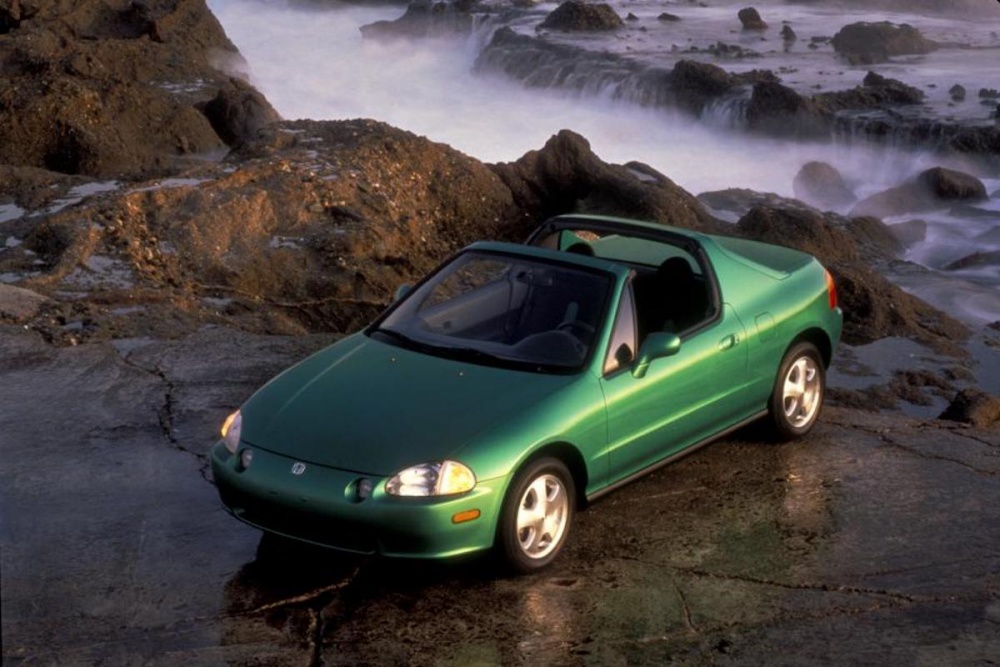
Honda Newsroom
Isuzu turned a 1993 concept SUV that looked like a nine-year-old’s drawing of a Moon rover and actually built it. This, of course, is the Isuzu VehiCROSS, an aggressively styled three-door SUV. Seeing one of these today, parked amongst a sea of crossovers, really shines a bright light on just how different carmakers thought back then.

Isuzu
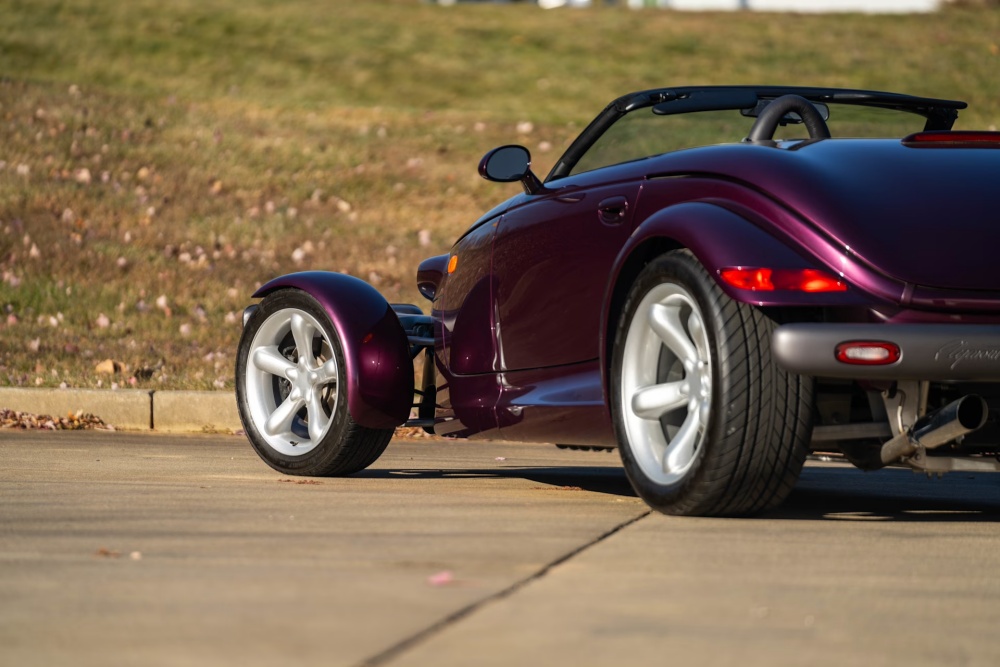
Then there was the Plymouth Prowler, a production hot rod/alien bug with exposed front suspension and styling that would have looked radical even if it had remained a concept car. I literally had a poster of this on my bedroom wall. It was extreme, a properly wild car that Plymouth actually made, and then went out of business, but let’s not talk about that.
Volkswagen literally took one of its most popular cars, the Golf, and painted all the body panels different colors, looking like a junkyard car someone’s uncle was planning to paint. The Golf Harlequin is particularly noteworthy when you compare it to today’s cars that we can barely get painted anything other than white, black, silver, or white.
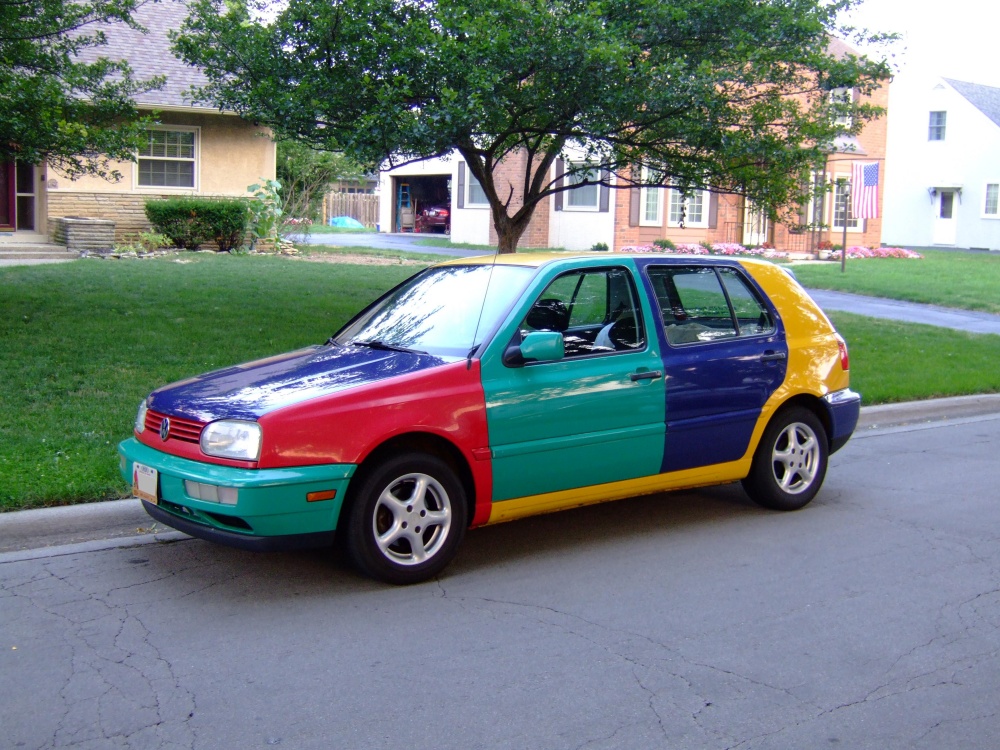
Wikimedia Commons
The Fiat Multipla might be the perfect example of the era's willingness to think differently. Fiat wasn't simply trying to make a small minivan. It created a small, six-seat vehicle, with three seats across the front and three across the rear that looked more like something a Japanese fisherman might pull up after a tsunami than a car. Fiat explicitly presented it as a new category of compact MPV, emphasizing its ability to function as a people carrier, station wagon, or van depending on how its modular interior was configured. Wild.
Even more telling is what happened to some of these cars after they reached production. The VehiCROSS began as a concept at the 1993 Tokyo Motor Show before Isuzu essentially carried the design into production in 1997. The Multipla was exhibited at New York's Museum of Modern Art as part of its "Different Roads" exhibition. The Prowler went from concept to production, even though it looked almost nothing like the conventional cars surrounding it in Chrysler showrooms.
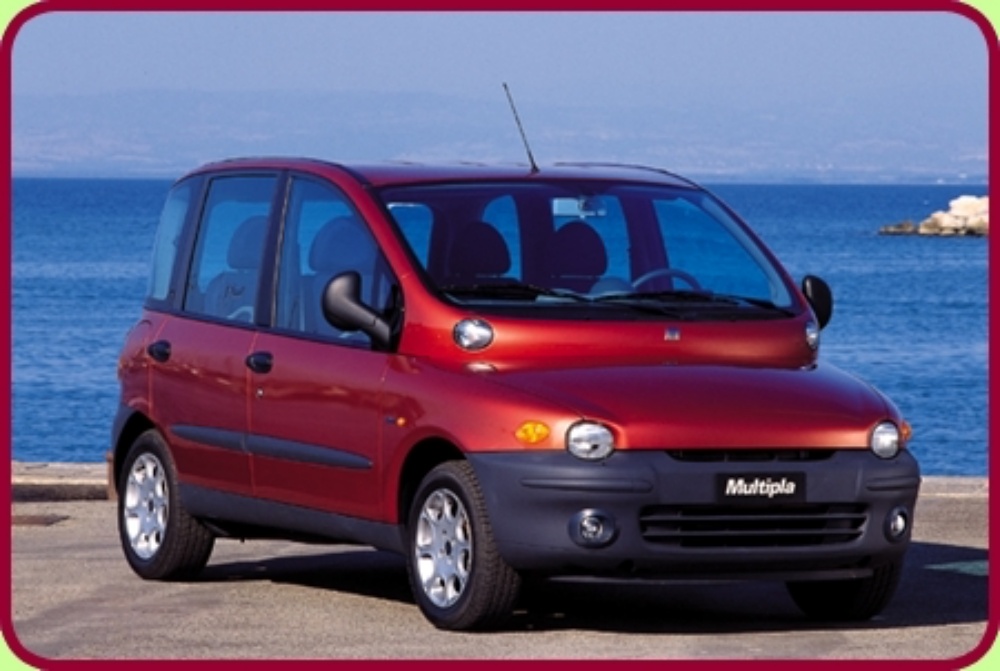
Fiat
The important thing isn't that every weird car was successful. Many weren't. The X-90 lasted only from 1995 through ’97. The Prowler remained a low-volume curiosity. The VehiCROSS was produced for only a few years. The del Sol disappeared after 1997 in North America. The industry tried things, discovered that some of them worked and discovered that others absolutely did not.
That experimentation, yes, but more so, the willingness to try, was what made the period interesting. Automakers were increasingly comfortable filling niches instead of simply building one car for the largest possible audience. The expanding SUV market created opportunities for manufacturers to play with body styles and purposes. Minivans had already demonstrated that Americans would reconsider what a passenger vehicle could be. Japanese automakers were particularly willing to experiment with compact vehicles, while European manufacturers continued to approach packaging and design from entirely different directions. Performance was a factor in all of this, but not the only one. Cars simply offered more variety and experimented with how to deliver that to a varied and diverse group of buyers.
The ’90s weren’t exactly better
For all the excitement and diversity of ’90s cars, not all of them were good ideas. That's important, too. The argument isn't that every 1990s car was brilliant. Some were ugly, impractical, underpowered, or just plain bad. But they were often memorable because somebody had been allowed to try something. Even if you never bought a VehiCROSS or del Sol, someone else did, and those cars were out there. Looking at a parking lot had the potential to show you something really interesting, not just a boundless mass of vaguely angry, egg-shaped washing machines on wheels.
Wikimedia Commons
That's harder to see in today's market. Modern cars are extraordinarily capable, and manufacturers have good reasons for concentrating development around a smaller number of global platforms. Safety regulations, emissions requirements, development costs, electrification and the economics of manufacturing all make it expensive to build something that appeals to a tiny audience. I get it. But the result is a market, and a world, increasingly colorless and flat, dominated by numbers and people in suits looking to make shareholders as much money as possible.
That isn't only a bad thing. Safer, more efficient cars are good things. But something has been lost in the process. We get lost in that process. The weird cars of the 1990s were culturally interesting because they weren't always optimized for efficiency. They represented an industry willing to spend some money finding out whether people might want something they had never seen before. Things like design and brand identity used to matter to carmakers as a matter of pride.
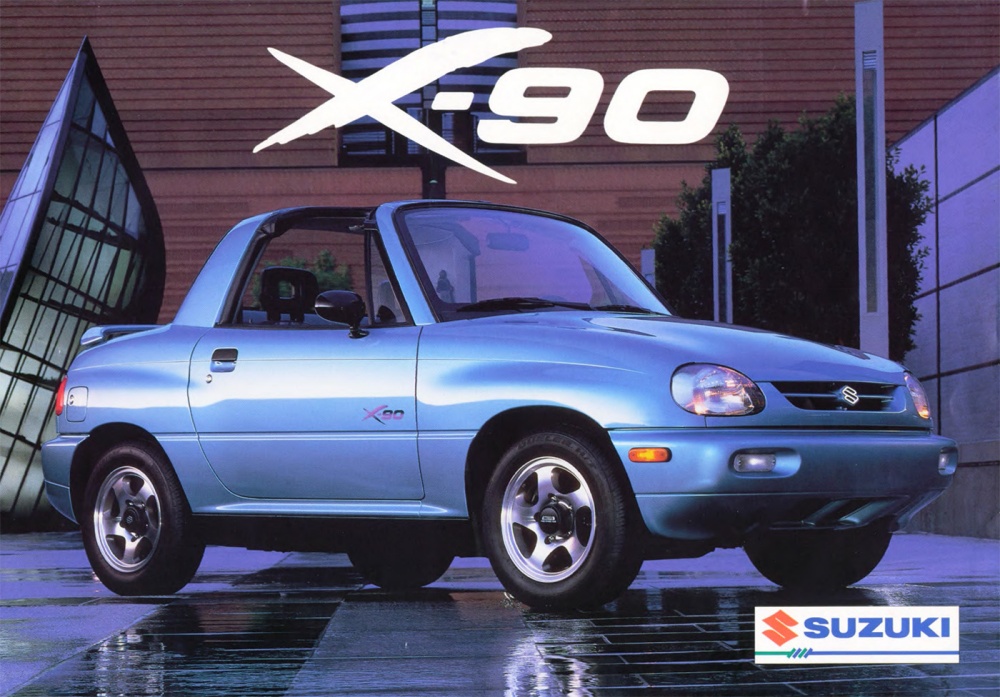
Suzuki
I think this is why, against this current world, the ’90s’ strangest cars have aged so well. The X-90, del Sol, VehiCROSS, Multipla, Prowler and Harlequin weren't all sales successes, and they certainly weren't all great cars. They also weren’t the only weird cars, far from it. It’s just a small cross-section to show that strange cars were an option. No matter how well they did at the time, decades later, people still remember them. They have become artifacts of a bygone era.
The lesson isn't that we need to bring back the 1990s. It is that the car industry needs to make room for the occasional bad idea. Because every once in a while, a bad idea turns out to be a great one. And even when it doesn't, it might at least give us something worth talking about 30 years later.

Peter Corn
Peter Corn is an automotive writer and storyteller. Peter has spent nearly a decade writing about cars, trucks, and motorcycles for some of the best publications in the business. He believes the best automotive stories aren't really about the machines at all, but instead, the people who love them.
Read Peter Corn's articles
Latest News


Comments
Comments are disabled until you accept Social Networking Cookies. Update cookie preferences
If the dialog doesn't appear, ad-blockers are often the cause; try disabling yours or see our Social Features Support.