Datsun/Nissan
God Bless America and the mini truck
We point to a great many things that “define” America. We love guns, rebellion, fried food, music, air conditioning, fireworks, huge dogs, land, “freedom,” sports, glamour, money, slow-cooked meats, and big-ass trucks. We really like trucks, but not just any ol’ trucks; we only have eyes for the literal biggest, most powerful, most luxurious, leather-clad, blue-collar cosplay pieces, so massive they are better compared to a small black hole than any trinket made in a factory. But it wasn’t always like this.
For most of the postwar era, the American pickup truck followed a simple formula: make it big, make it powerful, and give it a bed. The full-size Ford F-Series, Chevrolet C/K and Dodge pickups were designed to be working equipment first and transportation second. They hauled farm equipment, lumber, tools and campers, and their size and strength were generally treated as a virtue. If you needed a truck, the assumption was that you needed a big truck.
Then America changed.
The mini-truck finds its moment
By the early 1970s, the American automobile industry was running into a problem it couldn't simply engineer away. For decades, cheap gasoline had encouraged Americans to buy bigger cars, bigger engines and, increasingly, bigger trucks. Then the geopolitical landscape changed.
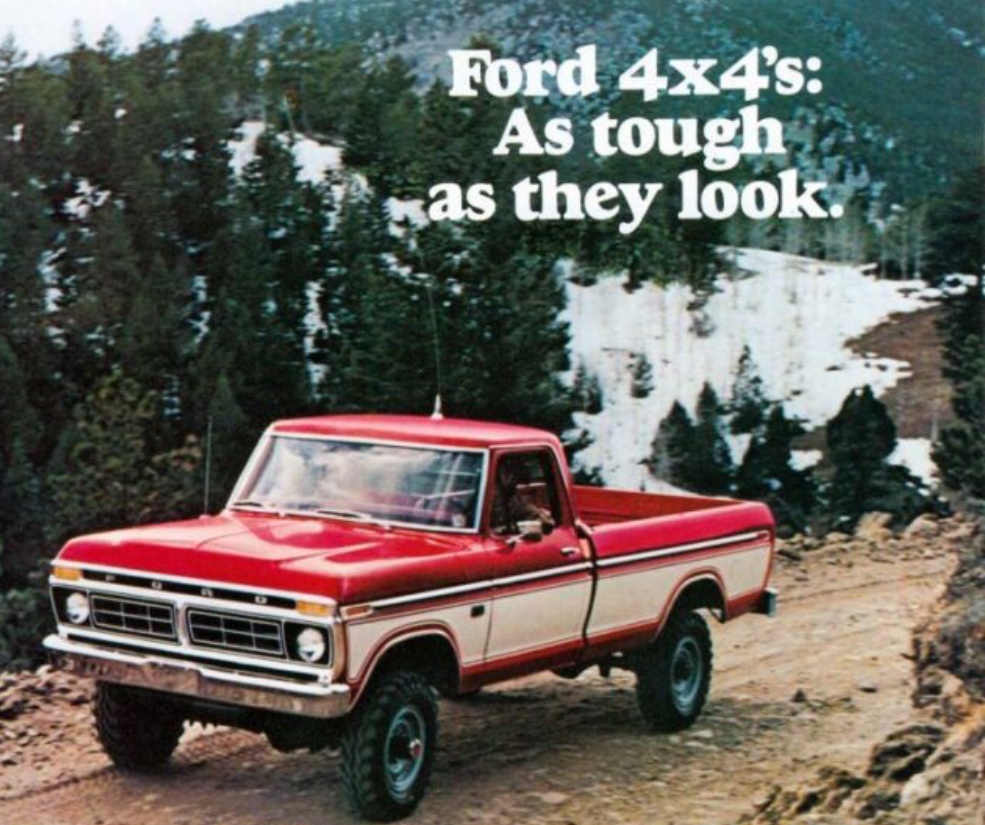
The 1973 OPEC oil crisis changed the fabric of American life. The way Americans thought about the automobile hit a brick wall, exposing the vulnerability of a country increasingly accustomed to cheap fuel and large vehicles. This affected everything from commuter cars to commercial trucking. Detroit was forced to respond with smaller, more efficient cars, but the pickup presented a different problem. The Earth-rending muscle cars of the late 60s were a luxury. Sixteen-year-olds didn’t need to roast tires outside the drive-in movie yard, but a truck? That was different. Trucks still had to be trucks despite the cost of oil. Farms, businesses, governments and contractors still needed something with an open bed, and the question became whether that job really required a full-size American pickup.
Japanese automakers were way ahead of us on answering that question. Toyota and Nissan had established themselves on the West Coast in the 1950s with small pickups, but these trucks occupied a peculiar place in the American market. They were useful and economical, but they were hardly viewed as serious alternatives to a Ford F-Series, Chevrolet C/K or Dodge pickup. The changing economic landscape gave them a new opportunity. A truck that was smaller, lighter and more economical was no longer necessarily a toy version of the real thing. For a growing number of Americans, it was simply a better fit for the job they actually had to do.
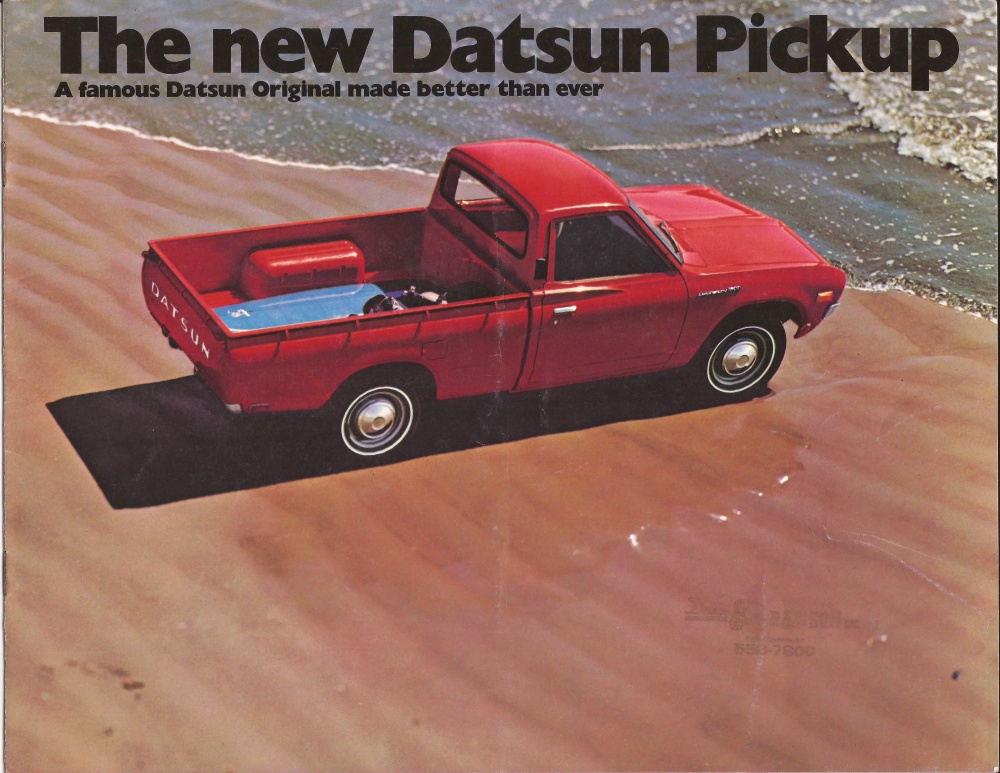
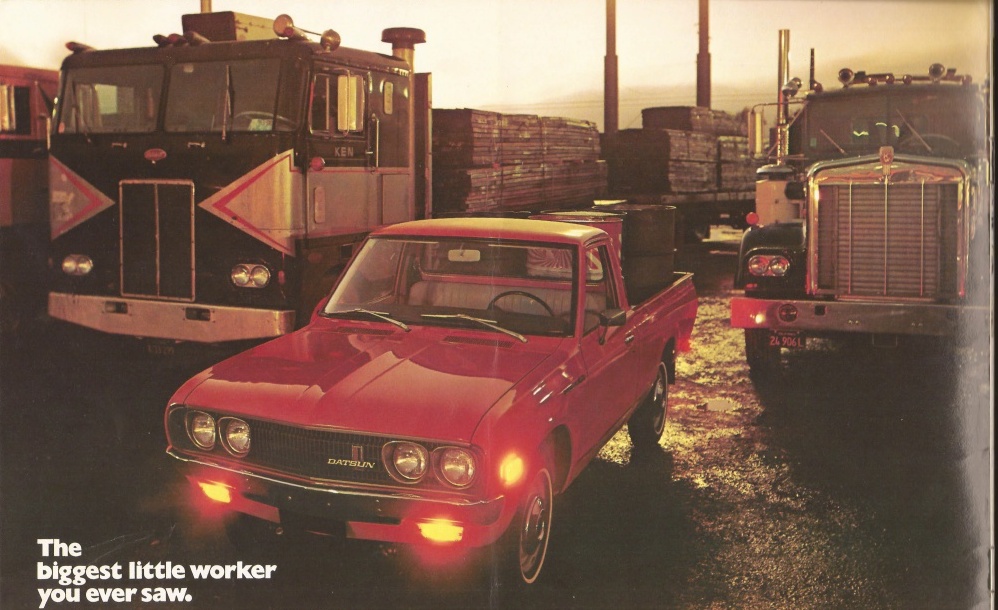
Datsun
The 1970s oil disaster actually came in two waves tied to different Middle East crises. The 1973 oil crisis was triggered by OAPEC's embargo during the Yom Kippur War, targeting the U.S. and other nations for supporting Israel, which quadrupled oil prices almost overnight. Iran, under Shah Mohammad Reza Pahlavi, was a key American ally at the time and didn't join the Arab embargo. Still, it did use the resulting price shock to push OPEC toward much higher posted prices, since Iran depended heavily on oil revenue to fund the Shah's rapid modernization and military buildup, largely underwritten by close U.S. backing.
That relationship soured through the mid-to-late 1970s as the Shah's government faced growing domestic unrest over inequality, repression by the secret police (SAVAK), and perceived Western cultural influence, fueling opposition from religious, nationalist, and leftist factions alike. Sound familiar?
Matters came to a head in 1978 as strikes, including a crippling walkout by oil workers, crashed Iranian oil production and exports just as global demand was uncomfortably tight, producing the second oil shock. The unrest culminated in what’s known as the Iranian revolution in January 1979 and the return of Ayatollah Ruhollah Khomeini, who established the Islamic Republic after the revolution succeeded that February.
Global oil prices roughly doubled amid the resulting supply disruption and market panic, which is the price spike that hit American consumers and helped drive demand toward smaller, more fuel-efficient vehicles like Japanese mini-trucks. So capitalism did what it do, and twisted in its skin to address this strange moment when Detroit needed smaller, more efficient vehicles and Japanese manufacturers already had them. All of a sudden, the most American industrial market got flipped on its head.
The mini-truck didn't cause the change in American automotive tastes. It was a product of that change. But it gave Americans something they hadn't previously considered: a truck scaled to the work they actually needed it to do. Restraint. That distinction would become increasingly important as the decade wore on, eventually turning the mini-truck from an oddity into one of the most important new segments in the American car market.
The Chicken Tax
Although the oil crisis was the final push, mini trucks had been circling America for nearly a decade before. In 1963, the U.S. had imposed a 25% tariff on light trucks (the "chicken tax"), originally retaliation in a trade dispute over European tariffs (familiar?) on American chicken exports. Still, it stuck around and effectively walled off the U.S. market to imported pickup trucks.
When fuel prices spiked, and American buyers wanted small, efficient trucks that Detroit wasn't really building, Japanese automakers like Toyota and Datsun found a workaround: they shipped mini-trucks as partially assembled kits or as "chassis cabs" without a bed attached, which classified them differently under customs rules and let them dodge the 25% tariff, then completed assembly domestically.
Companies also got creative by building plants in the U.S. or striking captive-import deals with American brands (like the Chevrolet LUV or Ford Courier, which were rebadged Isuzu and Mazda trucks) to sidestep the tariff structure entirely.
On the safety and regulatory side, small trucks also benefited from lighter-weight classifications with less stringent fuel economy and safety mandates than passenger cars faced under the emerging CAFE standards passed in 1975, making them cheaper to produce and sell. So you had a perfect alignment: oil-shock-driven consumer demand for efficient vehicles, a regulatory environment that inadvertently favored small trucks, and Japanese manufacturers actively engineering around a tariff meant to keep them out. That combination is really what let mini-trucks proliferate in a way that fuel prices alone couldn’t have caused.
America discovers it doesn't need a huge truck
The appeal was almost embarrassingly logical. A mini-truck could carry a surprisingly useful load while taking up less space, using less fuel, and generally costing less than a full-size pickup. Not to mention, the Japanese approach of giving these trucks less performance but far higher tolerances mechanically gave Americans these super-dependable little workhorses.
A 1980 comparison test by Car and Driver included seven small pickups and noted that every one managed at least 20 mpg while offering roughly half-ton hauling capability. At that point, mini-pickups accounted for about 30 percent of light-truck sales.
That is an important distinction. The mini-truck wasn't successful because Americans suddenly stopped liking big trucks. Quite the opposite. They liked trucks so much that they would rather shift their tastes to buy a smaller Japanese truck than give up on them altogether. The little pickup preserved the things people actually used a truck for while stripping away a lot of what they didn't necessarily need. The belt tightened.
There was also a cultural element developing slowly alongside the practical one. Especially on the West Coast, mini-trucks outgrew their value as something solely practical. Some owners lowered them, fitted wider wheels and tires, and treated them as something closer to a hot rod than a piece of farm equipment. Others went in the opposite direction, adding four-wheel drive and raising them for off-road use. The same basic little truck could therefore become a commuter, workhorse, street cruiser, or off-road toy. More on this in a bit. That flexibility was part of the magic. The mini-truck wasn't telling Americans what a truck was supposed to be. It gave them a new shape to fill with whatever they wanted.
Detroit builds its own little trucks
By the early 1980s, the mini-truck had become too important for Detroit to leave the segment entirely to imported products. General Motors was ready to step up to the plate in earnest. In 1982, the Chevrolet S-10 and GMC S-15 hit the market like the meteorite that killed the dinosaurs. Ford followed with the Ranger for the 1983 model year, replacing the Courier.
The significance of these trucks went beyond their dimensions. The S-10 and later Ford Ranger took the visual and mechanical language of their larger siblings and shrank it. They looked like trucks because they were designed to be trucks, just smaller ones. The Ranger in particular borrowed heavily from the F-Series formula, offering multiple cab and bed configurations, four-cylinder and V6 engines, and two- and four-wheel drive.
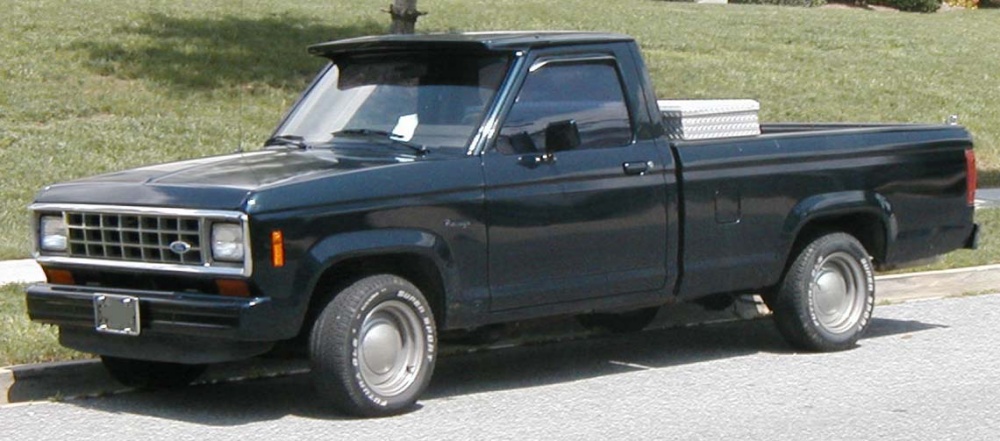
Wikimedia Commons
The Japanese manufacturers weren't simply pushed aside, either. Toyota continued to build its reputation around four-cylinder power and four-wheel drive, while Datsun's 720 brought features such as the King Cab extended cab to the segment. By 1983, Datsun pickups were also being built at Nissan's new plant in Smyrna, Tennessee, making it the first foreign pickup manufactured in the United States, which would prove to be the cow’s hoof, knocking over the lantern before the conflagration that would eventually completely consume the American car market as it had been since Henry first fired up his assembly line.
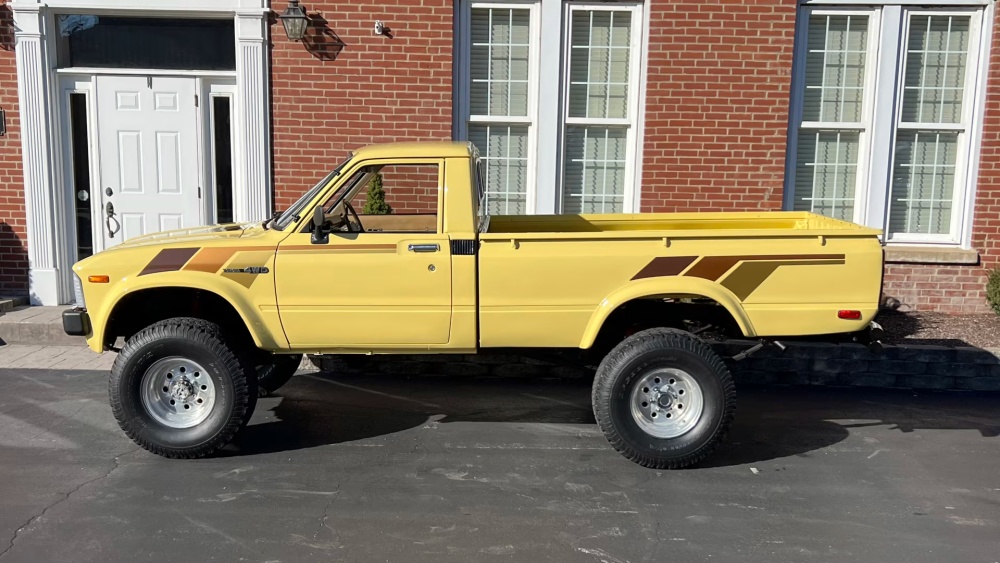
Courtesy of Mecum
Ford and GM were building American compact trucks. Toyota and Datsun were selling Japanese-designed trucks that had become thoroughly accepted by American buyers. Isuzu, Mazda and Mitsubishi were still in the mix, sometimes appearing with American badges. The word "truck" was on the other side of a proper paradigm shift.
Mini-truck culture takes shape
When Americans are exposed to inexpensive vehicles in large numbers, something cool happens. The mini-truck became part of a broader customization culture, particularly in Southern California. Lowered trucks appeared alongside the custom Volkswagen scene, while four-wheel-drive versions were lifted and turned toward off-road use. The truck's relatively simple proportions made it an appealing platform for modification, and its affordability meant owners could spend money changing the vehicle instead of spending all of it buying the vehicle.
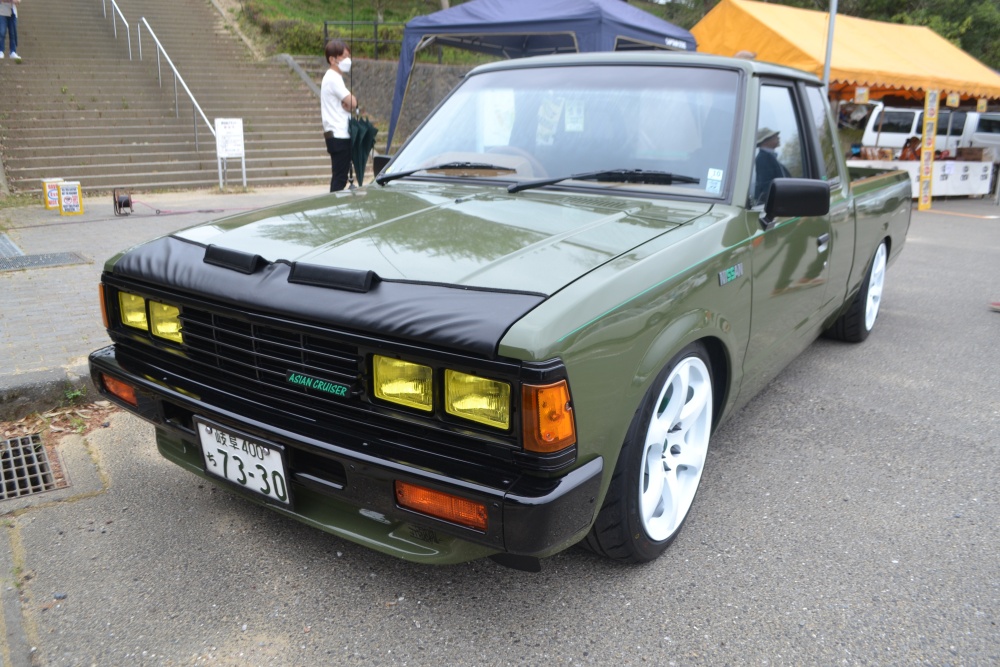
Wikimedia Commons
This is where the mini-truck becomes more interesting than simply another chapter in pickup-truck history. It reflected a broader change in how Americans related to their vehicles. A pickup didn't necessarily have to be an anonymous appliance purchased for work. It could be personal. It could be fashionable. It could be weird. It could be fast. It could be anything.
The mini-truck was particularly good at occupying that space because it was already a little bit weird. It looked like a truck, but not quite the truck America had grown accustomed to. It was economical without being an economy car. It could work without looking like industrial equipment. It was small enough to fit into urban life while still carrying the basic promise of a pickup.
By 1980, the category was established enough for Car and Driver to stage a seven-truck comparison test. Toyota, Datsun, Chevrolet, Ford, Mazda, Plymouth and Volkswagen all had entries, and the magazine took them seriously, not as curiosities, but as legitimate competitors in a growing market. That may be the clearest indication that we were on the other side of the revolution.
Where did all the little trucks go?
The temptation is to think of the mini-trucks like the dodo. These trucks weren’t here one day and gone the next. They weren’t sought for destruction. Their decline was something much closer to the Neanderthal: bred out of existence by the slow, steady hands of time, while the voracious appetites of capitalism drive the current.
Courtesy of Mecum
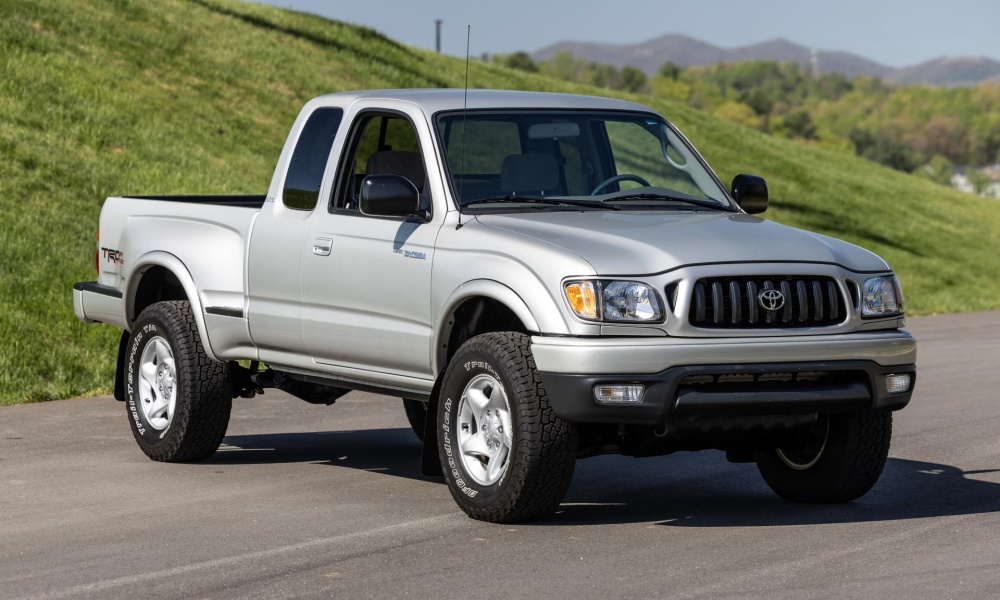
As the 1980s progressed, and the strictures of the oil crisis melted away, compact pickups grew larger, more powerful, and more sophisticated. The Chevrolet S-10 and Ford Ranger established themselves, while Toyota and Nissan continued growing and refining their trucks. Chrysler introduced the Dodge Dakota in 1987, occupying a new space between compact and full-size pickups; still small but moving toward something different.
The basic idea had survived, but the proportions were changing. The need for efficiency softened. The little truck was becoming the medium truck. Eventually, the American pickup market began drifting back toward the same basic philosophy it had always embraced: more capability, more room and more power.
What was lost in that evolution was the original reason the mini-truck had been so compelling. The early trucks weren't trying to be smaller versions of giant American pickups. They were answering a different question. How much truck do you actually need?
History bounces the same truths around like echoes
That question feels particularly relevant again in 2026 because the circumstances that made the mini-truck attractive haven't entirely disappeared. We still suffer from the Chicken Tax, a senseless conflict with Iran is yet again throttling oil production and ballooning prices.
Ford
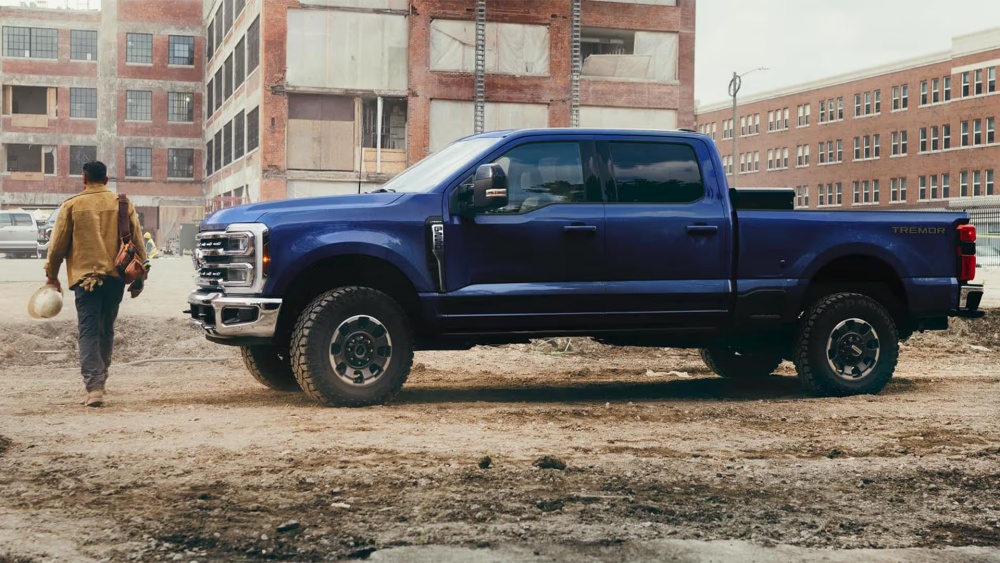
Fuel economy still matters. Small businesses still need to haul things without spending a fortune. Our manic and overly-aggressive tariffs are blasting the cost of living into the stratosphere. Americans still need inexpensive vehicles that can do several jobs at once. And yet the modern American pickup has become, increasingly, and cartoonishly massive.
Unlike the old days, though, the modern trucks aren’t just huge; they are getting more luxurious, powerful, and exclusive. The average price of a new pickup truck in America for 2026 is north of $60k. You can easily spend north of $100k. Although fuel economy has gotten better despite their size, they are still expensive to drive with our current gas prices.
The 1970s marked this extraordinary period when the country reconsidered the relationship between size and usefulness. Every truck didn't have to dominate the road to be useful. They all didn't need eight cylinders, a giant cab, or enough bed space to transport a whole second truck.
Sometimes, most of the time, most people only needed a little truck. The need has cycled back around, but will we be bothered to ask the same questions? Will the car makers respond in earnest?

Peter Corn
Peter Corn is an automotive writer and storyteller. Peter has spent nearly a decade writing about cars, trucks, and motorcycles for some of the best publications in the business. He believes the best automotive stories aren't really about the machines at all, but instead, the people who love them.
Read Peter Corn's articles
Latest News


Comments
Comments are disabled until you accept Social Networking Cookies. Update cookie preferences
If the dialog doesn't appear, ad-blockers are often the cause; try disabling yours or see our Social Features Support.