Kym Illman/Getty Images
How Zak Brown won the culture war at McLaren Racing
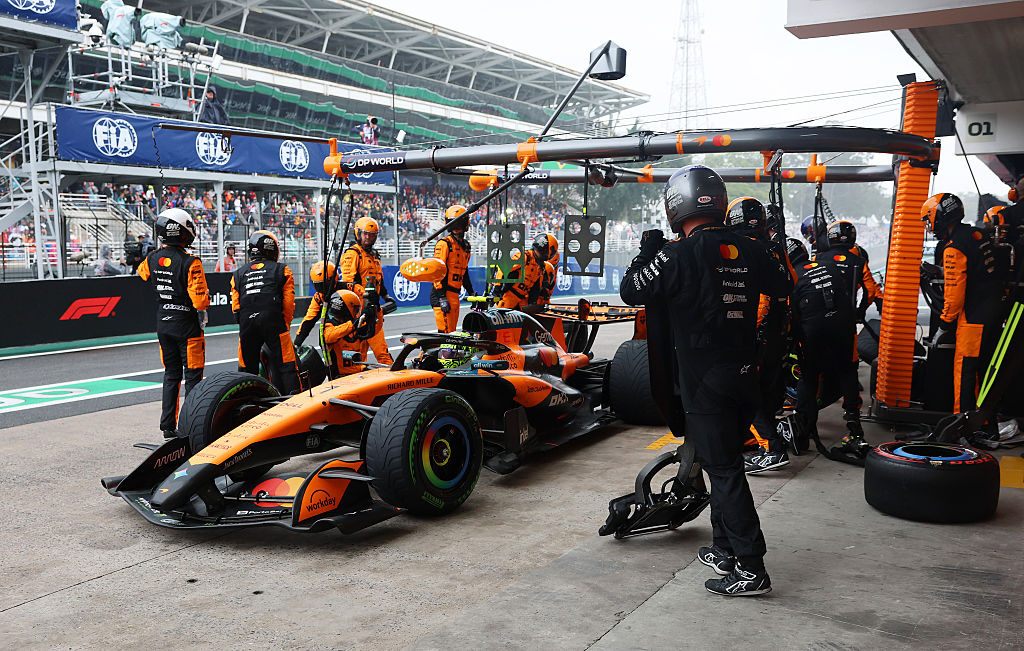
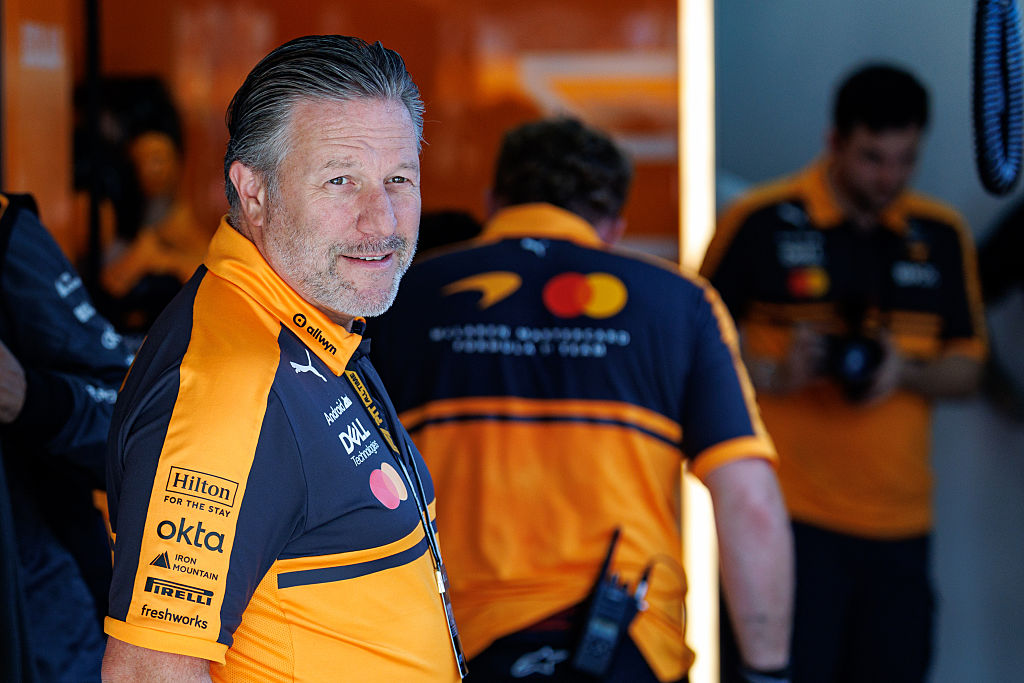
In 2016, Zak Brown was tapped as executive director of McLaren Technology Group, and two years later, the Californian became the CEO of McLaren Racing. Having been with the papaya organization for a decade now, Brown’s influence on McLaren's strategic direction, overall operational performance and marketing and commercial development has been profound. Along the way, Brown has taken the lead in transforming the culture and competitive spirit of the McLaren Formula 1 team.
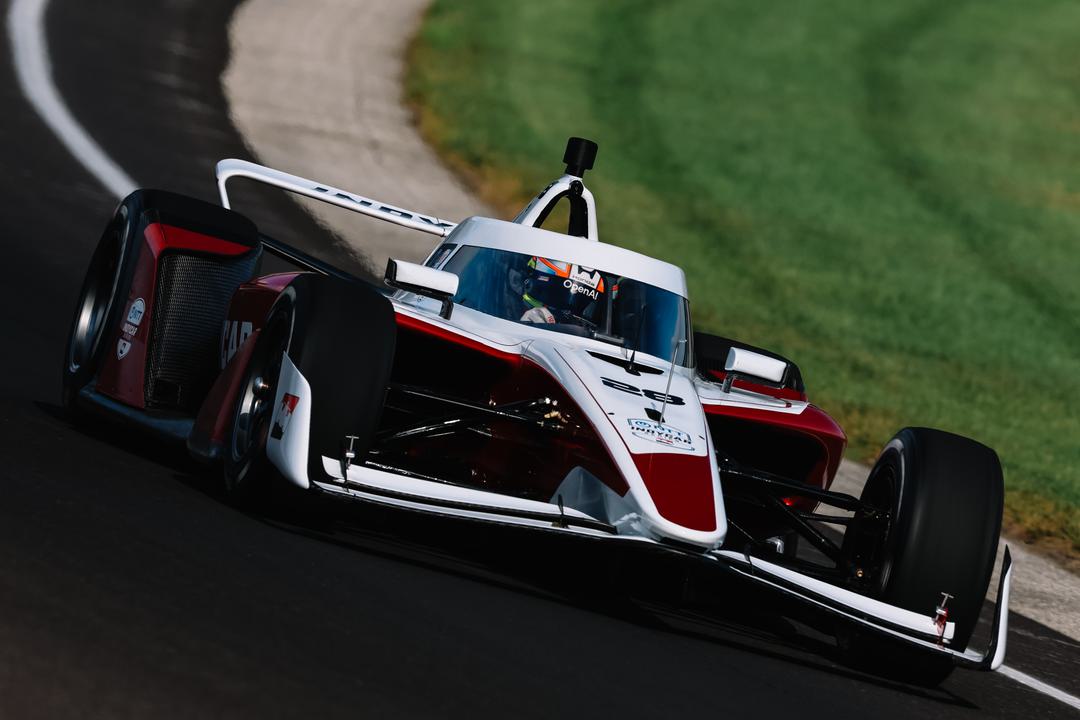
Front and center in the Woking, UK-based outfit’s rise to the sharp end of the F1 grid, Brown has worked relentlessly at placing the best resources, people, processes and infrastructure in place. And it all came right in 2024 and ’25 when Brown’s vision, influence and executional creativity led McLaren Racing to the constructors’ championship, as well as Lando Norris’ 2025 world drivers’ championship. Signed on to be the McLaren Racing CEO through 2030, Brown will lead the charge in growing sponsorship revenue, as well as expanding the McLaren name and presence in IndyCar and the FIA World Endurance Championship.
Born and raised in Los Angeles, Brown launched his racing career in karting in 1986. From there he was off to compete in Formula Ford 1600, the Toyota Atlantic Series, the British Formula 3 Championship, the German Formula 3 Championship and the Rolex 24 At Daytona and 12 Hours of Sebring before gravitating into the motorsports marketing business. Yet despite racing the world over himself, initially Brown was not up to speed on the race team Bruce McLaren brought to F1.
“I was not really aware of Bruce McLaren,” he admits. “I was very aware of McLaren in the moment. I was not really aware of them at the Indy 500, not Can-Am, not Bruce McLaren. I was aware of Ayrton Senna and Alain Prost at McLaren. I first went to a Formula 1 race in 1981 at the Long Beach Grand Prix and I didn’t know who anybody was. 1987 is when I got involved in karting. That’s when Ayrton Senna was at Lotus. He then went from Lotus to McLaren, and McLaren dominated in 1988. I was getting into racing and following Formula 1, and listening to Jackie Stewart and ABC’s “Wide World of Sports”, and Monaco, and to me McLaren was this foreign, untouchable organization that felt so far away. That was my awareness of McLaren.”
Alongside his racing efforts, in 1995 Brown founded and launched Just Marketing International (JMI). Ultimately becoming the largest and most successful motorsports marketing agency in the world.
“It was kind of a necessary evil to pay my bills when I was racing in Europe,” explained Brown of JMI’s origins. “I didn’t have any family economics, so I had to do my own sponsorship. I just learned how to do it out of, ‘I’m never going to race if I don’t figure it out.’ I was obsessed with begging people for sponsorship and coming to an understanding of what I need to give them what they want. I think that was an early lightbulb moment for me. I became obsessed with understanding companies and what they were trying to do, so when I reached out to them I was naturally going, ‘Here’s what I think I could do for you.’ And that’s a subtle difference, but a very important difference.
“I was still only doing deals to make a living so I could continue to race. I had no intention of building a business. At that point I had a lot of people telling me to build a business. I think a lot of people recognized earlier than me, ‘Stop racing and get in this business because you’re much better at it.’ That’s not what you want to hear when you’re a racing driver. Then racing petered out at the end of the decade. Business was booming. I got tired of racing and got fully stuck in the business. Business went bonkers from that moment onwards. And then it was, ‘OK, well, I’m going to do this because I like the money that I’m making.’”
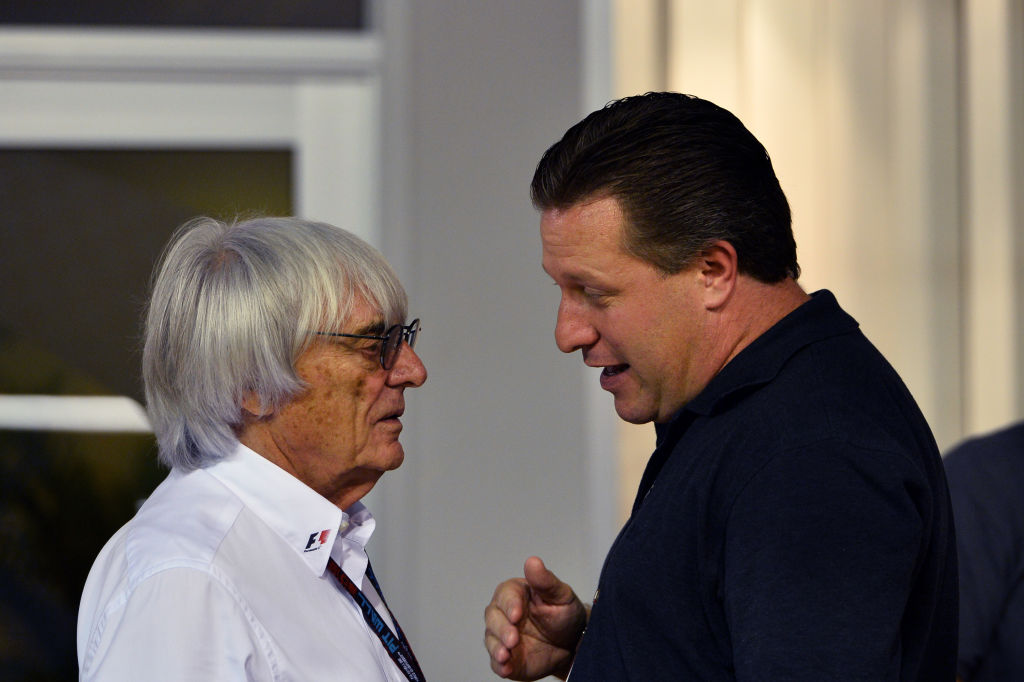
The path not taken: Bernie Ecclestone (left) wanted Brown to join him in F1 management. Sutton/Getty Images
Brown ultimately sold JMI in 2013 as new, high-profile racing opportunities presented themselves.
“After I had sold my company in 2013, I had been pursued by Bernie Ecclestone himself to come join Formula 1, but not to replace him,” explains Brown. “I had been pursued by CVC, the owners of Formula 1, to join Bernie. At the same time I had Ron Dennis trying to recruit me to join McLaren, but purely in a commercial capacity. This was all kind of continuous through 2013, 2014 and 2015. Then in 2016, when Liberty acquired Formula 1, I was being pursued by Liberty to come in and kind of take a number two role with a glidepath to taking the big role eventually. At the same time, I got a phone call from the McLaren shareholders Mansour Ojjeh and Sheikh Mohammed, who went, ‘We’re parting ways with Ron Dennis and we’d like you to come in and run McLaren.’
“Those opportunities kind of landed in the same week. I ultimately was in a very luxurious position of having two offers of a lifetime. But ultimately what won me over with McLaren was, I wanted to go racing. Formula 1 was a purely commercial jo,b and I love the commercial side of the business. McLaren offered me the commercial side, but when the lights go out, I’m in the race. Historically, when the lights went out, Bernie left the track. To me, McLaren was a more exciting opportunity because it allowed me to be a commercial person and a racer, where Formula 1 was just commercial. I went to McLaren because I love the racing.”
Upon initially joining McLaren Racing, did Brown realize just what he was up against?
“No. No. No,” he says. “I thought I knew of the almighty McLaren that won everything and had the best sponsorship and was the best team in the business. At that point the team had convinced itself that the exclusive problem we were having was our engine provider. I bought into that. However, once I got in at McLaren, it was clear that the issues we were having were so much deeper than the engine partner. While the engine partner was a big reason for our lack of on-track success, it had nothing to do with our lack of success off the track, with the politics of the team, and the way were engaging, or not engaging, with our fans. When we replaced the Honda and put in the Renault, we went from ninth in the championship to sixth. From there, we were at an even bigger gap from sixth to first. That’s when I fully realized that our problems were so much deeper an engine provider.”
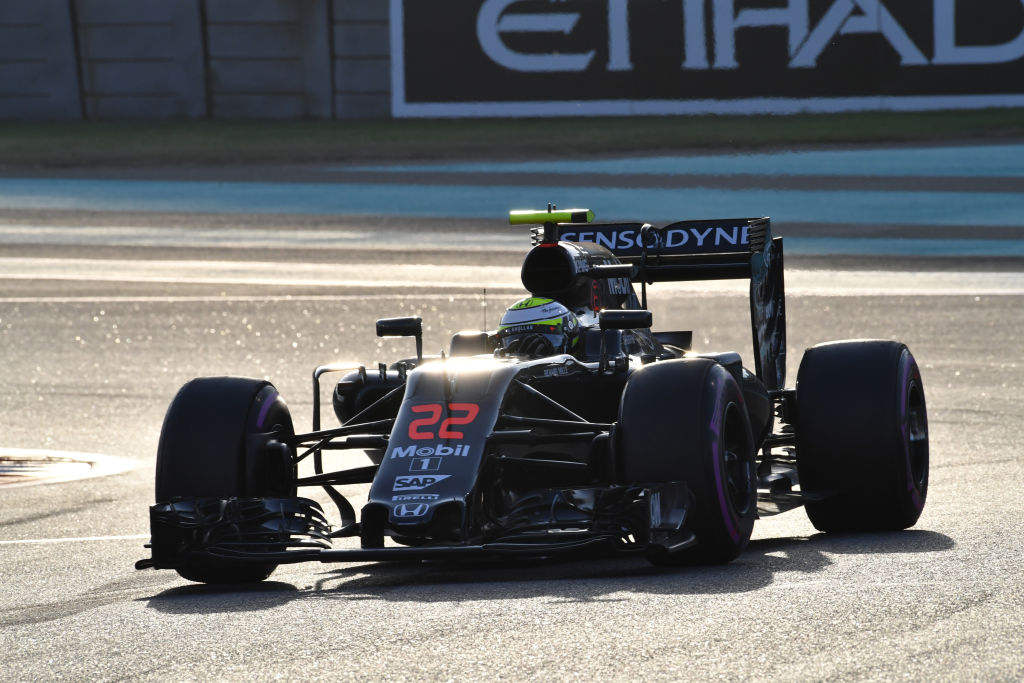
The mood at McLaren in 2016 was as dark as its cars, and it would take a lot more than a coat of papaya orange to right the ship. Mark Sutton/Getty Images
Brown admits finding it tough when he found what he’d stepped into upon entering the McLaren Racing organization.
“It was a very toxic environment,” Brown recalls. “It started with a real lack of alignment of the leadership as well as a lack of leadership. You had five different bosses in six years. Guys were brought in and brought out. Martin Whitmarsh, Eric Boullier, Jos Capito and then me. You effectively had a six- or seven-year period with Ron [Dennis], Martin, Eric, Jost and Zak. You had all these different leaders.
"That’s a recipe for disaster in any business. If you have a revolving door at the leadership level, then the team don’t know who to follow. That breeds a lack of trust and breeds toxicity inside an organization. That meant instead of us being focused on working together and working with our sponsor partners and being a team that was trusting and good with communication, everyone was in cover-their-ass mode and blame mode. It was a terrible environment. That manifested itself in terrible on-track results, lack of sponsorship, lack of fan engagement and a very unsatisfied workforce.
“However, what was great was the history of our brand. I knew out of the 1,200 people that we had at the time that we probably only needed to fix about 20 of them. There was no doubt in my mind that we had 1,100 people there who had won a lot of races and championships. It needed the leadership team reset. I completely changed the leadership team. It just needed fresh blood. I got alignment among the leadership team. We built trust. We built excitement.
"We went to papaya because that’s what our fans wanted. That was to indicate to everyone internally and externally that this was a new day at McLaren. We were going to be an inclusive team, a fun team, a hard-working and aligned team. We were going to rebuild our sponsorship, We were going to invest in the team – new technology, new wind tunnels. And here we are a few championships in. It was a trusting, transparent, collaborative, high-performance, straight-talking and awesome culture.
“That was the single biggest thing that we achieved. We changed the culture of our racing team. I knew we had an unbelievable brand that needed to be rejuvenated. But you can’t take our history away from us. We’re just started building momentum. The canvas that we have now painted on is what I had hoped we would get to. I’m very proud of where we are. We’re in IndyCar. We’re going back to Le Mans. We’re celebrating Bruce McLaren’s legacy and trying to build on it. We’re in the papaya era dynasty. We’re winning championships. We’re a very warm team. We’re a fun team. We’re a team people want to work for. We’re a team people want to partner with. We’re a team that drivers want to race for. You can’t take anything for granted and our competition is immense. It’s a very intense job staying at the front.
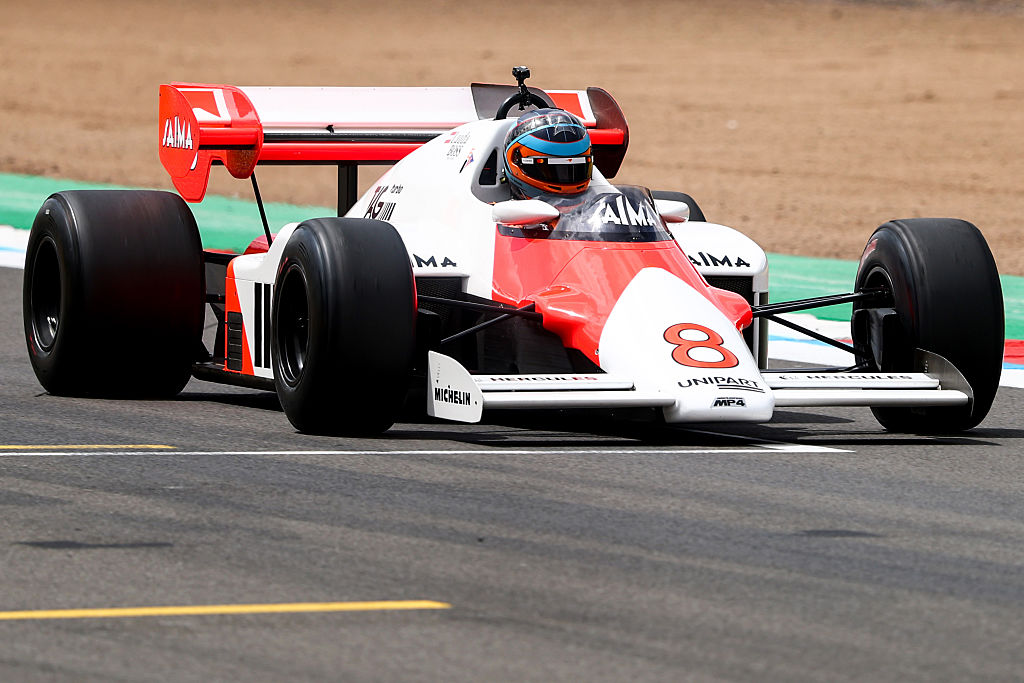
Zak still scratches his racing itch by taking McLaren’s historic race cars for a spin, like here in an ex-Niki Lauda 1984 MP4/2 TAG at the British GP this summer. It’s part of the team’s rich heritage he’s keen to spotlight, and add to. Simon Galloway/Getty Images
“From the middle of 2023 onward, people now say the McLaren comeback is the biggest recovery in the history of Formula 1,” continues Brown. “We were knocked to the canvas and we were given the standing eight count, but we got up at the seven-second mark and fought our way back and won some heavyweight championship fights. I think all of that really brought a lot of character to the team and showed that we are not quitters.”
Which made the return to championship glory all the more satisfying.
“It was amazing,” he says of the team’s 2024-25 title haul. “Everyone dreams and very rarely does the dream come true. It was always the goal, but I think when I started here in 2016, 2017, 2018 and 2019, we did OK. We won a race in 2021. And if you look at where we started the season in 2023 when we were ninth-best team – or ninth-worst team, however you want to look at it. It was all a dream, but it didn’t feel like it was going to come true. It was pretty awesome what the team did to turn it around and double down with the constructors’ championships. And it was awesome to have two drivers going into the final race with a chance to win the 2025 world championship was unreal.”
Now 10 years in with McLaren Racing, Brown has no plan to slow down.
“What a decade!” he says. “I’ve loved every moment of it. Or almost every moment of it. It’s been a lot of hard work and it’s not getting any easier. It’s been fantastic and we’re going to do it again. While it’s great to have the achievements behind us, and no one can take them away from us, you’ve got to earn it every year. The fact that we won in 2024 and 2025 and that we have won races this year, that doesn’t entitle us to anything in 2027. We have got to earn it.”
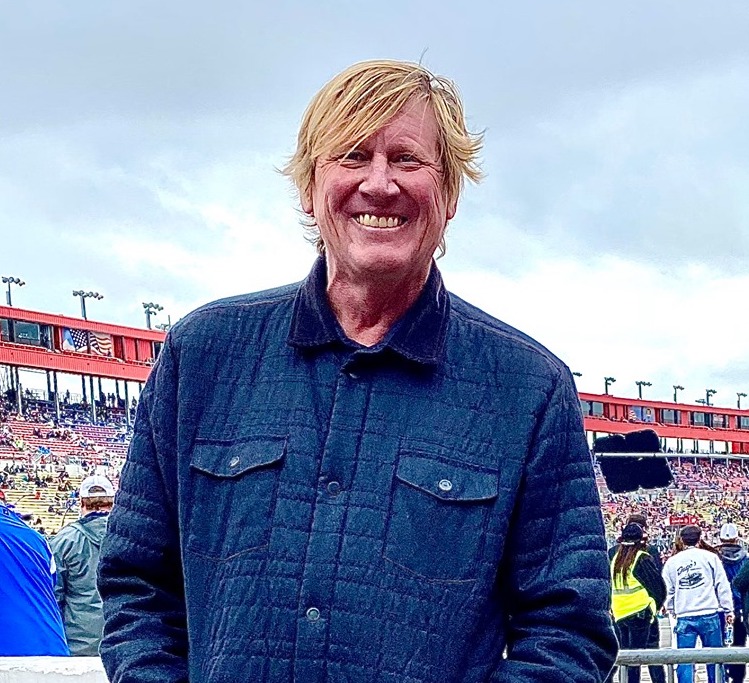
Eric Johnson
Born and raised in the rust belt to a dad who liked to race cars and build race engines, Eric Johnson grew up going to the races. After making it out of college, Johnson went into the Los Angeles advertising agency world before helping start the motocross magazine Racer X Illustrated in 1998. Some 20 years ago, Johnson met Paul Pfanner and, well, Paul put him to work on IndyCar, NASCAR, F1, NHRA, IMSA – all sorts of gasoline-burning things. He’s still here. We can’t get rid of him.
Read Eric Johnson's articles
Latest News
Comments
Comments are disabled until you accept Social Networking Cookies. Update cookie preferences
If the dialog doesn't appear, ad-blockers are often the cause; try disabling yours or see our Social Features Support.