Dom Gibbons/Formula 1 via Getty Images
How Norris shifted Hungary’s qualifying formbook from red to papaya
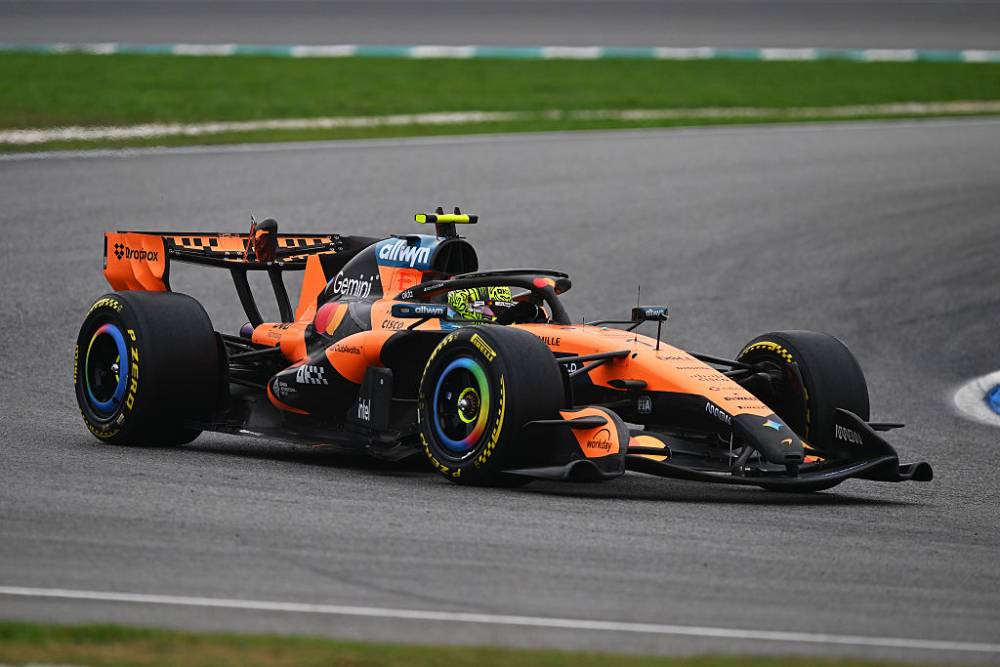
Ferrari’s form on Friday at the Hungarian Grand Prix was in line with the pre-race predictions, at a Hungaroring circuit that was expected to suit the Scuderia’s 2026 car. But it also perhaps led to it becoming easy to overlook the potential of McLaren, with a new floor installed on the MCL40.
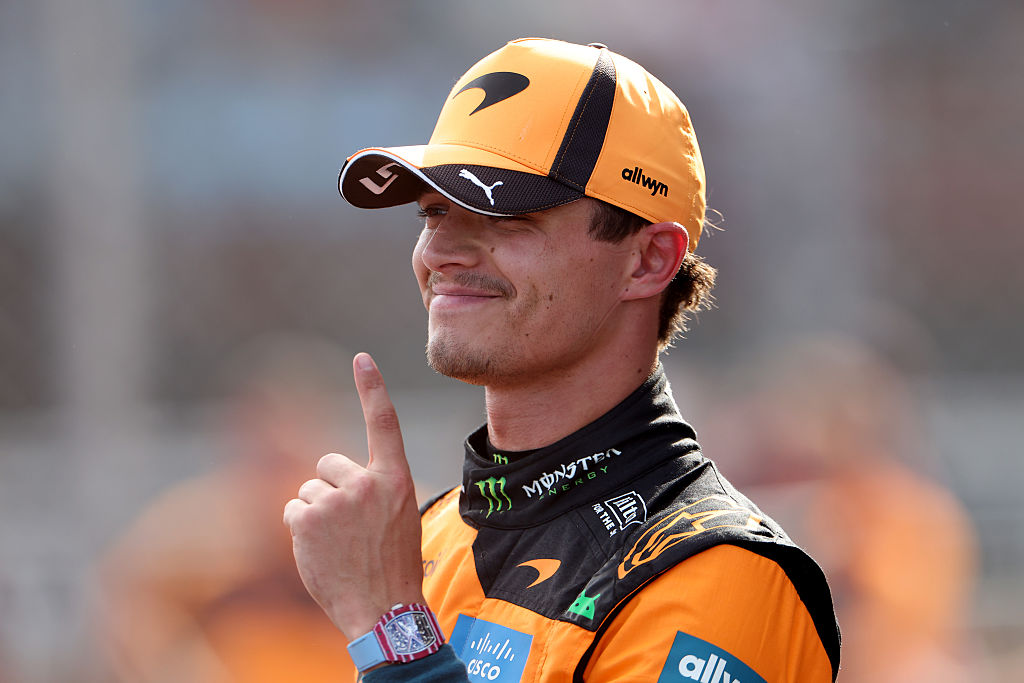
As McLaren learned from its upgrade and Lando Norris grew in confidence, the combination managed to make a step forward on Saturday that put it right in the mix for pole position, and Norris duly ensured it was McLaren and not Ferrari that ended Mercedes’ run of dominance in qualifying.
“We’ve seemed quick from the first laps that we did, and we brought a few upgrades,” Norris said. “It’s hard to know how much it helps in terms of lap time, but it certainly helped today. So, very, very happy to be back on top, especially at a track where you certainly want to be on pole.
“Honestly, I had confidence the whole of today. My laps in Q3 were not the best, even the one at the end, so I’m pleasantly surprised to be on top. But we’ve been doing a good job. The car’s been feeling good. I’ve had good confidence.
“I certainly pushed it a little bit more on the last lap. Some paid off, some didn’t, but the main thing is we did it in the end. So, I’m very, very pleased for the team. A big thanks to them for working so hard, and another big job for tomorrow.”
In such a close qualifying session, Norris’ admission that he didn’t feel he maximized his laps highlights another test that all of the drivers were facing, and it relates to the track surface.
“It wasn’t my finest [lap]. Honestly, just difficult to put a lap together here, that’s for sure, with the new tarmac and it being grippy in places and not grippy in others," he said. "At times, it feels like a bit of a lottery in certain corners. But I certainly did a good amount of the lap, the best I’ve done.
“I had the confidence to push more and push more. I kind of got into unexplored territory with what happens to the balance when I push it to that next level, and I lost a bit of time in a couple of places. So, if I had a third run, I certainly think I could have gone quite a chunk better, but I didn’t have a third run.
“Still, very happy nonetheless to be here again. It’s been a while, and I’ve felt confident all weekend, so it’s nice to be able to turn it into something like that.”
Norris had clearly lost time in the final corner on his first run of Q3, while the Ferraris appeared more hooked up through that section. But with the likes of Max Verstappen and Isack Hadjar both spinning at different points, and numerous other drivers fighting their cars through the last part of the lap, Norris explained exactly what the challenge was like that they were facing.
“It’s just been difficult all weekend in the last sector. I think you can just look at any onboard, and the last two corners, Turns 13 and 14, have been very difficult to get right," he noted. "It feels like either you under-drive it, or you push it a little bit more and you’re hustling, the rear is letting go, you push, understeer, snaps… So, it was just very difficult to know how much to push and not push.
“Also, because the track is pretty broken up in places and there are a lot of different patches of tarmac in Turn 1 and Turn 12, I struggled to get a consistent feeling of what was best or what the car was doing every time in these kinds of corners.
“Turn 1 and Turn 12, honestly, were our biggest losses to the Ferraris every single lap, in braking and cornering speed. We just cannot match them in these very slow-speed corners, which we know from Monaco and various other tracks. We know that we struggle in these kinds of corners. But the tarmac is certainly trickier than last year.
“It’s normally relatively high grip and very smooth. Certainly, this year it’s quite a bit trickier, with the newer tarmac, which is worse than the old tarmac. It makes it quite difficult to get a good balance, basically. It’s the same for everyone. It’s just a good challenge.”
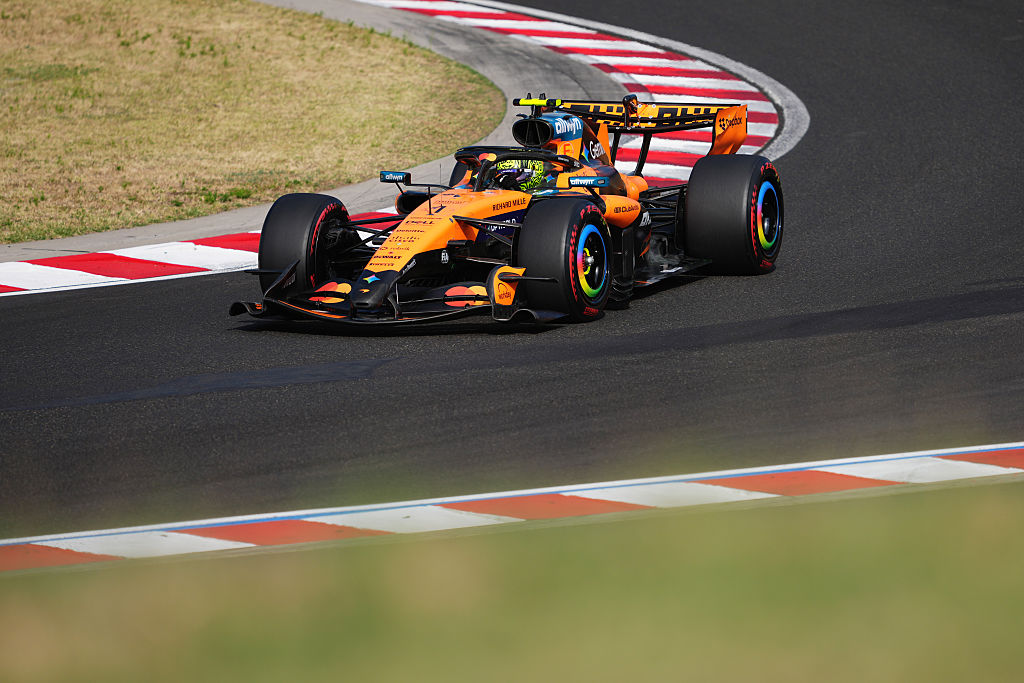
The unusual nature of the Hungaroring has been heightened by changes to the track surface, and even the pole winner admitted it was hard to nail a full lap. Sona Maleterova/Getty Images
Inheriting a spot alongside Norris on the front row as a result of Lewis Hamilton’s grid penalty, Charles Leclerc concurred that the feedback to the drivers of the changes in grip level made it particularly difficult to string a lap together.
“I was just struggling for grip,” Leclerc said. “I got kind of the same snap as I had every lap into Turn 1, but bigger, and lost quite a lot there. From that moment onwards, the rears were just not in the right window anymore.
“But I think, as Lando was saying, for me, Turn 1 and Turn 12, where there was new tarmac, I was really struggling to get the right feeling with the car and to anticipate what the car would do.
“I did not do a good job on that last lap in Q3. On top of that, I felt like we were a little bit down on grip, so we need to see whether we did anything different on the out-lap, because sometimes it relies on very small details.”
McLaren team principal Andrea Stella described the grip level as “pretty much a bet in every single corner” and one that led to an uncharacteristic number of mistakes from the drivers. Yet it also made for a spectacle that had multiple different cars in the frame for pole position, with no guarantee they could maximize their potential.
The higher fuel loads and need to preserve tires makes it less likely that drivers will quite be on the edge in the same way on race day, but they will also not get the usual comfort of a predictable grip level on a dry surface. That’s a fresh challenge that Norris has so far risen to best, but now needs tackling over 70 laps.
Chris Medland
While studying Sports Journalism at the University of Central Lancashire, Chris managed to talk his way into working at the British Grand Prix in 2008 and was retained for three years before joining ESPN F1 as Assistant Editor. After three further years at ESPN, a spell as F1 Editor at Crash Media Group was followed by the major task of launching F1i.com’s English-language website and running it as Editor. Present at every race since the start of 2014, he has continued building his freelance portfolio, working with international titles. As well as writing for RACER, his broadcast work includes television appearances on F1 TV and as a presenter and reporter on North America's live radio coverage on SiriusXM.
Read Chris Medland's articles
Latest News
Comments
Comments are disabled until you accept Social Networking Cookies. Update cookie preferences
If the dialog doesn't appear, ad-blockers are often the cause; try disabling yours or see our Social Features Support.