Larry Chen
Excerpt: Ready to Rock, The Story of RTR and Vaughn Gittin Jr.
Beginnings matter. Vaughn Gittin Jr. began in a parking lot with the same youthful desire to make loud noises, throw a ton of smoke in the air, and generally see how far he could push something normal, like driving, past its logical conclusion. Fun, but adolescent. Not to be taken seriously, one way or the other.
Wrong.
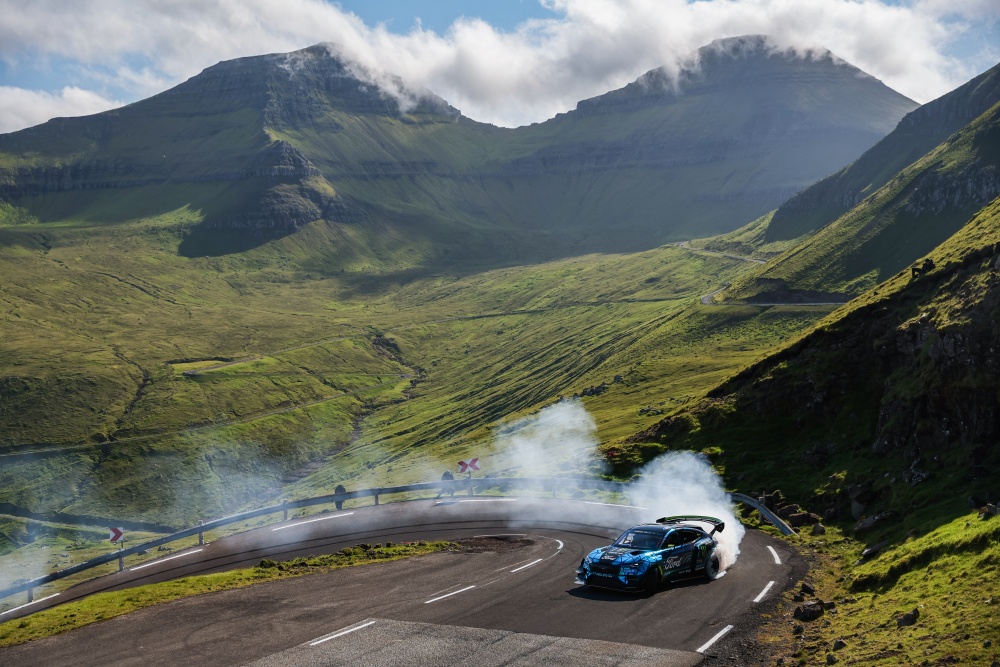
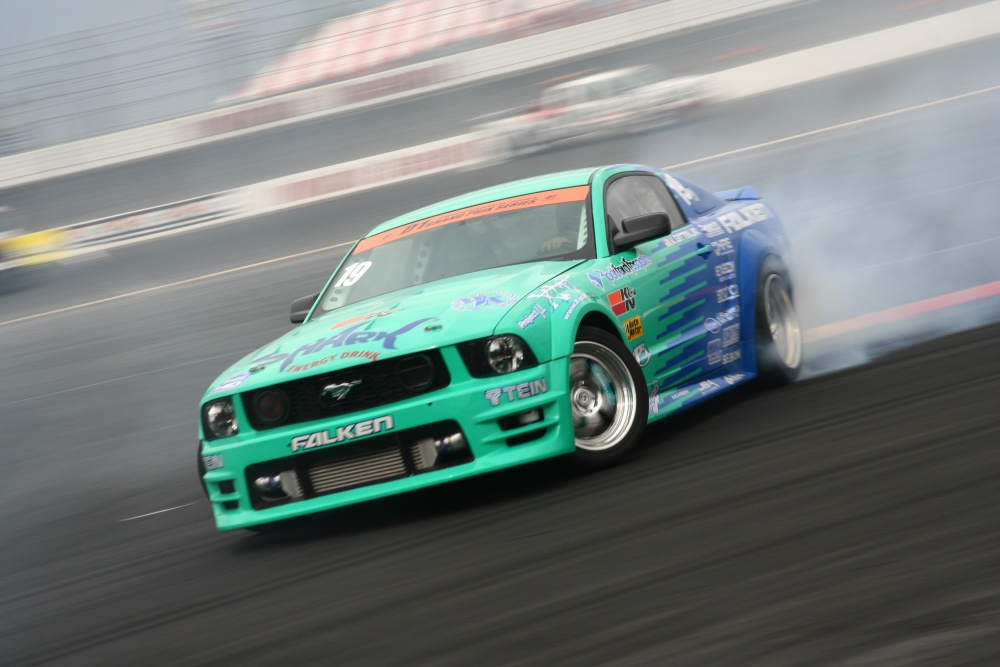
His parking lot bansheeing mutated the way only passion and a pure love of something can; He practiced. A lot. Not because he had a dream to compete. Hell, drifting was barely anything more than a carnival sideshow at this time, at least stateside. No, he practiced because each next pass through the parking lot seemed just as fun or maybe even more fun than the last one. True perpetual motion at work. His parking lot ass-hattery became a dream. The dream a reality. And then new dreams form.
Jay Canter
His company RTR began the same way a lot of good automotive stories do: with a kid who was more interested in driving than business. Long before it became a globally recognized performance brand, RTR was simply an extension of Vaughn Gittin Jr.'s obsession with cars and trying to drive them fast and, in this case, sideways.
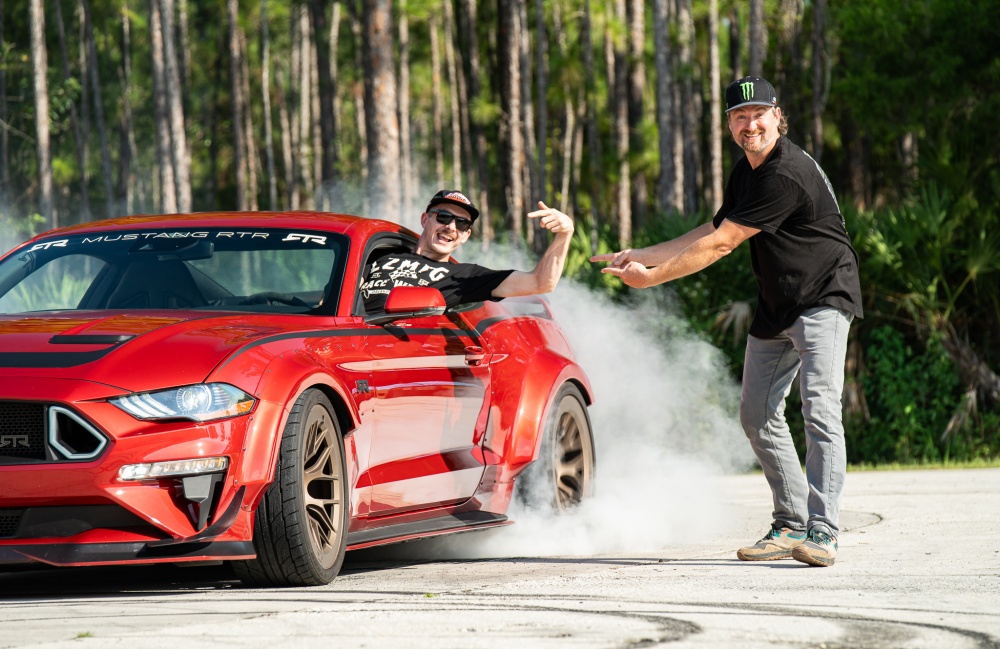
As Vaughn's professional drifting career took off, he realized there weren't many companies making the kinds of parts, products, or experiences that reflected the way he and his friends wanted to build and drive cars, Mustangs in particular. Rather than wait for someone else to do it, he decided to build it himself. RTR, short for "Ready to Rock," wasn't created to chase market share or capitalize on a trend. It was created because Vaughn wanted to make cool stuff for people who loved driving as much as he did.
Larry Chen
What started as a grassroots passion project has since grown into one of the most recognizable names in modern car culture. Today, RTR builds proper firebreathers, designs aftermarket parts, collaborates with major manufacturers like Ford, competes at the highest levels of motorsport, and has slowly and intentionally nurtured a community that stretches far beyond drifting. Through it all, the philosophy has remained remarkably unchanged: build things that excite people, create experiences worth remembering, and never lose sight of why it all started in the first place.
Larry Chen
The following is a brief excerpt from Vaughn Gittin Jr. and Mike Spinelli’s book Ready To Rock about the origins of and tall tales emanating from RTR. Alongside the storytelling, Ready To Rock is stuffed full of tasty photo nuggets from Larry Chen and other car photography legends, and a foreword by T-Pain. The book is honest and inspirational. It’s a treasure map to fulfillment, a sort of refocusing or maybe a full reset on our often poisoned ideas that life-sacrificing work is the only way to succeed. Sometimes that’s true, I guess, but Jr. shows us another path. A path cut from persistence and hard work, yes, but only possible to follow thanks to passion, vision, and an unrelenting dedication to “doing cool s***.” Amen, dude.
Ready To Rock: Chapter 4
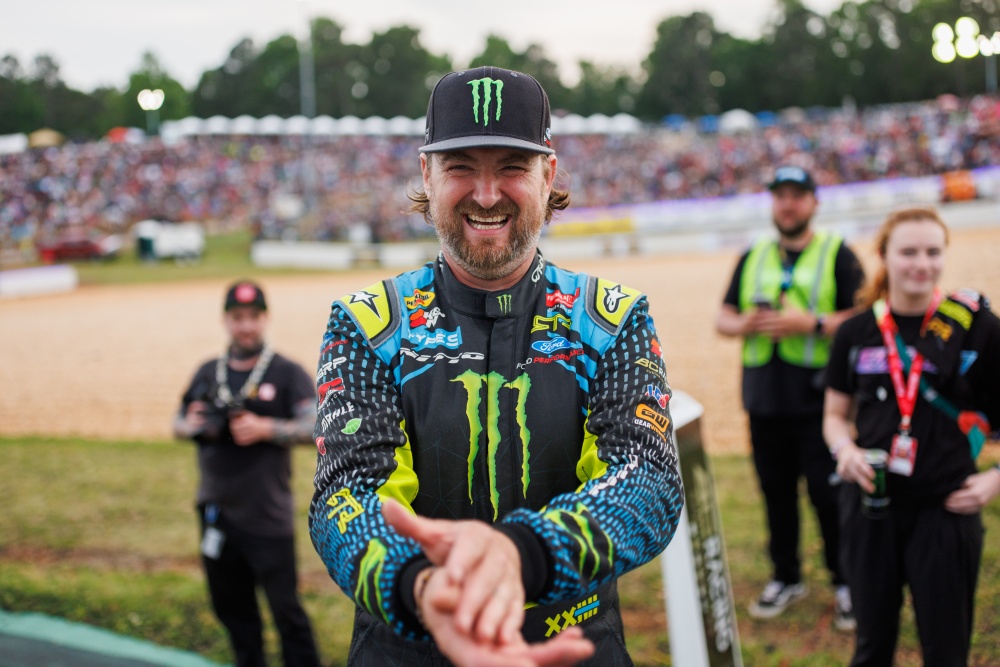
By the time we get to Long Beach for Round 1 of FormulaDrift in 2010, the whole vibe around my program is different. I have my first real contract with Ford. I finally nailed down the Monster Energy deal I’d been chasing for years, and that put me in this family of absolute heavy hitters – Block, Deegan, Dyrdek – the kind of roster where, if your name’s on the same sheet, you know you’ve done something right.
Plus, this car isn’t the half-reliable thing we started with years before. We have a proper race car under us, built and developed by ASD. The engine program is solid, the chassis is right, the team knows what they’re doing, and I’m in the best headspace I’d ever been in.
I wasn’t hoping to be competitive. I expected to be.
We came out of Round 1 and win Long Beach. All of the changes – new car, new look, new sponsors – all this pressure, and we just rolled out and took the top step. That sets the tone for the whole season. It’s the proof of concept, not just for everyone watching, but for me too. It said, “You weren’t crazy to believe all this could come together.”
From there, 2010 turned into one of those rare seasons where the results actually match the work you’ve put in. Drifting is unpredictable. Stuff breaks, people make mistakes, you get hit, you get knocked out by one tiny error. But that year, we were just on. We ended up with six podiums out of seven rounds. That kind of consistency in Formula Drift is no joke. It means the car is right, the calls are right, the team is sharp, and you, as a driver, are fully locked in.
In the end, that season, we put it all together and won the2010 Formula Drift Championship. The coolest part for me was what that said about the Mustang. When I first showed up with one, people thought I was nuts. It was a joke to a lot of folks: “Why would you ditch a light import for that big thing?” By 2010, that same car, evolved and refined, was the one repeatedly standing on the box and claiming a championship. We weren’t the weird experiment anymore. We were the benchmark. That was really satisfying.
I was also building a brand in real time. RTR wasn't just a sticker or a cool name; it was a real company. We had parts in development, dealer programs evolving, and customers starting to buy into what we were doing. I was the guy in the race car, sure, but I was also the guy in the shop shooting install videos, talking about why we set up the suspension the way we did, explaining the whole Ready to Rock philosophy to an audience of potential customers and fans.
People around me would say, “I don't know how you handle all this,” because I'd go from qualifying runs to phone calls about logistics or development or some appearance we had coming up. But I honestly never saw it as some impossible workload. That's just how I'm wired. I like having a lot of balls in the air. My hobbies and my job are the same thing, so it wasn't like I was juggling “work vs fun.” It was all one big, crazy, high-speed lane.
From about 2010 through 2018, my calendar was chaos, 30, 40 events a year, all over the place. Shows, demos, races, launches, filming, international stuff. And yeah, there were nights I looked at the travel schedule or the P&L and thought, “Man, this is intense.” But I also genuinely loved it. I loved the team around me, the partners who believed in what we were doing, the fans, the feeling of loading up for the next event knowing we were building something bigger than one race or one season.
When we finally locked up the 2010 Formula Drift championship, it didn't feel like the end of some long story arc. It felt like the start of a new one: the real one. That title was proof that the Mustang belonged here. The vision I'd pitched to Ford in that little conference room in 2008, the culture shift I'd been ranting about, the idea that you could merge this American muscle icon with a global drift culture and make it relevant again, it all had a trophy standing behind it now.
It was the year everything stopped being accidental and started being intentional. It was the moment when the kid sitting in an old '69 Mach 1 on the back of his dad's flatbed became the guy winning championships in a Mustang, working hand-in-hand with Ford, flying the Monster claw, and building his own car company out of all of it.
Coming soon
The story of RTR is not just the origins of a cool car parts company. I mean, it is that, but that's certainly not all it is. Ready To Rock lets us into Vaughn Gittin Jr's world, heart, and mindset, not only about starting RTR but in everything that led to that moment and followed. It's a story about being driven by passion and a real love of motorsport first, and experience and know-how second. It's simply impossible not to be motivated by his willingness to try. His pluck and grit are illustrated beautifully in the words of the book, but more importantly, in the trail of influence he's had on motorsport and Mustang tuner culture.
Ready To Rock comes out November 2, 2026, by Carrara Media. The standard press run is $54.99, and a limited print at $124.99 that comes signed by the man himself, has an alternate cover, and is limited to only 1,000 copies.

Peter Corn
Peter Corn is an automotive writer and storyteller. Peter has spent nearly a decade writing about cars, trucks, and motorcycles for some of the best publications in the business. He believes the best automotive stories aren't really about the machines at all, but instead, the people who love them.
Read Peter Corn's articles
Latest News
Comments
Comments are disabled until you accept Social Networking Cookies. Update cookie preferences
If the dialog doesn't appear, ad-blockers are often the cause; try disabling yours or see our Social Features Support.