Alex Caparros/Formula 1 via Getty Images
Making sense of that frustrating and confusing British GP finish
There were a number of moments during the British Grand Prix that felt like the application of the regulations was unfair, but take a step back at the decisions taken post-race and it looks more like a case that the rules were applied correctly, and are sometimes the lesser of a number of evils.
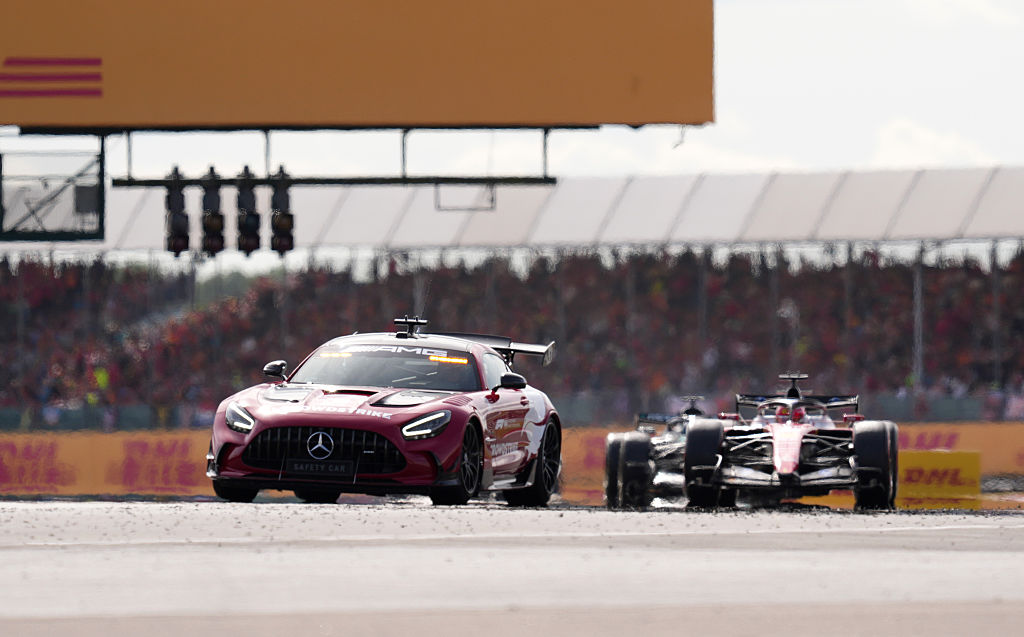
The most obvious example surrounded the finish of the race, that was underwhelming to so many fans who had been gearing up for a final-lap shootout after a safety car period. The issue was a two-second discrepancy between Charles Leclerc crossing the finish line to start his penultimate lap and race control allowing lapped cars to overtake.
Had the message come any time prior to Leclerc crossing the line, then the regulations would have allowed the safety car to be withdrawn with one lap remaining. Instead, with the regulations stating it must be at the end of the following lap, it meant the race ended under a safety car.
The FIA says a software error led to the message “Safety Car In This Lap” appearing prior to the final lap, although it wouldn’t be completely surprising to find that it might have been a manually sent message that had overlooked the fact Leclerc had already started the lap. That led to confusion, but as frustrating as it was that it prevented a restart, there realistically has to be a hard and fast rule in place.
If the rule instead said the safety car could come in at the end of the same lap that cars were allowed to overtake it, then how late can a decision be made? Perhaps you could say at the end of the first sector, but then this same situation could still unfold at a different control line to the one currently used.
Abu Dhabi 2021 remains clear in many minds, and so giving race control freedom to choose how to apply the rules would be fraught with danger, and would heavily impact how teams go about making strategic decisions. In the case of Lewis Hamilton at Silverstone, a pit stop that gave up track position proved costly, but that was at least a decision taken in the knowledge of the protocols for race resumptions, and they were applied to the letter.
Personally, I spent most of our SiriusXM post-race coverage advocating for race control to simply not unlap any cars in order to allow the race to restart, but having lapped cars in position for such a situation was described by one strategist as “carnage.” Not that they wanted to see a race end under a safety car, but simply emphasizing the reason why lapped cars are moved.
It should still remain an option on the table to leave the order mixed up with lapped cars (as it is when track conditions are deemed unsuitable) but – just as with a blanket red flag approach in the closing X number of laps – it only goes to show that there isn’t one simple better solution. Each one will come with a cut-off that will suit some and not others.
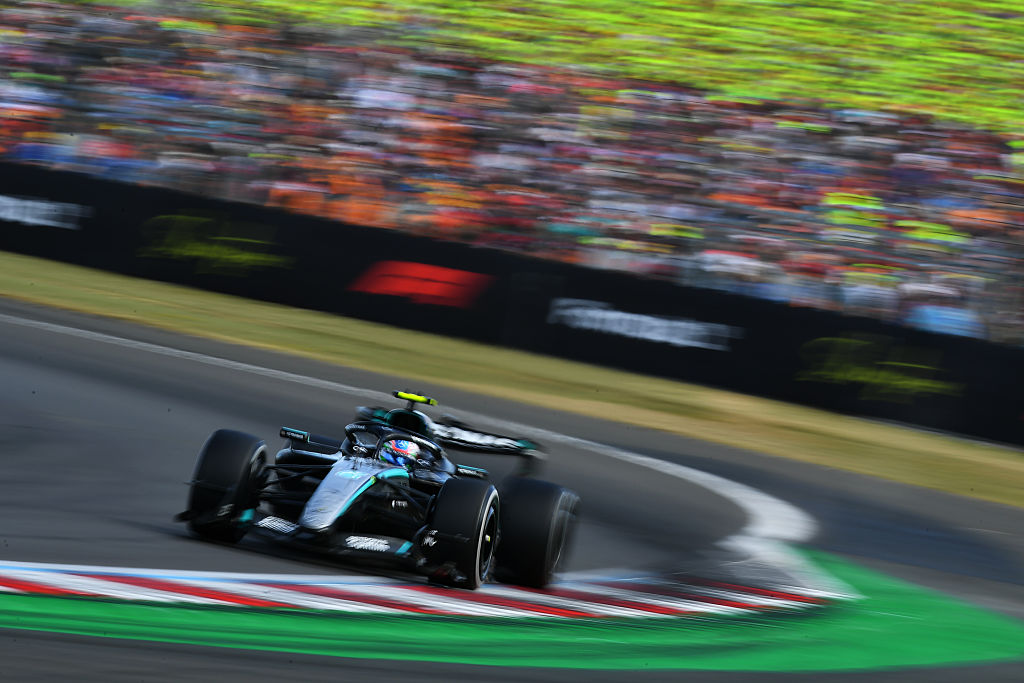
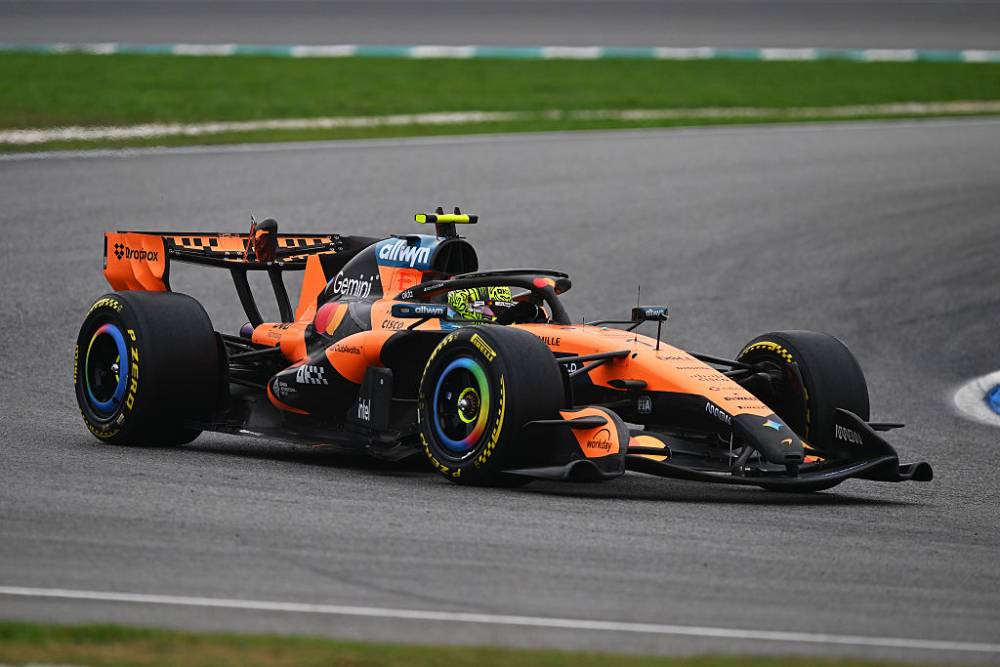
Antonelli's tenacity in trying to drive through his car's issues was admirable, but that doesn't change how track limits rules are applied. James Sutton/Getty Images
The same is true of Kimi Antonelli’s track limits penalty, that initially felt harsh given the clear mechanical issue that was hampering him. But the stewards said that didn’t represent a justifiable reason to leave the track, and there’s understandable theory behind that.
Whether a car is damaged or not, it has to be driven at a speed that keeps it within the white lines. Taking a corner too quickly for the car’s limitations – impacted by damage or otherwise – leads to exceeding track limits, so you have to slow.
When that speed becomes so slow that it is dangerous, then drivers are told not to keep driving and to park up (or if it’s simply a performance issue then they can fall foul of the 107% rule). But if the car is able to be safely brought back to the pits – or to the finish of the race, as was the case with Antonelli – then it has to do so within the same boundaries everyone is racing within.
Sustaining damage and then straight-lining corners to limit the time loss is never going to be allowed, but if you say you don’t count track limit infringements when a car is damaged, that will be taken advantage of. And in a situation where two cars have damage and one continues to stay on track while the other cuts corners, clearly you have to differentiate between what is legal and what isn’t.
Antonelli was massively unlucky to see a likely victory taken away from him by a component failure, but in still trying to beat other cars to the flag in order to score points, he has to adjust his driving to still complete legal laps. If he physically can’t, then he needs to retire the car. A more robust car that doesn’t sustain damage shouldn’t find itself competing against another that is racing to a layout that suits its own limitations.
By its very nature, racing is always going to have winners and losers, and applying rules as they are written doesn’t always deliver the most entertaining outcome. But on other occasions they will, and knowing exactly how they will be applied – whether you stand to benefit or not – at least provides the most level playing field possible.
The frustration seen today is founded in following the regulations to the letter, and is far more preferable than a repeat of the approach from that night in Abu Dhabi.

Chris Medland
While studying Sports Journalism at the University of Central Lancashire, Chris managed to talk his way into working at the British Grand Prix in 2008 and was retained for three years before joining ESPN F1 as Assistant Editor. After three further years at ESPN, a spell as F1 Editor at Crash Media Group was followed by the major task of launching F1i.com’s English-language website and running it as Editor. Present at every race since the start of 2014, he has continued building his freelance portfolio, working with international titles. As well as writing for RACER, his broadcast work includes television appearances on F1 TV and as a presenter and reporter on North America's live radio coverage on SiriusXM.
Read Chris Medland's articles
Latest News

Comments
Comments are disabled until you accept Social Networking Cookies. Update cookie preferences
If the dialog doesn't appear, ad-blockers are often the cause; try disabling yours or see our Social Features Support.