.jpeg?environment=live)
WEC playing the long game with its digital overhaul
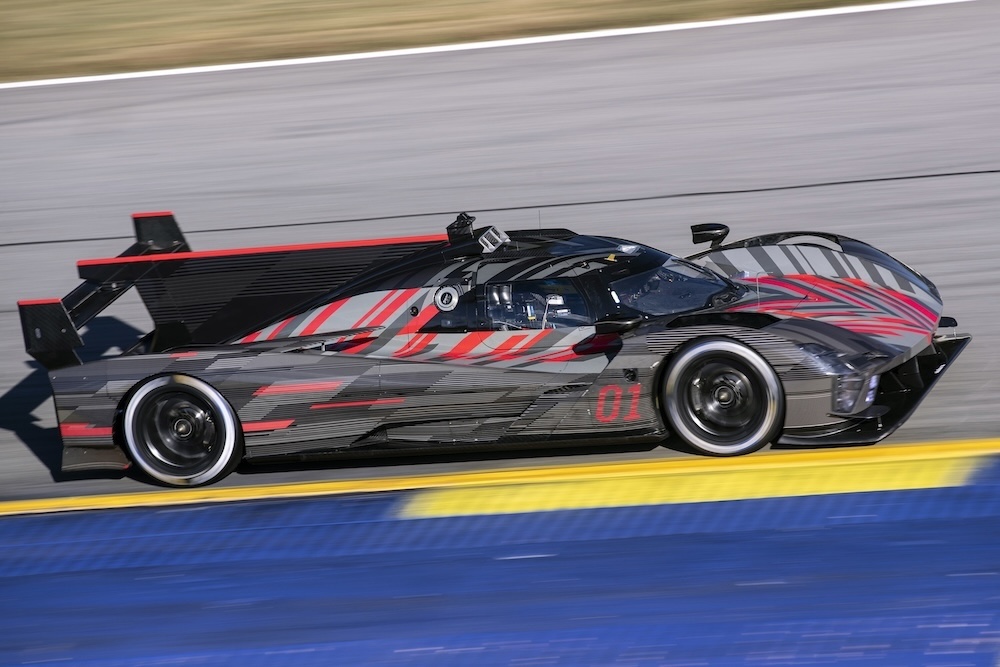
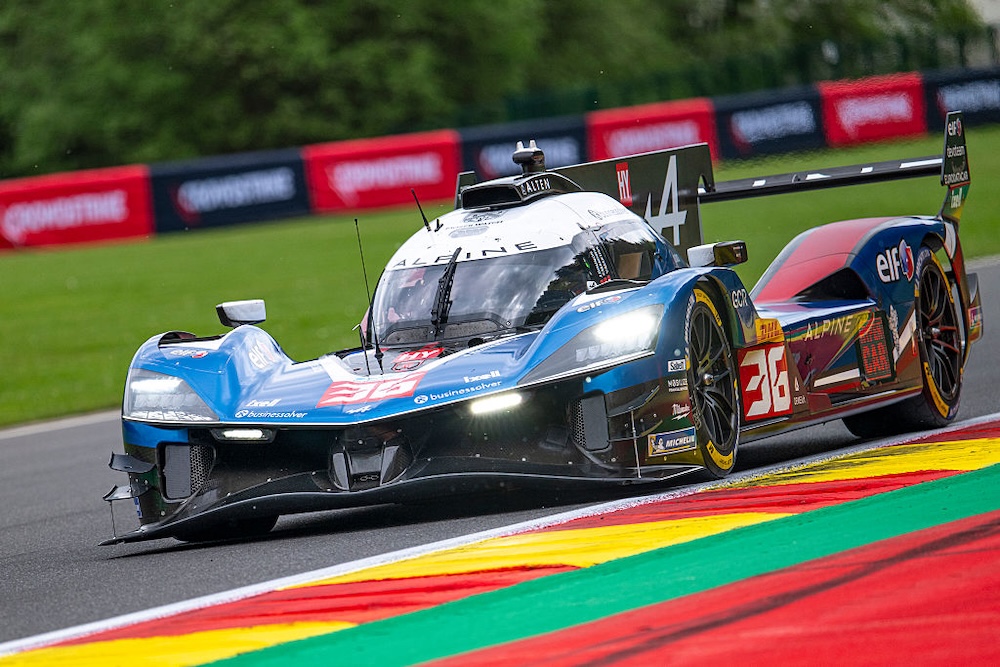
Ahead of the 2026 24 Hours of Le Mans, the FIA World Endurance Championship has completed the biggest digital overhaul in its history. The headliner has been the launch of its new FIAWEC+ service and its brand-new app, marking a new era for the championship and its offering to fans.
FIAWEC+ is designed to become the central hub for ACO endurance racing fans around the world (including, crucially, North America, without geoblocks) — combining live race coverage, timing data, original programming, and fan engagement tools within a single ecosystem.
The move reflects a broader transformation behind the scenes at the championship, as WEC adapts to its huge increase in manufacturer involvement, expanding audiences, and rising expectations from fans and partners alike.
What began as a rebuild of the series' visual identity and marketing strategy has evolved into a far broader push to modernize how fans consume the championship and how manufacturers measure value from competing in it. For Marius Louvet, Le Mans Endurance Management's marketing and communications director, the launch of the new platform is directly tied to the changing realities of the Hypercar era.
"It was important," Louvet says of overhauling the championship's streaming offering, in conversation with RACER. "But there were a lot of priorities when I took the role. I combined the marketing and communications side when I arrived. Both are far more important to the championship now than they were a handful of years ago because for several years, it was a championship with mostly gentleman drivers, and only a few manufacturers. The challenges were less about marketing ROI (Return On Investment) because there were more chances to win, and the results were enough to justify the championship for the factories.
"We'll have eight next year, maybe more, in Hypercar, and not all of them can win. It is our duty to provide them with the best ROI we can in terms of marketing, which includes ticketing, digital media, everything, so they can justify their program, even if it is not the most expensive in motorsport."
The shift in priorities within the championship is reflected in the scale of the behind-the-scenes changes. WEC's communications and marketing operations have expanded rapidly in recent years. At the same time, the series has rebuilt its website, introduced a stronger visual identity, and revised its broadcast presentation to make the championship easier to follow for both newcomers and dedicated fans alike.
"We went from five people to 20, in three or four years," Louvet says of his communications team. "We started with the website, changed it so it has a stronger identity, with a new head of design. We have a new CRM (Customer Relations Manager) to talk to our clients, collect data and make sure we are pushing the right offer at the right moment.
"Ticketing is extremely important. Because it's important to have full grandstands. When we speak to manufacturers and partners, they are happy if there are fans in the stands.
"Even if they are not getting results, they are happy if we keep grandstands full. It's why we haven't been raising ticket prices for races like Spa and Imola, and why we try extremely hard to make the weekends feel like an event for dedicated fans and families with lots of activation.
"So we had the new website, new TV graphics to make the broadcast easier to understand and show off the manufacturers and build on the new identity of the championship. The next step was to rebuild the app, over a year, to create a product that's a better user experience, with better live timing, and roll out a new content strategy for YouTube, socials and FIAWEC+."
In an era when many sports have moved to digital platforms to capture as many eyeballs as possible, in response to the number of households with cable packages dropping, the WEC made a key decision a year ago. It chose to continue building its own ecosystem around a subscription model and a dedicated platform, rather than follow IMSA's lead and stream its broadcasts for free (notably for fans outside its domestic market) on YouTube.
For Louvet, the decision to relaunch its own service rather than change direction was not simply about monetization. It was about ownership.
"YouTube is great, it's free, but you don't know who is watching you," he says. "You have no data, and at the end, you have no offer to push, because the data goes to Google, and we can't offer it to our clients. We get data from ticketing, from surveys and from our app, and this helps us understand better what our audience looks like, so we can improve the experience.
.jpeg)
"TV rights are not what they were in the past, and it's never been that high in endurance. But we spend a lot on TV production, and what we get from the app in terms of money helps us to make a better product and allows us to offer something state-of-the-art in terms of quality.
"But it has to be sustainable. So the launch of FIAWEC+ is also a change of provider, not only a streamer, but a marketing partner from London, Two Circles, who work in football, IndyCar, Wimbledon, and the NFL. So we are working with them on the app and the website to make it a virtuous circle.
"The key to entertainment and sport is finding a way to get your product to people. On socials, and that includes YouTube, you are really dependent on the algorithm. Sometimes it's good. Sometimes it's a lot slower, because the algorithm isn't putting you in front of people.
"The app puts the product somewhere dedicated, with no ads during the race, and full coverage, with premium elements that a normal broadcast could not provide if we put it on YouTube for free."
A free YouTube stream supported by advertising revenue may have delivered larger headline audience figures, but Louvet argues that approach would ultimately undermine both the value of WEC's broadcast partnerships and the premium positioning the championship is trying to establish.
"Yes and no," he says when asked whether advertising could have replaced subscriptions. "It would be big, but it would not be as big as we can expect in terms of audience size. And we don't want to be a competitor to our broadcasters that we sell the feed to. Having a closed app, with a paywall, is accepted by our broadcasters. They don't see it as a competitor; they see it as a complement because it has original content and live timing.
"If we put it on YouTube, we don't have live timing, we just have a competitor to people who buy the rights. It's not possible. We cannot go without broadcasters because they give the championship legitimacy. We are still in a world where TV views are important for boardrooms. Maybe too important because there are other ways to consume races, but if you say you have 10 million views on YouTube, it's not that valuable to a board. They'll say: 'Yes, but are you on Sky Italia?'"
One of the more notable changes for 2026 is that FIAWEC+ is actually cheaper than the previous service. Following research carried out with London-based agency Two Circles, WEC lowered the annual subscription price in an effort to find what Louvet describes as a sustainable middle ground.
"What is important is that we reduced the price," he says. "Last year it was 60 Euros a year. We did a study, a survey with Two Circles, and they recommended that we lower the price by 17 per cent, to 50 Euros for the year, six Euros per race.
"We did a survey about cost and what fans would be willing to pay, so we could find a point that's not too expensive, but remains credible. The app is not there to break records in terms of views; we know we won't have 10 million people paying for it. But it's very valuable for our most dedicated fans, and for us to understand our audience better."
While the WEC is choosing not to publicly disclose subscriber numbers, the early response internally has been encouraging, particularly among existing users transitioning from the previous platform.
"We are not communicating the figures, because it could be interpreted in different ways," Louvet says. "What we can say is that the first goal was to see what the people who subscribed before would do. That was a success; we didn't lose people, we had a strong campaign to make it clear what we were doing, and people have come back.
"In the first race, we also got 100,000 new fans creating accounts. Of course, not all of them are paying, because there are elements that are free, but this is not about big figures. It is not about us giving manufacturers big figures about the app. The manufacturers want a very nice tool, and we don't have a lot of complaints about the new product from the paddock.
"At Imola, before the app launched, the online web-based platform was used for the first time. We only got about 150 support tickets (subscribers asking for online support), and most of those were people asking questions about buttons they could not find for live timing. So it's nice for us.
"As long as the app is a tool for us that keeps people engaged with the WEC story across the whole year, and especially between races with content we are producing for it, like the series we did on Genesis, Full Access, things like this. We are in complete control of our content and the image we want to put, and we have no ads."
[74].jpeg)
Part of that strategy has involved moving more premium programming behind the paywall, including the Full Access behind-the-scenes docuseries and the previously free Free Practice 3 session, which were all hosted on YouTube. It is a balancing act between attracting casual viewers and rewarding paying subscribers, and Louvet admits the company is still learning where the line should sit.
"I am not saying it will be the case forever," he says. "We are trying with this; we made the bet that Full Access, for instance, should go on the app, to justify the amount you spend on subscribing.
"Some things will stay on YouTube, like the highlights and previews. But what we saw about types of programs like Full Access is that if you don't push them with adverts, the numbers are not big, and we believe the only people watching, for the most part, were app clients anyway.
"But we are learning. We will make a decision and conclude later. At the moment, we still have a strong free content offering on YouTube, and we expect things like the highlights will stay. We will use those to push you to go deeper on the app."
The strategy extends beyond the FIA WEC itself. The European Le Mans Series and Le Mans Cup have also moved to the platform (notably, they remain accessible with a free login) despite concerns that removing free YouTube streams would cause viewer numbers to dip significantly.
"I was worried about it," Louvet admits. "But what we saw in Barcelona (for the ELMS season opener), compared to YouTube, is that we saw a less than 20 percent reduction in viewers compared to last year, and this is with a platform that is new and requires a sign-up.
"This proved to us that our ELMS fan base is very dedicated, and they found it after it was taken off YouTube. In terms of number of views, we haven't lost that much, and we expect that in time, it will grow and grow because the experience is better and it's free.
"Data collection is, of course, sensitive, but it's an important point. We are not interested in gathering personal data to sell to advertisers. YouTube, we see, is like an advertising screen. At the end, who gets the data and money? YouTube. As we are showing figures that show that their YouTube views are not much bigger than the app, we have the argument to prove that it's the right choice."
Even with the new platform now live ahead of Le Mans, Louvet stresses that FIAWEC+ is still only the beginning of a much longer process.
"Of course," he says when asked whether the app remains a work in progress. "For example, we will have more data on timing soon, like tire data, and the virtual energy tanks, which are live for the Le Mans 24 Hours this weekend. It's coming. I cannot give a date because it takes time for development.
"But we will keep improving it. If we have a conversation like this in one year, I am sure we won't be talking about YouTube, because you won't be able to compare how it would be.
"We have to find a balance with what we are spending. We will go step by step."
As endurance racing continues to thrive, FIAWEC+ may ultimately become one of the championship's most important long-term projects. Not because it replaces television, but because it allows WEC to build a direct relationship with fans at a time when the competition for attention has never been more intense.
And with the world about to turn its attention once again to Le Mans, the championship feels ready to showcase its new platform to the largest audience of the season.

Stephen Kilbey
UK-based Stephen Kilbey is RACER.com's FIA World Endurance Championship correspondent, and is also Deputy Editor of Dailysportscar.com He has a first-class honours degree in Sports Journalism and is a previous winner of the UK Guild of Motoring Writers Sir William Lyons Award.
Read Stephen Kilbey's articles
Latest News
_.jpg?environment=live)
Comments
Comments are disabled until you accept Social Networking Cookies. Update cookie preferences
If the dialog doesn't appear, ad-blockers are often the cause; try disabling yours or see our Social Features Support.