IMS Photo
Revisiting Sam Hornish Jr.’s unparalleled 2006 Indy 500 speed
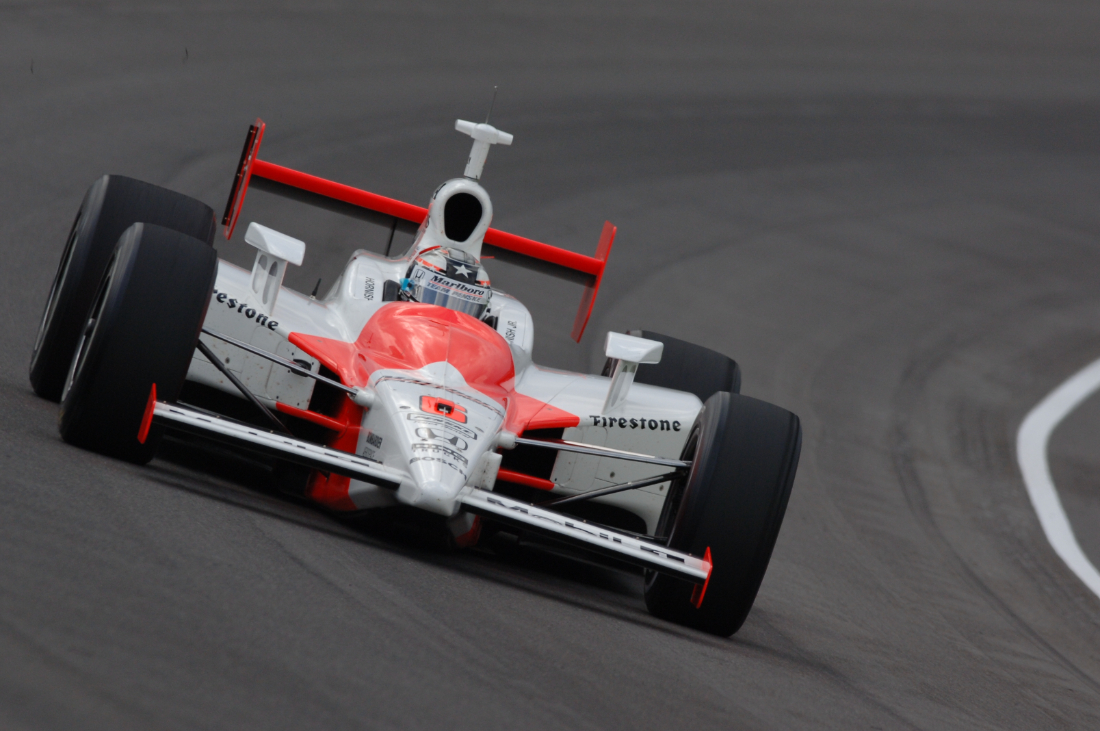
Sam Hornish Jr., race engineer Tom German and crew chief Matt Jonsson combined to make one of the most devastating trios we’ve seen at the Indianapolis 500.
Their triumph with Team Penske in 2006 sits on a perfect 20-year anniversary to warrant a deep dive into the day where the driver from Defiance, Ohio became immortalized at the Indianapolis Motor Speedway.
But there’s another tribute from their achievement with the No. 6 Dallara IR-03 Honda that deserves a historical nod, and it’s the manner in which Hornish, German and Jonsson started and ended the month of May. Before they drove into victory lane and drank the milk, this Team Penske triumvirate did something that is unfathomable in today’s IndyCar.
Practice Session 1 was led by Hornish at 224.811mph. Practice 2 was led by Hornish at 224.056mph. Practice 3 was led by Hornish at 226.789mph. Practice 4 was cancelled due to rain. Pole day qualifying was canceled due to rain. Practice 7 was led by Hornish at 224.381mph. Practice 8 was led by Hornish at 224.951mph. Practice 9 was led by Hornish at 227.925mph. Practice 10 was led by Hornish at 229.996mph. Pole Day was led by Hornish who took pole position at 228.985mph. Practice 11 was led by Hornish at 226.256mph. Carb Day was led by Hornish at 220.698mph. The 90th Indy 500 was won by Hornish at 157.085mph.
Total domination of an entire event, Penske style. Well, almost.
“It certainly occurred to me as it was happening, but to be honest, we didn't really talk about it, because it wasn't a plan to start with, but I'm comfortable saying, at least from my perspective, that it was a plan after the first couple sessions,” he added.
And what about Practice 6? Roger Penske called the track and instructed his team to park the car before the No. 6 car could do what was necessary to maintain its streak.
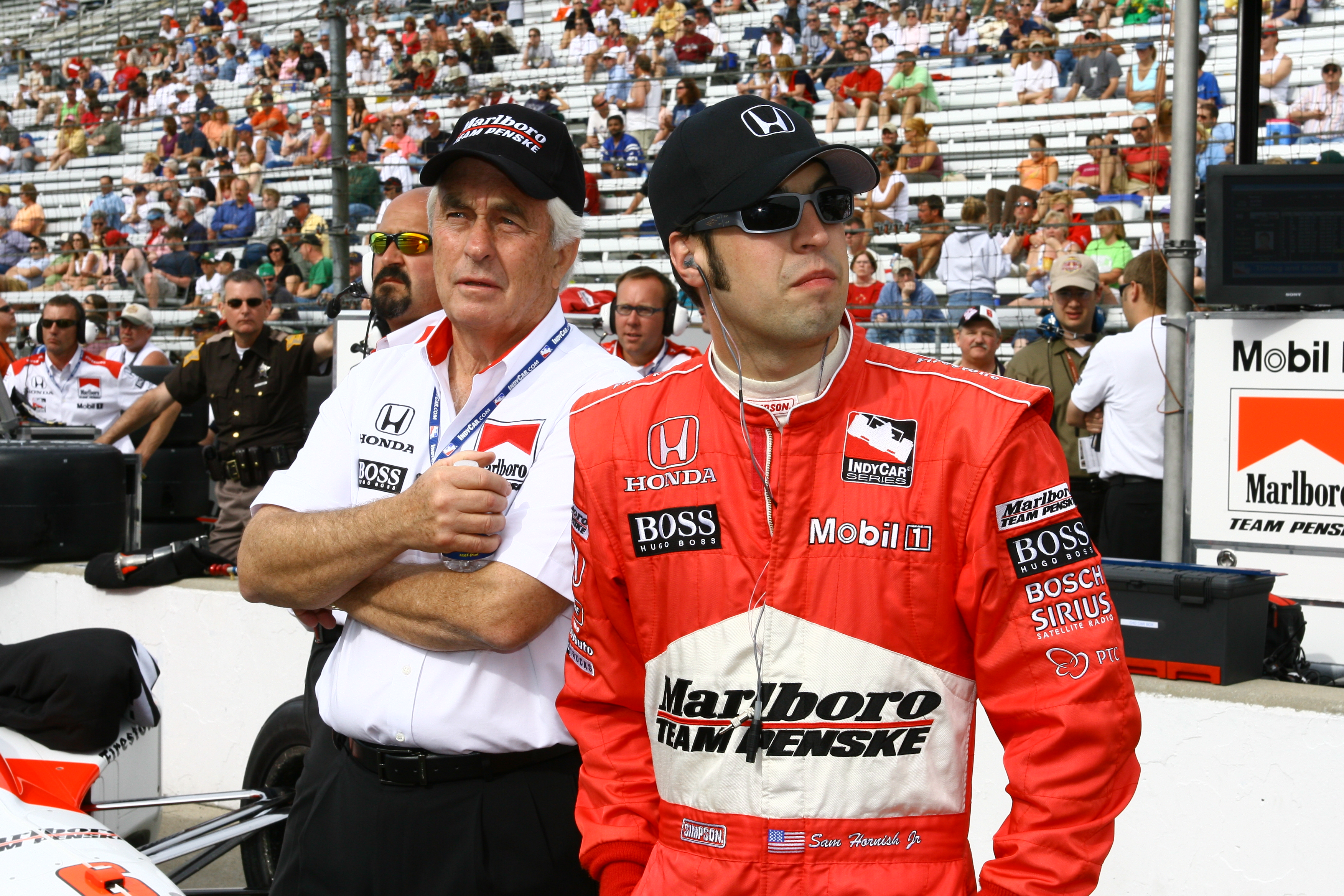
Hornish Jr. and Roger Penske at Indy in 2006. IMS Photo
Hornish, who only turned four laps, would end the day classified second, his fastest lap of 228.220mph coming on the final tour before the message to stop was received. Dan Wheldon, the 2005 Indy winner, would finish P1 on the day, pipping Hornish with a lap of 228.663mph to prevent a clean sweep for Hornish and Team Penske.
But for that fateful phone call, leading 100 percent of all on-track activity in May of 2006 was certainly possible; their record stands at a 91.6 percent from the 12 sessions that ran from May 9 through the final lap of the May 28 race, where Hornish, German, and Jonsson led 11.
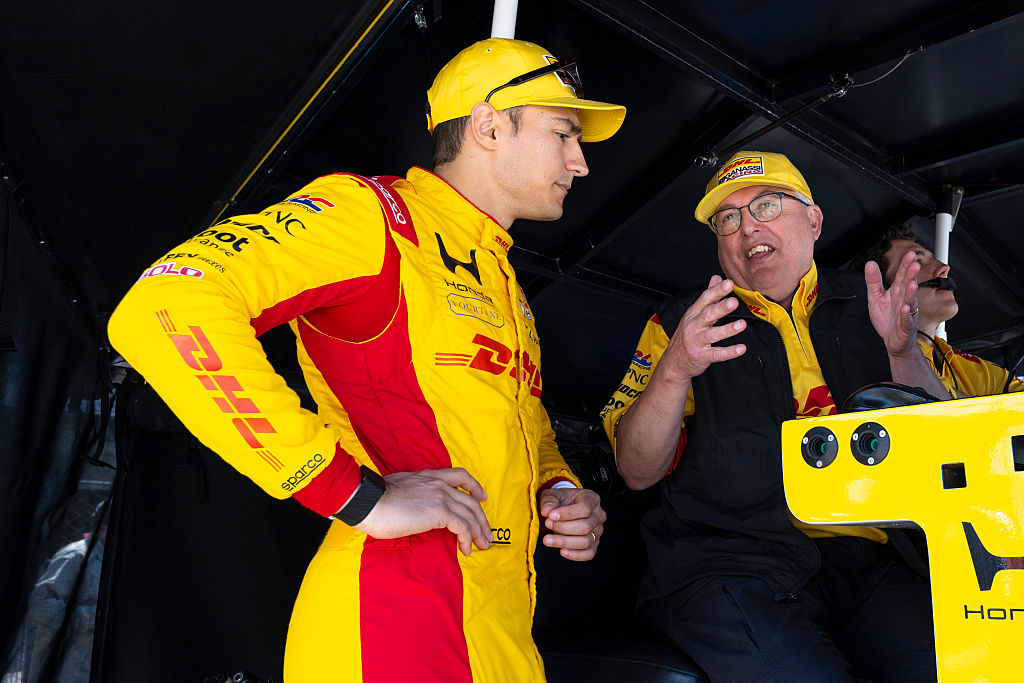
“Sam, right away, was exceptional,” German told RACER. “You talk about a dream driver that you'd like to have.”
Whether it was as the race engineer or in another senior technical role, German was part of five Indy victories before retiring and looks back in awe at Hornish’s team-wide talents.
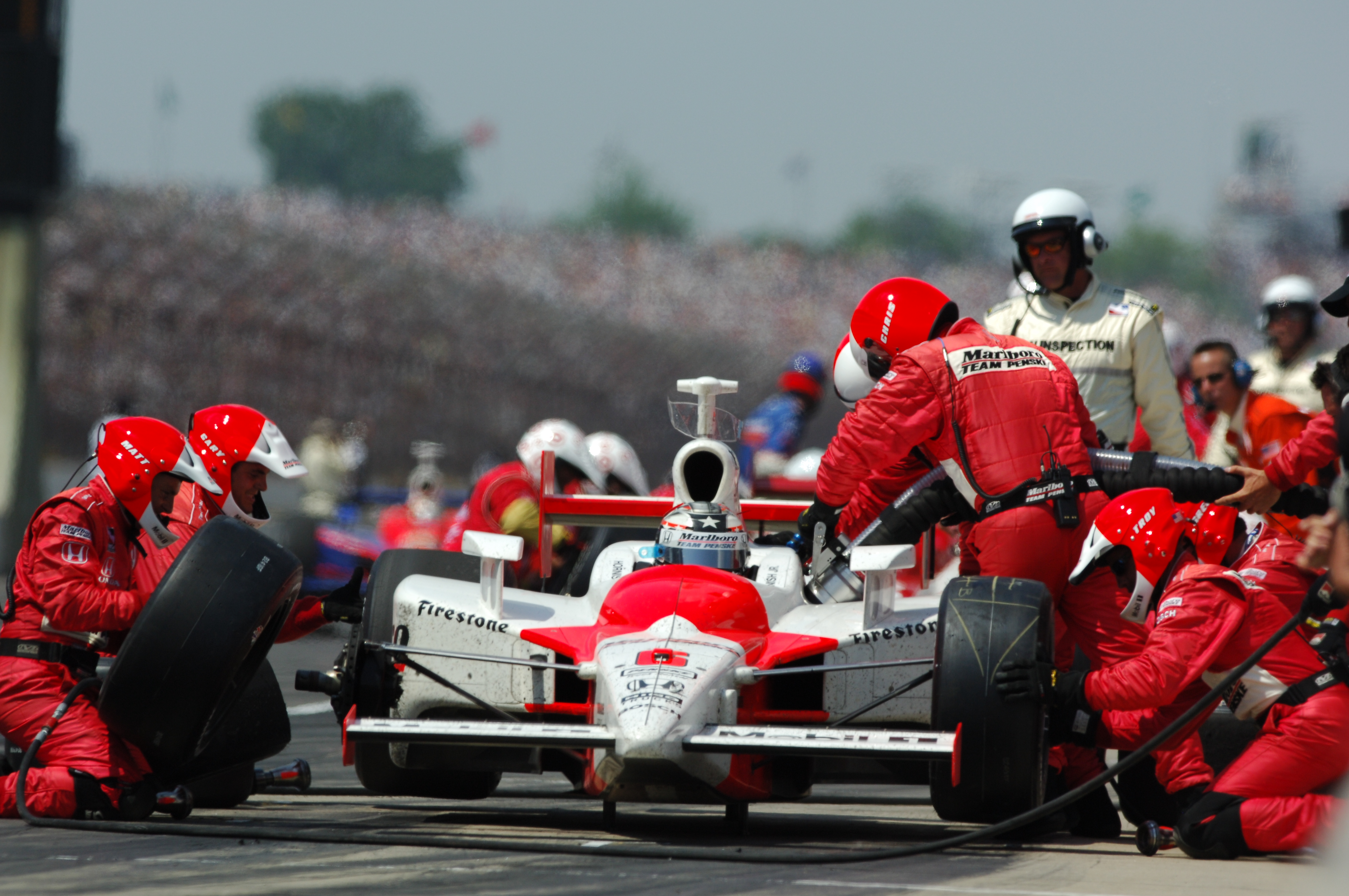
Hornish Jr.'s race engineer Tom German said the driver was exceptional right away. IMS Photo
“Sam is absolutely at the top of the list,” he said. “Just in his ability to read traffic, his ability to race. The way he would work with the team was just super easy; he tells you what his challenges are, you make a change, it’s straightforward. It's better, or it's not, and you move on. Really, a great guy to work with, super supportive of the team, puts the pressure on himself.
“And then when he goes on and races, and you're just amazed. You're watching telemetry and seeing things happen in the in the steering trace and a throttle trace, and you're looking at TV where he is in traffic, and you're like, ‘Oh my God, this is scary, something's gonna happen here.’ And he comes out the other end, not one bit worried, not one bit uncomfortable.”
By 2006, most of the best open-wheel teams had migrated from Champ Car to the IndyCar Series. Champ Car — the former CART series — was healthy and had the likes of Newman/Haas Racing and Forsythe Racing as its leading entrants, but the Penskes, Ganassis and Andrettis had long abandoned their former home for the Indy Racing League, which renamed itself the IndyCar Series in 2005 and had exclusive domain over the Indy 500.
For Hornish, who won back-to-back IRL championships with Panther Racing in 2001 and 2002, the union with Penske took him to new heights, where a third title was earned in 2006 alongside his Indy 500 win.
“It was a great time to be there,” Germain said. “You're racing against the best people, the best teams, the best drivers, best-funded teams, and you know everybody was at the same place and everybody had very similar equipment by that time.”
Honda was in its first season as IndyCar’s sole engine supplier, and although a few teams continued to use the GForce chassis, which was bought and renamed as a Panoz chassis, most of the 2006 IndyCar grid was comprised of Dallara-Hondas, and all teams were using Firestone tires.
Parity was high throughout the series at that time — not as high today, where Dallara is the only approved chassis — but it wasn’t to the point of preventing an outrageous demonstration like the one delivered by Hornish, his engineer, and his chief mechanic achieved with the No. 6 car.
Leading Practice 1 was a nice way to open the event in 2006. And then it happened again in Practice 2, and again, and again. Great racers, by nature, are greedy, which fueled German’s desire to run the table at Indy.
“We became more intentional and almost organically that we would choose the time to go out on the track, would choose the time to be in a pack, you know, so that we could put up big times, because there's more to doing that day after day than just being fast.”
RELATED: The best and the worst: Sam Hornish Jr. on his career highs and lows
Decades later, German continues to marvel at the stupefying speed they delivered to lead 11 out of 12 sessions.
“I think it's special,” he said. “It's hard to do. It's a very competitive environment. There's a lot of people that on whatever day, they want to put in a lap time to show that they're there, and they'll find the right draft, they'll find the right thing to be fastest. So to be able to do that and prepare for the race and prepare for qualifying, and still to be fastest all of those times, that's an achievement I'm proud of. It goes to show what a talent Sam Hornish really is. You know, I think it's hard to imagine someone else that would be able do what he did.”
Presented by:
Marshall Pruett
The 2026 season marks Marshall Pruett's 40th year working in the sport. In his role today for RACER, Pruett covers open-wheel and sports car racing as a writer, reporter, photographer, and filmmaker. In his previous career, he served as a mechanic, engineer, and team manager in a variety of series, including IndyCar, IMSA, and World Challenge.
Read Marshall Pruett's articles
Latest News
Comments
Comments are disabled until you accept Social Networking Cookies. Update cookie preferences
If the dialog doesn't appear, ad-blockers are often the cause; try disabling yours or see our Social Features Support.