Geoff Miller/Lumen via Getty Images
Perfecting an IndyCar pit stop the RLL way
The Indianapolis 500 isn’t just IndyCar’s biggest race: it’s also the longest in terms of distance, with 200 laps of the 2.5-mile Indianapolis Motor Speedway. Providing it runs the full distance, the leaders will have made at least five pit stops.
So far in 2026, the Rahal Letterman Lanigan No. 15 team, the folks servicing Graham Rahal, have been better on pit lane than any other crew. We talked to two vital members of the team to find out how they get it done.
Once a pit lane speed limit was introduced to Formula 1 from the 1994 Monaco Grand Prix, Michael Schumacher was one of the first drivers that we at RACER can recall who really practiced maximizing his speed on pit entry, before crossing the pitlane speed limit line. With everyone conforming to the same speed when in pit lane proper, it was an obvious way to minimize time off the racing surface come race day.
These days, it’s almost de rigeur across multiple racing series to follow Schuey’s example and be up to speed on how to shed speed at the last possible moment without incurring a drive-through penalty. As Kyle Sagan, Rahal Letterman Lanigan’s pit stop manager explains, “We practice that every day we’re on track – test session, practice session, qualifying session, warm-up… We study data on that, and then also analyze videos of their entry into the pit box. Graham [Rahal] is our veteran on the team and is the best of our guys on pit lane: videos of him help our sophomore, Louis Foster, and our rookie Mick Schumacher, [yes, ironically, son of Mr. Pit Lane Perfection himself]. Great pit stops start with the driver.
“I was on Alex Palou’s car in 2023, and our No. 10 [Chip Ganassi Racing] crew would beat our teammates on Scott Dixon’s car, from stop to drop [from car coming to a halt to coming down off the jacks] but Scott would kill us on pit lane overall. So I hammer home to any driver, ‘You don’t have to come in with all wheels locked up to shave off half a tenth, but you must always hit your marks and be consistent, whether you have to drive in to your box around the car that’s pitted behind you, or whether you’re able to come straight in. That allows the crew to get used to how you arrive.”
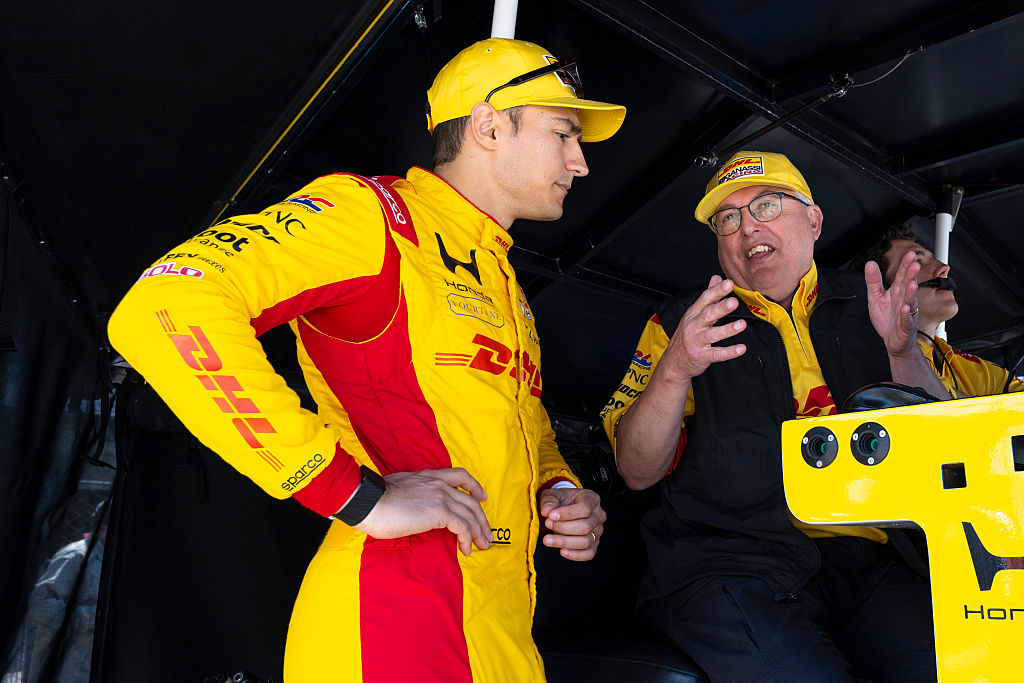
Sagan, who moved from Arrow McLaren to Rahal Letterman Lanigan Racing for 2026, is a difference-maker. Under his instruction, Rahal’s pit stops have been some of the finest in the NTT IndyCar Series this year. Not that Sagan will accept all the credit.
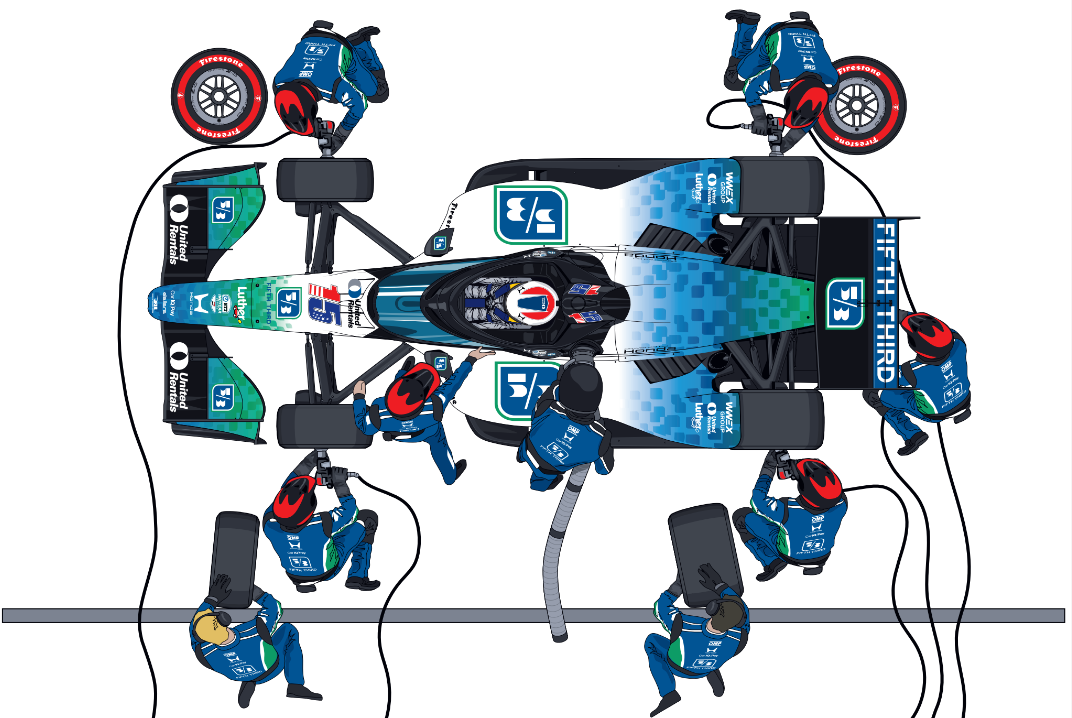
Paul Laguette illustration
“Graham has been with his crew for nine or ten years and it shows,” he says. “It used to be that you could do pit stop practice whenever you had time through the weekend. Now we have specific times, whether it’s the last 20 minutes of final practice or in race day warm-up, and we use that.
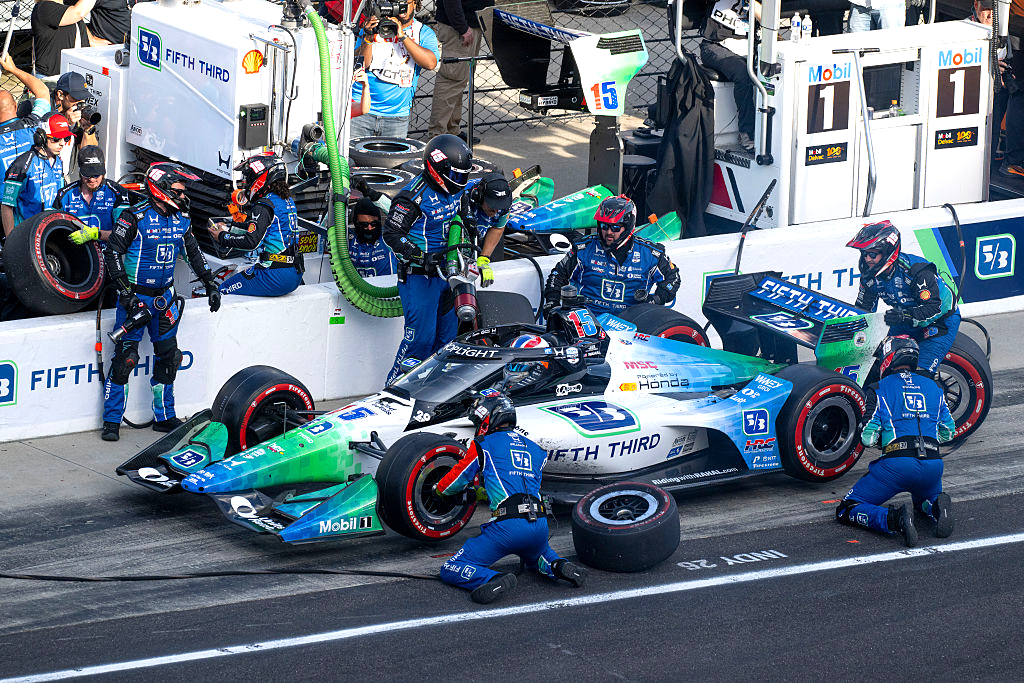
“Per IndyCar rules, the outside-front guy – often the crew chief – is standing up and signaling to our driver where we are, with the new outside front by his right foot. The outside rear tire is out there, too, but its changer isn’t there yet because the driver can’t run over the hose. The inside front and inside rear guys are poised – front guy crouched, rear guy standing – and waiting with their air guns, but their new tires are being held by crew members on this side the wall, ready to hand over the fresh tires and retrieve the old ones.
“As the driver stops – on his marks, hopefully! – the outside front tire and both inside guys can tackle their wheels simultaneously, as the jackman goes to the rear hydraulic jacking point to activate the car’s inbuilt jacks and the outside-rear guy runs around the back and removes his wheel, the refueler fits the hose and the tear-off person runs to clear the tear-off from the aero screen. That’s the only job that he or she is allowed to perform.
“The outside front guy, once his job is completed, throws the airgun back toward pit wall, lays the old wheel down and stands up. The outside-rear guy hands his wheel to the jackman who takes it while pausing at the jack to release it and lower the car, before taking the old outside rear back to the other side of the wall. The two inside wheel-changers have already handed off their old wheels back over the wall and if everything’s gone smoothly, they’re all signaling to the outside front guy that their job is done.
“If the car needs a full fuel load, that will decide the time of the stop, because I want the outside front and the two inside guys to be sub-4.75 seconds, and the outside rear to be sub-5.25s. From the car stopping to the fueler being fully plugged in should be six-tenths of a second, and then from completely empty to absolutely full tanks is 7.5s. The crew chief, on the outside front, is then the person who the driver looks at to signal when he’s free to leave the pitbox according to traffic.”
Front tire changers have to be adept at adjusting wing settings in qualifying and race, according to how a driver feels he needs to alter his car’s responses – often according to tire sets.
“On a road course, we have adjusters for the flaps on both sides ” says Sagan, “so each tire changer is responsible for his or her side. On the speedways, we have one adjuster on the nosecone. Then it’s the inside-front guy’s job unless he has an issue, and it’s the outside-front guy’s job to notice if his counterpart has an issue because then it might become his job.”
Flexibility is key for the crew, since they could find themselves in as many pit lanes going from left to right as from right to left.
Sagan states: “The way I’ve been explaining it – outside/inside rather than right/left – is the way it is in the team. The outside-rear tire changer is always the one running around the rear of the car, with his back to pit lane when tire-changing, whichever way pit lane goes, just as the outside-front changer is always the outside-front changer, waving the guy in and signaling him to leave.
“Ideally, he or she would be ambidextrous to carry out duties with left or right hands!”
Presented by:


David Malsher-Lopez
David Malsher-Lopez is editor-at-large for RACER magazine and RACER.com. He has worked for a variety of titles in his 30 years of motorsport coverage, including for Racer Media & Marketing from 2008 through 2015, to which he returned in May 2023. David wrote Will Power’s biography, The Sheer Force of Will Power, in 2015. He doesn’t do Facebook and is incompetent on Instagram, but he does do Twitter – @DavidMalsher – and occasionally regrets it.
Read David Malsher-Lopez's articles
Latest News
Comments
Comments are disabled until you accept Social Networking Cookies. Update cookie preferences
If the dialog doesn't appear, ad-blockers are often the cause; try disabling yours or see our Social Features Support.