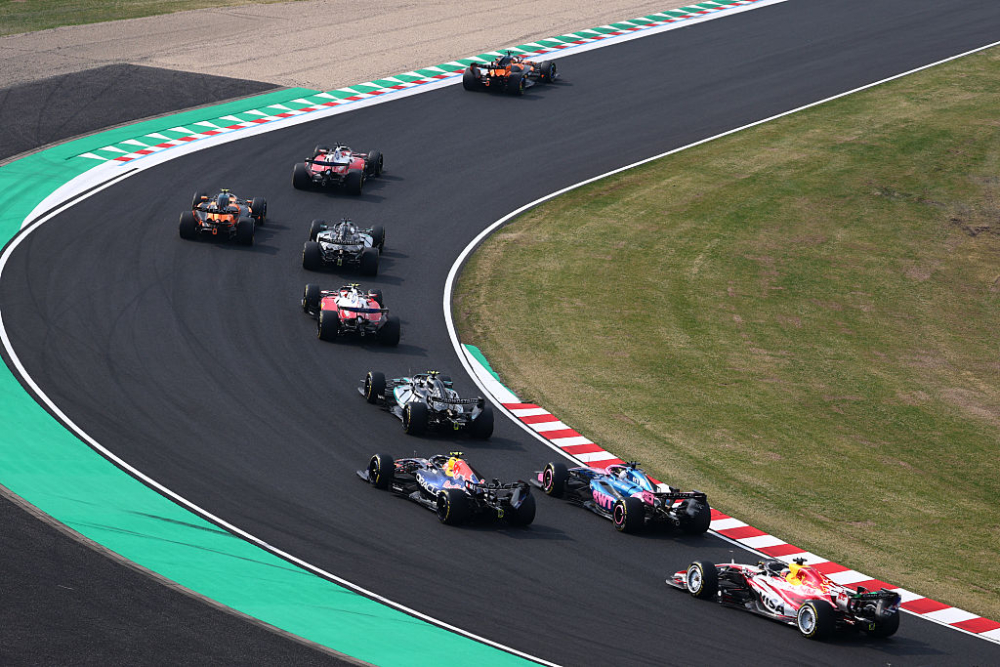
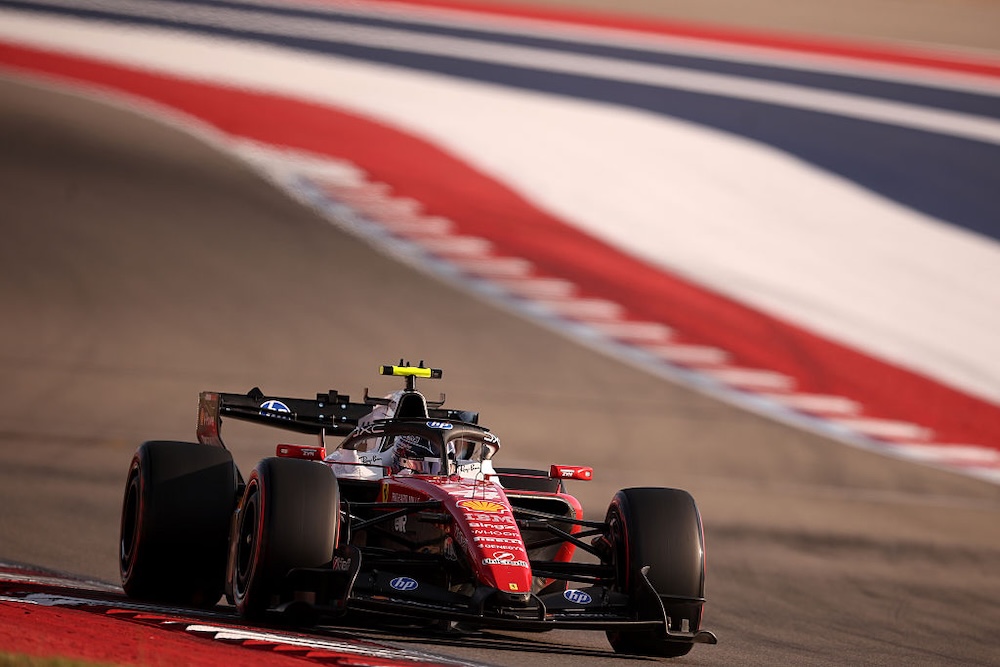
Clive Rose - Formula 1/Formula 1 via Getty Images
FIA, F1 and teams agree on regulation tweaks ahead of Miami
The FIA, Formula 1, the teams and power unit manufacturers have agreed a number of tweaks to the 2026 regulations to try and allow drivers to push harder in qualifying, as well as improve safety.
Driver feedback from the opening three rounds of the season have led to a significant amount of criticism of the impact of the new cars on qualifying, with priority given to harvesting and deployment for straight line speed, often at the cost of cornering potential. The drivers had also voiced concerns relating to closing speeds, with the differential between Franco Colapinto and Ollie Bearman during the latter’s crash at Suzuka cited as an example of the risks involved.
Following numerous meetings of the teams, power unit manufacturers, FIA and F1 on both a technical and leadership level, an online meeting that led to an agreement on multiple fronts took place on Monday.
“The final proposals presented during today’s meeting were the result of a series of consultations over the past few weeks between the FIA, technical representatives and extensive input from F1 drivers,” the FIA said in a statement.
“Discussions around potential adjustments were based on data gathered from the first three events of the 2026 season.
“The 2026 regulations were developed and agreed in close partnership with the FIA, teams, OEMs, Power Unit Manufacturers, and FOM (Formula One Management). Changes to the regulations were discussed against the backdrop of this collaboration.”
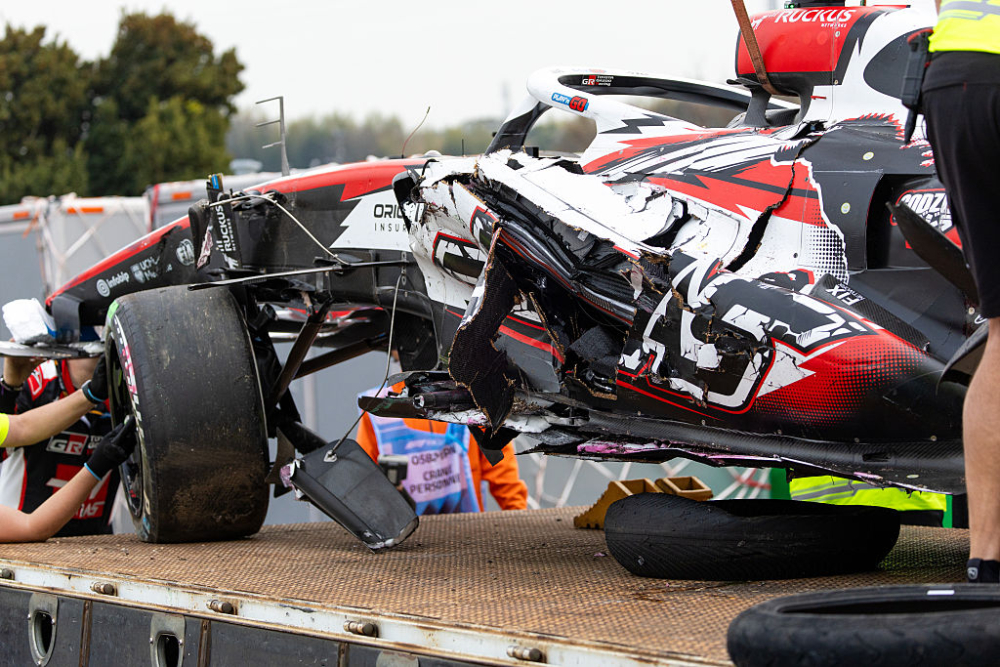
The changes should reduce the risk of accidents like Ollie Bearman's in Japan. Kym Illman/Getty Images
The key changes relate to energy harvesting and deployment, particularly in qualifying where new limits aim to reduce how long it takes for drivers to be able to recharge the battery to its maximum permitted level on each lap. There are also reductions in the Boost mode available during a race, and the amount of deployment allowed from the MGU-K in certain parts of a lap.
The FIA describes the agreed proposals as:
Qualifying - promoting performance
- Adjustments to energy management parameters, including a reduction in maximum permitted recharge from 8MJ to 7MJ, aimed at reducing excessive harvesting and encouraging more consistent flat-out driving. This change targets a maximum superclip duration reduced to approximately 2-4 seconds per lap.
- Peak superclip power increased to 350 kW, previously being 250kW, further reducing the time spent recharging, and reducing driver workload on energy management. This will also be applied in race conditions.
- The number of events where alternative lower energy limits may apply has been increased from 8 to 12 races, allowing greater adaptation to circuit characteristics.
Race - improved safety and consistency of performance
- The maximum power available through the Boost in race conditions is now capped at +150 kW (or the car’s current power level at activation if higher) limiting sudden performance differentials.
- MGU-K deployment is maintained at 350 kW in key acceleration zones (from corner exit to braking point, including overtaking zones) but will be limited to 250 kW in other parts of the lap.
- These measures are designed to reduce excessive closing speeds while maintaining overtaking opportunities and overall performance characteristics.
Race starts - enhanced safety mechanisms
- A new “low power start detection” system has been developed, capable of identifying cars with abnormally low acceleration shortly after clutch release.
- In such cases, an automatic MGU-K deployment will be triggered to ensure a minimum level of acceleration and mitigate start-related risks without introducing any sporting advantage.
- An associated visual warning system is being introduced, activating flashing lights (rear and lateral) on affected cars to alert following drivers.
- A reset of the energy counter at the start of the formation lap has also been implemented to correct a previously identified system inconsistency.
There are also tweaks to the regulations when it comes to wet weather running, with an increase in tire blanket temperature, a reduction of maximum ERS deployment, and simplified rear light systems for visibility improvements.
As they mark mid-season regulation changes, all of the proposals will be put to the World Motor Sport Council (WMSC) for ratification via e-vote, with the intent of implementing the majority from the Miami Grand Prix on May 1-3 onwards. The race start changes are set to be tested in Miami but only adopted after further feedback and analysis.
Presented by:


Chris Medland
While studying Sports Journalism at the University of Central Lancashire, Chris managed to talk his way into working at the British Grand Prix in 2008 and was retained for three years before joining ESPN F1 as Assistant Editor. After three further years at ESPN, a spell as F1 Editor at Crash Media Group was followed by the major task of launching F1i.com’s English-language website and running it as Editor. Present at every race since the start of 2014, he has continued building his freelance portfolio, working with international titles. As well as writing for RACER, his broadcast work includes television appearances on F1 TV and as a presenter and reporter on North America's live radio coverage on SiriusXM.
Read Chris Medland's articles
Latest News
Comments
Comments are disabled until you accept Social Networking Cookies. Update cookie preferences
If the dialog doesn't appear, ad-blockers are often the cause; try disabling yours or see our Social Features Support.