James Moy Photography/Getty Images
Tire changes send LMGT3 into a world of unknowns
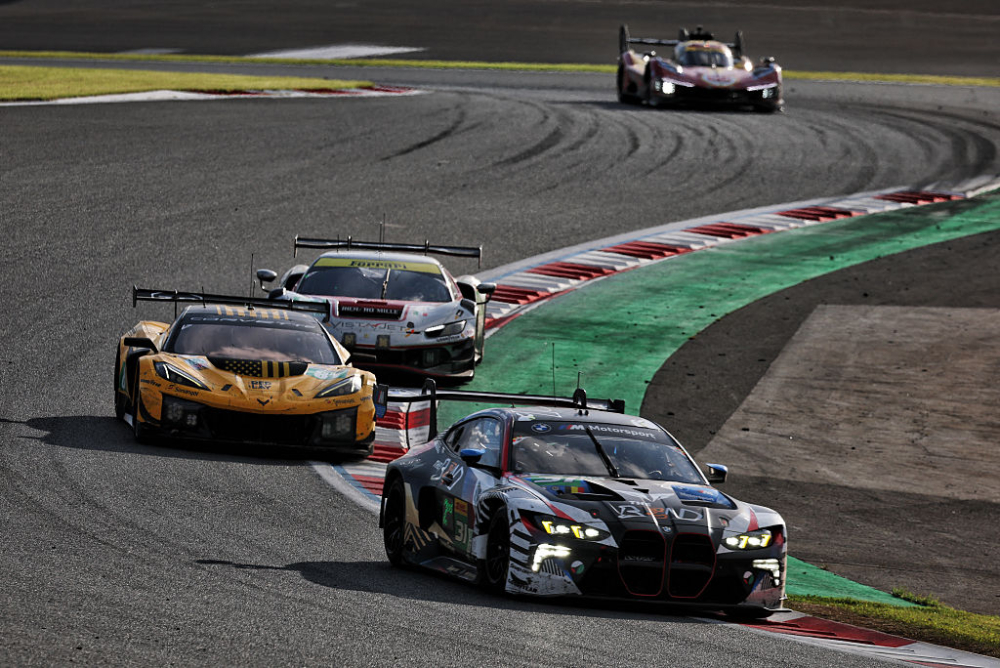
Towards the end of last year, the FIA confirmed an increase in tire allocation for the LMGT3 class beginning with the 2026 FIA World Endurance Championship season. Teams will receive six additional tires for six- and eight-hour races, plus eight more for the 10-hour race in Qatar, along with an extra set for use in free practice.
The change opens the door for teams to single-stint each set of Goodyear tires during races next year. A key knock-on effect is that the Medium Eagle compound will become the exclusive race tire, with the Hard compound — introduced at Interlagos last season — now retired.
So what does that mean for the racing? It’s arguably the biggest unknown facing LMGT3 as it heads into its third season in WEC competition.
Several teams initially met the news with skepticism. Critics of the change worry it could dilute strategy, removing (or reducing) the need for double- or even triple-stinting.
Goodyear, however, believes the impact may not be as significant as first feared — though the company acknowledges it could shift the competitive dynamic.
“I think some of the philosophies will change, but we’ve got to maintain the overall essence of WEC, ELMS and Le Mans,” said Stephen Bickley, Goodyear’s head of sportscar racing, in comments to RACER. “You’ll see certain teams lean toward a sprint-race mentality and change tires more frequently. But the tire itself hasn’t changed — it was designed as a double-stint tire for two hours, not 45-minute runs.
“That said, some teams will look to gain an advantage by skipping tire changes. Twelve seconds is still twelve seconds in the pits, and if the tire can deliver consistent performance over two hours, why give that up?
“That’s where you’ll see strategy split across teams and manufacturers. It could actually make the racing more interesting. We saw it in the European Le Mans Series — tire limits weren’t as tight as in WEC, but teams still double-stinted because the tires allowed it.”
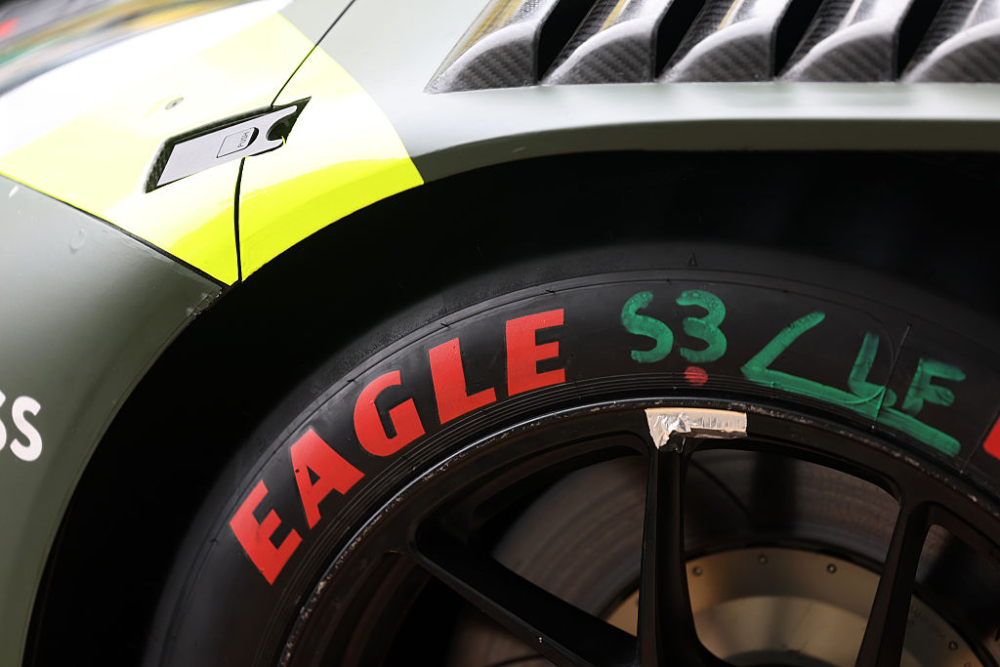
The Hard tire introduced last season has been retired. Jakob Ebrey/Getty Images
Bickley also noted that track characteristics will play a role.
“It’ll vary circuit to circuit — places like São Paulo, Bahrain, even Imola Circuit — where you might even see triple-stinting on the less-loaded side. The level in WEC is so high, teams are incredibly sharp, so expect experimentation and creative approaches.”
A major factor will be stint length. If runs stay under an hour (around 45 minutes), teams may have more flexibility to experiment. No official confirmation has been made public yet, though indications from sources on set-up in Imola yesterday suggested to RACER that the LMGT3 stint lengths could hover around the one-hour mark.
“I’m curious to see how energy usage plays into stint length,” Bickley added. “Is it going to be an hour, or closer to 45–50 minutes? Some teams have pushed to keep it at 45.”
Looking further ahead, the rule changes could also influence development of Goodyear’s next LMGT3 tire — an evolution of the current Medium compound slated for 2027.
“With the 2027 tire, we’re aiming to merge the philosophies of the Hard and Medium,” Bickley said. “It’s about longevity and consistency — that’s what endurance racing is all about.”
Increasing the percentage of sustainable materials is also a priority, mirroring efforts by Michelin in developing its 2026 slick tire range for Hypercar and GTP.
“We’re pushing toward a more sustainable future with tires that perform better for longer,” Bickley explained. “Even if regulations dictate the number of sets, there’s still value in going further — building a tire that delivers more performance over a longer period.
“Our goal remains a double-stint tire and, ideally, a single-spec solution. That’s what we’ve achieved in LMP2 — a versatile tire that works across a wide range of temperatures, abrasion levels and warm-up demands. Fewer tires shipped globally is part of that equation.”
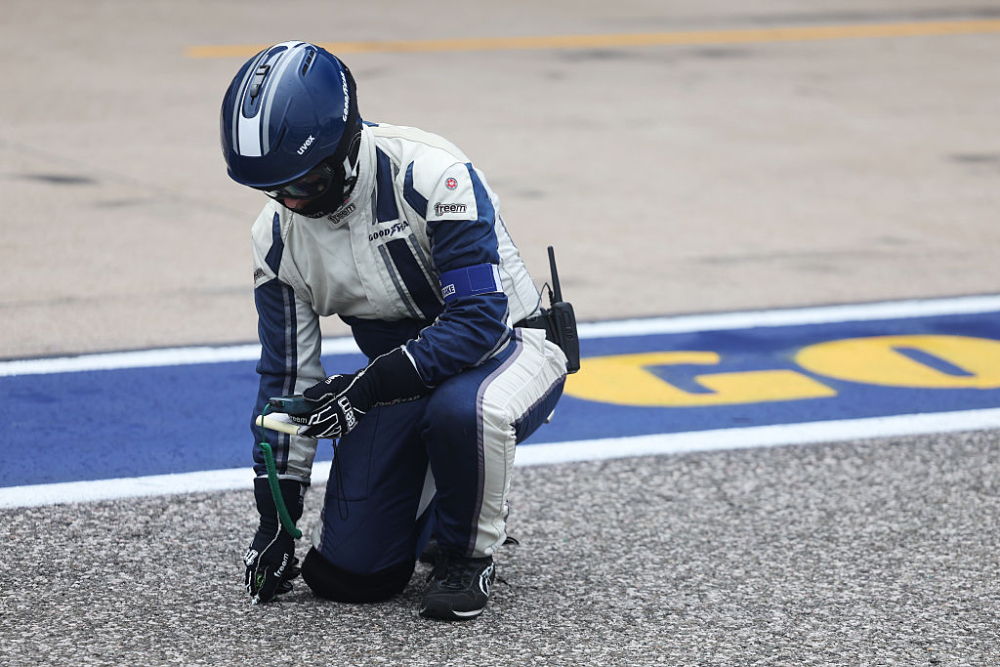
Track characteristics could lead to creative tire strategies. Jakob Ebrey/Getty Images
Development of the new LMGT3 tire is already underway, with manufacturers actively involved and invited to participate in testing later this year.
“We’re doing more simulation work, including driver-in-the-loop programs,” Bickley said. “But ultimately, you need real-world track time to validate the data.
“The plan is to conduct product launch tests around Q4, giving teams a solid understanding before the 2027 season. We’re working on a three-year development cycle.”
Beyond LMGT3, Goodyear has also been spotted testing Hypercar tires. The company declined to comment on recent images showing a Goodyear-liveried Porsche 963 run by Proton, alongside a Ferrari 499P and a Toyota GR010 Hybrid, also running development rubber at Circuit Paul Ricard earlier this month.
Still, Goodyear has made no secret of its ambitions to expand its motorsports footprint. But in its attempt to win the WEC Hypercar tyre contract from 2030 onward, it will face stiff competition in the tender process from the current supplier, Michelin and any other left-field contenders that emerge.
While those involved in the Paul Ricard test have stayed quiet publicly, multiple sources told RACER they were impressed by the early performance of Goodyear’s prototype tires.

Stephen Kilbey
UK-based Stephen Kilbey is RACER.com's FIA World Endurance Championship correspondent, and is also Deputy Editor of Dailysportscar.com He has a first-class honours degree in Sports Journalism and is a previous winner of the UK Guild of Motoring Writers Sir William Lyons Award.
Read Stephen Kilbey's articles
Latest News
Comments
Comments are disabled until you accept Social Networking Cookies. Update cookie preferences
If the dialog doesn't appear, ad-blockers are often the cause; try disabling yours or see our Social Features Support.