Getty Images
The best and the worst: Bourdais on the highs and lows from a hall of fame career
BEST CAREER DECISION
My best career decision was made on my behalf. After I won the Formula 3000 championship [in 2002], I didn’t have anything, so I signed with Opel to race in DTM. But David Sears put an exit clause in the contract if I got an open-wheel opportunity. So when the seat at Newman/Haas became available for 2003, I was able to sign up. It was the defining moment of my career, because the recognition and success I had with Newman/Haas opened so many doors.
WORST CAREER DECISION
I don’t think there was a really terrible decision I made, because it wasn’t like I had a lot of opportunities and I turned down a good one for a bad one. For a while, it was just really hard for me to land a ride. It wasn’t a bad decision because it eventually led somewhere, but the toughest outcome for a while was returning to IndyCar in 2011 with Dale Coyne, just as all the best guys quit the team! We were really in the weeds and needed to change a lot of things, and that takes time. Eventually he got good people in and we had decent results in the second half of the year. Switching to Dragon Racing in 2012 was also extremely tough at first, because the Lotus engine was so down on power compared with Chevy and Honda. That was painful. But again, we rebounded and even got a few podiums in 2013. And again, it led somewhere because KV Racing took an interest and we won some races together over the next few years.
GREATEST RACE
When you start your professional career with Newman/Haas, in a situation that is so conducive to winning, and then go to Formula 1 at a tricky time, come back and find it challenging to find another situation like Newman/Haas, it kind of looks like my career is in reverse, with all the gold at the beginning [31 wins and four Champ Car titles in five years], and then the struggles came after that.
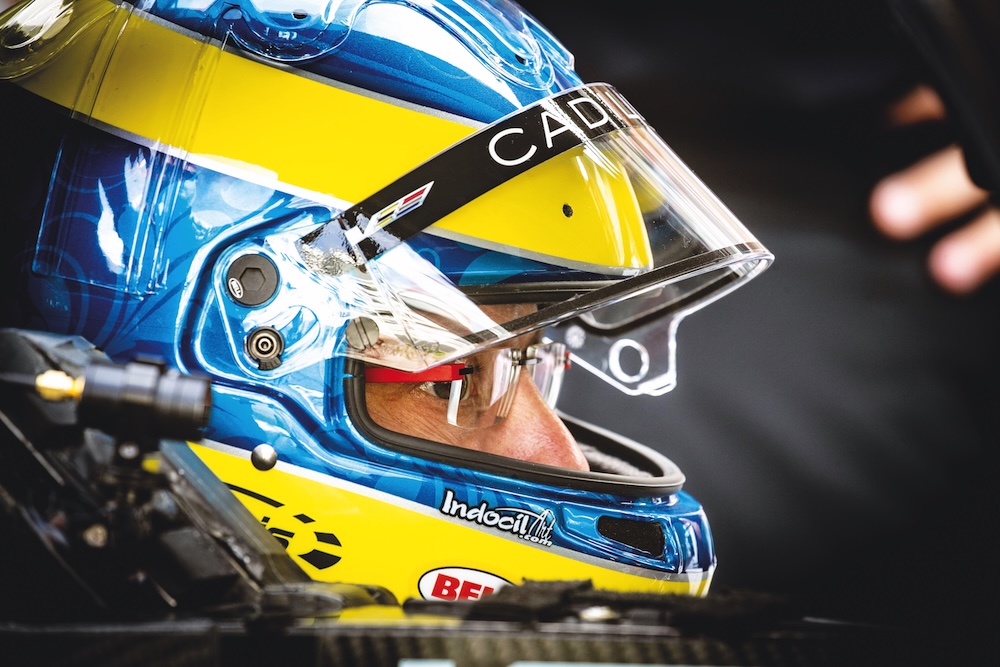
But anyway, with Newman/Haas, I think of Denver 2004, when we got spun to the back at the start and then came through to win. More recently, I’d say winning the Twelve Hours of Sebring in the JDC Cadillac in 2021. That was a huge effort. And then last year at Sebring, we should have won the P2 class [for Tower Motorsports] if they didn’t take away the lead from us at the pit sequence.
I’ve been pretty blessed to be able to have a few to choose from. I mean, the 2014 Toronto win with KV Racing was great because it was the first open-wheel victory I’d had here in the States since before I went to Formula 1. But in that second IndyCar career, I was very proud of the win with KVSH at Milwaukee. At one point we were a lap ahead of everyone, until a late yellow. It was one of those moments where you think, “Wow! What’s going on?” The other fast cars had been committed to a fuel-saving strategy, whereas Jimmy [Vasser, team co-owner] and Olivier [Boisson, race engineer] made the right call, turned me loose to just go for it. Everyone thought it wasn’t going to work because we had to go through the field at one point, but we did it. A lot of fun.
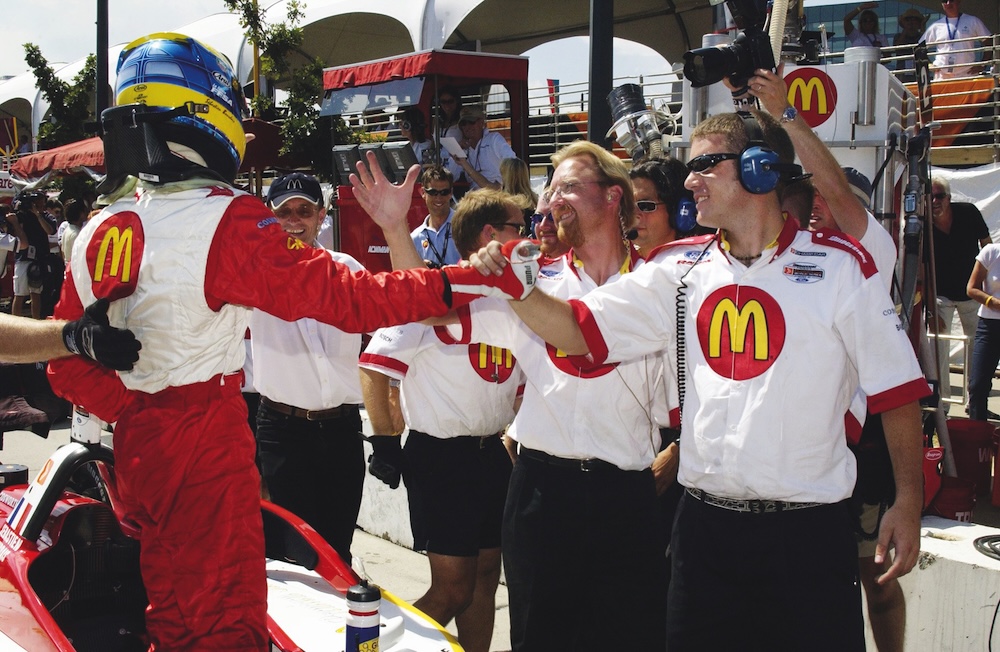
The Newman/Haas Racing CART team was already used to Bourdais winning when he produced one of his best drives, at Denver in 2004. Getty Images
MOST DISAPPOINTING RACE?
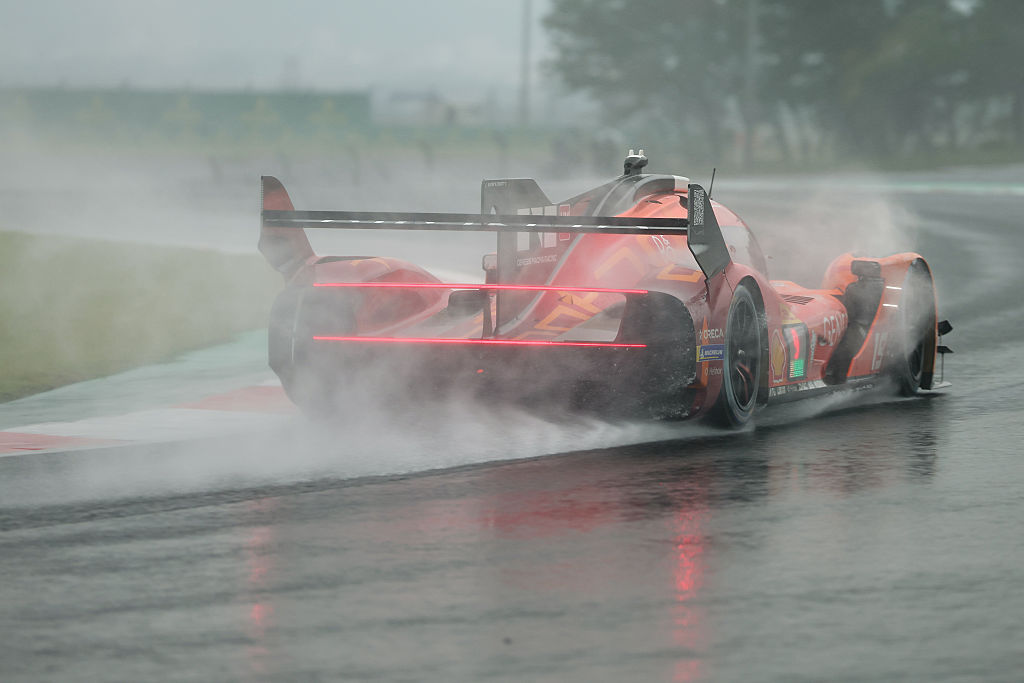
That’s easier to pick: Le Mans in 2009. That race was decided by team management at 4am on Sunday. Our Peugeot [908 HDi] had been the class of the field all week. We were on pole, and after six hours, Franck Montagny, Stephane Sarrazin and myself had built a three-minute lead. Then we lost nine minutes in the pits, but we were catching our teammates so easily and were only 45 seconds behind them. No way we were going to lose. Alex Wurz in the other Peugeot was as fast as us, but his teammates weren’t: Marc Gene was a solid two seconds off, I think trying to find his confidence from a big crash there the year before, and David Brabham had a massive struggle in that car from Day 1, and was even slower than that. So after our long stop, we regained almost three laps on them in six or seven hours.
At 4am, one of the Audis was still going – not really a threat, but somewhat in the hunt, and with us running 1-2, there was no need to keep pushing. We were just the wrong side of that decision to hold position, and I guess Alex did a good job of politicking in the background to make sure that their car was the chosen one. Given our speed difference, the decision felt so unreal, so unfair.
Through your career, you have to expect setbacks, but that result was the one that broke me the most. It came at the same time that things were going very wrong for me in F1, so… yeah, that took me a while to get over. And actually, I don’t think you ever really do, which is why I’m here talking to you about it 17 years later!
MOST SIGNIFICANT WIN
My first year in Champ Car, 2003, winning at Brands Hatch and Lausitzring were very important because they gave myself and Newman/Haas confidence in each other, especially after the terrible racing luck we’d had at the first three races. But the third win, at Cleveland, was in essence the most significant because that started Newman/Haas Racing’s relationship with McDonald’s. Up to that point, the team didn’t have funding for my car. And I don’t know if McDonald’s was even that excited about the program. If that weekend hadn’t gone as well as it did [pole, fastest lap and victory], maybe they wouldn’t have stayed. But because we won, and the buzz around it, it was hard for them to say, ‘No, we’re not going to do this.’ So that kept McDonald’s involved and cemented my program, and they became a primary sponsor for Newman/Haas throughout my time there and beyond.
WHAT WIN WOULD YOU MOST LIKE ON YOUR RESUME?
Sticking to the realm of realism, Le Mans. Hopefully I have few more shots at it. I grew up in a house just outside Tertre Rouge corner, so it’s genuinely a home race. The class win with Ganassi in the Ford GT in 2016 was great, but it’s still only a class win and, actually, I struggled that race – I only drove twice. Dirk Muller was on fire; that’s who won that race for our car. It was great to be associated with it, but I felt that was a win more for the Ford family, the manufacturer itself. That’s what made it significant, in my eyes. The reason Ford is coming back again is that they want the overall win.
For me and JOTA, I think 2026 could be very interesting. We know our Cadillac is strong, I think we have a very solid line-up, so I hope it pays off and we have a proper shot.
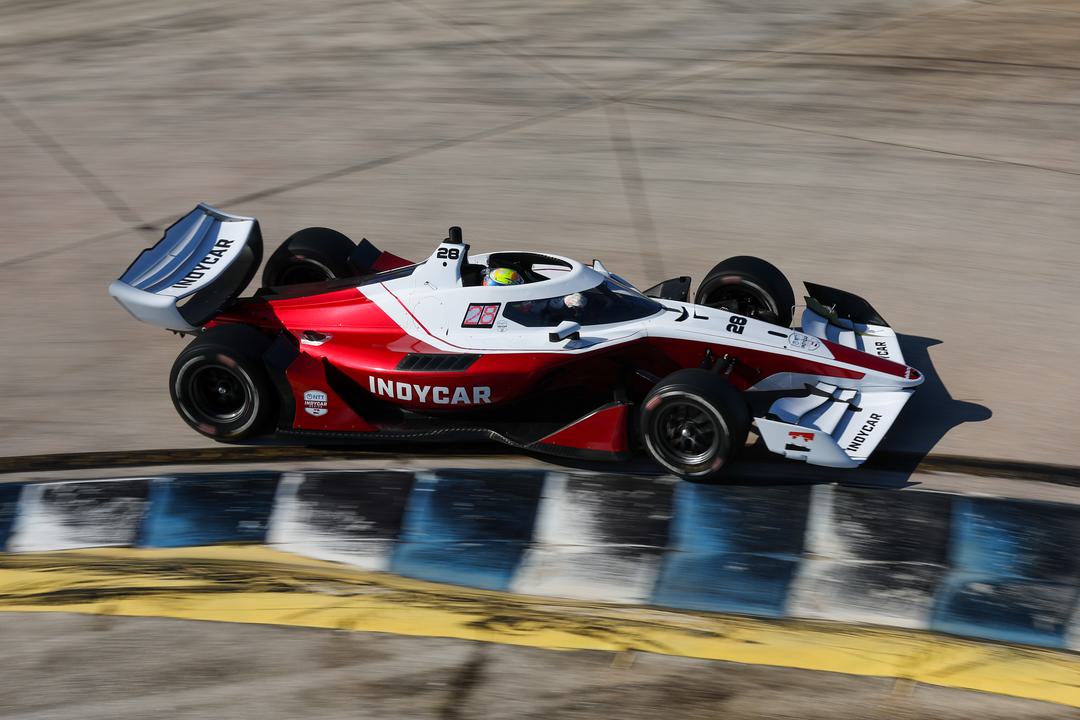
Obviously, the Indy 500 would be a fantastic win to have, and if I could have a do-over in my career, it would of course be qualifying at Indy in 2017. That year, Dale Coyne Racing had amazing cars, and I had never been in that position before at the Speedway. The car was just magical, and from the moment we unloaded until the crash that put me in hospital [shattered pelvis and fractured hip], it was so planted that I hadn’t had to turn right to catch it. If you then see how Ed Jones, my teammate, finished third even with damage on race day, and then Tristan Vautier was so fast in “my” car at Texas… Yeah, Dale’s cars were fantastic on superspeedways that year. Never had an oval car like that before, and never did again.
BEST TEAMMATE
My first teammate at Newman/Haas was Bruno Junqueira. He really challenged me, made me give the best of myself. I ended up having more success, but I learned so much from him, and the difference between us wasn’t that much, just enough. He made me work hard: there was not a single weekend where he wasn’t faster in a corner or a few corners or in a session. So that will always up your game, and so Bruno helped make me the driver I became.
In terms of sharing a sports car, the other guy I loved racing with was Anthony Davidson. Every race we did together at Peugeot we fought for the win, and fitted together perfectly. We drove very similarly, and so we wanted the same things from the car, so if I set up the car, it was great for him; if he set it up, it was great for me. That’s the kind of partnership in an endurance team that you always dream about. There’s no better scenario.
WORST TEAMMATE
I’ll take the high road on this. There’s no point, because the guy I want to name still wouldn’t understand what he did wrong…
David Malsher-Lopez
David Malsher-Lopez is editor-at-large for RACER magazine and RACER.com. He has worked for a variety of titles in his 30 years of motorsport coverage, including for Racer Media & Marketing from 2008 through 2015, to which he returned in May 2023. David wrote Will Power’s biography, The Sheer Force of Will Power, in 2015. He doesn’t do Facebook and is incompetent on Instagram, but he does do Twitter – @DavidMalsher – and occasionally regrets it.
Read David Malsher-Lopez's articles
Latest News
Comments
Comments are disabled until you accept Social Networking Cookies. Update cookie preferences
If the dialog doesn't appear, ad-blockers are often the cause; try disabling yours or see our Social Features Support.